Sexy Shrimp
Thor amboinensis
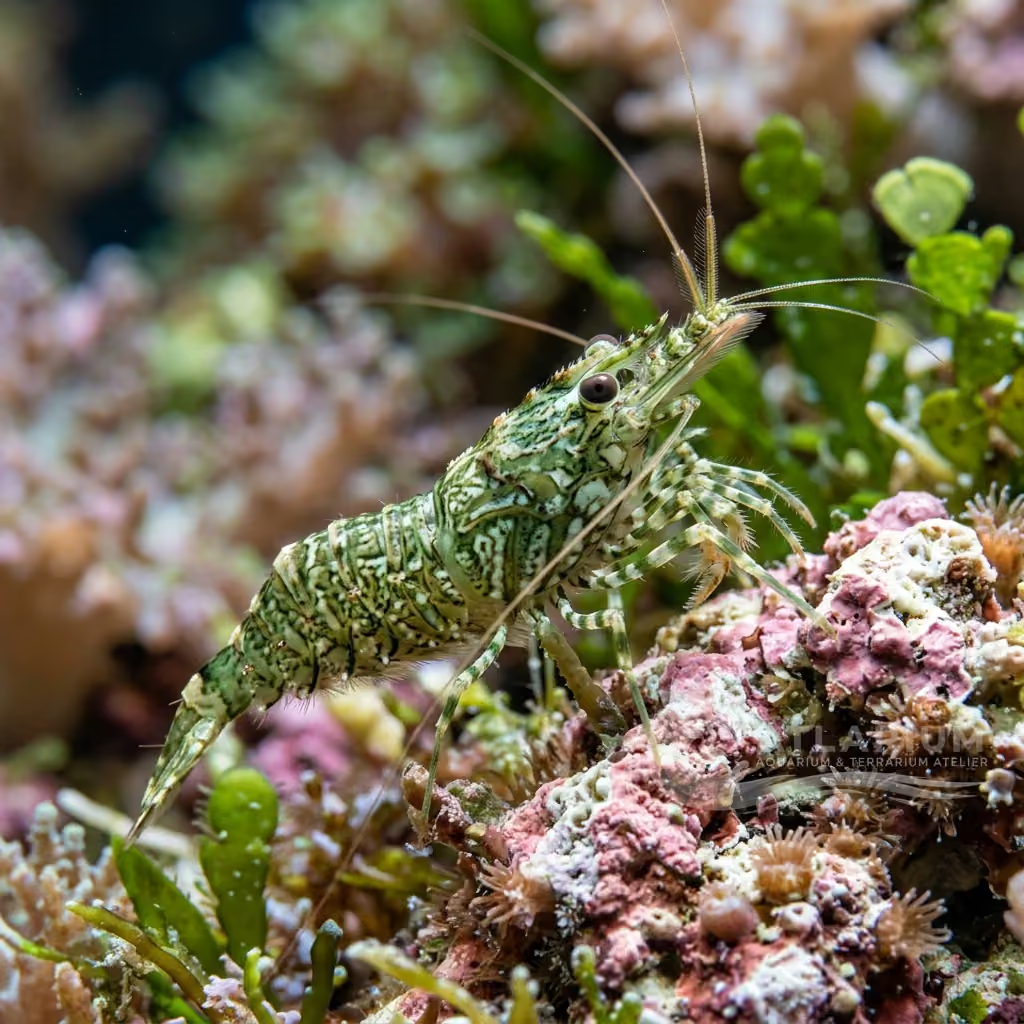
The Sexy Shrimp, a small marine shrimp famous for its signature abdomen-waving dance. Often lives in symbiosis with anemones and corals. Geographical Origin and Habitat: Thor amboinensis...
Wassertemperatur
24 - 28 °C
pH-Wert
8.1 - 8.4
Wassertyp
Meerwasser
Wirbelloser Typ
Marine shrimp
Erwachsenengröße
2 cm
Mindestgruppe
>= 1
Ökologische Rolle
Scavenger
Kupferempfindlichkeit
High

Artbeschreibung
Geographical Origin and Habitat: Thor amboinensis has a circumtropical distribution, commonly found in the Indo-West Pacific, Red Sea, Caribbean Sea, and the Gulf of Mexico. It inhabits shallow coral reefs at depths of 1 to 20 meters, living in close symbiotic association with sea anemones and corals.
Taxonomy: Belonging to the family Thoridae, this is a tiny marine shrimp reaching an adult size of only 1.5-2 cm. It features a distinctive body posture where the tail and abdomen are held arched upward over the back, which it constantly wiggles side-to-side.
Social Behavior: Peaceful, highly social, and active. They should be kept in small groups of 3-5 individuals, as they prefer to colony-live on a single host anemone. The swaying movement of their body is a social communication signal used between members of the species.
Coloration and Sexual Dimorphism: Body is olive-to-golden brown, decorated with large, white-to-light blue circular patches outlined in electric blue. Females are significantly larger than males, displaying broader abdominal segments to accommodate egg clutches.

Pflege, Zucht und Mitbewohner
Tank Setup: Suitable for nano-reef aquariums of at least 30-40 liters. Providing a host anemone (such as *Stichodactyla*, *Entacmaea*) or large-polyp stony corals (such as *Euphyllia* or mushroom corals) is highly recommended to mimic their natural habitat and offer protection.
Diet and Feeding: Omnivorous scavengers. They feed on organic detritus, leftover fish food, micro-plankton, and the mucus produced by their host anemone. Target-feed with frozen foods (mysis, cyclops, baby brine shrimp) and powdered coral foods.
Water Quality: Requires stable marine parameters: temperature 24-26°C, specific gravity 1.023-1.025, pH 8.1-8.4, and low nitrates. Highly sensitive to sudden salinity shifts during water top-offs. Maintain proper iodine levels for molting. Copper is highly lethal.
Compatibility and Tankmates: Safe with corals. Compatible with small, peaceful reef fish like gobies and clownfish. Do not house with predatory fish such as wrasses, hawkfish, dottybacks, pufferfish, or large crabs that will quickly eat them.
Aquarium Breeding: Breeding is extremely difficult. Mated females carry eggs under their abdomen. The hatched larvae are planktonic and require a specialized rotifer-based feeding program in a separate breeding vessel to survive and reach metamorphosis.
Risks and Diseases: Predation due to their tiny size is the primary threat. Without a host coral or anemone for shelter, they are easily eaten. Molting complications (failed ecdysis) can occur if essential trace minerals like iodine are depleted in the water.

Geografische Herkunft und Verbreitung
Thor amboinensis has a circumtropical distribution, commonly found in the Indo-West Pacific, Red Sea, Caribbean Sea, and the Gulf of Mexico. It inhabits shallow coral reefs at depths of 1 to 20 meters, living in close symbiotic association with sea anemones and corals.
Ursprung
Kosmopolitisch oder eingeführtMittelamerika und KaribikTropische Ozeane und Riffe

Wirbelloses Profil
- Diät
- Omnivore
- Thor amboinensis is primarily an omnivorous scavenger that constantly forages for detritus, biofilm, and leftover food among the substrate. In captivity, their diet should be supplemented with high-quality sinking pellets, frozen mysis, and occasional vegetable matter. A diverse and rich diet ensures robust molting and brilliant coloration.
- Ökologische Rolle
- Scavenger
- Playing a critical role in the aquatic food web, Thor amboinensis acts as a macro-detritivore that breaks down organic materials. Their constant scavenging significantly reduces the accumulation of decaying matter, thereby improving overall water quality. In reef or planted tanks, they often act as meticulous cleaners of the aquascape.
- Lebenserwartung
- 2-3 years
- Erwachsenengröße
- 2 cm
- Sprungrisiko
- Yes
- When startled by a sudden movement, bright light, or aggressive tank mate, Thor amboinensis possesses a powerful tail-flick reflex that can launch them entirely out of the water. This jumping behavior makes an unsecured aquarium a severe hazard. A tight-fitting lid or mesh top is absolutely mandatory to prevent them from becoming desiccated on the floor.
- Stoßempfindlichkeit
- High
- Thor amboinensis is highly susceptible to osmotic shock caused by rapid shifts in specific gravity, temperature, and pH. Sudden changes can compromise their delicate osmoregulatory systems, often leading to immediate fatalities or failed molts. A diligent drip acclimation process taking at least one to two hours is vital for successful introductions.
- Kalzium und Mineralien
- High
- To successfully regenerate their chitinous exoskeleton during a molt, Thor amboinensis requires consistent availability of dissolved calcium, magnesium, and trace iodine. Poor mineral content in the water column can result in "white ring of death" or the inability to fully shed their old shell. Regular water changes and appropriate mineral supplementation are essential for their survival.
- Häutung
- Regular
- Molting is the most precarious time in the life cycle of Thor amboinensis, during which it will hide until its new exoskeleton hardens. Aquarists will often find complete, transparent molts in the tank, which should be left in the water as the shrimp will consume it to reclaim lost minerals. Never disturb or force a shrimp out of hiding during this vulnerable phase.
- Reproduktion
- Oviparous
- Under optimal water conditions and with plenty of food, Thor amboinensis can readily breed in captivity. Females can often be seen carrying clutches of eggs (berried) beneath their pleopods until they hatch into miniature shrimp or planktonic larvae. Providing dense moss or hiding spaces greatly increases the survival rate of the offspring.
- Kompatibilität & Tankkameraden
- Reef safe with caution
- Thor amboinensis is best kept in dedicated invertebrate setups or alongside small, peaceful nano fish. They are at high risk of predation from cichlids, larger wrasses, hawkfish, and puffers, which will readily hunt them. When kept with appropriate tank mates, they will confidently display their active and engaging behaviors.

Verwandte Arten
Empfehlungen gruppiert nach nahen Verwandten, Auswahl von Begleitern und ähnlicher Betreuung.