Aduja's Tetra
Iguanodectes adujai
The Red-line Iguanodectes lives in slow, blackwater Amazonian rivers. Being a pelagic omnivore, it requires a very long aquarium for uninterrupted swimming, decorated with twisted roots and modest flow.
Wassertemperatur
24 - 28 °C
pH-Wert
5 - 7
Wassertyp
Süßwasser
Tankfüllstand
Mitte
Erwachsenengröße
7 cm
Mindesttankvolumen
>= 100 L
Mindestgruppe
>= 1
GH
1 - 10 dGH
KH
1 - 6 dKH
TDS
25 - 210 ppm
Leitfähigkeit
39 - 328 uS/cm

Artbeschreibung
Geographical Origin and Habitat: Middle and upper Rio Negro systems in Brazil. They populate slow watercourses (Igarapés) and "blackwater" oxbow lakes extremely poor in minerals, loaded with decomposing humic acids in the thick of the Amazon forest.
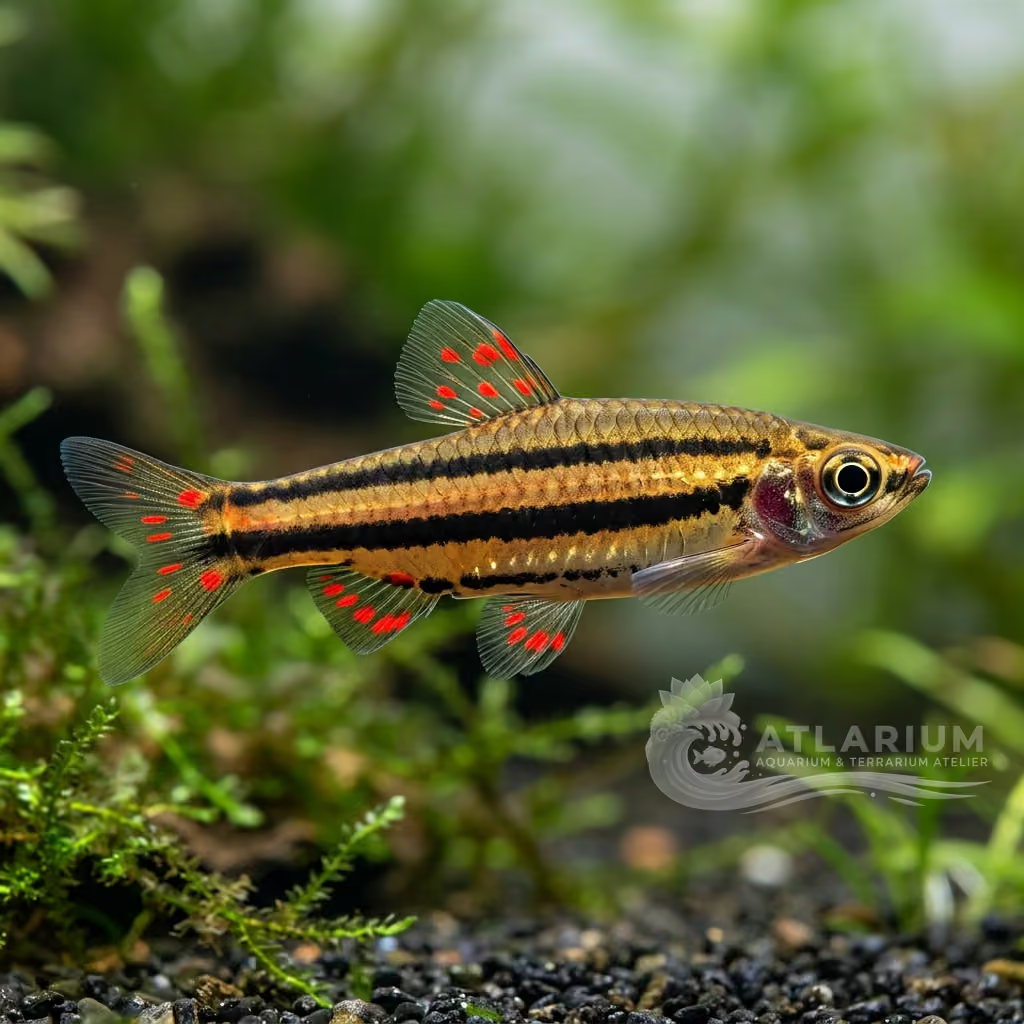
Taxonomy and Morphology: Red-line Iguanodectes (Iguanodectes adujai). Atypical characin with a very slender, cylindrical, and tapered "torpedo" body shape. Features a terminal mouth and a very long anal fin at the base.
Social Behavior: Very active pelagic species that never stops. Swims in very tight and compact schools against the current or hovering in mid-water. Absolutely peaceful and shy, needs schools (10+ specimens) to calm down.
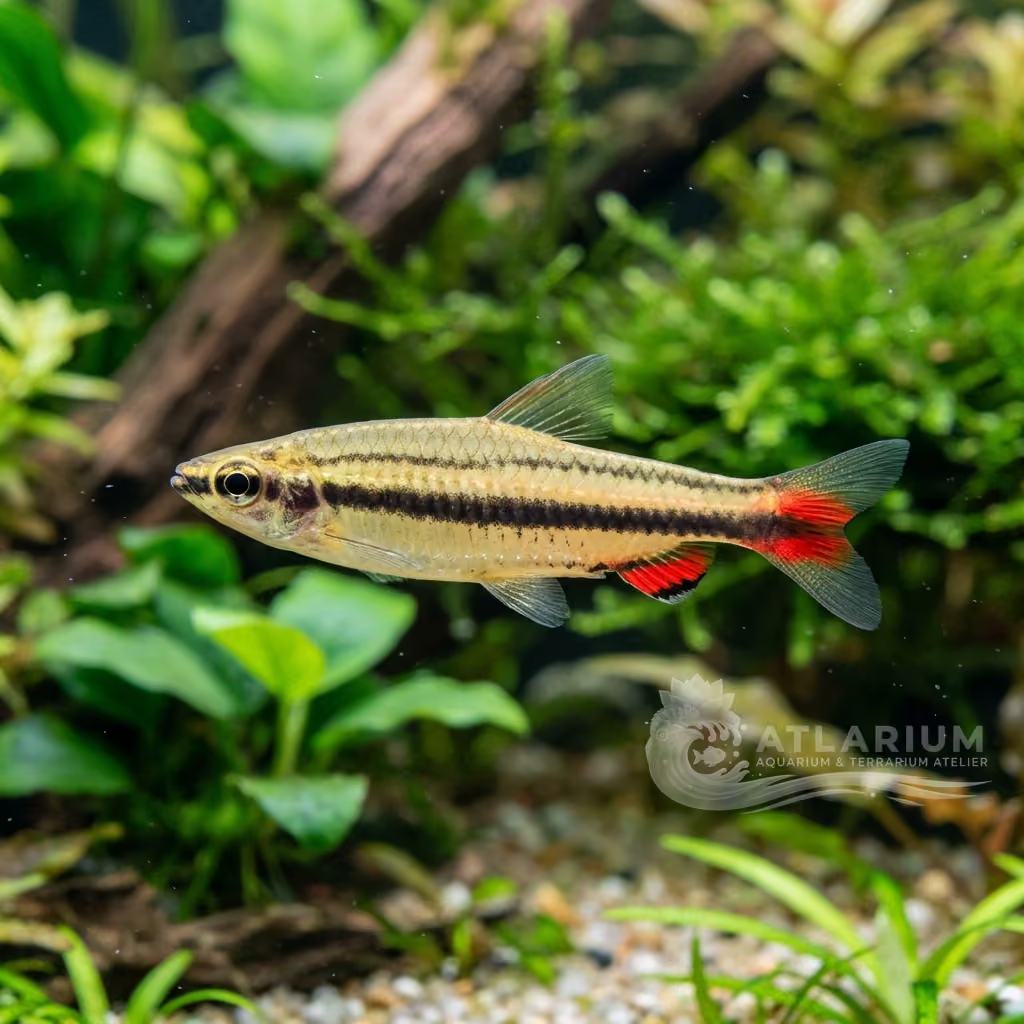
Coloration and Sexual Dimorphism: Semi-diaphanous to silvery/greenish body. The distinguishing feature is a tricolor line (red, golden, black) that crosses the flank from the snout to the base of the caudal fin. Males slightly more intense and with a concave anal fin.

Pflege, Zucht und Mitbewohner
Aquarium Setup: Requires very long aquariums (minimum 100 cm / 40 inches in length). Essential to leave a huge amount of space for uninterrupted swimming. Set up the perimeter and bottom with twisted roots and a modest water current.
Diet and Feeding: Tends to be a pelagic carnivore/insectivore. Gathers food floating in the water column. Gladly eats fruit flies (Drosophila), frozen bloodworms, daphnia, and slow-sinking granules.
Water Quality: Very delicate regarding water chemistry. Only tolerates ultra-soft (GH 1-5) and distinctly acidic (pH 5.0-6.5) waters. Sensitive to fluctuations and nitrates: massive filtration is imperative.
Compatibility and Cohabitation: Admirable and peaceful guest, coexists perfectly in large blackwater biotopes with Discus (as long as the temp does not exceed 28°C / 82°F), Apistogramma, and large schools of Corydoras sterbai or adolfoi.
Aquarium Breeding: Extremely rare in captivity due to the ultra-acidic and pure water required for egg development. Spawns on mosses. The eggs are lucifugous (they degrade under strong lighting).
Risks and Diseases: The only pathologies are derived from osmotic shock or alkalosis. It is an excitable and jumping species: if the tank is uncovered and they are frightened, they will fatally jump out as a school.

Geografische Herkunft und Verbreitung
Middle and upper Rio Negro systems in Brazil. They populate slow watercourses (Igarapés) and "blackwater" oxbow lakes extremely poor in minerals, loaded with decomposing humic acids in the thick of the Amazon forest.
Ursprung
Tropische Ozeane und RiffeAmazonas, Orinoco und Guayana

Fischprofil
- Temperament
- Semi-aggressive
- They have a peaceful, active, and strictly schooling temperament. They must be kept in groups of at least eight to feel secure and display natural behaviors. In smaller numbers, they become highly stressed, skittish, and prone to disease.
- Diät
- Omnivore
- They are omnivorous micro-predators that eagerly accept most commercial foods. Provide a varied diet of crushed high-quality flakes, micro-pellets, and frozen daphnia. Supplementing with live foods occasionally will encourage their best coloration.
- Lebenserwartung
- 3-5 years
- Erwachsenengröße
- 7 cm
- Geschlechterverhältnis
- School
- Males are generally slimmer and often display slightly more intense coloration during the breeding season. Females possess a noticeably rounder belly, particularly when laden with eggs. They must be kept in schools where both sexes are present.
- Fütterungsfrequenz
- Twice daily
- Feed them small portions two times a day, ensuring they consume it entirely within minutes. Because of their small mouths, food must be appropriately sized. Overfeeding should be avoided to prevent degrading the water parameters.
- Bioload
- Low to Medium
- As a slender and active tetra, it produces a low bioload in the aquarium. Standard mechanical and biological filtration will easily process their waste. Routine partial water changes are still required to keep nitrates low.
- Fluss
- Stagnant
- They appreciate a moderate water flow that mimics natural river currents. This flow encourages their natural active swimming behaviors. Ensure there are also calmer areas in the tank where they can rest.
- Sprungrisiko
- Yes
- They are agile swimmers and are known to be notorious jumpers, especially when spooked. A tightly fitted aquarium lid is absolutely mandatory. Even small gaps around filters should be securely covered.
- Reproduktion
- Oviparous
- Breeding requires a dedicated, dimly lit setup with very soft, acidic water. They are egg scatterers that provide no parental care to their offspring. The adult fish must be removed immediately after spawning to prevent egg cannibalism.
- Kompatibilität & Tankkameraden
- Semi-aggressive
- They are incredibly peaceful and make superb additions to tranquil community tanks. Ideal tank mates include corydoras, small rasboras, and dwarf cichlids. Do not keep them with large, aggressive fish that could swallow them.
- Tankfüllstand
- Middle
- They are highly active fish that predominantly cruise the middle and upper levels of the tank. They need extensive open swimming space to thrive. Adding some floating plants will help them feel secure without hindering their swimming.

Wissenschaftliche Modelle & Parameter
FishBase
Zugang zu den offiziellen wissenschaftlichen Daten der Art
FishBase v25.04Daten synchronisiert am: 15.06.2026
- Trophäenniveau
- 3,2 ± 0,4 se
- Phylogenetische Einzigartigkeit (PD50)
- 0.5039
- Bayessche Längen-Gewichts-Beziehung
- a = 0.00589, b = 3.18
- AnfälligkeitGeringe Anfälligkeit (10 / 100)

Verwandte Arten
Empfehlungen gruppiert nach nahen Verwandten, Auswahl von Begleitern und ähnlicher Betreuung.