SüßwasserMittel
©AI Generated·Proprietary
Hypselecara temporalis — Chocolate Cichlid

Chocolate Cichlid

Hypselecara temporalis

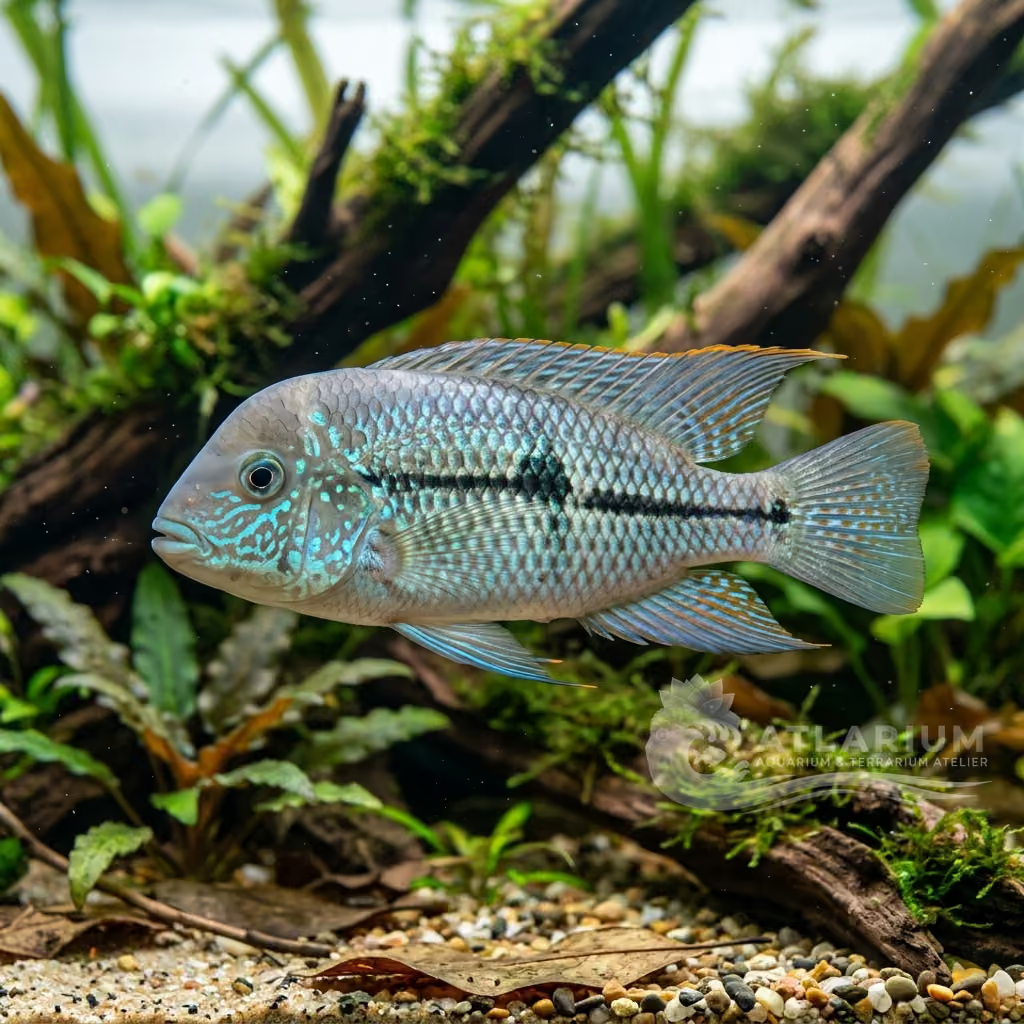
The Chocolate Cichlid (Hypselecara temporalis) is a mastodon of the Amazonian rivers, loved for its massive, rustic appearance and its placid temperament. Reaching the titanic size of 30 cm (12 inches) in length and 20 cm (8 inches) in height, adults develop a unique coloration: a dark chocolate brown or burgundy body, tinged with brick pink and golden yellow on the snout, with an impressive "nuchal hump" in old males. Its golden/dark red eye placed on top of its large head gives it a menacing appearance, which incredibly contrasts with its nature of a 'slow and gentle giant', easily becoming the aquarist's great 'pet fish'.

Wassertemperatur

25 - 29 °C

pH-Wert

5.5 - 7.5

Wassertyp

Süßwasser

Tankfüllstand

Mitte

Erwachsenengröße

30 cm

Mindesttankvolumen

>= 600 L

Mindestgruppe

>= 1

GH

2 - 12 dGH

KH

1 - 6 dKH

TDS

40 - 240 ppm

Leitfähigkeit

63 - 375 uS/cm

Artbeschreibung

Geographical Origin and Habitat: Widely distributed in the Amazon River basin (including the Ucayali and Solimões rivers) across Peru, Colombia, and Brazil. Inhabits placid, slow-moving backwaters, lagoons, and oxbow lakes heavily shaded by thick floating vegetation and tangled submerged roots, usually in clear or tannin-stained (blackwater) environments.
Taxonomy and Morphology: Famously known in the hobby as the Chocolate Cichlid. A substantial, large-growing cichlid (males reach 25-30 cm / 10-12 inches, females up to 20 cm / 8 inches). It possesses an unmistakably stocky, very tall, almost rhomboid-shaped body that is laterally compressed. Its small eyes are set high up on its forehead, giving it a comical, "thoughtful" expression.
Social Behavior: Nicknamed the "Gentle Giant" of South America. Despite its intimidating size, it possesses an extraordinarily placid, shy, and almost phlegmatic temperament. It spends much of its time hovering motionless in mid-water or sheltering under floating plants. It only becomes territorial during breeding, but never exhibits the lethal, psychopathic aggression seen in other large cichlids (like Oscars or Midas).
Coloration and Sexual Dimorphism: As a juvenile, it is incredibly drab (grayish-brown), which is why it is often overlooked in stores. As it matures, the livery explodes into breathtaking hues: the body turns deep metallic olive-green or purplish-brown, while the throat, belly, and lower flanks ignite in a rich, intense burgundy or wine-red (hence "chocolate"). Both sexes feature a thick black lateral spot. Adult males develop a massive, prominent nuchal hump on their forehead.

Pflege, Zucht und Mitbewohner

Aquarium Setup: Requires a very large aquarium (minimum 150 cm / 5 feet, 350-450 liters / 90-120 Gallons) due to its sheer adult bulk. It strongly prefers dim lighting, tranquil water, and abundant floating vegetation (Water Lettuce, Salvinia), which makes it feel secure. Being inherently shy, it needs large, arching driftwood branches to hover under. Unlike many large cichlids, it is generally NOT a plant destroyer or a frantic digger.
Diet and Feeding: In the wild, it is primarily a surface and mid-water insectivore, also eating fallen fruits and seeds. In captivity, it readily accepts high-quality floating or slow-sinking pellets, freeze-dried krill, bloodworms, and earthworms. It has a relatively small mouth for its massive body, so pellet size must be manageable, and extremely hard pellets should be soaked first.
Water Quality: Being an Amazonian species, it demands stable, warm (26-29°C / 79-84°F), soft, and neutral to slightly acidic water (pH 6.0 - 7.5, GH 2-10). Excellent biological filtration is mandatory due to its massive bioload, BUT the water flow must remain gentle. Chocolate cichlids loathe strong currents and will become highly stressed if forced to battle heavy water flow.
Compatibility and Cohabitation: The perfect centerpiece for a peaceful, large-scale Amazonian community tank. It thrives alongside large tetras (Silver Dollars), Hatchetfish (for the surface), Severums, Geophagus, and large peaceful Plecos. DO NOT house it with aggressive, high-strung cichlids (e.g. Jack Dempseys, Green Terrors); they will brutally bully the Chocolate Cichlid, causing it to lose its color, stop eating, and hide until it dies.
Aquarium Breeding: A bi-parental substrate spawner. They are notably picky when choosing a mate, so buying a group of 5-6 juveniles and letting a natural pair form is the best approach. They lay up to 500 eggs on vertical surfaces (smooth wood, slate, or even the aquarium glass). While they guard the fry, they are known to be clumsy parents; inexperienced pairs will often eat their first few batches if startled or stressed.
Risks and Diseases: 1. Stress from Bullying: its passive, introverted nature makes it highly vulnerable; if tankmates are too aggressive, it will simply give up and starve. 2. Water Quality Sensitivity: highly susceptible to "Hole in the Head" (Hexamita) if kept in water with high nitrates or poor diet. 3. The Ugly Duckling Phase: because they are so ugly when young, buyers must have patience; it takes 1-2 years for the glorious red colors to appear.

Geografische Herkunft und Verbreitung

Widely distributed in the Amazon River basin (including the Ucayali and Solimões rivers) across Peru, Colombia, and Brazil. Inhabits placid, slow-moving backwaters, lagoons, and oxbow lakes heavily shaded by thick floating vegetation and tangled submerged roots, usually in clear or tannin-stained (blackwater) environments.

Ursprung

Amazonas, Orinoco und Guayana

Fischprofil

Temperament
Territorial
They possess a famously relaxed, dog-like personality and often learn to interact with their owners. They are curious and slow-moving, rarely showing aggression outside of breeding periods. They quickly become the centerpiece pet of the aquarium.
Diät
Omnivore
Their omnivorous diet is heavily skewed towards animal proteins, but vegetable matter is also needed. High-quality cichlid pellets, frozen krill, earthworms, and occasional spirulina flakes form a perfect diet. Avoid feeding mammalian meats like beef heart.
Lebenserwartung
8-12 years
Erwachsenengröße
30 cm
Geschlechterverhältnis
Group
Mature males grow significantly larger, develop a very prominent nuchal hump, and often have longer fin extensions. Females remain smaller and have a steeper, less rounded forehead. Venting is the most accurate method for determining the sex of juveniles.
Fütterungsfrequenz
Twice daily
Feed adult specimens once or twice daily with only what they can aggressively consume in a few minutes. They are eager eaters and will beg for food at the glass. Overfeeding should be strictly avoided to maintain water quality.
Bioload
High
This chunky cichlid produces a substantial amount of waste, contributing to a high bioload. Exceptional biological and mechanical filtration is absolutely critical. Strict adherence to a routine water change schedule is necessary to prevent nitrate buildup.
Fluss
Strong
They originate from slow-moving rivers and flooded forests, so gentle flow is ideal. They dislike strong currents which cause them unnecessary stress. A setup with moderate turnover but diffused output is best.
Sprungrisiko
No
Reproduktion
Oviparous
They are biparental substrate spawners that clean a vertical or flat surface to lay hundreds of eggs. Both parents are exceptionally dedicated and will fiercely guard the territory from intruders. The fry are easily raised on newly hatched brine shrimp.
Kompatibilität & Tankkameraden
Verify
They are well-known as gentle giants and make fantastic additions to large community tanks. Suitable tank mates include severums, geophagus, and large peaceful catfish. Small fish will likely be eaten, so companions must be appropriately sized.
Tankfüllstand
Middle
They navigate the middle to lower regions of the aquarium for the most part. The tank should feature large, open swimming spaces and massive driftwood pieces to act as visual barriers. They rarely damage sturdy plants.

Wissenschaftliche Modelle & Parameter

FishBase

Zugang zu den offiziellen wissenschaftlichen Daten der Art

FishBase v25.04Daten synchronisiert am: 15.06.2026
Trophäenniveau
2,4 ± 0,27 se
Belastbarkeit
Hoch (weniger als 15 Monate)
Phylogenetische Einzigartigkeit (PD50)
0.75
Bayessche Längen-Gewichts-Beziehung
a = 0.03388, b = 3.06
AnfälligkeitGeringe Anfälligkeit (10 / 100)