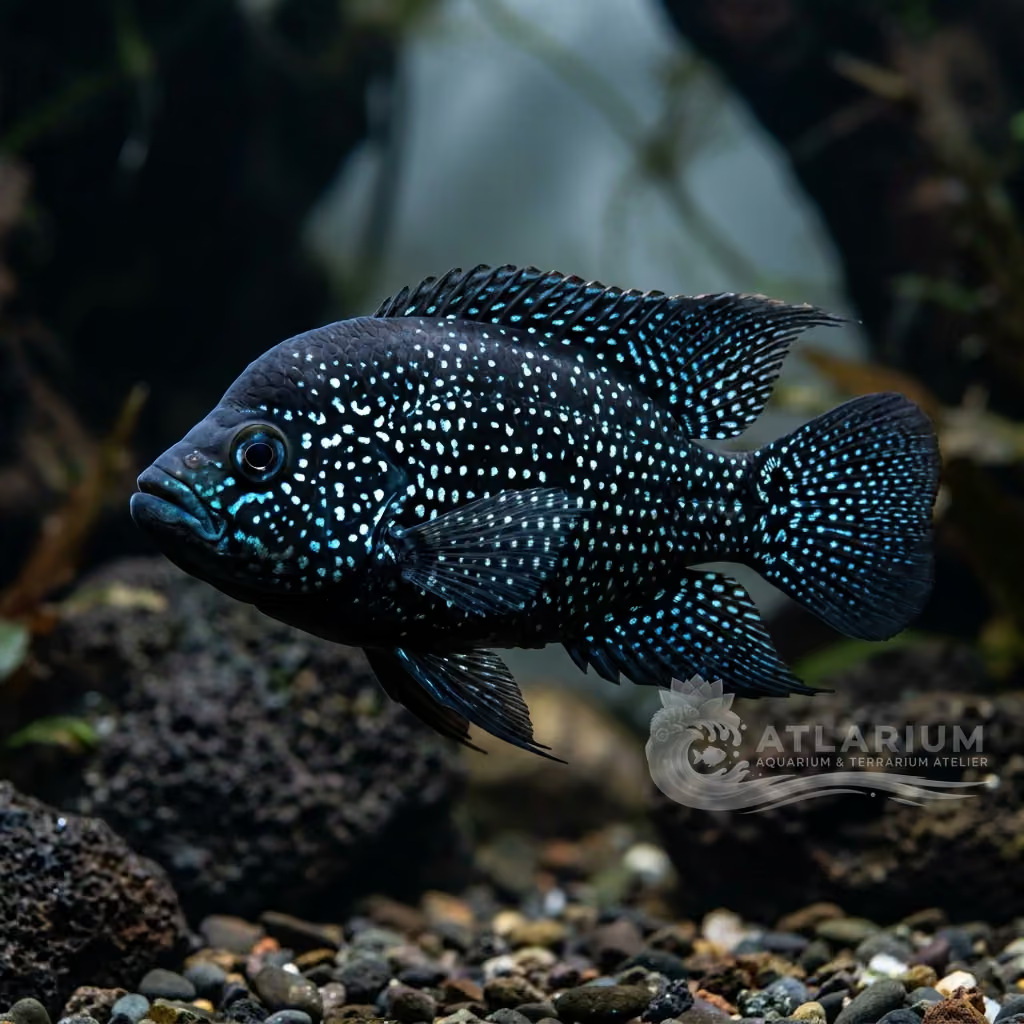
Nanochromis transvestitus
Nanochromis transvestitus
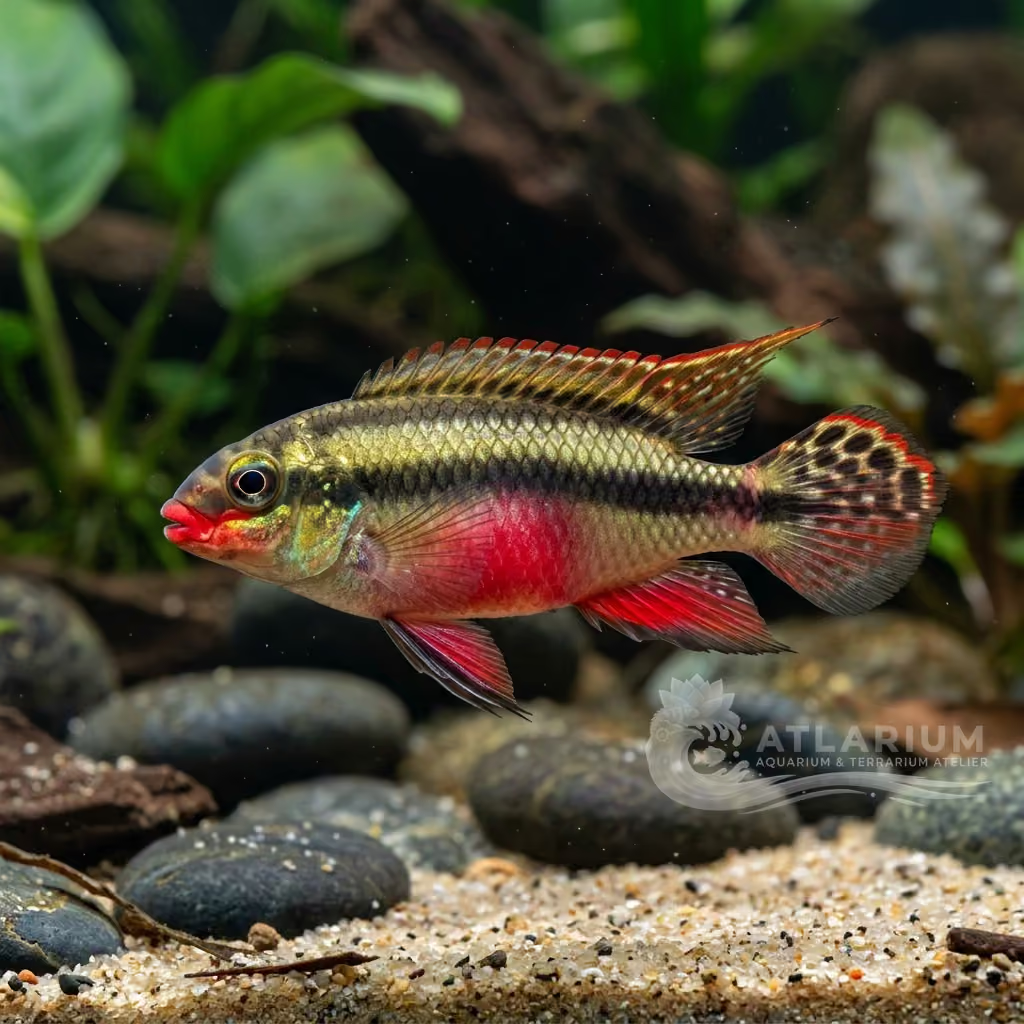
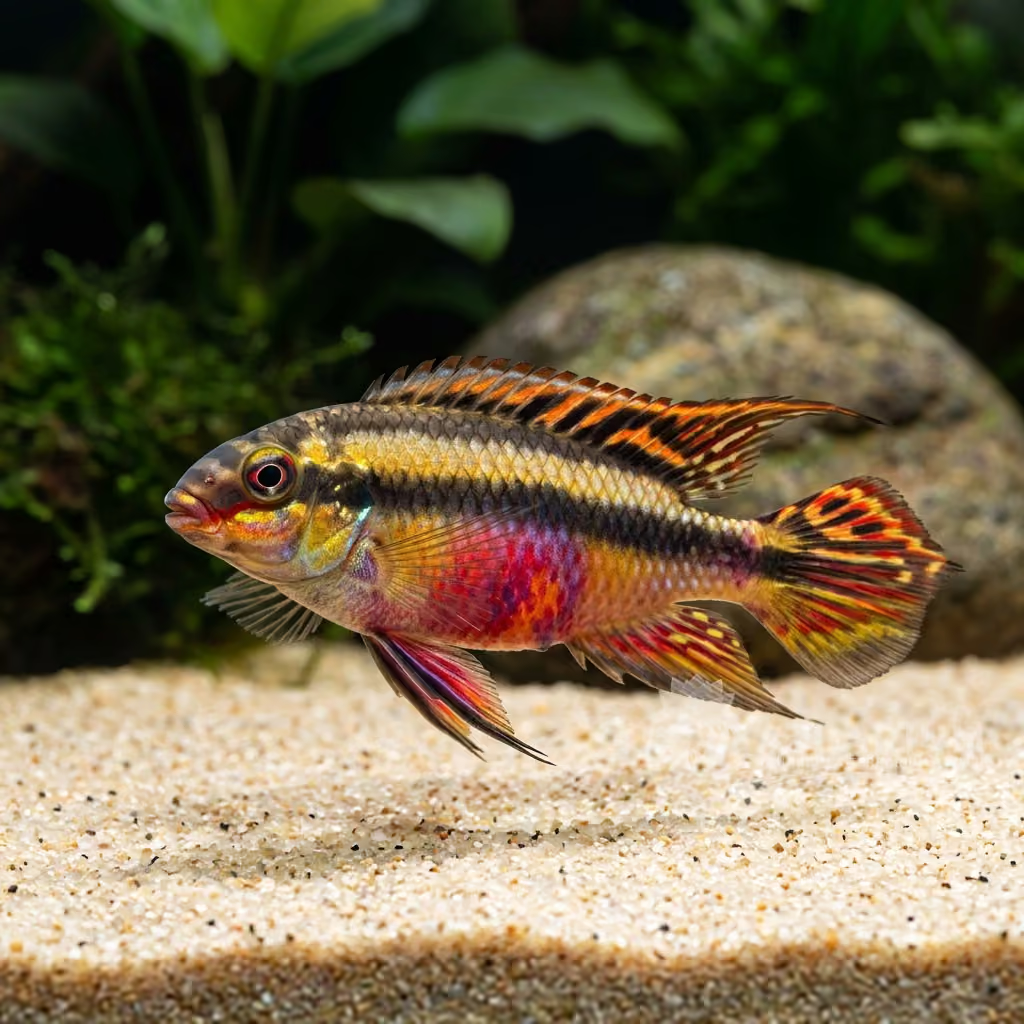
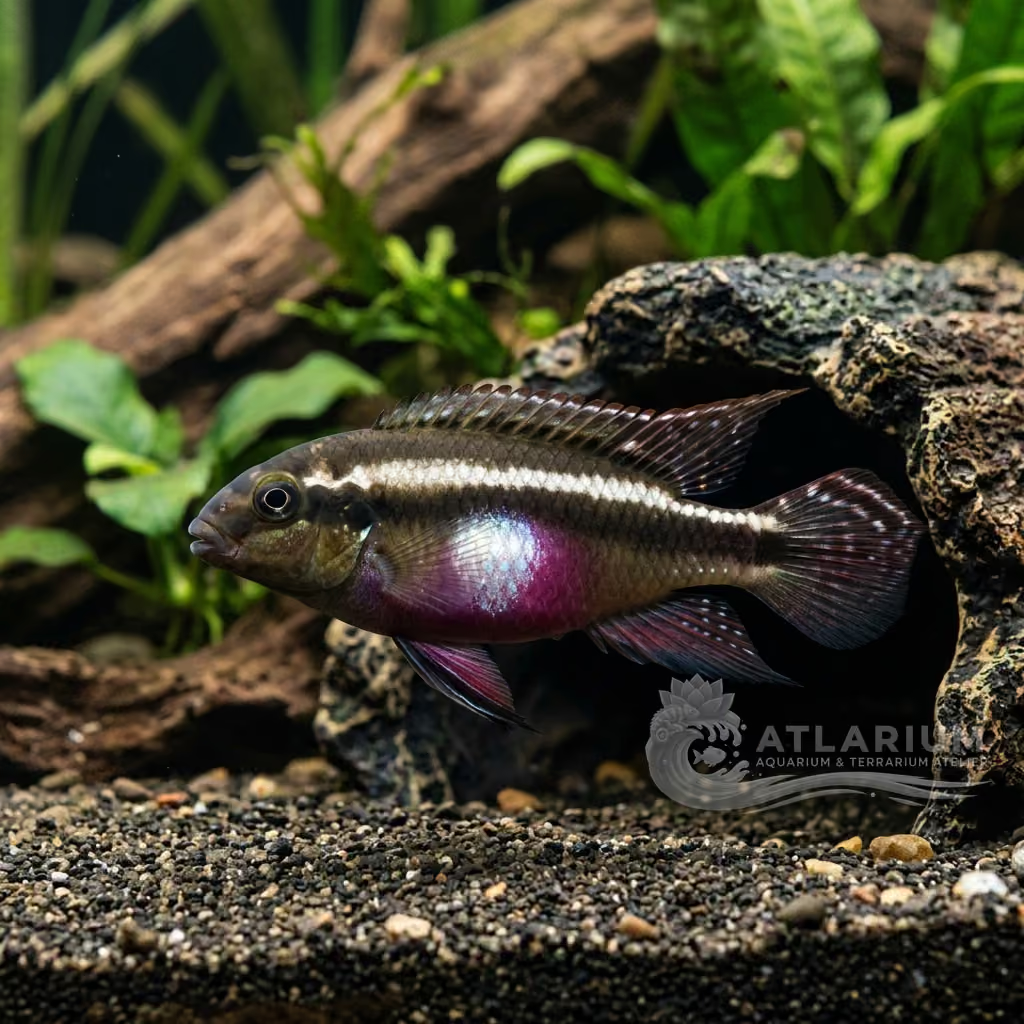
Tiny river cichlid (5 cm). Famous for its extreme 'inverted' sexual dimorphism: the female is ablaze with stripes and a glowing red belly, while the male remains gray and faded. Very fragile, demands soft waters and very low pH.
Wassertemperatur
24 - 27 °C
pH-Wert
5 - 6.5
Wassertyp
Süßwasser
Tankfüllstand
Unten
Erwachsenengröße
6 cm
Mindesttankvolumen
>= 100 L
Mindestgruppe
>= 1
GH
1 - 5 dGH
KH
1 - 2 dKH
TDS
25 - 95 ppm
Leitfähigkeit
39 - 148 uS/cm

Artbeschreibung
Geographical Origin and Habitat: Exclusive to Lake Mai-Ndombe (formerly Lake Leopold) in the Democratic Republic of Congo. It is an area of very pure stagnant and extremely acidic (pH 4.0) blackwaters, rich in vegetation and floating forests.
Taxonomy and Morphology: Travesti Cichlid (Nanochromis transvestitus). Discovered by Stewart and Roberts. The name "transvestitus" derives from the fact (unique or almost so in fish) that the female displays spectacular colors, while the male is insignificant (generally the opposite happens in Nature).
Social Behavior: Shy and fearful among the woods, very tied to the sandy bottom. Females are extremely aggressive and "brazen" during courtship, to the point of physically terrifying or exhausting a male not ready to mate.
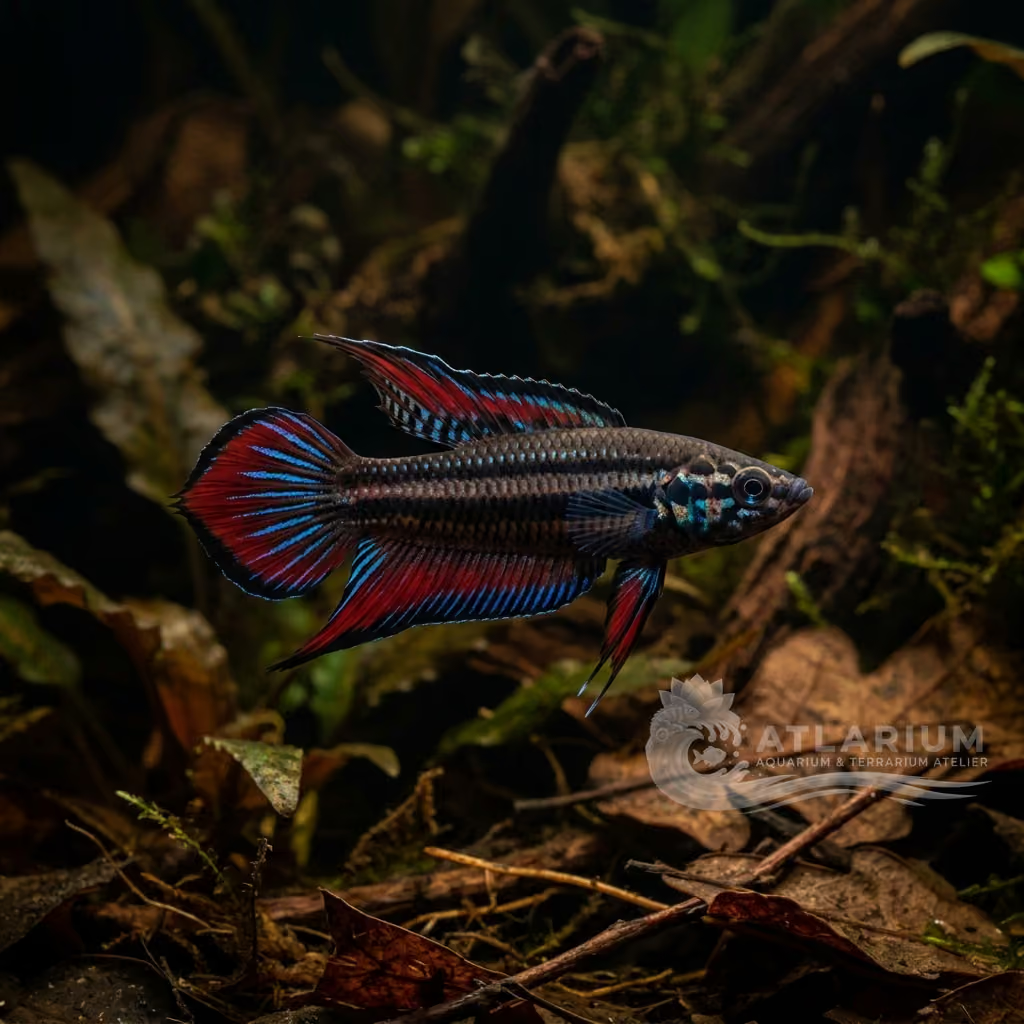
Coloration and Sexual Dimorphism: Gorgeous females: they possess a swollen cherry-red/purple belly, intense red nuances on almost all fins, and anal/caudal fins marked by dazzling black and white streaks and spots. The male is faded gray-brown with vague iridescence (very visually disappointing).

Pflege, Zucht und Mitbewohner
Aquarium Setup: Strictly dedicated nano-tank (60 cm / 24 inches). Fine sand mandatory for digging. Dens under rocks (like volcanic) or roots in abundance. Minimal lighting filtered by floating plants, peat and dry leaves to saturate the water with tannins.
Diet and Feeding: Sifting micropredator. Needs exclusively frozen or live food (Daphnia, Brine Shrimp, Bloodworms). Very reluctant to accept dry food, which in any case must be specific for bottom fish and highly digestible.
Water Quality: Fish for True Experts (The Chemical Nightmare). It is incredibly delicate. Requires pH below 6.0, non-existent hardness (GH 0-2) and constant chemical filtration. Zero nitrates. Most transvestitus die from water stress in the amateur's tank.
Compatibility and Cohabitation: Never in community aquariums. Keep them alone (Species tank) in a pair, or associated (in 100 cm / 40 inches tanks) with non-competitive African blackwater microfish that stay on the surface. Warning: the female can literally kill the male if not tolerated.
Aquarium Breeding: Very difficult. The female digs under a root and attracts the male (if the water chemistry is not equal to that of a tea infusion, they will never lay). The larvae need live infusoria, the pH must remain rigidly acidic (4.5-5.5) so that fungi do not arise.
Risks and Diseases: Killings and Starvation. Besides the extreme bacterial fragility at neutral pH, the female is a ruthless tyrant. If the male refuses to mate or she is too insistent in a tank without inaccessible hiding places, the male will die in a few days from the stress of constant beatings.

Geografische Herkunft und Verbreitung
Exclusive to Lake Mai-Ndombe (formerly Lake Leopold) in the Democratic Republic of Congo. It is an area of very pure stagnant and extremely acidic (pH 4.0) blackwaters, rich in vegetation and floating forests.
Ursprung
Selektive Züchtung und SortenAfrika und Madagaskar

Fischprofil
- Temperament
- Semi-aggressive
- They are extremely territorial and will fiercely defend their chosen cave and surrounding area. This aggression is magnified tenfold during spawning periods. Aside from territorial disputes, they are generally calm and busy fish.
- Diät
- Omnivore
- This species is carnivorous and requires a diet rich in high-quality proteins. Frozen and live foods such as bloodworms, white worms, and brine shrimp are highly recommended. High-quality sinking carnivore pellets can be offered but should not be the sole dietary source.
- Lebenserwartung
- 3-5 years
- Erwachsenengröße
- 6 cm
- Geschlechterverhältnis
- Pair
- They should strictly be kept as a single male-female pair. This species is unique because the female is more colorful and actively courts the male, hence the name 'transvestitus'. Keeping multiple males or unpaired individuals often leads to severe aggression.
- Fütterungsfrequenz
- Twice daily
- Adults should be fed once or twice a day in controlled portions. Ensure that the food sinks to their level quickly before upper-level fish consume it. Any uneaten food should be carefully siphoned out to maintain optimal water quality.
- Bioload
- Low
- The Transvestite Cichlid has a moderate bioload, similar to other small dwarf cichlids. They require an efficient biological filter to handle their waste effectively. Maintaining pristine water conditions is crucial as they are highly sensitive to elevated nitrates.
- Fluss
- Stagnant
- Endemic to the Congo River, they require highly oxygenated water with moderate to strong flow. Good water movement simulates their natural fast-flowing river habitat. Using a strong canister filter paired with an additional powerhead works perfectly.
- Sprungrisiko
- Yes
- While not prone to jumping, a lid is recommended to keep their environment stable. A secure cover prevents dust and outside contaminants from affecting the pristine water they require. It also ensures safety during any sudden frights.
- Reproduktion
- Oviparous
- They are cave brooders and the female plays the dominant role in courtship, showing off her striking belly. The female tends to the eggs within a secluded cave while the male guards the perimeter. Both parents fiercely defend the fry once they emerge from the cave.
- Kompatibilität & Tankkameraden
- With caution
- They are suitable for community tanks alongside robust, fast-swimming mid-to-top water fish. However, they are aggressively territorial towards other bottom dwellers. Avoid keeping them with Corydoras, Plecos, or other dwarf cichlid species.
- Tankfüllstand
- Bottom
- They are bottom-dwelling fish that will rarely venture into the upper parts of the aquarium. They need a soft, sandy substrate for digging and creating breeding pits. Numerous caves and rocky overhangs must be provided to mimic their natural environment.

Wissenschaftliche Modelle & Parameter
FishBase
Zugang zu den offiziellen wissenschaftlichen Daten der Art
FishBase v25.04Daten synchronisiert am: 15.06.2026
- Trophäenniveau
- 3,1 ± 0,4 se
- Belastbarkeit
- Hoch (weniger als 15 Monate)
- Phylogenetische Einzigartigkeit (PD50)
- 0.5039
- Bayessche Längen-Gewichts-Beziehung
- a = 0.00389, b = 3.12
- AnfälligkeitGeringe Anfälligkeit (10 / 100)

Verwandte Arten
Empfehlungen gruppiert nach nahen Verwandten, Auswahl von Begleitern und ähnlicher Betreuung.