Altum Angelfish
Pterophyllum altum
The Altum Angelfish is the unapproachable giant of its genus. With its 40 cm height and characteristic notched snout, it is a dream fish. However, being almost always wild-caught, it is extremely fragile and traumatized. It requires prohibitive conditions: tanks at least 70 cm tall, 30°C temperature, pH around 5.0 (highly acidic water), and zero pollution. It is a voracious predator but with no immune system against domestic bacteria. Without a perfect environment, its majestic fins will literally melt in hours.
Wassertemperatur
27 - 30 °C
pH-Wert
4.5 - 6.5
Wassertyp
Süßwasser
Tankfüllstand
Mitte
Erwachsenengröße
18 cm
Mindesttankvolumen
>= 400 L
Mindestgruppe
>= 5
GH
1 - 5 dGH
KH
0 - 2 dKH
TDS
15 - 95 ppm
Leitfähigkeit
23 - 148 uS/cm
Artbeschreibung
Geographical Origin and Habitat: South America, endemically restricted to the upper Rio Negro basin and the Orinoco River system (including the Inírida and Atabapo tributaries) in Venezuela and Colombia. It is an absolute, obligate inhabitant of genuine "Blackwater" environments: painfully slow-moving rivers winding through the deep Amazonian jungle, heavily stained with dark brown tannins and choked with fallen, tangled tree trunks and overhanging riparian roots.
Taxonomy and Morphology: Universally revered as the "Altum Angelfish" or "Orinoco Altum". It is the undisputed king and the most majestic (and difficult) species of the Pterophyllum genus. It is not just a "big common angelfish"; it features an extreme morphology. The body is laterally compressed like a razor blade but incredibly extended vertically. It possesses a defining, sharp "notch" (saddle-like depression) right above the snout before the wildly towering dorsal fin begins. The dorsal and anal fins are sickle-shaped and monstrously long. A fully grown, imposing adult can easily surpass 35 cm (14 inches) in *height* (from dorsal tip to anal tip).
Social Behavior: Extraordinarily elegant and regal, yet incredibly nervous, skittish, and shy. The Altum moves with a hypnotic, hovering slowness among submerged roots. They are highly gregarious schooling fish that naturally live in large, hierarchical groups. They absolutely cannot tolerate sudden movements, loud noises, or boisterous, fast-swimming tankmates. If panicked, they will blindly rocket themselves into the aquarium glass.
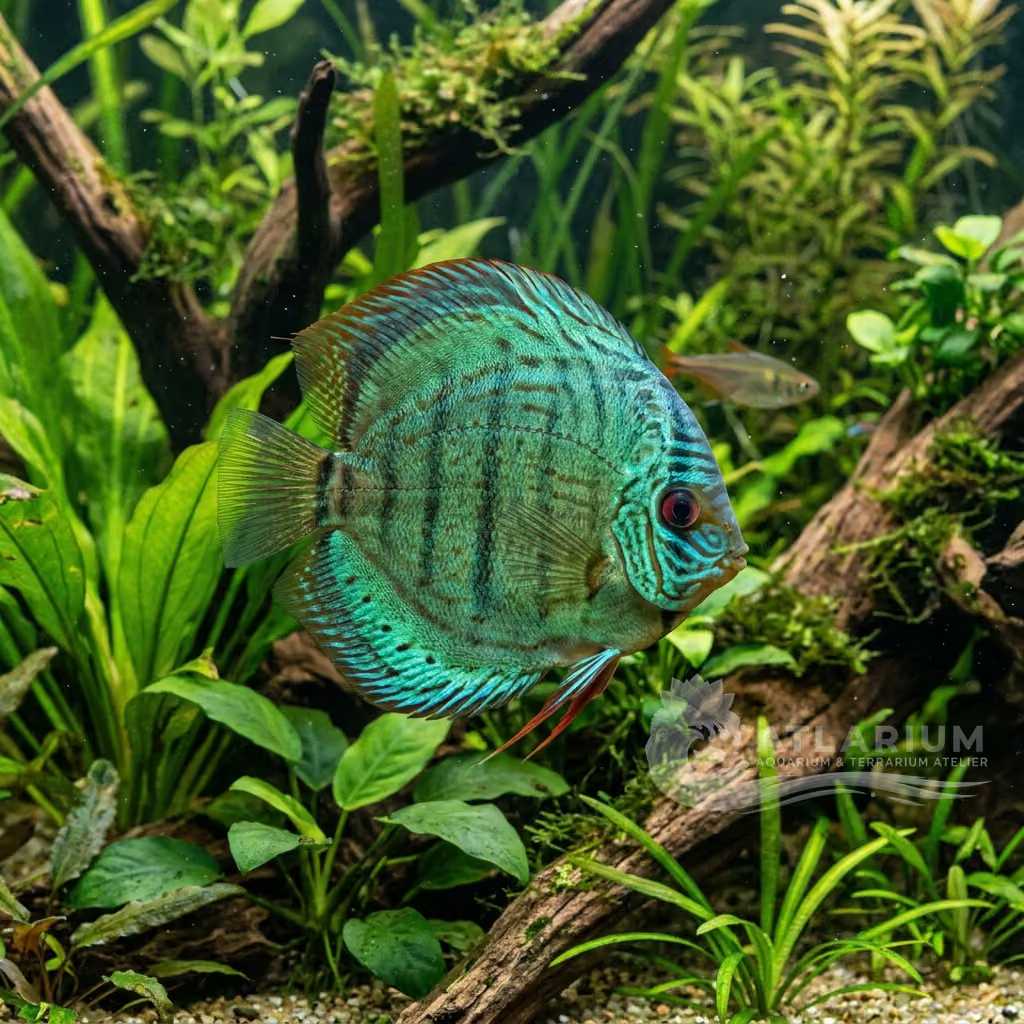
Coloration and Sexual Dimorphism: Majestic wild elegance. The background color is a brilliant, reflective silver heavily suffused with olive-green or warm bronze. The body is slashed by 3 (or 4) incredibly deep, broad, and pitch-black vertical bars (much thicker and darker than a common angel's). In the pale spaces between the thick black bars, faint grayish or reddish vertical striae (stripes) are usually visible. Under proper lighting, iridescent gold scales and sea-green or blue highlights flash on the flanks and the massive fins. **No Dimorphism:** Males and females are virtually identical until minutes before spawning (the female's breeding tube is thick and blunt; the male's is thin and pointed).
Pflege, Zucht und Mitbewohner
Aquarium Setup: Keeping adult Altums is the pinnacle of the freshwater hobby, rivaling Wild Discus. They demand colossal aquariums: *the vertical height of the tank* is the single most critical parameter. Absolute minimum is 60 cm (24 inches) of water column height (70-80 cm / 28-32 inches is much better), with a length of at least 150 cm (5 feet) (125+ Gallons for a small group). The layout must perfectly simulate the Rio Negro: towering, arching "Manzanita" or bogwood branches hanging down from the surface, incredibly dim, tannin-stained lighting heavily shaded by floating plants, and a deep layer of Indian Almond (Catappa) leaves over fine white sand.
Diet and Feeding: Ambush micro-predators. Highly demanding. Altums (especially Wild Caught specimens) will often categorically refuse dry flakes or freeze-dried food. They MUST be fed high-end, extremely clean live or frozen foods in bite-sized pieces (due to their relatively small mouths): live Glassworms (mosquito larvae), Brine Shrimp (Artemia), Mysis, and occasionally high-quality bloodworms (beware of parasites). Once acclimated, some may accept premium slow-sinking granules.
Water Quality: The parameter where 90% of hobbyists fail miserably. The Altum demands extreme Blackwater conditions. Brutally warm water (28-30°C / 82-86°F), but most importantly, water of shocking purity and softness. Hardness must be almost non-existent (GH 1-4, KH 0-2) and highly acidic (pH ranging from 4.5 to 6.0). The Altum's immune system is supported solely by humic acids in the water: if placed in standard hard tap water or water with any nitrates, their magnificent fins will literally melt and rot away within 48 hours (fulminant Fin Rot).
Compatibility and Cohabitation: They must be the absolute, uncontested kings of the tank, housed in a species-specific group of at least 5 to 7 individuals. The only acceptable tankmates are slow, heat-loving South American tetras (Cardinal Tetras, Rummy-noses), peaceful Corydoras (like *C. sterbai* that tolerate heat), or Loricariids (Plecos). NEVER mix them with other large cichlids, darting fish, fin-nippers (Tiger Barbs, Serpae Tetras), or boisterous feeders. A frightened Altum will cower in a dark corner, stop eating, and slowly starve to death.
Aquarium Breeding: One of the most epic and legendary challenges in the hobby, considered by many the ultimate "Holy Grail". Once a pair bonds, they meticulously clean a massive, vertical leaf (like Amazon Swords) or an angled submerged root. They lay up to 500 eggs with surgical precision. As wild or F1 fish, their parental instincts are immense; they ferociously defend the clutch by flexing their bodies. The true nightmare is keeping the water bacterially pure enough (at pH 5.0) to prevent the eggs from instantly fungusing over.
Risks and Diseases: 1. The Terror of Cramped Spaces: in tanks shorter than 24 inches high, an adult Altum's fins will permanently curl, stunt, and bend, ruining the fish's health and beauty. 2. Fulminant Fin Melt: their massive fins act as water quality sensors; the slightest ammonia spike, nitrate buildup, or lack of tannins causes instant, deadly fin rot. 3. Blindness by Darting: highly skittish, they are notorious for suddenly darting in terror from shadows outside the tank, smashing their faces into the glass, resulting in broken jaws, severed spines, or instant death.
Geografische Herkunft und Verbreitung
South America, endemically restricted to the upper Rio Negro basin and the Orinoco River system (including the Inírida and Atabapo tributaries) in Venezuela and Colombia. It is an absolute, obligate inhabitant of genuine "Blackwater" environments: painfully slow-moving rivers winding through the deep Amazonian jungle, heavily stained with dark brown tannins and choked with fallen, tangled tree trunks and overhanging riparian roots.
Ursprung
Selektive Züchtung und SortenAmazonas, Orinoco und Guayana
Fischprofil
- Temperament
- Territorial
- They maintain a relaxed, graceful temperament. They approach the aquarium glass eagerly. Adequate cover prevents any skittish behavior.
- Diät
- Carnivore
- This species needs a varied omnivorous diet. High-quality pellets are essential for health. Supplement them with frozen bloodworms.
- Lebenserwartung
- 10-15 years
- Erwachsenengröße
- 18 cm
- Geschlechterverhältnis
- Pair
- Keeping them in confirmed pairs is ideal. This reduces aggressive male territoriality. Hiding spots allow safe retreats for females.
- Fütterungsfrequenz
- Twice daily
- Adults need careful feeding twice daily. Proper portioning prevents uneaten food from rotting. Juveniles require more frequent meals.
- Bioload
- Medium to High
- The Pterophyllum altum produces a substantial bioload. Frequent water changes are strictly required. A spacious tank dilutes waste effectively.
- Fluss
- Stagnant
- They strongly prefer a gentle water flow. Diffuse filter outputs to avoid strong currents. Heavy flow causes them chronic stress.
- Sprungrisiko
- Yes
- They rarely jump unless deeply startled. A tight lid is still absolutely mandatory. Floating plants reduce their flight response.
- Reproduktion
- Oviparous
- Breeding this species is exceptionally difficult. They lay adhesive eggs on flat surfaces. Parents fiercely guard the resulting fry.
- Kompatibilität & Tankkameraden
- Community
- They are generally peaceful with similar fish. Avoid housing them with tiny prey. Visual barriers reduce occasional territoriality.
- Tankfüllstand
- Middle
- They primarily occupy the middle water levels. They actively navigate around vertical driftwood. Open swimming space should be balanced.

Wissenschaftliche Modelle & Parameter
FishBase
Zugang zu den offiziellen wissenschaftlichen Daten der Art
FishBase v25.04Daten synchronisiert am: 15.06.2026
- Trophäenniveau
- 3,3 ± 0,4 se
- Belastbarkeit
- Hoch (weniger als 15 Monate)
- Phylogenetische Einzigartigkeit (PD50)
- 0.625
- Bayessche Längen-Gewichts-Beziehung
- a = 0.02692, b = 3.02
- AnfälligkeitGeringe Anfälligkeit (10 / 100)