Atahualpa Dwarf Cichlid
Apistogramma atahualpa
Native to northern Peru, specifically the Rio Nanay basin. It inhabits slow-moving forest streams, small tributaries, and flooded areas with highly ac.
Wassertemperatur
23 - 29 °C
pH-Wert
5 - 6.5
Wassertyp
Süßwasser
Tankfüllstand
Unten
Erwachsenengröße
7 cm
Mindesttankvolumen
>= 70 L
Mindestgruppe
>= 2
GH
1 - 5 dGH
KH
0 - 3 dKH
TDS
15 - 105 ppm
Leitfähigkeit
23 - 164 uS/cm

Artbeschreibung
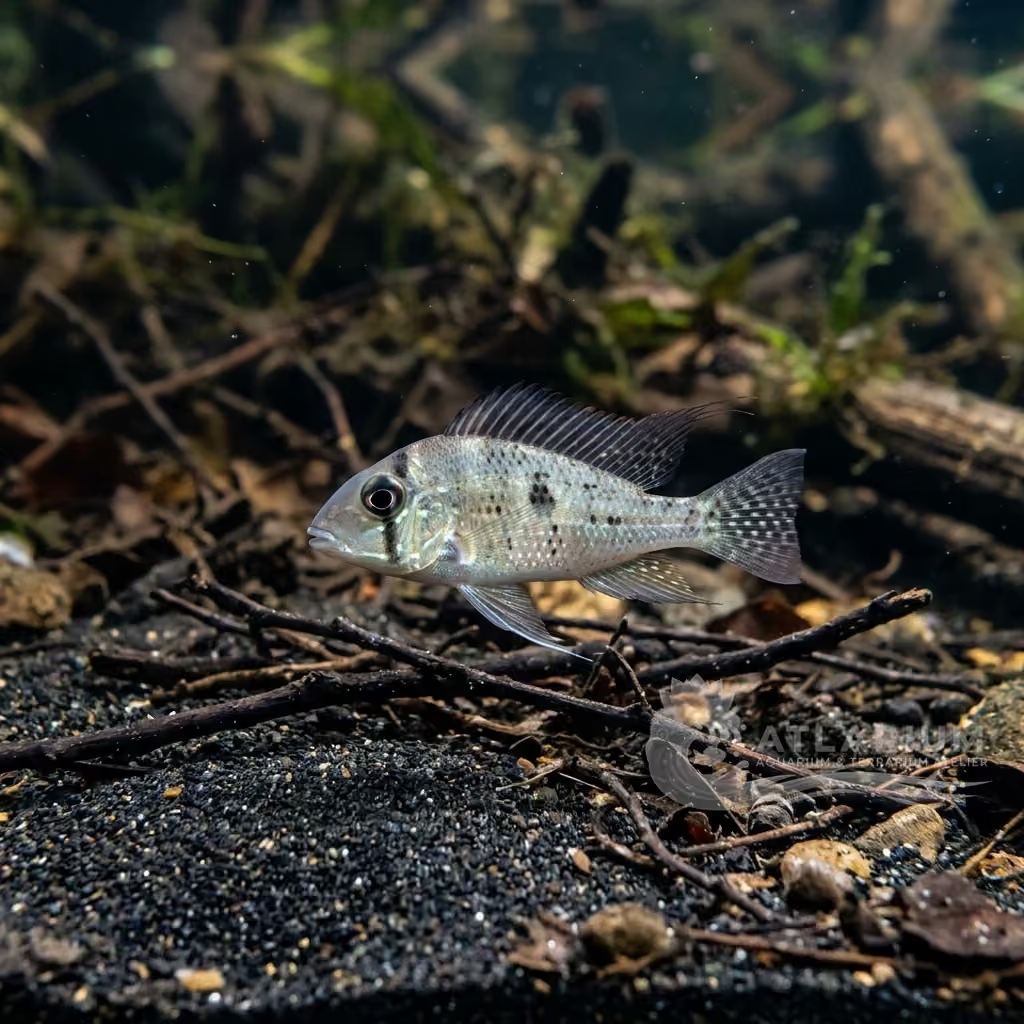
Geographical Origin and Habitat: Native to northern Peru, specifically the Rio Nanay basin. It inhabits slow-moving forest streams, small tributaries, and flooded areas with highly acidic, blackwater conditions and sandy beds covered in leaf litter.
Taxonomy and Morphology: A member of the Cichlidae family, this dwarf cichlid features a robust body structure with a large head. Males reach a maximum length of 7.0 cm, while females are smaller, growing up to 5.0 cm.
Social Behavior: Territorially aggressive, especially during breeding. Males defend territories against rivals. They are best kept as a compatible pair or in a harem consisting of one male and several females.
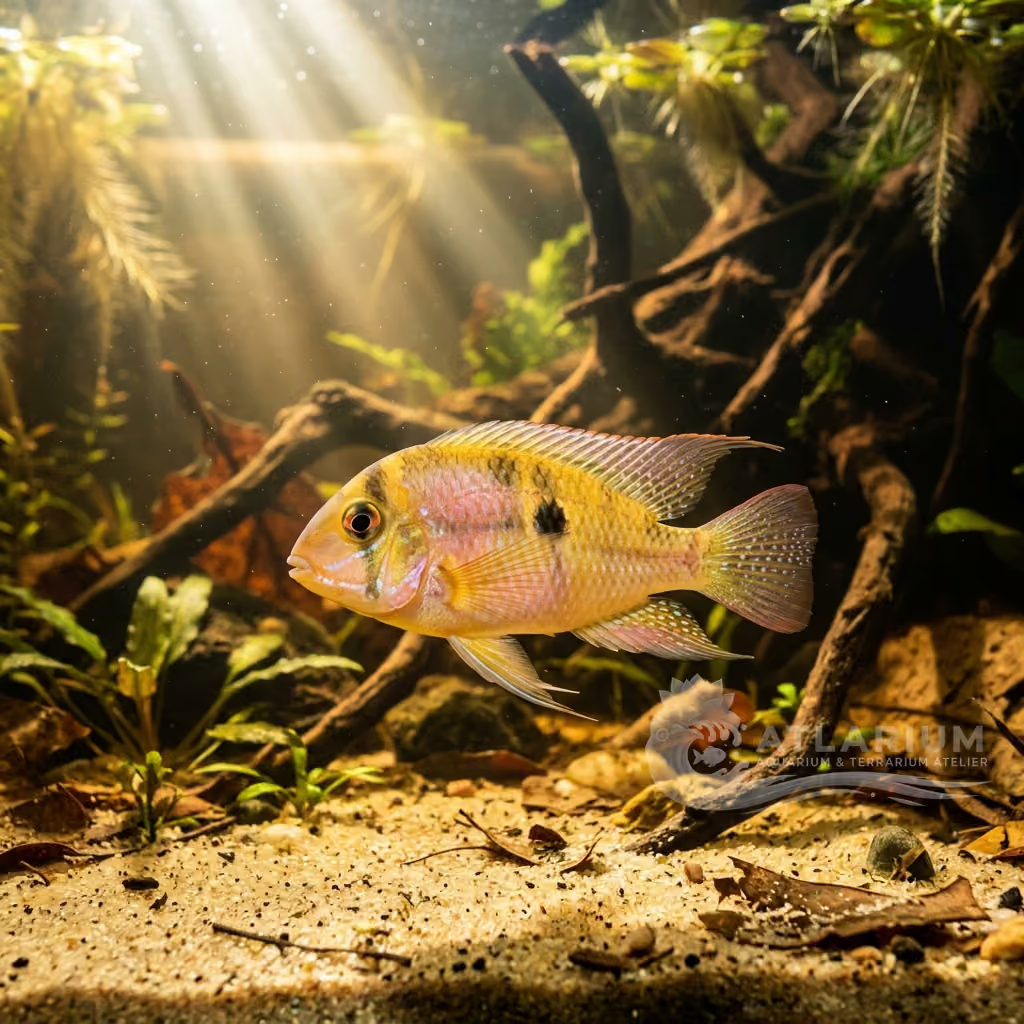
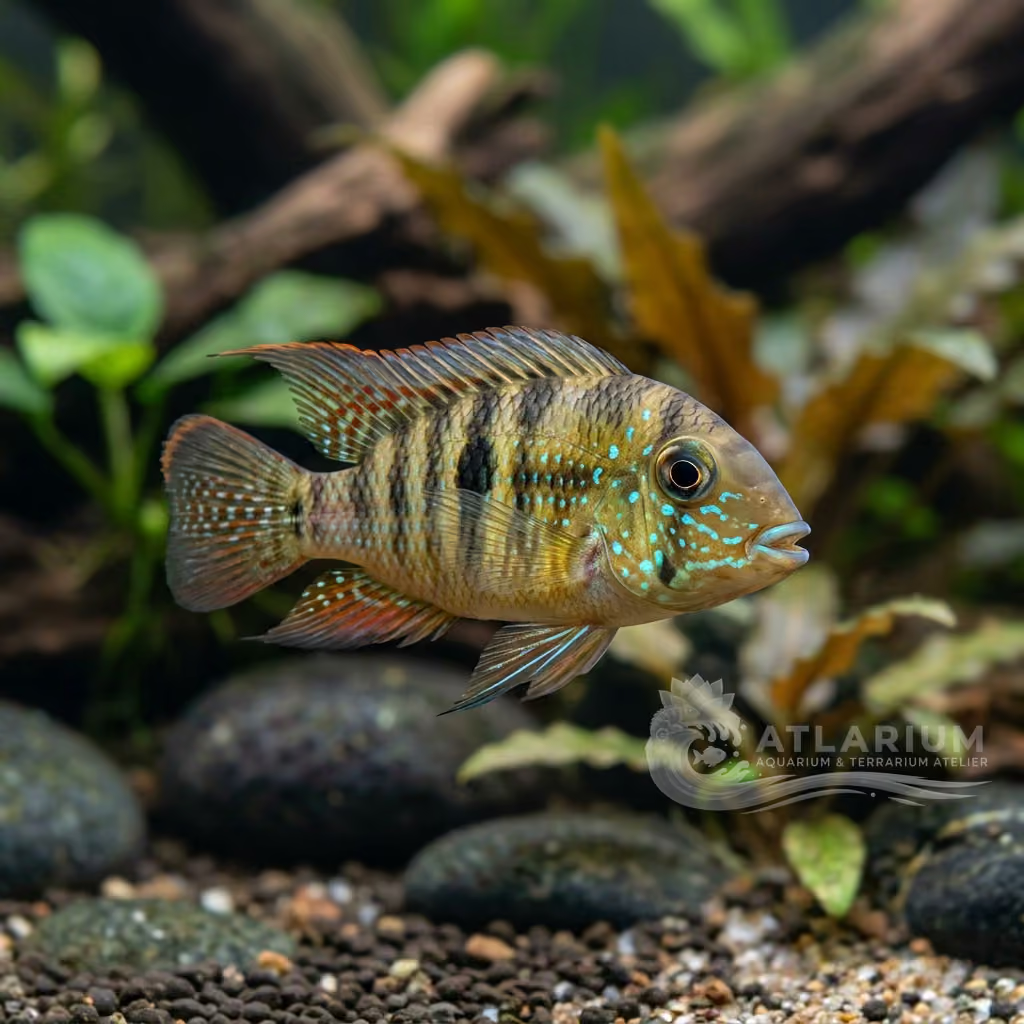
Coloration and Sexual Dimorphism: Males exhibit a grayish-blue to yellowish body color with extended fin filaments. Females are smaller, less colorful, but turn bright yellow with distinct black markings when breeding.

Pflege, Zucht und Mitbewohner
Aquarium Setup: A tank of at least 70 liters is required with a soft sandy substrate. Provide numerous caves (e.g. coconut shells or ceramic pots) for spawning, along with driftwoods and dense plantings to block lines of sight.
Diet and Feeding: Primarily carnivorous. Prefers live or frozen foods such as brine shrimp, daphnia, and bloodworms. They can be reluctant to accept dry foods initially.
Water Quality: Demanding. Requires soft, acidic water: pH 5.0-6.5, GH under 5 dGH, and stable temperatures between 23°C and 29°C. Use peat or leaf litter to maintain appropriate water chemistry.
Compatibility and Cohabitation: Can be housed with small, peaceful dither fish like tetras. Avoid other territorial bottom dwellers (like other cichlids) to prevent aggressive territorial disputes.
Aquarium Breeding: Cave spawner. The female takes sole charge of egg care inside the cave and aggressively defends the fry. Feed the fry with freshly hatched brine shrimp nauplii.
Risks and Diseases: Highly sensitive to poor water conditions and nitrogenous waste. Prone to intestinal parasites. Frequent, gentle water changes are mandatory.

Geografische Herkunft und Verbreitung
Native to northern Peru, specifically the Rio Nanay basin. It inhabits slow-moving forest streams, small tributaries, and flooded areas with highly acidic, blackwater conditions and sandy beds covered in leaf litter.
Ursprung
Extra-Amazonas-Südamerika

Fischprofil
- Temperament
- Aggressive
- They are relatively shy and reclusive, requiring a heavily decorated tank to feel secure. While peaceful to upper-water species, they fiercely defend their bottom territories from conspecifics. They exhibit fascinating, complex behaviors, particularly during courtship and brood care.
- Diät
- Carnivore
- Their natural diet consists of small benthic invertebrates and insect larvae sifted from the substrate. In the aquarium, they require a varied diet of high-quality frozen or live foods, such as bloodworms, daphnia, and brine shrimp. They may slowly learn to accept specialized sinking carnivore pellets, but live foods are best.
- Lebenserwartung
- 2-4 years
- Erwachsenengröße
- 7 cm
- Geschlechterverhältnis
- Harem
- They can be kept as a bonded pair or in a harem of one male to multiple females, provided the tank has a large footprint. Males are intensely intolerant of rival males and will engage in vicious combat if housed together. In a harem, each female requires her own distinct territory to prevent female-female aggression.
- Fütterungsfrequenz
- Twice daily
- Feeding them one to two small meals a day is appropriate for their metabolic needs. It is crucial to ensure that enough food reaches the bottom without being intercepted by faster tank mates. Careful observation during feeding prevents them from being outcompeted.
- Bioload
- Low
- Like most dwarf cichlids, they produce a minimal bioload that is easily managed in a mature aquarium. However, they are highly intolerant of poor water quality and require pristine conditions to thrive. A strict regimen of regular partial water changes and vacuuming is essential.
- Fluss
- Strong
- They hail from sluggish streams in the Amazon basin and require a gentle water flow. Excessive current will force them to hide constantly and causes significant physiological stress. Utilizing a sponge filter or carefully directing filter outputs ensures the calm environment they need.
- Sprungrisiko
- No
- Reproduktion
- Oviparous
- They are secretive cave spawners, with the female taking primary responsibility for guarding the eggs and fry. The male defends a larger overarching territory containing the female's cave. Successful spawning requires soft, acidic water and an abundance of small, enclosed caves or coconut shells.
- Kompatibilität & Tankkameraden
- Aggressive
- They are peaceful toward dither fish like small tetras and pencilfish, which help them feel secure. They can, however, be aggressively territorial toward other bottom-dwellers, especially other dwarf cichlids. Housing them with boisterous or highly aggressive mid-water fish should be completely avoided.
- Tankfüllstand
- Bottom
- They are strictly bottom-dwelling fish that spend their time navigating the substrate, driftwood, and leaf litter. They rely on complex visual barriers to establish territories and feel safe. They will rarely, if ever, swim in the upper half of the aquarium.

Wissenschaftliche Modelle & Parameter
FishBase
Zugang zu den offiziellen wissenschaftlichen Daten der Art
FishBase v25.04Daten synchronisiert am: 15.06.2026
- Trophäenniveau
- 3,3 ± 0,4 se
- Belastbarkeit
- Mittel (1,4 - 4,4 Jahre)
- Phylogenetische Einzigartigkeit (PD50)
- 0.5
- Bayessche Längen-Gewichts-Beziehung
- a = 0.0182, b = 2.99
- AnfälligkeitGeringe Anfälligkeit (10 / 100)

Verwandte Arten
Empfehlungen gruppiert nach nahen Verwandten, Auswahl von Begleitern und ähnlicher Betreuung.