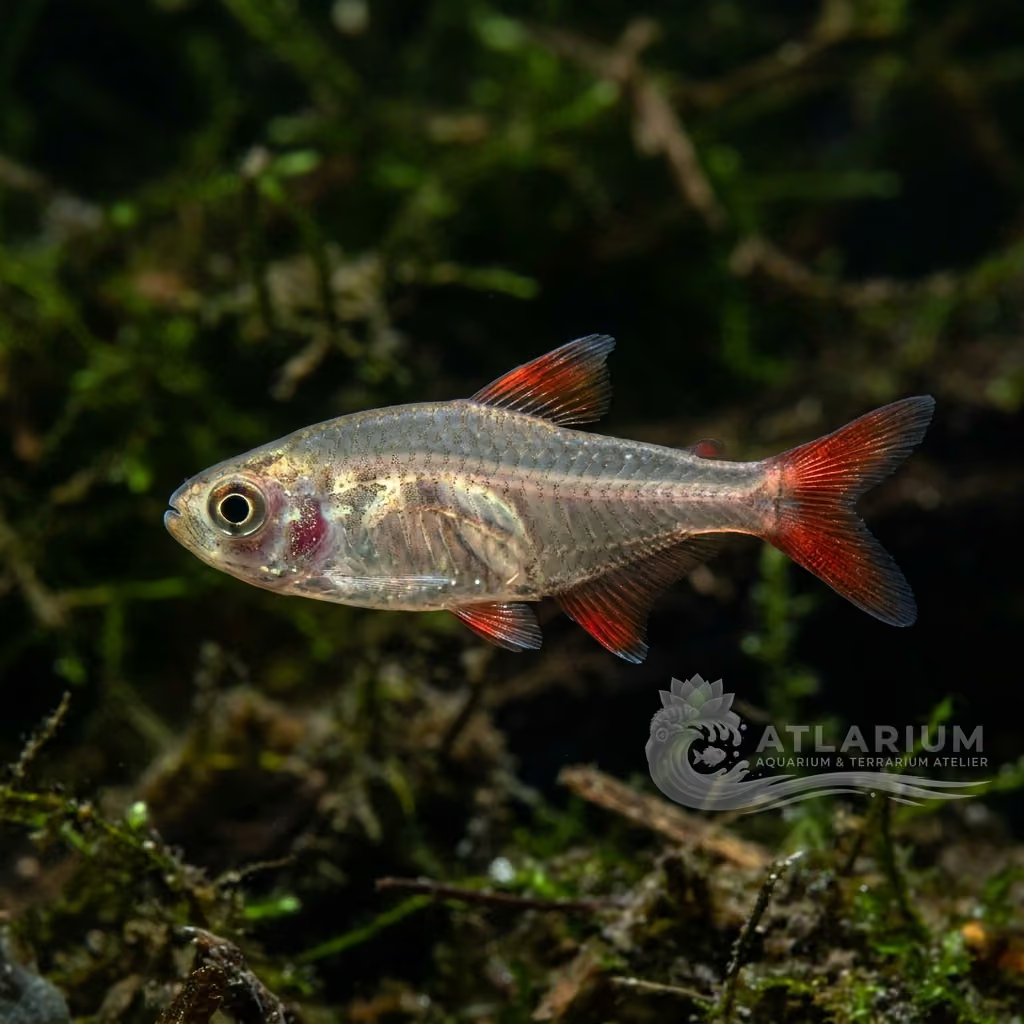
Apistogramma paucisquamis
Apistogramma paucisquamis
A rare and delicate dwarf cichlid from the Rio Negro: slender body with dual lateral bands and spectacular colorations (white and orange morphs). Member of the bitaeniata group. Requires very soft, acidic water (Rio Negro blackwater) — the critical parameter. Very high sensitivity to water quality: nitrates below 25 mg/L mandatory. The female chooses the male. Cave spawner with maternal care. Challenging breeding. For experienced Apistogramma keepers.
Wassertemperatur
24 - 30 °C
pH-Wert
4 - 5.5
Wassertyp
Süßwasser
Tankfüllstand
Unten und in der Mitte
Erwachsenengröße
6 cm
Mindesttankvolumen
>= 60 L
Mindestgruppe
>= 2
GH
0 - 3 dGH
KH
1 - 2 dKH
TDS
10 - 65 ppm
Leitfähigkeit
16 - 102 uS/cm

Artbeschreibung
Geographical Origin and Habitat: Typical of the hydrographic basins of the Rio Negro and Rio Japurá in Brazil. It is an obligate inhabitant of extreme "Blackwater" systems, living in flood pools with bottoms of dry leaves and a high presence of decaying branches.
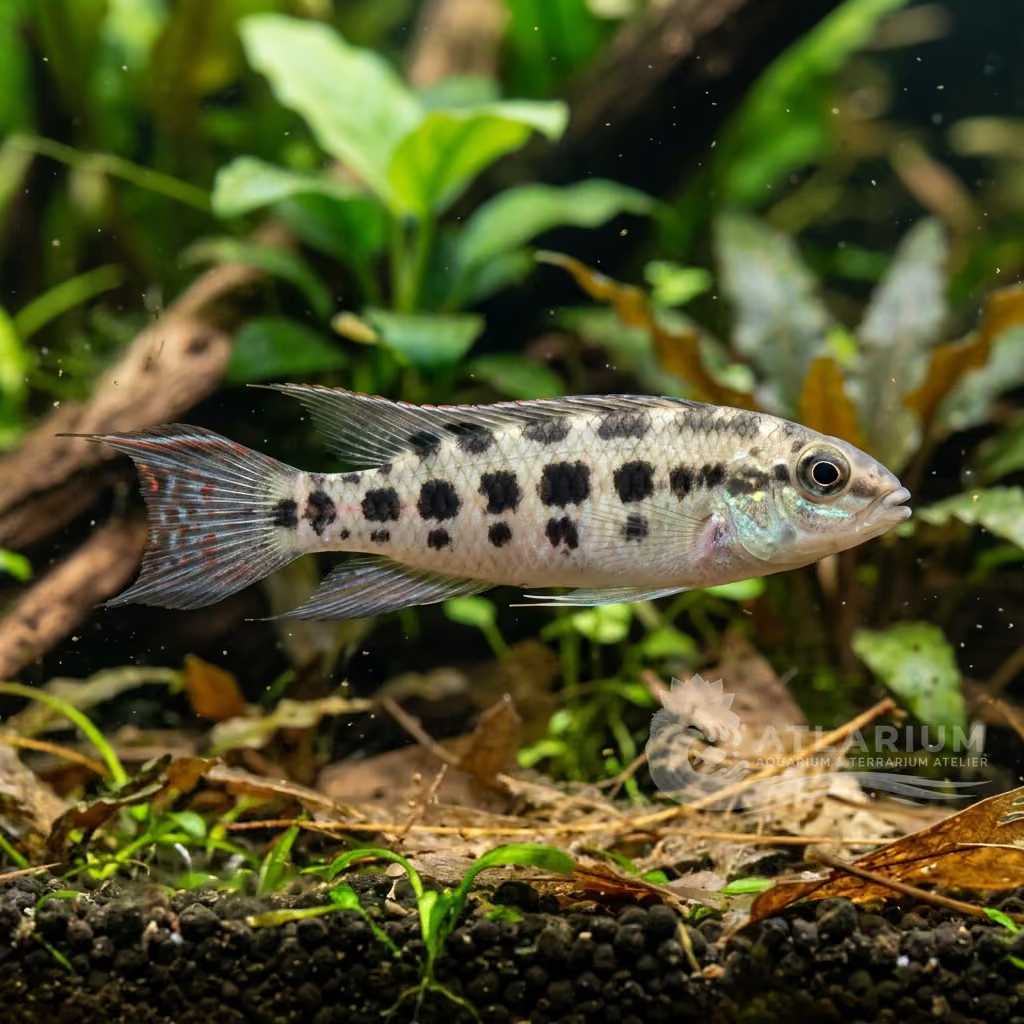
Taxonomy and Morphology: Paucisquamis Dwarf Cichlid (Apistogramma paucisquamis). Owes its name to the peculiar lack (pauci) of scales (squamis) on the cheek, which differentiates it from most members of the family. Particularly thin body.
Social Behavior: Moderately territorial but extremely shy in overcrowded or bright tanks. The male holds the harem if he has a meter of shoreline for himself. Females intolerant of each other if their respective dens are in the line of sight.
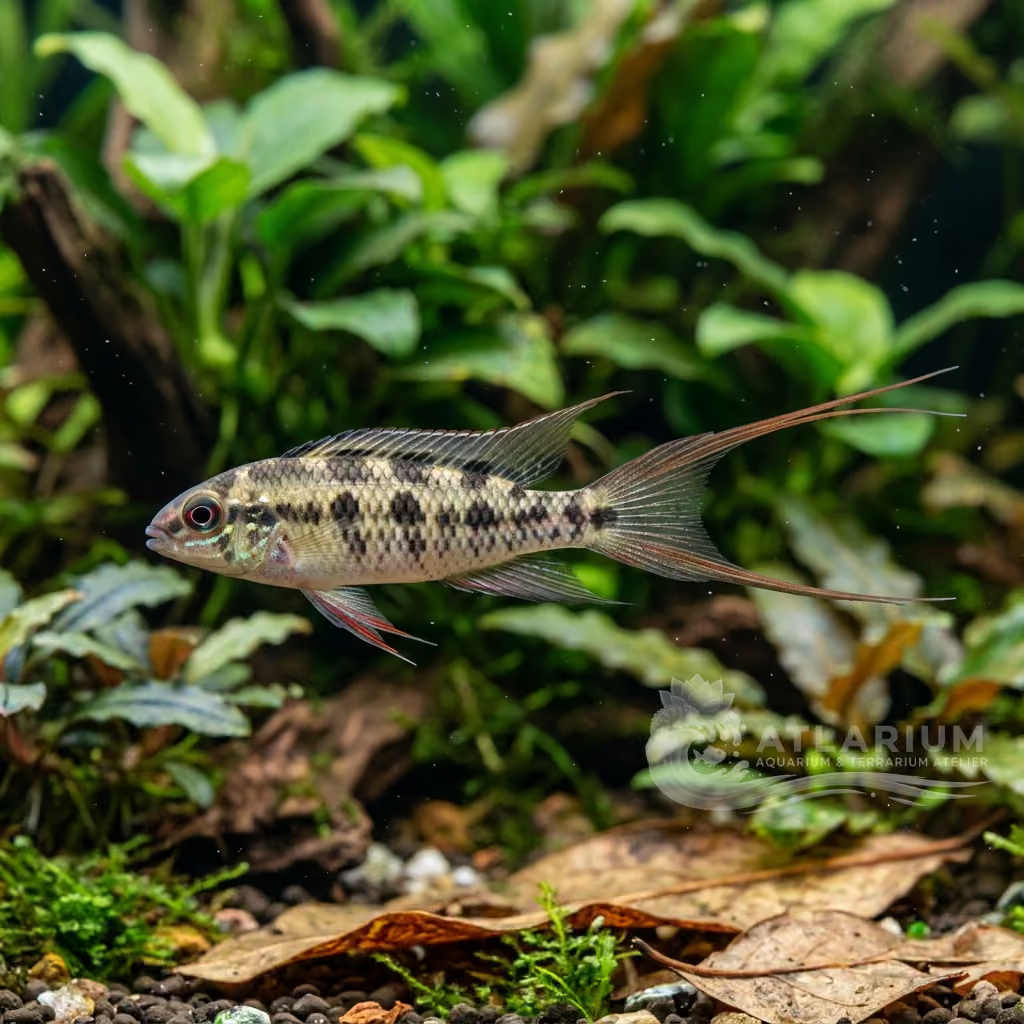
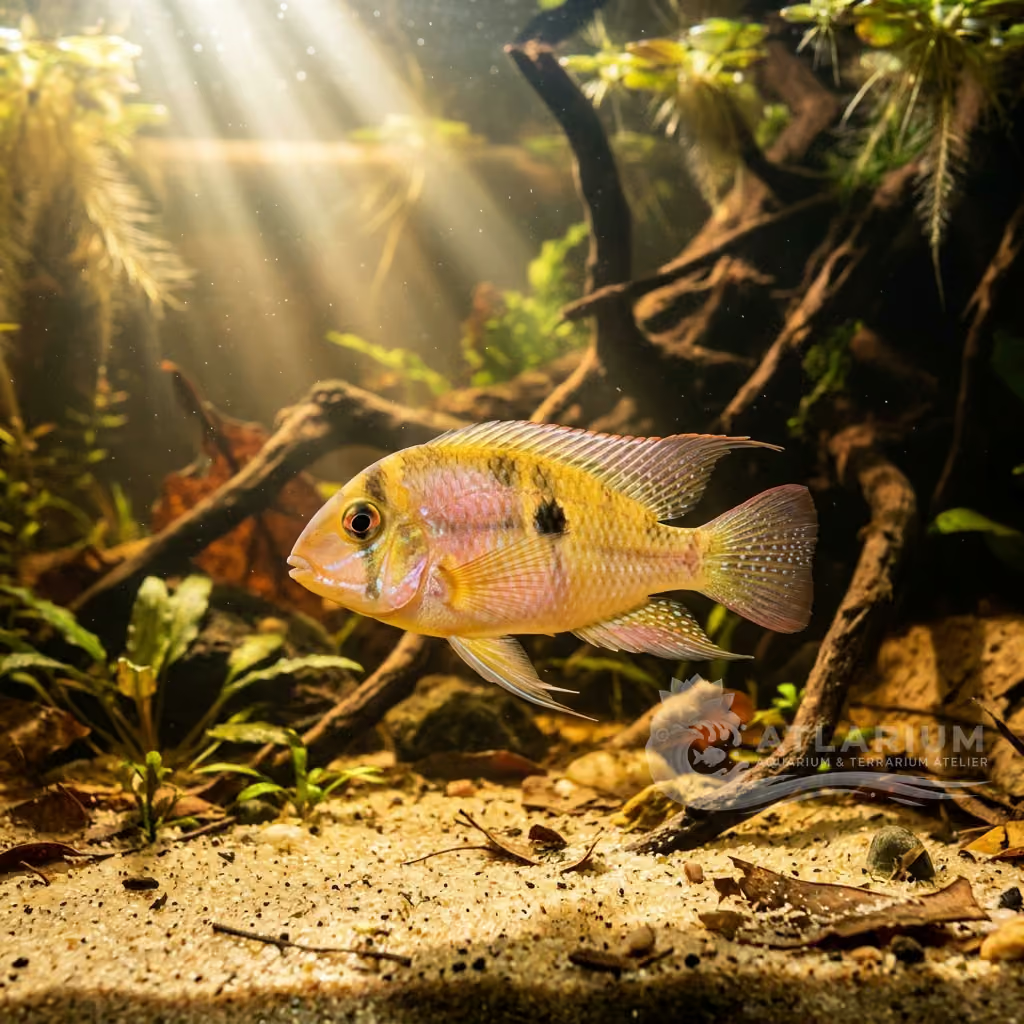
Coloration and Sexual Dimorphism: Notable polymorphism. Males feature two distinct dark lateral stripes, orange ventral shades and a round caudal fin with a finely "reticulated" pattern. Females are small, and flaunt a canary yellow/ocher color during reproduction.

Pflege, Zucht und Mitbewohner
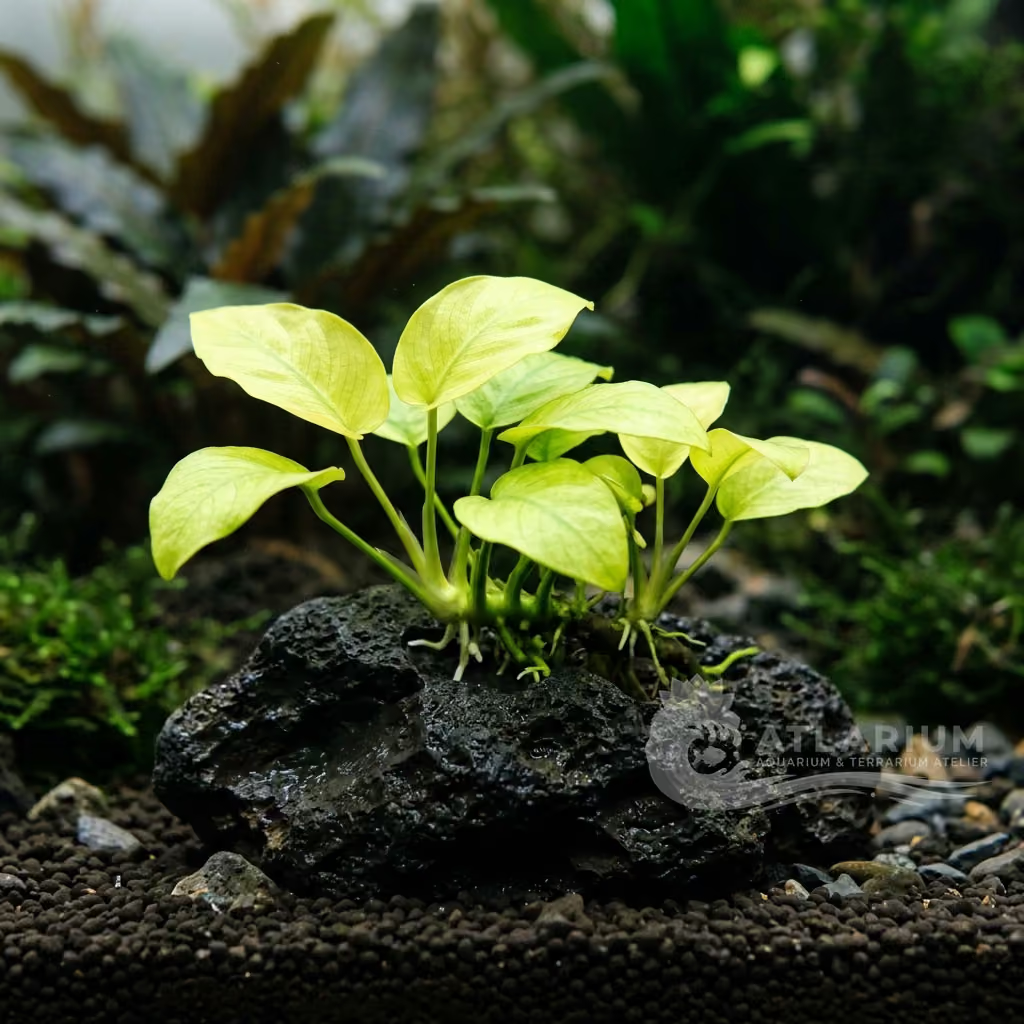
Aquarium Setup: Specialized tank (Blackwater Biotope). A lot of peat in the filter, very low lights shielded by Pistia or Limnobium. A litter of dead leaves (catappa, oak) is essential to develop the micro-fauna they feed on and to simulate their natural refuge.
Diet and Feeding: Hunter of benthic micro-invertebrates. Often refuse dry commercial preparations. Daily administration of live or frozen brine shrimp nauplii, microworms and moina is required.
Water Quality: Very delicate. Needs very acidic water (pH < 5.5) and practically devoid of carbonate and general hardness (KH 0, GH 1). An accumulation of nitrogenous pollutants leads to death from septicemia in 48 hours.
Compatibility and Cohabitation: Must be kept alone or, at most, with a tiny school of Paracheirodon innesi (Neon tetras) or Nannostomus, which encourage the fish to come out into the open. Never associate it with other cichlids, even of the same size.
Aquarium Breeding: Complicated. Hatching occurs only at pH below 5.0. The eggs (laid on leaves or in tiny cavities) are cared for only by the female, while the male patrols the borders. Larvae highly sensitive to bacteria.
Risks and Diseases: Vulnerable species (Experts Only). Its gill mucosa is irremediably "burned" by tap water (chlorine or neutral/basic pH), causing suffocation due to excess secretion of protective mucus.

Geografische Herkunft und Verbreitung
Typical of the hydrographic basins of the Rio Negro and Rio Japurá in Brazil. It is an obligate inhabitant of extreme "Blackwater" systems, living in flood pools with bottoms of dry leaves and a high presence of decaying branches.
Ursprung
Selektive Züchtung und SortenAmazonas, Orinoco und Guayana

Fischprofil
- Temperament
- Semi-aggressive
- This species exhibits a generally peaceful but naturally territorial temperament, typical of dwarf cichlids. Outside of breeding periods, they are relatively shy and prefer to remain hidden amongst caves and plants. However, during the spawning season, both males and females become highly protective of their territories and will aggressively defend their chosen sites. To minimize conflict, the aquarium must be structured with visual barriers, such as driftwood and rocks, to define clear boundaries.
- Diät
- Omnivore
- Apistogramma paucisquamis is primarily a micro-predator that feeds on small invertebrates, insect larvae, and organic particles in the wild. In the aquarium, they should be offered a diet rich in live and frozen foods, such as baby brine shrimp, Daphnia, Cyclops, and bloodworms. While some individuals can be trained to accept high-quality dry pellets or flakes, their primary nutrition should come from meaty, moisture-rich foods. Feeding a varied diet is crucial for enhancing their coloration, vitality, and encouraging successful breeding behaviors.
- Lebenserwartung
- 3-5 years
- Erwachsenengröße
- 6 cm
- Geschlechterverhältnis
- Harem
- In the aquarium, Apistogramma paucisquamis can be successfully kept in a well-matched pair or in a harem consisting of one male and multiple females. Keeping them in a harem is often preferred as it helps distribute the male's attention and reduces potential aggression toward a single female. The aquarium layout must include multiple distinct caves and territorial barriers to allow each female to claim her own breeding site. If keeping multiple males, a very large tank with clear territorial boundaries is required to prevent serious fighting.
- Fütterungsfrequenz
- 2-3 times daily
- It is recommended to feed Apistogramma paucisquamis in small portions once or twice a day. Feeding them multiple smaller meals rather than one large portion helps replicate their natural foraging behavior and prevents water quality degradation. Care should be taken to ensure that all food reaches the bottom where these fish dwell, as they may be outcompeted by faster surface-dwelling tankmates. Any uneaten food should be promptly siphoned out to prevent organic waste from building up and spoiling the water parameters.
- Bioload
- Low to Medium
- Apistogramma paucisquamis is a small dwarf cichlid that produces a relatively low biological waste load due to its small physical size. However, because they are native to pristine blackwater habitats, they are exceptionally sensitive to the accumulation of organic compounds like nitrates and ammonia. Efficient biological filtration combined with regular, small water changes is essential to maintain the necessary high water quality. Over-filtering with a gentle sponge or peat-filtered setup is highly recommended to keep parameters stable without creating excessive current.
- Fluss
- Strong
- This species is native to slow-moving rivers, flooded forest floors, and quiet blackwater creeks where the water flow is very minimal. Consequently, they prefer weak or gentle water circulation in the aquarium, as strong currents can easily stress and exhaust them. A high-flow environment will force them to expend too much energy swimming and will discourage natural behaviors. Utilizing sponge filters, air-driven filtration, or adjusting filter outputs to create diffuse, gentle currents is ideal for keeping them comfortable.
- Sprungrisiko
- Yes
- Although Apistogramma paucisquamis is not widely known as an active surface jumper, they are easily startled and can leap out of the tank when frightened. Sudden movements outside the tank, aggressive territorial chases, or sudden light changes can cause them to dart upwards in panic. To prevent tragic accidents, a secure, tight-fitting lid or cover slides are absolutely necessary. Additionally, providing ample cover such as floating plants and dense vegetation helps them feel secure and reduces the likelihood of panic-induced jumping.
- Reproduktion
- Oviparous
- Apistogramma paucisquamis is a cave-spawning dwarf cichlid that displays complex brood care behaviors. Breeding this species in captivity can be quite challenging, as it requires very soft, acidic water (pH below 5.5) and stable, pristine parameters to trigger spawning. The female will typically deposit her eggs on the ceiling of a small cave or crevice and take sole responsibility for guarding them. After the eggs hatch, the female continues to protect the free-swimming fry, guiding them around the substrate, while the male defends the outer territory.
- Kompatibilität & Tankkameraden
- Community
- Apistogramma paucisquamis is best housed with small, peaceful dither fish that occupy the upper levels of the aquarium. Excellent tankmates include quiet characins, pencilfish, and small rasboras, which help reduce their shyness without competing for space. They should not be kept with large, aggressive, or overly active fish that might intimidate them or outcompete them for food. Bottom-dwellers like Corydoras should be monitored closely, as they may repeatedly wander into the Apistogramma territories and trigger defensive behavior.
- Tankfüllstand
- Middle/Bottom
- This species is primarily a bottom-dwelling fish that spends the vast majority of its time near the substrate and lower levels of the aquarium. They actively forage among leaf litter, driftwood, and low-growing aquatic plants, searching for small organisms. While they may occasionally venture into the middle water column during feeding times, they quickly return to the safety of the bottom cover. Consequently, when setting up an aquarium for this species, the floor footprint and substrate quality are far more critical than the height of the tank.

Wissenschaftliche Modelle & Parameter
FishBase
Zugang zu den offiziellen wissenschaftlichen Daten der Art
FishBase v25.04Daten synchronisiert am: 15.06.2026
- Trophäenniveau
- 3,2 ± 0,4 se
- Belastbarkeit
- Mittel (1,4 - 4,4 Jahre)
- Phylogenetische Einzigartigkeit (PD50)
- 0.5
- Bayessche Längen-Gewichts-Beziehung
- a = 0.0182, b = 2.99
- AnfälligkeitGeringe Anfälligkeit (10 / 100)

Verwandte Arten
Empfehlungen gruppiert nach nahen Verwandten, Auswahl von Begleitern und ähnlicher Betreuung.