Wine-red Betta
Betta coccina
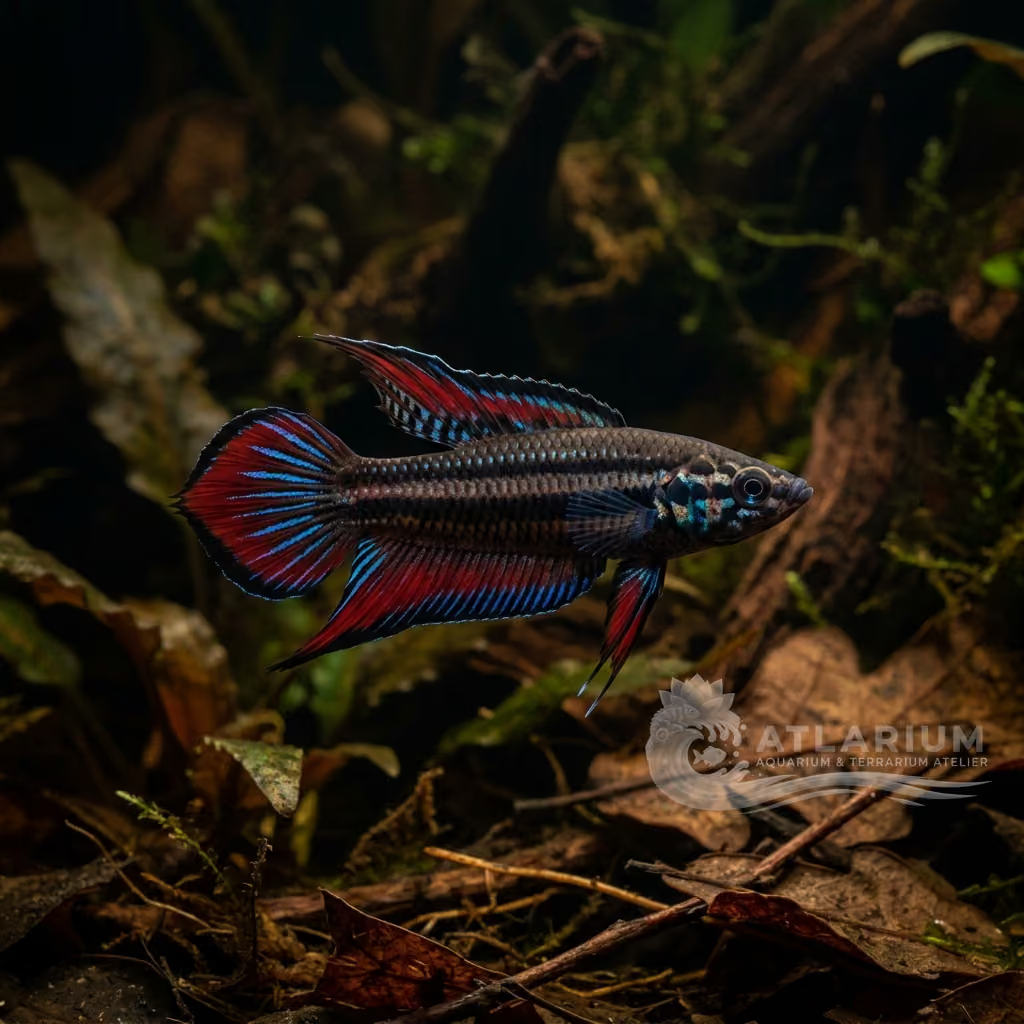
The 'Wine-red Betta' (5 cm). Tiny and delicate labyrinth bubble-nest builder, typical of the extreme black and acidic peat swamps. Uniform crimson red coloration with a bright blue eye in the center of the flank in alpha males. Requires extremely specialized care and water parameters.
Wassertemperatur
24 - 28 °C
pH-Wert
4 - 6
Wassertyp
Süßwasser
Tankfüllstand
Alle Ebenen
Erwachsenengröße
5 cm
Mindesttankvolumen
>= 60 L
Mindestgruppe
>= 1
GH
1 - 5 dGH
KH
1 - 2 dKH
TDS
25 - 95 ppm
Leitfähigkeit
39 - 148 uS/cm

Artbeschreibung
Geographical Origin and Habitat: Native to the Malay Peninsula and Sumatra (Indonesia). Inhabits highly acidic peat swamps (often pH below 4.0), pools and small streams within rainforests, in zones of impenetrable shade.
Taxonomy and Morphology: Scarlet Betta (Betta coccina). Type species of the "coccina" group of wild Bettas. Torpedo body, very elongated and thin, adapted to move fluidly through the tangled debris of the shallows.
Social Behavior: Rather shy but males are territorial and can be intolerant of each other in confined spaces. It is recommended to keep them in pairs. They form territories limited to an area with vegetation or a leaf.
Coloration and Sexual Dimorphism: Breathtaking coloration: males show a scarlet or deep wine red body and fins (coccina). Often exhibit a dark iridescent spot (green/blue) on the flanks. Females are less red, tending towards brown, often with vertical stress bars.

Pflege, Zucht und Mitbewohner
Aquarium Setup: Nano aquarium (40 cm / 16 inches) for a pair. It is essential to recreate a "Blackwater" environment densely planted (moss, Cryptocoryne) and rich in hiding places created with PVC pipes, half coconuts, almond leaves.
Diet and Feeding: Microscopic predator. Requires a diet almost exclusively based on live food (brine shrimp, daphnia, microworms, tubifex). Almost always avoids dry flakes and granules.
Water Quality: Extremely demanding: the water must be soft (KH almost 0) and markedly acidic. Variations in parameters or high nitrates cause rapid deterioration.
Compatibility and Cohabitation: Strongly discouraged in a community aquarium. If necessary, combine it only with very calm small cyprinid fish that inhabit the surface or with very small Boraras.
Aquarium Breeding: Submerged bubble nester. Builds the nest under large leaves or cavities. The male takes care of the nest and fertilized eggs, chasing the female away after mating.
Risks and Diseases: Very susceptible to mycobacteria (fish tuberculosis) and fungal infections if the hygienic and chemical conditions of the water deteriorate even slightly. Sensitive to cold.

Geografische Herkunft und Verbreitung
Native to the Malay Peninsula and Sumatra (Indonesia). Inhabits highly acidic peat swamps (often pH below 4.0), pools and small streams within rainforests, in zones of impenetrable shade.
Ursprung
Süd- und SüdostasienOstasien

Fischprofil
- Temperament
- Semi-aggressive
- Betta coccina is a shy and reclusive species that exhibits a peaceful temperament toward non-matching tankmates. However, males can be territorial and aggressive toward other males of their own species, particularly when competing for mates or nesting sites. When kept in a suitable environment with ample cover, they generally cohabit peacefully as a pair. Because they are easily intimidated, they should never be housed with active, boisterous, or aggressive fish.
- Diät
- Omnivore
- In their natural habitat, Betta coccina acts as a micro-predator feeding on small aquatic and terrestrial insects and other invertebrates. In the aquarium, they thrive on a varied diet consisting primarily of live or frozen foods such as Daphnia, Artemia nauplii, and bloodworms. While some specimens may eventually adapt to accepting high-quality dried micro-pellets or flakes, these should not form the bulk of their diet. Providing live food is particularly beneficial for encouraging breeding behavior and enhancing their natural red coloration.
- Lebenserwartung
- 3-5 years
- Erwachsenengröße
- 5 cm
- Geschlechterverhältnis
- 1:1 ratio
- Betta coccina is best kept in stable, bonded pairs (a 1:1 sex ratio) or as a single specimen in smaller aquariums. While it is possible to keep them in larger groups or harem structures, this requires a spacious tank with numerous visual barriers to prevent territorial disputes. Males can be aggressive toward one another, especially when breeding, so stocking ratios must be managed carefully. For beginners, a single male-female pair is highly recommended to ensure a peaceful environment.
- Fütterungsfrequenz
- Twice daily
- It is recommended to feed Betta coccina once or twice daily in small portions that they can consume within a couple of minutes. Care must be taken not to overfeed, as wild bettas are highly prone to obesity and related health complications. Offering a fasting day once a week can help regulate their digestive system and maintain optimal health. Varying the food types between different live and frozen items prevents nutritional deficiencies.
- Bioload
- Low
- Due to its small adult size of approximately 4 cm, Betta coccina has a very low biological footprint. However, because they inhabit extremely soft, acidic peat swamp environments in nature, they require high water quality and stable parameters. A gentle filtration system, such as a sponge filter, is ideal to prevent strong currents while maintaining optimal biological filtration. Regular, small water changes are recommended to prevent the build-up of organic waste, to which this species is highly sensitive.
- Fluss
- Stagnant
- Betta coccina originates from slow-moving or stagnant peat swamps and blackwater streams with minimal water movement. Consequently, they prefer very weak water flow in the aquarium, as strong currents cause them significant stress and hinder their swimming ability. Filtration should be kept gentle, with air-powered sponge filters or heavily baffled power filters being the preferred choices. Excessive surface agitation should also be avoided to prevent the disruption of their bubble nests.
- Sprungrisiko
- Yes
- This species presents an exceptionally high risk of jumping, and a completely secure, tight-fitting cover is mandatory. Even the smallest gaps around filter pipes or cords must be sealed, as Betta coccina can easily escape through tiny openings. In addition to preventing escapes, a secure lid helps maintain a pocket of warm, humid air above the water surface. This humid environment is vital for the proper function of their labyrinth organ, protecting it from sudden temperature drops.
- Reproduktion
- Oviparous
- Breeding Betta coccina can be challenging but is highly rewarding for dedicated aquarists. They are bubble-nest builders, with the male creating a nest under floating leaves or inside submerged cavities like film canisters or PVC pipes. Spawning occurs under the nest, after which the male gathers the eggs and guards them diligently until they hatch in 24 to 48 hours. The fry become free-swimming within 3 to 4 days and can be raised on microworms and Artemia nauplii, while adults rarely predate on their young.
- Kompatibilität & Tankkameraden
- Species only
- Due to their timid nature and specialized water parameter requirements, Betta coccina is best kept in a species-only aquarium. If tankmates are desired in a larger tank, they should be limited to very peaceful, small species that thrive in acidic blackwater, such as small Boraras or Pangio species. Boisterous, fast-moving, or aggressive fish will easily outcompete them for food and cause chronic stress. Additionally, they should not be housed with other Betta species to prevent territorial conflict and hybridization.
- Tankfüllstand
- All levels
- In the aquarium, Betta coccina will utilize all levels of the water column, though they display a strong preference for sheltering near the bottom and middle layers. They spend a significant amount of time exploring leaf litter, roots, and dense vegetation in search of micro-prey. As labyrinth fish, they also frequently visit the top of the tank to breathe atmospheric air and construct their bubble nests. Providing floating plants and a shallow water depth helps mimic their natural shallow swamp habitats.

Wissenschaftliche Modelle & Parameter
FishBase
Zugang zu den offiziellen wissenschaftlichen Daten der Art
FishBase v25.04Daten synchronisiert am: 15.06.2026
- Trophäenniveau
- 3,2 ± 0,4 se
- Belastbarkeit
- Hoch (weniger als 15 Monate)
- Phylogenetische Einzigartigkeit (PD50)
- 0.5
- Bayessche Längen-Gewichts-Beziehung
- a = 0.01, b = 2.97
- AnfälligkeitGeringe Anfälligkeit (10 / 100)

Verwandte Arten
Empfehlungen gruppiert nach nahen Verwandten, Auswahl von Begleitern und ähnlicher Betreuung.