Samurai Gourami
Sphaerichthys vaillanti
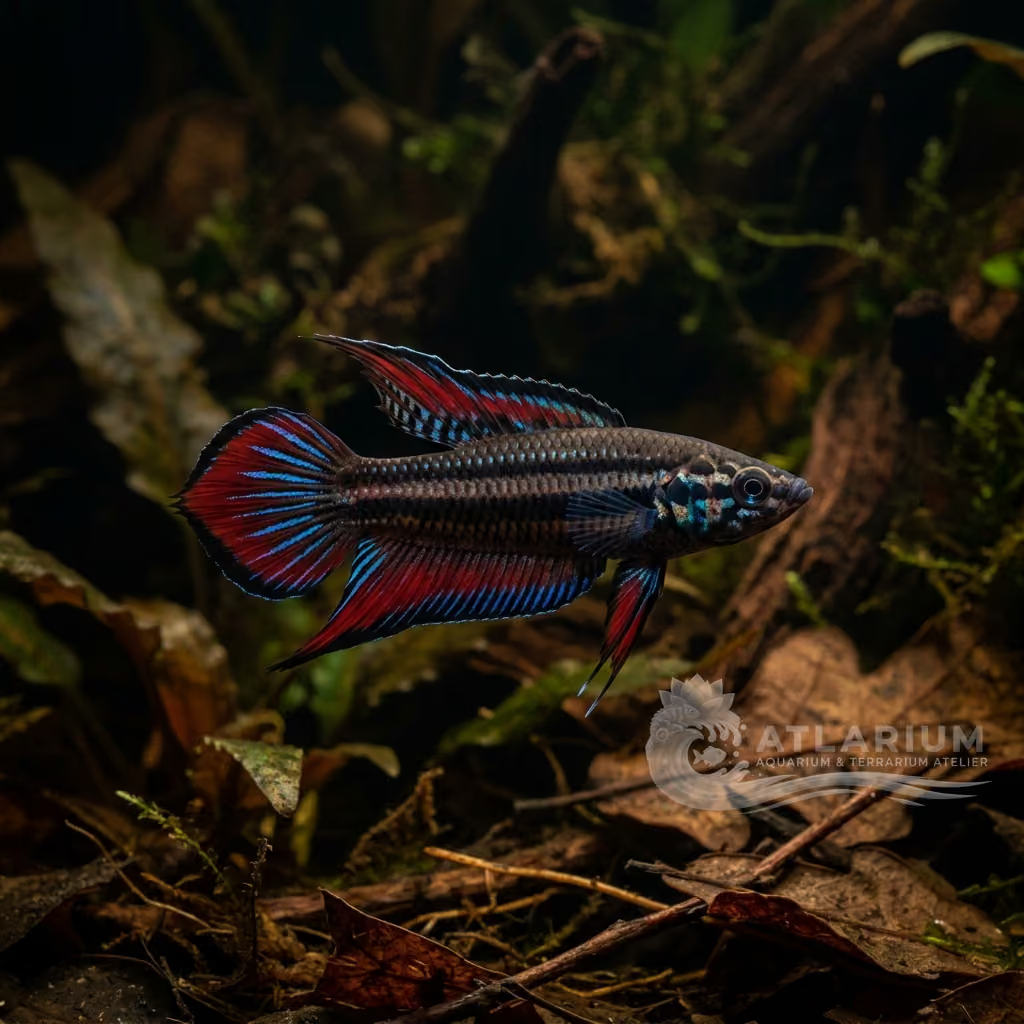
The Reverse-Dimorphism Ghost (2.5 inches / 6 cm). The Samurai Gourami is an ultra-rare, ghostly, blade-shaped labyrinth fish from the heart of the Borneo jungle. It is incredibly famous among elite hobbyists for two reasons: its insane fragility, and the fact that the FEMALES are the brightly colored ones. When ready to breed, the female explodes into a mesmerizing zebra-striped 'Samurai Armor' pattern of deep blood-red and emerald green, while the male remains a dull, dusty brown leaf color. Keeping them alive is a master-class challenge.
Wassertemperatur
24 - 28 °C
pH-Wert
4 - 6
Wassertyp
Süßwasser
Tankfüllstand
Mitte
Erwachsenengröße
6 cm
Mindesttankvolumen
>= 60 L
Mindestgruppe
6 - 8
GH
0 - 5 dGH
KH
1 - 2 dKH
TDS
10 - 95 ppm
Leitfähigkeit
16 - 148 uS/cm
Artbeschreibung
Geographical Origin and Habitat: An extraordinarily rare, incredibly delicate, and highly sought-after jewel endemic strictly to the Kapuas River basin in Kalimantan (Indonesian Borneo). Vaillant's Chocolate Gourami is an extreme, obligate "Blackwater" species: it clings to life in flooded peat-swamp forests, deeply shaded forest streams, and dense canopies where the water is utterly stagnant, practically devoid of minerals, and deeply stained the color of black tea by massive, rotting beds of fallen leaves and submerged roots.
Taxonomy and Morphology: A highly distinct and specialized anabantoid of the Osphronemidae family, completely lacking the roundness of standard gouramis. It possesses a slender, heavily compressed, torpedo-like body, culminating in an incredibly pronounced, sharp, pointed snout that distinctly resembles a seahorse profile—an evolutionary adaptation designed to probe deep into submerged leaf litter to extract micro-crustaceans. It notably lacks the long, sweeping tactile pelvic feelers signature to the *Trichogaster* genus. It is a diminutive dwarf, maxing out at a fragile 5-6 cm (2-2.5 inches) in captivity.
Social Behavior: Painfully shy, overwhelmingly timid, and peaceful to the point of lethal vulnerability. It is a gregarious, loose-shoaling species that heavily relies on group safety in the wild. Within a captive shoal, they establish extremely gentle, non-violent hierarchies. It is a pathologically slow, highly deliberate, hovering swimmer: it spends its entire day meticulously investigating dead leaves, and will instantly and frantically retreat into the darkest, deepest shadows if startled by a sudden shadow or loud footstep outside the tank.
Coloration and Sexual Dimorphism: One of the exceedingly rare anomalies in the vertebrate animal kingdom displaying reversed sexual dimorphism: the female is spectacularly, overwhelmingly more beautiful and heavily colored than the male. **Extreme Reverse Dimorphism:** When mature females enter breeding condition or display for dominance, their slender bodies violently erupt into a neon-painted canvas of alternating, stark vertical bands of deep rust-red and brilliant, metallic emerald-green or electric blue. Males, conversely, are tragically drab, uniformly dull, washed-out muddy brown or pale grey, featuring significantly fainter striping and a noticeably distended, swollen lower jaw (specifically evolved to hold eggs).
Pflege, Zucht und Mitbewohner
Aquarium Setup: It demands a maniacally controlled, dedicated "Blackwater" biotope (60-80 liters / 15-20 Gallons for a small shoal). The lighting MUST be dim, moody, and deeply spectral; bright reef lights will terrify them into permanent hiding. Water flow must equal absolute zero: mature, gentle sponge filters are the only option. The aquascape MUST be an impenetrable fortress of dark wood, Manila roots, and the substrate heavily carpeted in thick, overlapping layers of dried botanical leaves (Catappa/Almond, Oak, Alder cones) that will leach heavy humic acids to stain the water pitch dark. A tightly sealed glass canopy is critical for its fragile labyrinth lung.
Diet and Feeding: A hyper-specialized, exasperatingly picky micro-predator. Wild-caught specimens (which comprise almost all stock) will categorically, stubbornly refuse all dry, commercial flake or pellet foods, choosing to literally starve themselves to a skeletal death. The aquarist MUST source living daphnia, live baby brine shrimp (nauplii), microworms, and grindal worms to trigger their feeding reflex. Over months of supreme patience, they can sometimes be transitioned to frozen bloodworms. They must be fed tiny, frequent meals: their sharp snouts and weak jaws cannot process or swallow large chunks of meat.
Water Quality: The ultimate Achilles' heel of the species: it demands agonizing, surgically precise water chemistry or it will rapidly melt away. The water must be heavily heated (26-30°C / 79-86°F), but crucially, it must be almost completely devoid of dissolved minerals: GH must be 0-3, and the pH must be horrifyingly acidic, crashing between 4.5 and 5.5 (max 6.0). Creating this requires a dedicated Reverse Osmosis (RO) water system filtered heavily through pure active peat moss. The slightest trace of ammonia, or housing them in basic pH 7.5 tap water, instantly destroys their fragile slime coat immune system, guaranteeing a swift death.
Compatibility and Cohabitation: A 100% uncompromising "Species-Only" tank requirement. This Gourami is so pathologically timid, slow, and delicate that it will be hopelessly outcompeted for food, bullied, or stressed into lethal organ failure if housed with even mildly dynamic fish (like Tetras, Guppies, or energetic Rasboras). It must NEVER have to compete for a meal. The only remotely acceptable tankmates are microscopic, peaceful Boraras (e.g. Chili Rasboras) or peaceful snails, living strictly within a supportive shoal of 6-8 of its own kind to provide it with the psychological courage to come out of the shadows.
Aquarium Breeding: A breathtaking, fascinating paternal Mouthbrooder. Unlike standard gouramis that build bubble nests, in *S. vaillanti*, the stunning, brightly colored female aggressively courts the drab male. Following a gentle nuptial embrace near the dark tank floor, the female gathers the massive, very few eggs (10-40 total) and literally SPITS them directly into the waiting mouth of the male. The male immediately retreats into absolute darkness, refusing all food and starving himself completely while he incubates the eggs in his buccal cavity for 10-15 agonizing days. In captivity, if the brooding male is even slightly stressed by the owner peering in or flashing a light, he will panic and swallow all the eggs to survive.
Risks and Diseases: 1. Osmotic Collapse (Lethal Velvet/Oodinium): If dumped into standard, alkaline tap water (pH above 7.0), their protective slime coat burns off. They will be instantly decimated by an incurable outbreak of Velvet disease (gold dust parasite) or flesh-eating fungus within a week. 2. Terminal Starvation: Newly imported wild specimens are perpetually terrified and refuse food; they will waste away to literally skin-and-bones and die if live, wriggling food is not provided immediately. 3. Total loss of fry due to paternal panic.
Geografische Herkunft und Verbreitung
An extraordinarily rare, incredibly delicate, and highly sought-after jewel endemic strictly to the Kapuas River basin in Kalimantan (Indonesian Borneo). Vaillant's Chocolate Gourami is an extreme, obligate "Blackwater" species: it clings to life in flooded peat-swamp forests, deeply shaded forest streams, and dense canopies where the water is utterly stagnant, practically devoid of minerals, and deeply stained the color of black tea by massive, rotting beds of fallen leaves and submerged roots.
Ursprung
Selektive Züchtung und SortenEuropa, Mittelmeerraum und WestasienSüd- und SüdostasienTropische Ozeane und Riffe
Fischprofil
- Temperament
- Semi-aggressive
- Behaviorally, the Samurai Gourami is characterized as being shy. They exhibit fascinating social dynamics that can be a true joy to observe in a well-planned display. While generally agreeable, unexpected aggression can sometimes occur if their fundamental environmental needs are not met. Providing adequate hiding spots and sufficient swimming space will go a long way in ensuring their temperament remains calm and manageable.
- Diät
- Omnivore
- This species is known to be a micro-predator in its natural habitat, requiring a varied diet in captivity. To ensure optimal health and coloration, provide high-quality prepared foods alongside live or frozen options like brine shrimp or bloodworms. It is essential to match the food particle size to the fish's mouth structure to facilitate easy consumption. Regular rotation of dietary items will prevent nutritional deficiencies and keep the fish highly active.
- Lebenserwartung
- 3 years
- Erwachsenengröße
- 6 cm
- Geschlechterverhältnis
- Specific M:F ratio
- To prevent undue stress, it is recommended to keep the Samurai Gourami in a carefully managed sex ratio. Providing more females than males reduces the constant harassment that a single female might endure. If keeping multiple males, the aquarium must be sufficiently large to allow for the establishment of distinct territories. Careful observation during the first few weeks will dictate if any aggressive individuals need to be rehomed.
- Fütterungsfrequenz
- Twice daily
- Establishing a consistent feeding routine is important, with 1-2 small meals per day being ideal for the Samurai Gourami. Aquarists should carefully monitor the fish during feeding time to ensure every individual gets its share. Any uneaten food should be promptly removed with a net or siphon to preserve the pristine aquatic environment. During periods of breeding or elevated temperatures, the feeding frequency may be slightly increased.
- Bioload
- Low
- Maintaining this freshwater species requires understanding its low bioload profile. The Samurai Gourami will thrive when the filtration system is carefully matched to its specific waste production. Frequent testing of the water chemistry is highly recommended to ensure no dangerous spikes occur. Excellent water quality is the foundation for preventing disease and promoting a vibrant, active fish.
- Fluss
- Stagnant
- Providing a very low current is highly recommended for the overall well-being of the Samurai Gourami. Adequate water circulation not only mimics their natural ecosystem but also ensures high dissolved oxygen levels throughout the aquarium. Hobbyists should avoid creating localized dead spots where debris might accumulate. Adjusting the filtration output angle can help achieve the perfect balance between steady circulation and calm resting areas.
- Sprungrisiko
- Yes
- Aquarists should be aware that the Samurai Gourami presents a low jump risk, especially when initially introduced or startled. A tightly fitting lid or a mesh screen cover is absolutely essential to prevent accidental escapes. Keeping the water parameters stable and avoiding aggressive tankmates will minimize the stress that often triggers jumping behavior. Ensuring the tank is kept in a relatively quiet environment can also help keep them securely in the water.
- Reproduktion
- Oviparous
- As a known maternal mouthbrooder, the Samurai Gourami exhibits fascinating breeding behaviors when conditions are optimal. Providing a separate, specialized breeding setup is often the best approach to ensure a high yield of fry. Parents may require removal post-spawning depending on the specific parental care traits of the species. Raising the young demands pristine water parameters and a steady supply of infusoria or newly hatched artemia.
- Kompatibilität & Tankkameraden
- Peaceful
- When considering tankmates, the Samurai Gourami is generally considered requires peaceful tankmates and specialized care. It is important to avoid housing them with overly aggressive or large predatory fish that could bully them or outcompete them for food. Careful observation during the initial introduction period is highly recommended to ensure harmony within the community. Selecting species that occupy different levels of the water column can further reduce territorial disputes.
- Tankfüllstand
- Middle
- This species is predominantly a mid to bottom dweller within the aquarium setup. Providing the appropriate spatial layout with open swimming areas or dense vegetation where they feel secure is highly beneficial. By understanding their preferred depth, aquarists can carefully select complementary species that occupy other regions of the tank. This spatial separation helps to reduce competition for food and minimizes unnecessary territorial disputes.

Wissenschaftliche Modelle & Parameter
FishBase
Zugang zu den offiziellen wissenschaftlichen Daten der Art
FishBase v25.04Daten synchronisiert am: 15.06.2026
- Trophäenniveau
- 3,2 ± 0,4 se
- Belastbarkeit
- Hoch (weniger als 15 Monate)
- Phylogenetische Einzigartigkeit (PD50)
- 0.5625
- Bayessche Längen-Gewichts-Beziehung
- a = 0.01995, b = 3.01
- AnfälligkeitGeringe Anfälligkeit (10 / 100)