Wine red betta
Betta tussyae
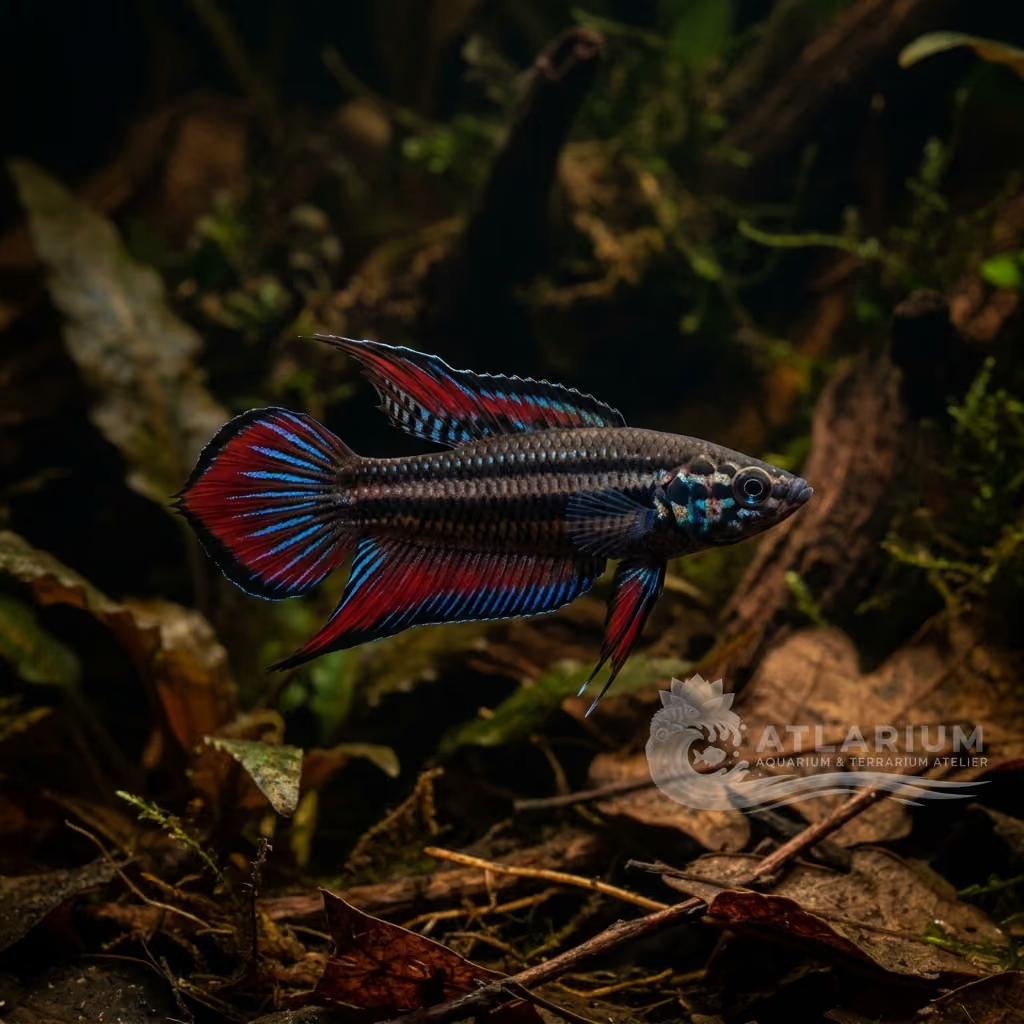
A rare wild betta belonging to the B. coccina complex, with a deep wine-red livery and iridescent green-blue spots. Native to the peat bogs and blackwater streams of eastern Peninsular Malaysia, it is among the smallest bettas (3–3.7 cm) and the most demanding in terms of water: pH 3.0–6.0, near-zero hardness. In dark tanks with tea-colored water and leaf litter, its colors emerge with surprising depth. Short-lived (2–3 years) but accessible breeding. Watch for obesity — do not overfeed. Exclusively for species-only tanks.
22 - 27 °C
4 - 5.5
Süßwasser
Unten und in der Mitte
4,5 cm
>= 30 L
>= 2
1 - 5 dGH
1 - 2 dKH
25 - 95 ppm
39 - 148 uS/cm

Artbeschreibung

Pflege, Zucht und Mitbewohner

Geografische Herkunft und Verbreitung
Ursprung

Fischprofil
- Temperament
- Semi-aggressive
- Betta tussyae is a relatively peaceful and shy species, especially compared to the domesticated Betta splendens. Males will establish small territories and may show mild aggression or display behavior towards other males, but serious fights are rare. They do best in a quiet, dimly-lit aquarium where they can hide and feel secure.
- Diät
- Carnivore
- As obligate carnivores, Betta tussyae primarily feeds on small aquatic insects, larvae, and micro-crustaceans in the wild. In the aquarium, they should be fed a varied diet of live or frozen foods such as daphnia, Artemia, and bloodworms. While some specimens can adapt to high-quality dry micro-pellets, they usually prefer and thrive on live foods.
- Lebenserwartung
- 3-5 years
- Erwachsenengröße
- 4.5 cm
- Geschlechterverhältnis
- 1:1 ratio
- Betta tussyae is best kept in pairs (one male and one female) in smaller aquariums. In larger tanks with plenty of cover, they can be kept in small groups or harems with a ratio of one male to multiple females. Males are territorial but generally more tolerant of each other and females than other betta species if sufficient space is provided.
- Fütterungsfrequenz
- Twice daily
- It is recommended to feed Betta tussyae once or twice daily, offering only what they can consume within a few minutes. Because of their small stomach capacity, overfeeding must be avoided as it can cause bloating and degrade the water quality. A weekly fasting day can also help support their digestive health.
- Bioload
- Low
- Betta tussyae has a low bioload because of its small size (maximum 5.5 cm) and minimal waste production. However, it requires highly stable and pristine water conditions to avoid disease. Gentle filtration, such as a sponge filter, is ideal to provide biological filtration without generating strong currents.
- Fluss
- Stagnant
- This species prefers weak or virtually non-existent water flow, matching their natural blackwater peat swamp habitats. Strong currents cause extreme stress, exhaust the fish, and inhibit their natural behavior. The use of sponge filters or baffled filter outlets is highly recommended to keep the water calm.
- Sprungrisiko
- Yes
- There is a very high risk of jumping with Betta tussyae, as wild bettas are agile and easily capable of leaping from the tank. A tightly-fitting lid is absolutely essential, covering even the smallest gaps around filter pipes and cables. Leaving a small air space between the water surface and the cover allows them to breathe atmospheric air safely.
- Reproduktion
- Bubble nest builder
- Betta tussyae is a bubble-nest builder, and reproduction is moderately easy to achieve if provided with acidic (pH 4.0-5.0) and very soft water. The male builds a small bubble nest, often underneath floating plants or inside canisters. After spawning, the male guards the eggs and fry, but it is best to remove the parents once the fry are free-swimming.
- Kompatibilität & Tankkameraden
- Aggressive
- They are best kept in a species-specific setup or paired arrangement. If housed in a community tank, they should only be kept with very small, peaceful, and non-aggressive species that thrive in soft, acidic water, such as micro-rasboras or small corydoras. Overly active or aggressive tank mates will outcompete them for food and cause severe stress.
- Tankfüllstand
- Middle/Bottom
- This species primarily occupies the bottom and middle zones of the aquarium, swimming through leaf litter, roots, and dense live plants. However, as labyrinth breathers, they must have unobstructed access to the surface. They will regularly visit the top levels to breathe atmospheric air or hunt for food.

Wissenschaftliche Modelle & Parameter
Zugang zu den offiziellen wissenschaftlichen Daten der Art
- Trophäenniveau
- 3,1 ± 0,4 se
- Belastbarkeit
- Hoch (weniger als 15 Monate)
- Phylogenetische Einzigartigkeit (PD50)
- 0.5
- Bayessche Längen-Gewichts-Beziehung
- a = 0.01, b = 2.97
- AnfälligkeitGeringe Anfälligkeit (10 / 100)

Bildergalerie
Lizenzierte Bilder, die mit der Art oder, wenn markiert, mit dem nächstgelegenen repräsentativen Taxon verknüpft sind.

Verwandte Arten
Empfehlungen gruppiert nach nahen Verwandten, Auswahl von Begleitern und ähnlicher Betreuung.