Jaguar Cichlid
Parachromis managuensis
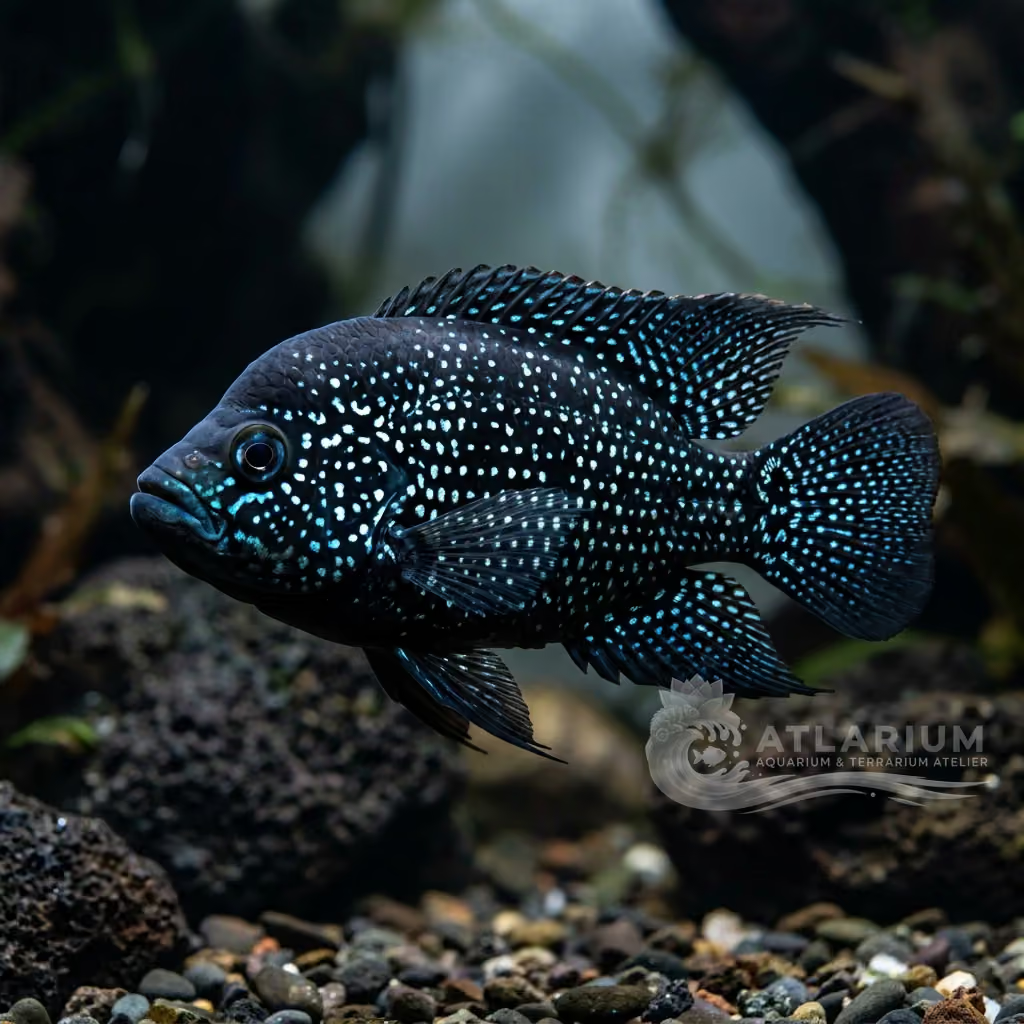
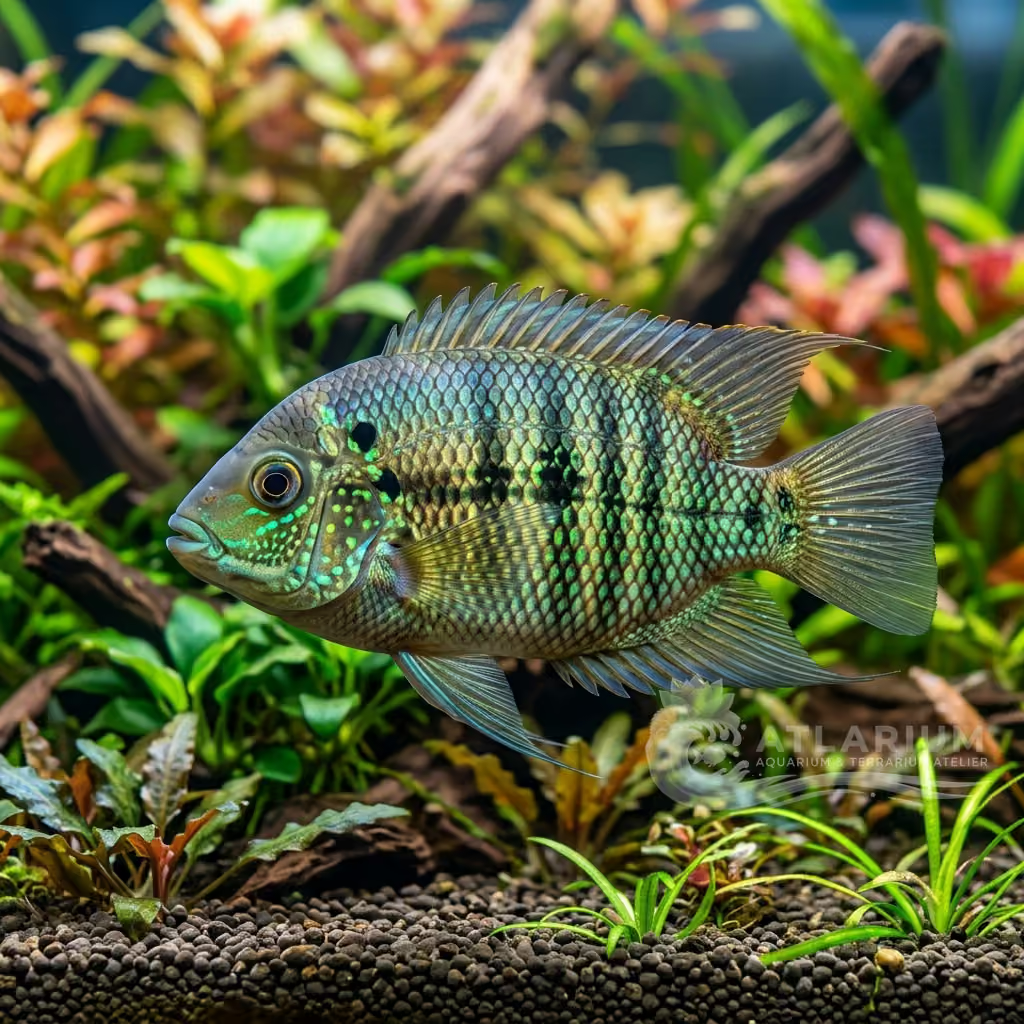
The Jaguar Cichlid (Parachromis managuensis), also known as 'Guapote Tigre', is one of the absolute apexes of the food chain of Central American freshwaters. More than an ornamental fish, it is a true aquatic predator (extreme piscivore), capable of exceeding 35 cm (14 inches) (in some wild specimens up to 40 cm / 16 inches). Its name derives from the spectacular coat of the male: a long and muscular golden silver/bronze body, entirely covered by an explosive tangle of blackish broken spots that exactly resemble the coat of a Jaguar. It is a primordial beast, endowed with a strongly prominent lower jaw, bristling with canine-like teeth visible when the mouth is closed, created for a single biological purpose: setting ambushes in the murky water, extending the mouth by protruding it and swallowing large whole fish in a fraction of a second.
24 - 28 °C
7 - 8
Süßwasser
Unten und in der Mitte
35 cm
>= 600 L
>= 1
10 - 20 dGH
5 - 10 dKH
200 - 400 ppm
313 - 625 uS/cm

Artbeschreibung

Pflege, Zucht und Mitbewohner

Geografische Herkunft und Verbreitung
Ursprung

Fischprofil
- Temperament
- Territorial
- This is an exceptionally aggressive and fiercely territorial species. They are unapologetic predators that completely dominate their environment. They will quickly kill any fish they perceive as a threat.
- Diät
- Carnivore
- They are apex predators requiring a meaty, protein-rich diet. Large pellets, earthworms, and pieces of fish are ideal. Feeder fish can be offered occasionally but carry disease risks.
- Lebenserwartung
- 10-15 years
- Erwachsenengröße
- 35 cm
- Geschlechterverhältnis
- Flexible
- They are best kept as a single pet or breeding pair. Keeping multiple adults often results in fatal territorial disputes. Unless the tank is exceptionally large, one pair is the limit.
- Fütterungsfrequenz
- Every other day
- Juveniles should be fed once a day for rapid growth. Adult specimens only need a large meal every other day. Overfeeding leads to poor water quality and fatty liver.
- Bioload
- High
- This massive cichlid produces an incredibly high bioload. They excrete significant amounts of waste. Oversized filtration and frequent massive water changes are absolutely necessary.
- Fluss
- Strong
- They appreciate moderate flow to keep the water highly oxygenated. A strong canister filter provides the necessary current. However, they do not require extreme river-like rapids.
- Sprungrisiko
- Yes
- Due to their massive size, they can knock off loose lids. A heavy, secure glass canopy is strongly required. They might jump if aggressively chasing prey near the surface.
- Reproduktion
- Oviparous
- They form monogamous pairs and are highly prolific substrate spawners. Breeding pairs become extremely hyper-aggressive toward tank mates. They exhibit excellent parental care defending both eggs and fry.
- Kompatibilität & Tankkameraden
- Species only
- They are highly aggressive and heavily predatory. They should only be kept with similarly robust cichlids. Any fish small enough to fit in their mouth will be eaten.
- Tankfüllstand
- Middle/Bottom
- They utilize all levels but establish a territory near the bottom. They prefer hanging around large pieces of driftwood or caves. They actively swim to the surface during feeding time.

Wissenschaftliche Modelle & Parameter
Zugang zu den offiziellen wissenschaftlichen Daten der Art
- Trophäenniveau
- 4 ± 0,59 se
- Belastbarkeit
- Mittel (1,4 - 4,4 Jahre)
- Phylogenetische Einzigartigkeit (PD50)
- 0.5312
- Bayessche Längen-Gewichts-Beziehung
- a = 0.02089, b = 3.05
- AnfälligkeitMäßige Anfälligkeit (42 / 100)

Verwandte Arten
Empfehlungen gruppiert nach nahen Verwandten, Auswahl von Begleitern und ähnlicher Betreuung.