Papilio Sand Sifter
Xenotilapia papilio
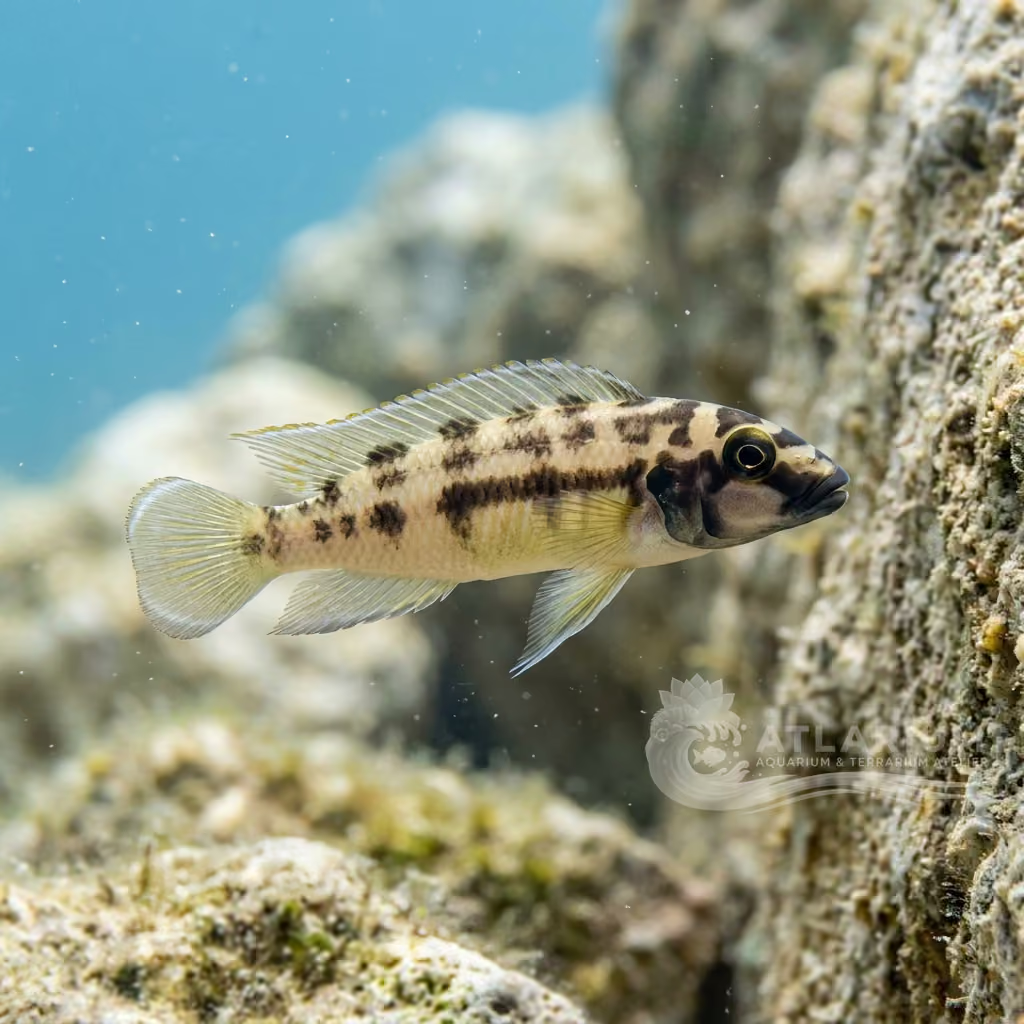
The 'Butterfly Cichlid' or Xenotilapia Papilio (10 cm). Exclusive and hypnotic deep Tanganyika sand sifter. Its immense and decorated ventral fins, which it uses as "little legs" to rest on the bottom or show threat, resemble the wings of a spotted butterfly. Peaceful but expensive and very delicate.
Wassertemperatur
24 - 27 °C
pH-Wert
8 - 9
Wassertyp
Süßwasser
Tankfüllstand
Unten
Erwachsenengröße
10 cm
Mindesttankvolumen
>= 100 L
Mindestgruppe
>= 1
GH
10 - 25 dGH
KH
5 - 12 dKH
TDS
200 - 495 ppm
Leitfähigkeit
313 - 773 uS/cm

Artbeschreibung
Geographical Origin and Habitat: Found exclusively in specific deep locations of Lake Tanganyika (such as Tembo Point or Tembwe Deux). Thrives in the dimly lit transition zone (20-40 meters / 65-130 feet deep), where rocks covered by a thin layer of gloomy sediment slide into the immense sandy expanse.
Taxonomy and Morphology: Iconic member of the Xenotilapia group (often called Sand Sifters or Goby Cichlids). Small dimensions (about 10 cm / 4 inches maximum). The anatomy is fascinating: elongated and cylindrical body, eyes positioned very high on the head (to look at predators from above amazing) and a blunt inferior mouth to collect debris. Its trademark are the mammoth fan-like ventral fins amazing fluffy, used to rest on the bottom like a natural tripod.
Social Behavior: "The Sand Spouses". Unlike the schooling Xenotilapia (e.g. X. flavipinnis), the adult Papilio lives in very close and indissoluble pairs, disdaining and lethally aggressively attacking other conspecifics in small aquariums. They have a very particular jerky flight (hopping) and spend the day maniacally inspecting the smooth rocks and spitting small boluses of clean sand fetid corner.
Coloration and Sexual Dimorphism: The Butterfly Watercolor (Sunflower). The body color is a velvety cream or pearl gray with stunning iridescent lilac/purple reflections sadistically beautiful and cerulean lips. In the 'Sunflower' variants, the entire dorsal fin is spotted with huge perfect ink black circles edged with a dazzling canary yellow/neon gold incalculable majestic. Males and females are practically identical morphologically and chromatically (both spectacular fluffy geniuses).

Pflege, Zucht und Mitbewohner
Aquarium Setup: FishBase reports Xenotilapia papilio in deeper rocky habitat, particularly where rocks are covered with sand.
Feeding and Diet: FishBase reports invertebrates extracted by filtering sediment through the gills; it also records copepods, ostracods, insect larvae, filamentous algae, and sand in the stomach.
Water Quality: FishBase reports freshwater, demersal, tropical conditions with pH 7.5–9.0, dH 10–25, depth 3–40 m, and 24–28 °C.
Compatibility and Coexistence: FishBase describes the species as territorial; subadults live in small groups and larger individuals form pairs.
Aquarium Breeding: FishBase describes the species as biparental mouthbrooding.
Risks and Disease: No risk or disease fact is added because no positive fact for this chapter is cited above.

Geografische Herkunft und Verbreitung
Found exclusively in specific deep locations of Lake Tanganyika (such as Tembo Point or Tembwe Deux). Thrives in the dimly lit transition zone (20-40 meters / 65-130 feet deep), where rocks covered by a thin layer of gloomy sediment slide into the immense sandy expanse.
Ursprung
NordamerikaAfrika und MadagaskarOstasien

Fischprofil
- Temperament
- Semi-aggressive
- Their temperament is a mix of extreme grace and focused conspecific intolerance. Toward other species that do not compete for the substrate, they are completely indifferent and peaceful. However, their pair bonds are fiercely defended, and they will not tolerate other benthic fish in their territory. Overall, they are elegant, delicate, and rewarding fish for the advanced cichlid keeper.
- Diät
- Omnivore
- They are specialized micro-predators that feed by hovering over the substrate and picking off small organisms. In the aquarium, their diet must be carefully managed; they rarely take food from the water surface. High-quality sinking pellets, frozen cyclops, and baby brine shrimp are excellent staples. Bloodworms and heavy, hard-to-digest meaty foods should be avoided as they can easily cause intestinal blockages.
- Lebenserwartung
- 5 years
- Erwachsenengröße
- 10 cm
- Geschlechterverhältnis
- Solitary
- They are best kept and purchased as a small group of juveniles, allowing a natural pair to form as they mature. Once a pair establishes a bond, the remaining individuals must be immediately removed, as the pair will relentlessly attack them. Single individuals can also be kept, but observing their complex pair dynamics is the main draw for aquarists. There is minimal visual difference between males and females.
- Fütterungsfrequenz
- Twice daily
- To replicate their constant natural foraging, they should be fed small amounts two to three times a day. Overfeeding in a single sitting can lead to severe digestive issues. Multiple small feedings ensure they get adequate nutrition without gorging. Ensuring the food sinks to their level is critical, as they are hesitant to rise up the water column to feed.
- Bioload
- Low
- This elegant Lake Tanganyika cichlid has a relatively low bioload compared to larger African cichlids. Because of their specialized diet and delicate constitution, they produce minimal waste. However, they are exceedingly sensitive to poor water conditions, meaning pristine water quality is non-negotiable. Efficient biological and mechanical filtration coupled with strict weekly water changes are essential to keep nitrates near zero.
- Fluss
- Stagnant
- They prefer a gentle to moderate water flow that simulates the calm deeper waters of Lake Tanganyika. While they appreciate well-oxygenated water, overpowering currents will stress them and disrupt their delicate hovering swimming style. Strategically placed sponge filters or properly diffused canister filter returns work best. A stable, calm environment encourages them to display their natural behaviors.
- Sprungrisiko
- Yes
- While not habitual jumpers, their skittish nature makes them a moderate jump risk. If spooked by sudden movements, loud noises, or aggressive tank mates, they can dart rapidly and accidentally clear the water surface. A secure lid is always recommended, particularly during the initial acclimation period when they are most easily startled. Soft lighting can also help reduce their overall stress levels.
- Reproduktion
- Oviparous
- This species exhibits a fascinating biparental mouthbrooding strategy. Both the male and female take turns carrying the developing eggs and fry in their mouths. During this incubation period, the parents are highly reclusive and may refuse food entirely. Once the fry are large enough, they are released to forage but will quickly retreat back into the parents' mouths if danger approaches.
- Kompatibilität & Tankkameraden
- Peaceful
- They are generally peaceful but require highly specific tank mates. They should never be housed with aggressive Mbuna or boisterous Central American cichlids. Ideal companions are peaceful mid-water Tanganyikan species like Cyprichromis, which provide activity without bottom-dwelling competition. Conspecific aggression can be brutal among unpaired individuals, so keeping a harmonious pair is the standard approach.
- Tankfüllstand
- Bottom
- They are obligate bottom-dwellers that rarely venture above the lower third of the aquarium. They require a large footprint with fine, soft sand to sift through without damaging their delicate gills. Smooth rocks can be added to create visual barriers and spawning sites. Vertical swimming space is largely irrelevant to this species.

Wissenschaftliche Modelle & Parameter
FishBase
Zugang zu den offiziellen wissenschaftlichen Daten der Art
FishBase v25.04Daten synchronisiert am: 15.06.2026
- Trophäenniveau
- 3,1 ± 0,4 se
- Belastbarkeit
- Hoch (weniger als 15 Monate)
- Phylogenetische Einzigartigkeit (PD50)
- 0.5
- Bayessche Längen-Gewichts-Beziehung
- a = 0.00389, b = 3.12
- AnfälligkeitGeringe Anfälligkeit (10 / 100)

Verwandte Arten
Empfehlungen gruppiert nach nahen Verwandten, Auswahl von Begleitern und ähnlicher Betreuung.