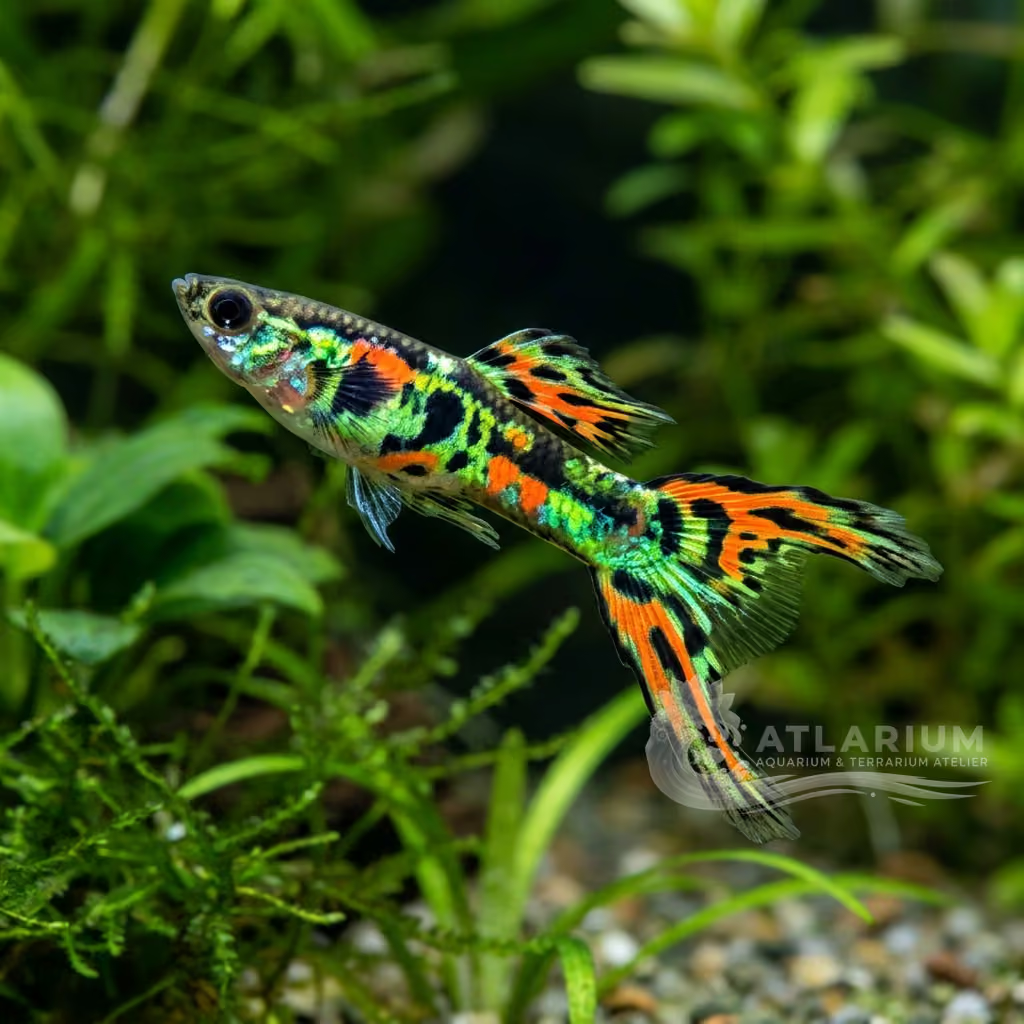
Mickey Mouse platy
Xiphophorus maculatus
A beloved and exceptionally hardy beginner fish, the Mickey Mouse Platy is named for the iconic three-spot pattern at its tail base. It is an active, peaceful livebearer perfect for diverse community aquariums.
Wassertemperatur
22 - 28 °C
pH-Wert
7 - 8.5
Wassertyp
Süßwasser
Tankfüllstand
Oberfläche und Mitte
Erwachsenengröße
6 cm
Mindesttankvolumen
>= 60 L
Mindestgruppe
>= 4
GH
10 - 30 dGH
KH
5 - 15 dKH
TDS
200 - 600 ppm
Leitfähigkeit
313 - 938 uS/cm

Artbeschreibung
Geographical Origin and Habitat: The wild platy (Xiphophorus maculatus) is native to Central America, ranging from eastern Mexico to Belize and Guatemala. It inhabits slow-moving rivers, swamps, drainage ditches, and warm ponds rich in aquatic vegetation over muddy or sandy substrates. The 'Mickey Mouse' variety is a captive-bred color variant selectly bred over generations.
Taxonomy and Morphology: Belonging to the family Poeciliidae and the order Cyprinodontiformes, this species has a stocky, slightly compressed body with an upward-pointing mouth suited for surface feeding. It is an ovoviviparous livebearer. Males are smaller and sleeker (3-4 cm) than females, which can grow up to 5-6 cm.
Social Behavior: Peaceful, active, and social. It thrives in groups and should be kept in a ratio of one male to two or three females to prevent the females from being stressed by continuous mating pursuits. They show no aggression toward other species and are perfect for community tanks.
Coloration and Sexual Dimorphism: The distinguishing mark of this variety is one large black round spot at the base of the caudal fin flanked by two smaller black spots, creating the silhouette of Mickey Mouse. Sexual dimorphism is clear: males possess a modified anal fin called a gonopodium used for internal fertilization.

Pflege, Zucht und Mitbewohner
Aquarium Setup: Suitable for aquariums of at least 60-80 liters (approx. 15-20 gallons). The tank should be densely planted with species like Vallisneria, Java fern, and fine-leaved plants to provide shelter for fry, while leaving open swimming areas. Floating plants are beneficial to diffuse light and provide cover.
Diet and Feeding: Omnivorous with a high herbivorous requirement. In the wild, they feed on small insects, worms, crustaceans, and algae. In the aquarium, they accept high-quality flakes and micro-granules, which should be supplemented with spirulina-based foods, blanched vegetables (peas, zucchini), and small frozen foods.
Water Quality: Prefers moderately hard to hard water. Keep water parameters stable: temperature between 22°C and 26°C (72-79°F), pH between 7.0 and 8.2, and water hardness above 10-12 dGH. They are sensitive to soft, acidic water. Gentle filtration is recommended to avoid creating strong currents.
Compatibility and Cohabitation: Excellent candidates for peaceful community aquariums. They coexist well with guppies, swordtails, mollies, corydoras, tetras, and small peaceful barbs. Avoid housing them with large predatory or aggressive fish (such as larger cichlids) that could view them as food.
Aquarium Breeding: Extremely easy and frequent in the home aquarium. Fertilization is internal, and after a gestation period of 4-5 weeks, the female gives birth to free-swimming live young. To maximize fry survival, ensure the tank has dense vegetation or transfer the pregnant female to a separate breeding tank.
Risks and Diseases: While very hardy, they can contract marine ich (white spot disease) and fin rot if water quality is neglected. Regular partial water changes (20-30% bi-weekly) and vacuuming the substrate are key to keeping ammonia and nitrite levels at zero and maintaining fish health.

Geografische Herkunft und Verbreitung
The wild platy (Xiphophorus maculatus) is native to Central America, ranging from eastern Mexico to Belize and Guatemala. It inhabits slow-moving rivers, swamps, drainage ditches, and warm ponds rich in aquatic vegetation over muddy or sandy substrates. The 'Mickey Mouse' variety is a captive-bred color variant selectly bred over generations.
Ursprung
Selektive Züchtung und SortenMittelamerika und KaribikTropische Ozeane und Riffe

Fischprofil
- Temperament
- Peaceful
- They have an incredibly peaceful and easygoing temperament, making them ideal candidates for beginner and community aquariums alike. They are active, curious, and constantly on the move, bringing a vibrant dynamic to the tank without aggressive tendencies. While males may occasionally posture at one another, true aggression or injury is extremely rare. They adapt quickly to new environments and tolerate minor fluctuations in water chemistry better than more sensitive species.
- Diät
- Omnivore
- They are unfussy omnivores that require a varied diet consisting of both plant and animal matter to thrive. A high-quality tropical flake or pellet food should form the staple of their daily diet. To enhance their vivid colors and support optimal health, supplement their meals with frozen or live foods like bloodworms, daphnia, and brine shrimp. Adding blanched vegetables or spirulina-based foods will satisfy their need for dietary fiber and vegetable matter.
- Lebenserwartung
- 3-5 years
- Erwachsenengröße
- 6 cm
- Geschlechterverhältnis
- Group
- To minimize stress within the group, it is highly recommended to keep a ratio of one male to every two or three females. Males are persistent in their pursuit of females for mating, which can quickly exhaust a lone female and lead to health decline. Maintaining a higher number of females ensures the males' attention is dispersed among the group. If the tank is small, keeping an all-female or all-male group can completely prevent both harassment and unwanted breeding.
- Fütterungsfrequenz
- Twice daily
- Offer them small meals one to two times daily, ensuring they consume all the food within a couple of minutes to prevent water fouling. Overfeeding is a common issue with these enthusiastic eaters, which can lead to bloating and degraded water quality. It is beneficial to fast the fish for one day a week to allow their digestive systems to clear. For growing fry, more frequent, smaller feedings using specialized fry food or baby brine shrimp are necessary.
- Bioload
- Low
- This fish generates a moderate bioload that is easily managed in an adequately filtered aquarium. Because they have hearty appetites and a relatively quick metabolism, their waste output can accumulate if maintenance is neglected. Regular partial water changes and proper gravel vacuuming are important to maintain pristine water conditions. Ensuring the biological filtration is mature will easily handle their waste without causing ammonia or nitrite spikes.
- Fluss
- Stagnant
- They originate from slow-moving waters and therefore prefer a gentle to moderate current in the home aquarium. Strong, turbulent water flow can easily exhaust them and cause stress, potentially leading to health complications. A standard sponge filter, hang-on-back filter, or canister filter with an adjustable output provides ideal conditions. Using decorations and plants to break the current can create comfortable resting zones for them.
- Sprungrisiko
- Yes
- While not as notorious for jumping as some other species, they are entirely capable of leaping from an open aquarium. A secure lid or canopy should be used to ensure they do not jump out, especially if they are startled or chased. Routine maintenance and sudden changes in lighting can sometimes induce a panic response resulting in a jump. Keeping the water level an inch or two below the rim can provide an extra margin of safety if a lid is not perfectly tight.
- Reproduktion
- Oviparous
- They are prolific and easy-to-breed livebearers, with females giving birth to batches of fully formed, independent fry. Males possess a modified anal fin, the gonopodium, to fertilize the females internally, and females can retain sperm for several broods. Breeding occurs readily in the home aquarium without any special intervention, provided the water parameters are stable. To ensure the survival of the fry, the tank should be heavily planted with fine-leaved plants like java moss to provide hiding spots from hungry adults.
- Kompatibilität & Tankkameraden
- Harem only
- They are exceptionally peaceful community fish that thrive in the company of other peaceful, similarly sized species. Excellent tankmates include small tetras, rasboras, corydoras catfish, and small peaceful loaches. It is important to avoid housing them with large, aggressive, or fin-nipping species that may harass them or outcompete them for food. They are social creatures that appreciate the presence of their own kind, displaying their best colors when comfortable.
- Tankfüllstand
- Top/Middle
- They are highly active fish that utilize the mid to top levels of the aquarium for the majority of their swimming and foraging. They are frequently seen exploring near the surface for food, but will enthusiastically search the substrate for any missed morsels. Providing ample swimming space in the upper layers, unobstructed by overly dense tall plants, is ideal for their behavior. Floating plants can make them feel more secure while still allowing them access to the surface.

Wissenschaftliche Modelle & Parameter
FishBase
Zugang zu den offiziellen wissenschaftlichen Daten der Art
FishBase v25.04Daten synchronisiert am: 15.06.2026
- Trophäenniveau
- 3,2 ± 0,4 se
- Belastbarkeit
- Hoch (weniger als 15 Monate)
- Phylogenetische Einzigartigkeit (PD50)
- 0.5
- Bayessche Längen-Gewichts-Beziehung
- a = 0.01047, b = 3.14
- AnfälligkeitGeringe Anfälligkeit (10 / 100)

Verwandte Arten
Empfehlungen gruppiert nach nahen Verwandten, Auswahl von Begleitern und ähnlicher Betreuung.