Balloon Molly
Poecilia latipinna
The Balloon Molly is a controversial fish: its "balloon" shape is actually a very severe spinal deformity (dwarfism and severe scoliosis) artificially fixed by breeders. This squat shape has horribly compressed the fish's internal organs. They have a laborious and wobbly swim, and chronically suffer from intestinal blockages and swim bladder problems. Females are particularly at risk: the compressed uterus makes giving birth a mortal agony. Requires nursing care: micro pre-soaked feeding, and no aggressive tankmates.
24 - 28 °C
7.5 - 8.5
Süßwasser
Oberfläche und Mitte
6 cm
>= 60 L
>= 1
15 - 30 dGH
7 - 15 dKH
295 - 600 ppm
461 - 938 uS/cm

Artbeschreibung

Pflege, Zucht und Mitbewohner

Geografische Herkunft und Verbreitung
Ursprung

Fischprofil
- Temperament
- Peaceful
- Poecilia latipinna var. Balloon has an active, outgoing, and generally peaceful temperament. Males will frequently display to each other by fully extending their impressive dorsal fins, a behavior that is fascinating to watch. While males may chase females relentlessly, they rarely inflict physical harm. They are excellent, lively additions to a peaceful community tank.
- Diät
- Micro-predator
- They are primarily herbivorous in the wild, constantly grazing on algae and detritus. In the aquarium, they need a diet heavy in vegetable matter, such as spirulina flakes or algae wafers. They will also greedily consume meaty foods like bloodworms and brine shrimp, but this should be supplementary. A lack of greens in their diet can lead to digestive issues.
- Lebenserwartung
- 3-5 years
- Erwachsenengröße
- 6 cm
- Geschlechterverhältnis
- Specific M:F ratio
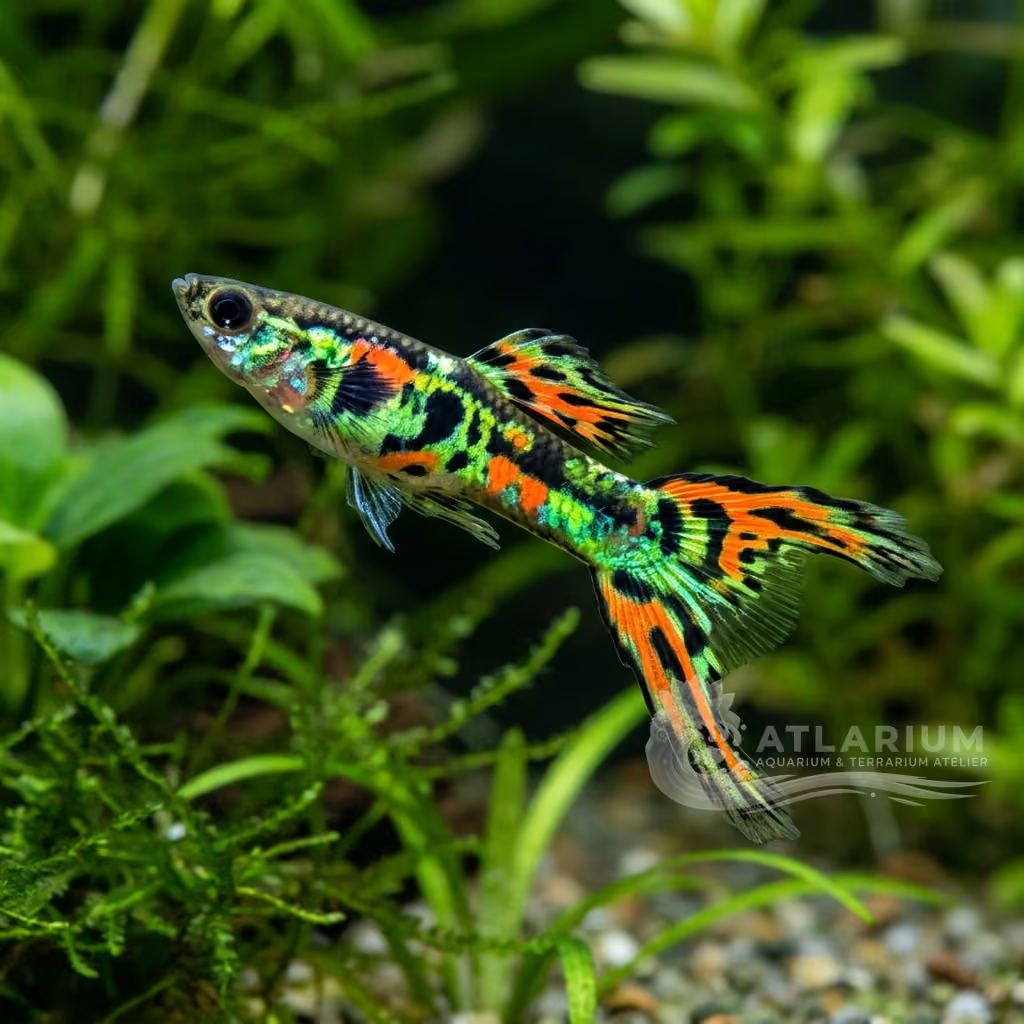
- Sexual dimorphism is very pronounced in this species. Males are generally smaller, possess a modified anal fin called a gonopodium, and develop a massive, sail-like dorsal fin. Females are larger, plumper, and have a standard rounded dorsal fin. A ratio of one male to at least two or three females is required to prevent female exhaustion.
- Fütterungsfrequenz
- Twice daily
- Feeding them small amounts two to three times a day is ideal for their active metabolism. They are enthusiastic eaters that will actively beg for food at the surface. Providing fresh blanched vegetables like spinach or zucchini is highly beneficial. Consistent, varied feeding ensures vibrant colors and healthy growth.
- Bioload
- Medium
- Poecilia latipinna var. Balloon produces a moderate to high bioload compared to other livebearers. They are voracious eaters with a fast metabolism, leading to a significant amount of waste. Strong biological and mechanical filtration is necessary to keep water parameters stable. Frequent water changes are highly recommended to prevent nitrate buildup, which they are sensitive to.
- Fluss
- Stagnant
- They appreciate a moderate water flow that provides excellent oxygenation and simulates natural river currents. Good flow also helps keep the aquarium free of stagnant areas. While they enjoy swimming in the current, ensure there are calmer resting areas available. Excessive flow that pins them against the glass should be avoided.
- Sprungrisiko
- Yes
- Sailfin mollies are notorious jumpers, particularly when startled or when water parameters are suboptimal. A tight-fitting lid with no large gaps is absolutely critical for this species. They are strong swimmers capable of launching themselves completely out of the water. Ensuring excellent water quality will reduce their motivation to jump.
- Reproduktion
- Oviparous
- They are incredibly prolific livebearers that will breed constantly without any special intervention. Females can store sperm for months, producing multiple batches of fry from a single mating. The fry are born relatively large and will be eaten by the parents and tankmates if cover is not provided. Dense planting, particularly floating plants, ensures a high survival rate.
- Kompatibilität & Tankkameraden
- Harem only
- They are peaceful community fish that do well with a variety of similarly sized, peaceful species. They can be kept with other livebearers, tetras, corydoras, and peaceful dwarf cichlids. Avoid housing them with fin-nipping fish that might target the male's impressive dorsal fin. They also do exceptionally well in brackish water community setups.
- Tankfüllstand
- Top/Middle
- They are highly active fish that utilize the mid-to-top levels of the water column. They are constantly on the move, exploring the tank and grazing on surfaces. They require plenty of open swimming space to accommodate their energetic nature. Floating plants are appreciated as they provide cover and grazing opportunities.

Wissenschaftliche Modelle & Parameter
Zugang zu den offiziellen wissenschaftlichen Daten der Art
- Trophäenniveau
- 2 ± 0 se
- Belastbarkeit
- Hoch (weniger als 15 Monate)
- Phylogenetische Einzigartigkeit (PD50)
- 0.5
- Bayessche Längen-Gewichts-Beziehung
- a = 0.01288, b = 3.05
- AnfälligkeitGeringe Anfälligkeit (10 / 100)

Verwandte Arten
Empfehlungen gruppiert nach nahen Verwandten, Auswahl von Begleitern und ähnlicher Betreuung.