Mummichog
Fundulus heteroclitus
The mummichog is an exceptionally hardy schooling killifish from North American salt marshes. It tolerates extreme salinity shifts but prefers brackish water, needing an 80L tank and a secure lid to prevent jumping.
Wassertemperatur
5 - 25 °C
pH-Wert
7 - 8.5
Wassertyp
Süßwasser / Brackwasser / Meerwasser
Tankfüllstand
Alle Ebenen
Erwachsenengröße
12 cm
Mindesttankvolumen
>= 120 L
Mindestgruppe
>= 6
GH
15 - 30 dGH
KH
7 - 15 dKH
TDS
295 - 600 ppm
Leitfähigkeit
461 - 938 uS/cm

Artbeschreibung
Geographical Origin and Habitat: Fundulus heteroclitus, commonly known as the mummichog, is native to the Atlantic coast of North America, ranging from Gulf of St. Lawrence in Canada to northeastern Florida. It primarily inhabits salt marshes, estuaries, tidal creeks, and tide pools, environments known for extreme and rapid fluctuations in salinity, temperature, and oxygen levels.
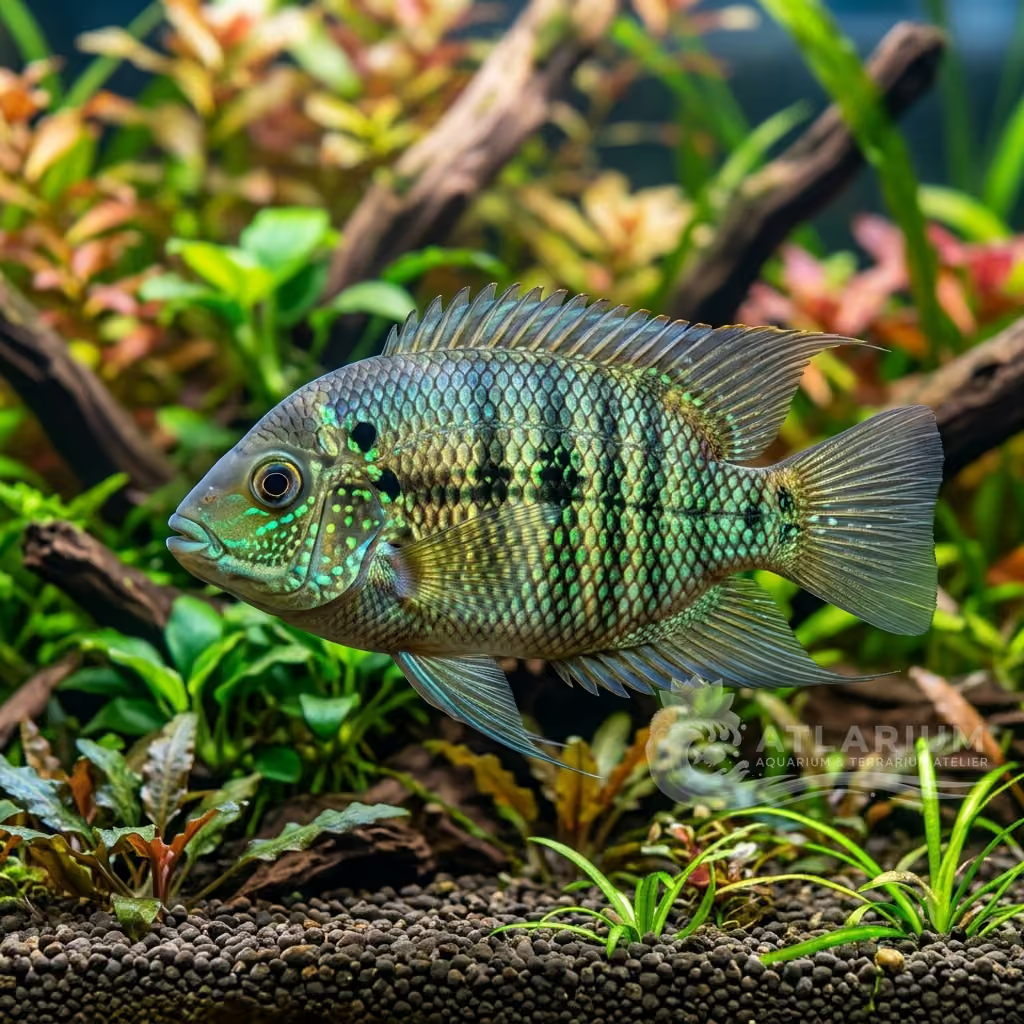
Taxonomy and Morphology: It belongs to the family Fundulidae. The body is stocky, cylindrical anteriorly and laterally compressed posteriorly, with a flattened head and an upturned mouth. The skin is thick and protected by resilient cycloid scales. Adults typically reach lengths between 7 and 12 cm.
Social Behavior: It is a highly gregarious schooling fish in its natural habitat. In captivity, it displays active, curious, and non-aggressive behavior, making it highly suitable for species-specific tanks or community setups with similarly sized brackish water species.
Coloration and Sexual Dimorphism: The base coloration ranges from olive-green to greenish-brown with silvery vertical bars along the flanks. Sexual dimorphism is pronounced: mature males display vibrant yellow-orange nuptial coloration on their ventral and anal fins and darker dorsal bodies, whereas females are larger, rounder, and have duller colors.

Pflege, Zucht und Mitbewohner
Aquarium Setup: A minimum tank volume of 80-100 liters is required. The substrate should consist of fine sand or rounded gravel, as they enjoy sifting through it. Provide plenty of hiding spots and visual barriers using rocks, driftwood, and salt-tolerant plants like Vallisneria or Microsorum.
Diet and Feeding: An opportunistic micro-predator. In captivity, it readily accepts high-quality dry pellets or flakes, but its diet should be supplemented with live or frozen foods such as brine shrimp, bloodworms, daphnia, and mosquito larvae to ensure optimal health.
Water Quality: Extremely tolerant of water chemistry, but thrives in brackish to marine conditions (specific gravity 1.005-1.015), pH between 7.2 and 8.2, high hardness (dGH 15-30), and temperatures between 15°C and 24°C, though they can tolerate much wider seasonal variations.
Compatibility and Cohabitation: Best housed with other similarly tempered brackish water fish, such as other killifish or small gobies. Avoid keeping them with very peaceful, slow-moving species, or strict freshwater fishes that cannot tolerate elevated salinity levels.
Aquarium Breeding: Breeding is relatively easy. Spawning occurs among plants or spawning mops where adhesive eggs are deposited. Eggs hatch in approximately 10-14 days at 20-22°C. The fry can be fed immediately with newly hatched brine shrimp nauplii.
Risks and Diseases: Although exceptionally hardy, poor husbandry or sudden stress can trigger bacterial infections or parasitic infestations like Oodinium or fin rot. Regular water changes and maintaining appropriate salinity levels will prevent most health issues.

Geografische Herkunft und Verbreitung
Fundulus heteroclitus, commonly known as the mummichog, is native to the Atlantic coast of North America, ranging from Gulf of St. Lawrence in Canada to northeastern Florida. It primarily inhabits salt marshes, estuaries, tidal creeks, and tide pools, environments known for extreme and rapid fluctuations in salinity, temperature, and oxygen levels.
Ursprung
Tropische Ozeane und RiffeNordamerika

Fischprofil
- Temperament
- Active
- The Mummichog is a bold, highly active, and sometimes pugnacious fish that is never shy. They are constantly on the move and will eagerly approach the front of the glass when they see their keeper. They are incredibly tough fish, famously capable of surviving in extreme environmental conditions.
- Diät
- Omnivore
- They are omnivorous and highly opportunistic feeders in the wild, consuming everything from algae to insects and small crustaceans. In the aquarium, they are unfussy and will eagerly accept flakes, pellets, frozen foods, and live foods. A varied diet that includes both meaty foods and plant matter ensures optimal health.
- Lebenserwartung
- 3-4 years
- Erwachsenengröße
- 12 cm
- Geschlechterverhältnis
- Group
- Males are typically more colorful, especially during breeding season when they display bright yellow bellies and silver bars, while females are plumper and more subdued. They are best kept in a mixed group with a ratio of one male to two or three females. This reduces male aggression and prevents harassment of individual females.
- Fütterungsfrequenz
- Twice daily
- Being very active, they have hearty appetites and benefit from being fed one to two times a day. They are aggressive eaters that will rush to the surface at feeding time. Care should be taken not to overfeed, as their begging behavior can be persuasive.
- Bioload
- Medium
- The Mummichog is an extremely hardy, medium-sized killifish that produces a moderate bioload. They are enthusiastic eaters that generate a fair amount of waste for their size. Robust filtration and regular water changes are recommended, although they are famously tolerant of poor water quality.
- Fluss
- Strong
- Originating from tidal salt marshes and estuaries, they appreciate a moderate to strong water flow. Good water movement helps simulate the changing tides of their natural habitat and keeps them active. However, they are incredibly adaptable and can also thrive in still water conditions.
- Sprungrisiko
- Yes
- Like most surface-dwelling killifish, Mummichogs are excellent jumpers, especially when startled or chasing prey. A tight-fitting lid is absolutely required to prevent them from ending up on the floor. Be cautious during maintenance, as they may attempt to jump out when the lid is removed.
- Reproduktion
- Oviparous
- Breeding is easy, as they are prolific spawners in captivity. They lay sticky eggs in vegetation or spawning mops, often corresponding with the lunar cycle and tidal changes in nature. The eggs are hardy, and the fry are large enough to take newly hatched brine shrimp immediately after hatching.
- Kompatibilität & Tankkameraden
- Community
- They are generally peaceful but highly active and somewhat boisterous. They can be kept with other robust, similar-sized fish that tolerate brackish conditions, such as mollies or gobies. They may nip the fins of slow-moving or long-finned fish, and very small tank mates might be harassed.
- Tankfüllstand
- All levels
- They primarily inhabit the middle and upper levels of the water column. They are constantly swimming and exploring, often patrolling the water surface for fallen insects. They require plenty of open swimming space alongside areas of dense vegetation.

Wissenschaftliche Modelle & Parameter
FishBase
Zugang zu den offiziellen wissenschaftlichen Daten der Art
FishBase v25.04Daten synchronisiert am: 15.06.2026
- Trophäenniveau
- 3,6 ± 0,48 se
- Belastbarkeit
- Mittel (1,4 - 4,4 Jahre)
- Generierungszeit
- 1,5 Jahre
- Phylogenetische Einzigartigkeit (PD50)
- 0.5
- Bayessche Längen-Gewichts-Beziehung
- a = 0.00933, b = 3.17
- AnfälligkeitGeringe Anfälligkeit (19 / 100)

Verwandte Arten
Empfehlungen gruppiert nach nahen Verwandten, Auswahl von Begleitern und ähnlicher Betreuung.