Yellowtail angelfish
Apolemichthys xanthurus
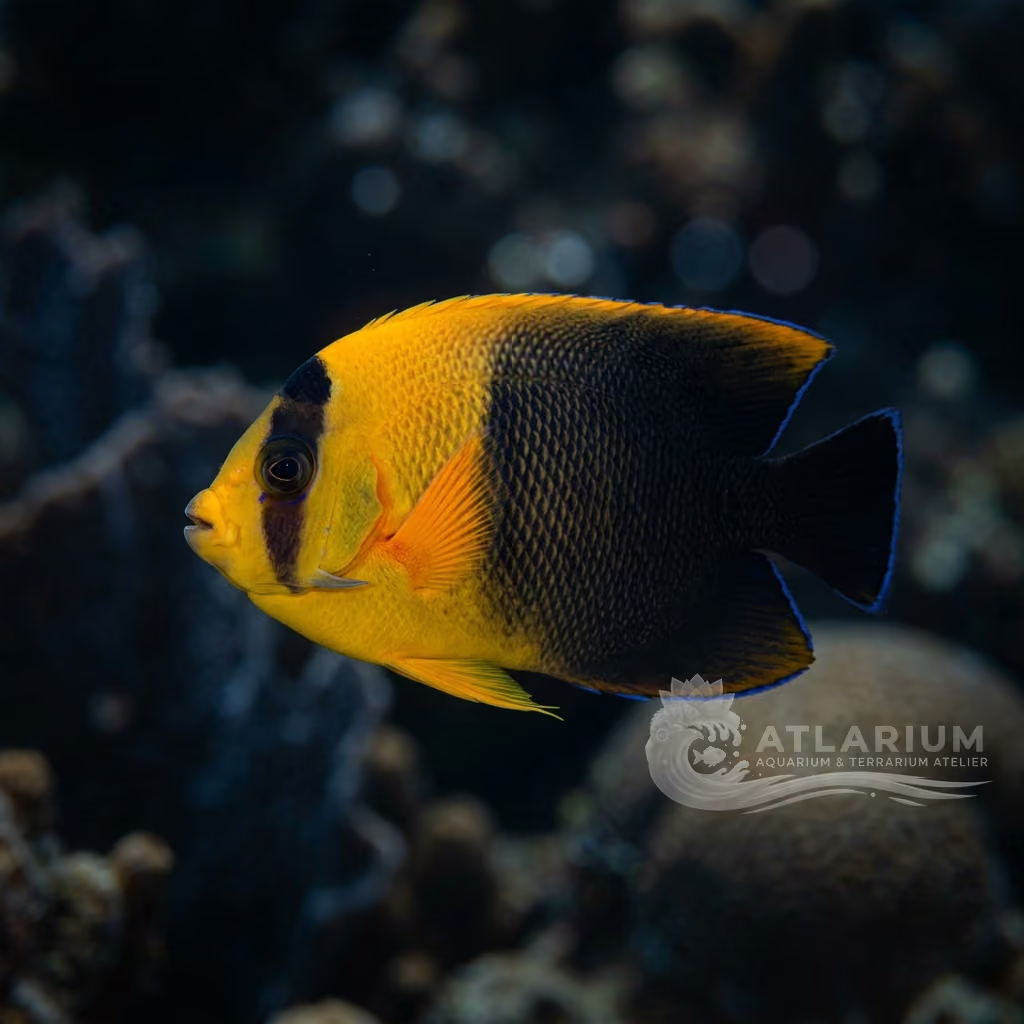
Featuring a dark smoky body and vivid yellow tail, this elegant angelfish needs a 500L aquarium. It grazes heavily on sponges and requires expert nutrition.
Wassertemperatur
24 - 28 °C
pH-Wert
8.1 - 8.4
Wassertyp
Meerwasser
Tankfüllstand
Alle Ebenen
Erwachsenengröße
25 cm
Mindesttankvolumen
>= 450 L
Mindestgruppe
>= 1
KH
8 - 12 dKH

Artbeschreibung
Geographical Origin and Habitat: This species is native to the western Indo-Pacific, primarily concentrated along the coasts of southern India, Sri Lanka, the Maldives, and extending into western Indonesia. It inhabits outer coral reef slopes and drop-offs at depths ranging from 5 to 40 meters. It prefers areas with rich growth of marine sponges and benthic algae, exposed to moderate to strong currents.
Taxonomy and Morphology: Pomacanthus xanthurus belongs to the Pomacanthidae family. It features a deep, laterally compressed body that is almost oval in shape. Like all angelfish of the genus Pomacanthus, it is equipped with a strong preopercular spine located at the base of the gill cover. Adults reach a maximum length of about 20-22 cm, which is moderate for the family.
Social Behavior: It is a primarily solitary fish or one that lives in stable pairs during the breeding season. It displays significant territorial behavior toward conspecifics and other similarly sized angelfish. While curious and active, adults become quite aggressive and dominant, establishing clear hierarchies in the aquarium.
Coloration and Sexual Dimorphism: The adult coloration is characterized by a dark smoky-brown body with a reticulated pattern of scales bordered in silvery gray. The snout is grayish with a dark mask over the eyes. Its distinguishing feature is a bright yellow caudal fin, which creates a sharp contrast with the dark body. There is no externally visible sexual dimorphism; males and females are identical in coloration and size.

Pflege, Zucht und Mitbewohner
Aquarium Setup: Due to its size and active, territorial nature, it requires an aquarium of at least 400-500 liters for a single specimen. The aquascape should incorporate a massive amount of live rock arranged to create large caves and swim-throughs where the fish can hide and graze, while still leaving ample open space for swimming.
Diet and Feeding: It is a specialized omnivore, feeding naturally on marine sponges, tunicates, and macroalgae. In captivity, it must be fed specific angelfish preparations containing sponge tissue, supplemented with frozen foods (mysis, krill, brine shrimp) and vegetable matter such as spirulina and nori sheets to prevent nutritional deficiencies.
Water Quality: It demands pristine and stable water conditions: temperature between 24°C and 27°C, pH between 8.1 and 8.4, and salinity between 1.021 and 1.025. An oversized filtration system with a highly efficient protein skimmer is essential, along with strong water flow to enhance oxygenation and regular water changes to keep nitrates below 15-20 ppm.
Compatibility and Cohabitation: It is not considered fully reef-safe. It is prone to nipping at the polyps of stony corals (both SPS and LPS) and clam mantles (Tridacna), making it risky for mixed reef tanks. It coexists well with robust, active fish like large surgeonfish, triggerfish, wrasses, and damselfish. Avoid housing other Pomacanthus or similar angelfish in the same tank.
Aquarium Breeding: Breeding in home aquariums is extremely difficult and rarely achieved. They are protogynous hermaphrodites that form temporary monogamous pairs. Spawning typically occurs at dusk, when the pair swims toward the surface to release eggs and sperm. The larvae are pelagic and require highly complex feeding protocols using live copepod cultures.
Risks and Diseases: It is susceptible to common marine fish diseases, particularly Oodinium, Cryptocaryon (white spot disease), and HLLE (Head and Lateral Line Erosion). HLLE is often linked to nutritional deficiencies, poor water quality, or the excessive use of unwashed activated carbon. Preventative quarantine and vitamin-enriched foods are strongly recommended.

Geografische Herkunft und Verbreitung
This species is native to the western Indo-Pacific, primarily concentrated along the coasts of southern India, Sri Lanka, the Maldives, and extending into western Indonesia. It inhabits outer coral reef slopes and drop-offs at depths ranging from 5 to 40 meters. It prefers areas with rich growth of marine sponges and benthic algae, exposed to moderate to strong currents.
Ursprung
Tropische Ozeane und RiffeAfrika und MadagaskarSüd- und Südostasien

Fischprofil
- Temperament
- Semi-aggressive
- They exhibit a generally peaceful, albeit slightly bossy, temperament. They are not as inherently belligerent as the Pomacanthus or Holacanthus genera. They make excellent, colorful centerpieces for carefully planned, very large community aquariums.
- Diät
- Omnivore
- They are highly omnivorous and depend heavily on finding marine sponges. Commercial preparations designed specifically for angelfish are critical for long-term survival. Feed plenty of spirulina and chopped mysis shrimp to balance their diet.
- Lebenserwartung
- 10-12 years
- Erwachsenengröße
- 25 cm
- Geschlechterverhältnis
- Solitary
- They should be kept entirely singly unless a guaranteed mated pair is acquired. Two males in the same tank will result in immediate, catastrophic aggression. Differentiating sexes visually is generally impossible without invasive dissection.
- Fütterungsfrequenz
- 2-3 times daily
- Offer them varied, small meals two to three times per day. They are enthusiastic grazers, so mature live rock is highly beneficial. Without frequent feeding, they are much more likely to start eating expensive corals.
- Bioload
- Medium
- This medium-sized angelfish produces a moderate to high bioload. A highly efficient filtration system combined with a strong protein skimmer is required. Regular, disciplined water changes will keep its environment safely pristine.
- Fluss
- Strong
- Moderate water flow suits their natural swimming patterns perfectly. Consistent movement helps deliver food throughout the water column during feeding times. It prevents dead spots in the large rock structures they favor.
- Sprungrisiko
- No
- Reproduktion
- Oviparous
- There is currently no reliable data on breeding them in standard home aquaria. Like most angelfish, their pelagic spawning habits require massive water depth. Larval rearing requires specialized microscopic live foods unavailable to hobbyists.
- Kompatibilität & Tankkameraden
- Reef safe
- It is generally more peaceful than other large angelfish but can still show attitude. It can be housed in a reef tank "with caution" as it may nip at fleshy LPS corals and clam mantles. It pairs well with semi-aggressive tangs and peaceful wrasses.
- Tankfüllstand
- All levels
- They spend the majority of their day navigating the middle tank levels. They weave in and out of the rockwork constantly searching for small morsels. Providing a complex aquascape with multiple caves provides them great comfort.

Verwandte Arten
Empfehlungen gruppiert nach nahen Verwandten, Auswahl von Begleitern und ähnlicher Betreuung.