Fisher's Angelfish
Centropyge fisheri
Fisher's Angelfish (Centropyge fisheri) is a vibrant, small marine species endemic to the Hawaiian Islands. It requires a well-established aquarium of at least 70 gallons with plentiful live rock for hiding and constant grazing. This omnivore needs frequent daily feedings of spirulina, mysis shrimp, and specialized sponge-based preparations. Use caution in reef tanks, as it may nip corals.
Wassertemperatur
23 - 28 °C
pH-Wert
8.1 - 8.4
Wassertyp
Meerwasser
Tankfüllstand
Unten und in der Mitte
Erwachsenengröße
8 cm
Mindesttankvolumen
>= 110 L
Mindestgruppe
>= 1
KH
8 - 12 dKH

Artbeschreibung
Geographical Origin and Habitat: Central Pacific, mainly around the Hawaiian Islands and Johnston Atoll. Inhabits rubble areas and outer reef slopes at depths of 10 to 90 meters.
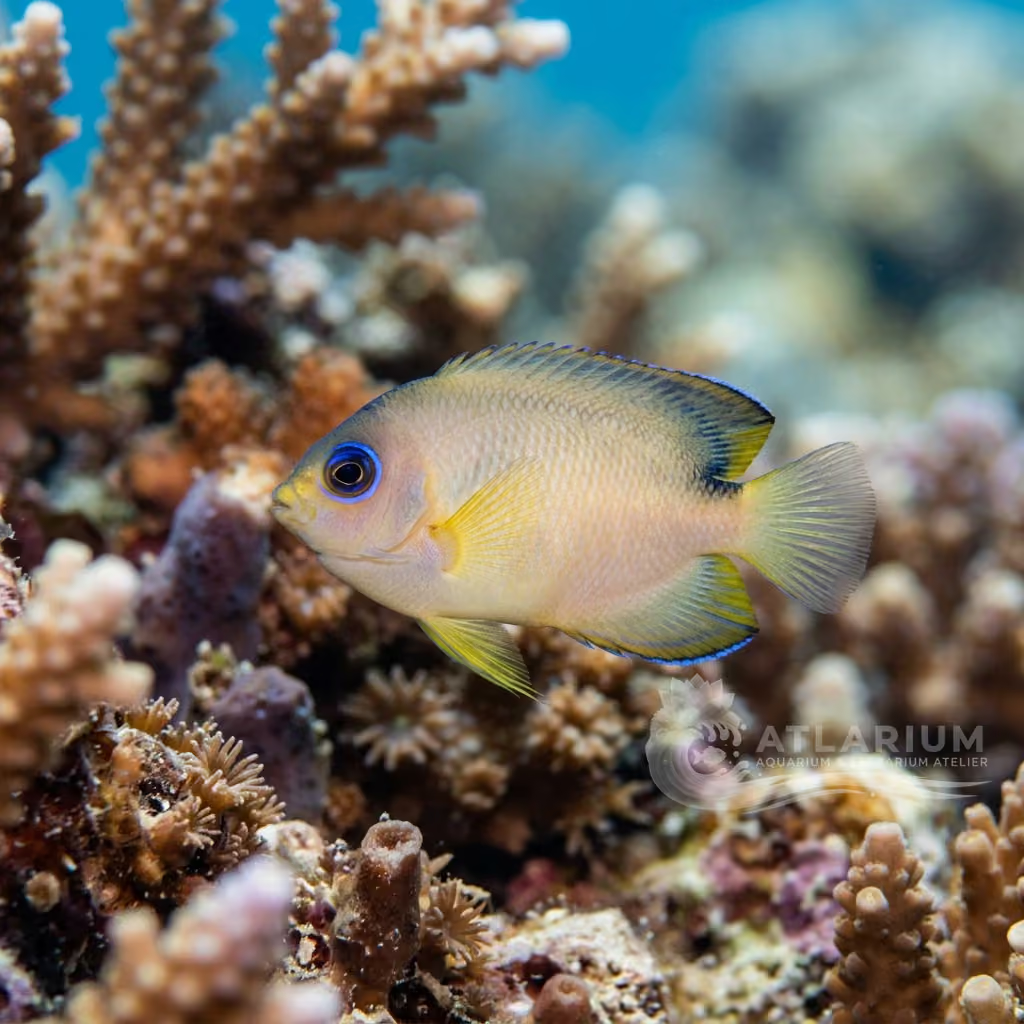
Taxonomy and Morphology: Pomacanthidae family, genus Centropyge. Reaches 8 cm (3.1 inches). Characterized by an oval brownish-orange body, electric blue fin margins, and a translucent tail.
Social Behavior: Active and constantly moving among rockwork. One of the more peaceful dwarf angelfish, though it will defend its shelter firmly.
Coloration and Sexual Dimorphism: Orange-brown or golden body, with anal and dorsal fins trimmed in electric blue, and yellow pectoral fins. Tail is translucent yellow. No sexual dimorphism. This species features a sharp preopercular spine that can easily become entangled in aquarium nets. The social structure in the wild consists of well-defined harems that patrol moderately sized rocky territories.

Pflege, Zucht und Mitbewohner
Aquarium Setup: Requires an aquarium of at least 110 liters with plenty of live rock arranged to create swim-throughs and small caves for hiding.
Diet and Feeding: Omnivorous. Feeds by grazing on live rocks. Offer spirulina, enriched dry foods (flakes or pellets), and frozen brine shrimp or mysis.
Water Quality: Stable temperature between 23°C and 28°C, pH between 8.1 and 8.4, salinity 1.020-1.025, KH 8-12, GH 15-25. Keep water well-oxygenated.
Compatibility and Cohabitation: Semi-aggressive. Compatible with most reef fish. Can be kept in pairs if introduced simultaneously in larger tanks.
Aquarium Breeding: Protagynous hermaphrodite. Captive breeding successfully achieved by commercial operations; spawning occurs pelagically in the evening.
Risks and Diseases: Generally hardy and adaptable. May occasionally nip at corals if underfed or lacking natural algae to graze on. The introduction of high-quality active carbon helps remove dissolved organic compounds, reducing fish stress. It is important to constantly monitor the status of soft corals, which might be targeted in smaller tanks.

Geografische Herkunft und Verbreitung
Central Pacific, mainly around the Hawaiian Islands and Johnston Atoll. Inhabits rubble areas and outer reef slopes at depths of 10 to 90 meters.
Ursprung
Tropische Ozeane und Riffe

Fischprofil
- Temperament
- Semi-aggressive
- Fisher's Angelfish is generally classified as semi-aggressive, exhibiting territorial behavior towards other dwarf angelfish and species with a similar shape or coloration. However, they are usually peaceful towards unrelated tankmates such as gobies, clownfish, and damselfish. Adequate aquarium size and complex rockwork structures help disperse territorial aggression by creating natural boundaries.
- Diät
- Omnivore
- They are omnivorous grazers that require a diverse and balanced diet to thrive in captivity. Their feeding regimen should include specialized angelfish preparations containing sponge matter, high-quality marine algae, Spirulina, and meaty frozen foods like mysis or brine shrimp. They also spend a significant portion of their day grazing on microalgae and detritus found on live rock.
- Lebenserwartung
- 5-7 years
- Erwachsenengröße
- 8 cm
- Geschlechterverhältnis
- Harem
- In the wild, Centropyge fisheri lives in small harems consisting of a single dominant male and several females. In the aquarium, it is recommended to keep them singly, or in an established male-female pair in larger systems to prevent territorial fights. If purchasing two specimens, choosing individuals of different sizes will encourage the larger one to transition into a male, forming a pair.
- Fütterungsfrequenz
- Twice daily
- It is recommended to feed Fisher's Angelfish small amounts two to three times daily to match their natural foraging behavior. Frequent feeding helps keep them well-nourished and significantly reduces the likelihood of them nipping at corals or other sessile invertebrates. A continuous supply of natural algae grazing opportunities on live rock is also highly beneficial.
- Bioload
- Low to Medium
- Fisher's Angelfish has a low-medium biological load due to its small adult size of approximately 2.5 to 3 inches. However, because they require frequent feedings of diverse foods and graze constantly on live rock, a reliable filtration system and regular water changes are necessary. An efficient protein skimmer is highly recommended to manage the organic waste produced by their regular feeding routine.
- Fluss
- Strong
- This species prefers moderate to strong water flow, which mimics the natural reef environments and rubble zones they inhabit in the wild. While they are capable swimmers that can navigate vigorous currents, a balanced water circulation ensures they can swim and feed comfortably without experiencing excessive physical fatigue.
- Sprungrisiko
- Yes
- While they are not the most notorious jumpers, Fisher's Angelfish are agile swimmers and can easily leap out of the tank if startled, chased, or stressed. Therefore, a secure, tight-fitting lid or a fine mesh jump guard is highly recommended to prevent accidental escapes. Providing plenty of hiding spots also reduces the likelihood of them jumping due to fear.
- Reproduktion
- Rare / not documented
- Breeding Centropyge fisheri in home aquariums is extremely difficult due to the challenges of raising their microscopic pelagic larvae. They are protogynous hermaphrodites, spawning at dusk as broadcast spawners where eggs and sperm are released into the water column. While spawning can occur in mature home aquariums, professional hatcheries are typically required to successfully raise the fry.
- Kompatibilität & Tankkameraden
- Territorial
- Fisher's Angelfish is generally reef safe with caution, as they may nip at large polyp stony (LPS) corals, soft corals, and clam mantles, particularly if they are underfed. They are compatible with semi-aggressive and peaceful reef fish of different families but should not be housed with other dwarf angelfish. Introducing them last to the aquarium helps minimize territorial disputes.
- Tankfüllstand
- Middle/Bottom
- This dwarf angelfish primarily occupies the bottom and middle zones of the aquarium, staying in close proximity to the rockwork. They spend most of their time darting in and out of crevices, caves, and rubble piles to forage and hide. Providing an environment with abundant live rock mimics their reef habitat and offers essential security that minimizes stress.

Wissenschaftliche Modelle & Parameter
FishBase
Zugang zu den offiziellen wissenschaftlichen Daten der Art
FishBase v25.04Daten synchronisiert am: 15.06.2026
- Trophäenniveau
- 2,8 ± 0,33 se
- Belastbarkeit
- Hoch (weniger als 15 Monate)
- Phylogenetische Einzigartigkeit (PD50)
- 0.5
- Bayessche Längen-Gewichts-Beziehung
- a = 0.03162, b = 2.84
- AnfälligkeitGeringe Anfälligkeit (10 / 100)

Verwandte Arten
Empfehlungen gruppiert nach nahen Verwandten, Auswahl von Begleitern und ähnlicher Betreuung.