Cherub Angelfish
Centropyge argi
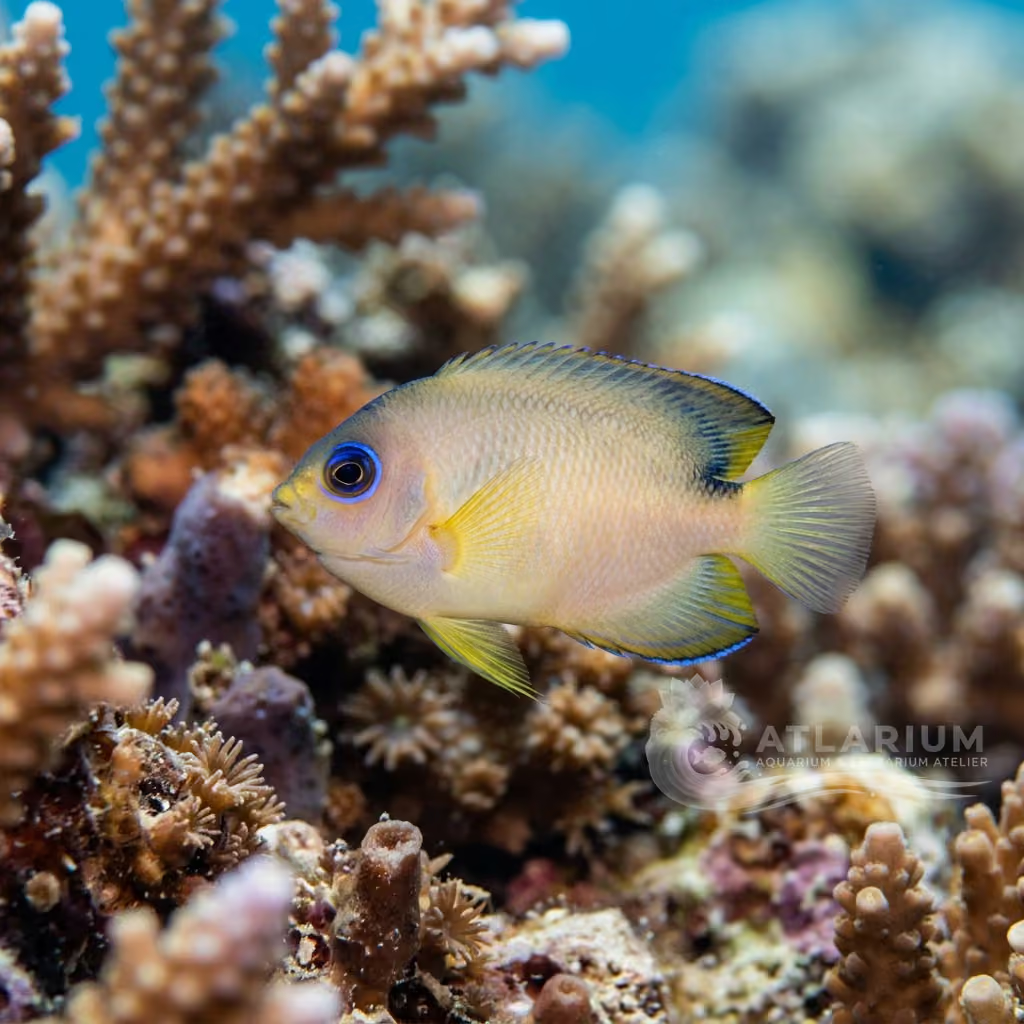
The Pocket Terrorist (3 inches / 8 cm). Tiny, deep blue with a glowing yellow face. But it possesses a truly demonic level of aggression for its size.
Wassertemperatur
24 - 28 °C
pH-Wert
8.1 - 8.4
Wassertyp
Meerwasser
Tankfüllstand
Unten und in der Mitte
Erwachsenengröße
8 cm
Mindesttankvolumen
100 L
Mindestgruppe
>= 1
KH
4 - 6 dKH

Artbeschreibung
Geographical Origin and Habitat: Endemic to the western Atlantic Ocean, from the Caribbean to the Gulf of Mexico and the coast of Brazil. Inhabits coral reefs rich in debris, rocky rubble, and sponge-covered areas at depths ranging from 5 to 80 meters. Prefers areas with an abundance of crevice hiding places.
Taxonomy and Morphology: Small marine angelfish, known as the Cherub Pygmy Angelfish. Belongs to the Pomacanthidae family. Has a compact, deep, and oval-shaped body. Like all members of the Centropyge genus, it possesses a stout preopercular spine (on the cheek) used for defense. Reaches a maximum of 8 cm (3 inches).
Social Behavior: Despite its tiny size and the nickname "Cherub", it is one of the most pugnacious, feisty, and fiercely territorial dwarf angelfish in the aquarium. If introduced first, it will claim the entire tank. Extremely active, it spends all day tirelessly patrolling the live rock, darting in and out of crevices.
Coloration and Sexual Dimorphism: Unmistakable livery: the body is a brilliant deep metallic blue or purplish blue. The head and chest area (throat) explode in a vibrant yellow-orange. The eye is often circled by a thin electric blue ring. There is no visual sexual dimorphism; they are all born female, and the most dominant specimen of the group undergoes a sex change (protogynous hermaphroditism).

Pflege, Zucht und Mitbewohner
Aquarium Setup: Marine tank of at least 100 liters (25 gallons). Although small, it requires ample swimming space due to its marked aggression. The aquarium must contain plenty of mature Live Rock to form a complex architecture of caves, tunnels, and overhangs that will delimit its territorial boundaries. Be careful with wavemakers, which must not trap it.
Diet and Feeding: Omnivore with a strong grazing component. Spends the day tearing microalgae and detritus from live rock. In the aquarium, it must be fed with spirulina flakes, dried macroalgae (Nori), and enriched mysis or brine shrimp. Has an occasional tendency to nip at soft coral polyps and sponges.
Water Quality: Standard tropical marine water. Salinity (Specific Gravity) of 1.023-1.025. Temperature: 24.0-28.0 °C (75-82 °F). Stable alkaline pH: 8.1-8.4. Excellent filtration with a high-performance protein skimmer to remove organic compounds before they decay, ensuring crystal clear and oxygenated water.
Compatibility and Cohabitation: Tolerated in Reef (coral) tanks only with close monitoring, as it might taste LPS corals and Tridacna clams. It does not tolerate other dwarf angelfish (they would kill each other) or fish of similar shape/color unless the tank is over 500 liters (130 gallons). Must ALWAYS be added LAST to a marine community tank.
Aquarium Breeding: Very difficult but occasional in the large tanks of expert enthusiasts. Pelagic spawners: male and female rise in the water column towards evening and simultaneously release eggs and sperm. The eggs are swept away by the current. Rearing the microscopic marine larvae is almost prohibitive at home.
Risks and Diseases: Frequent mortality due to lethal territorial battles in tanks that are too small or due to premature introduction into aquariums without mature rock to graze on (death by starvation or immune stress). Relatively resistant to common marine diseases (Cryptocaryon and Oodinium) if well acclimated.

Geografische Herkunft und Verbreitung
Endemic to the western Atlantic Ocean, from the Caribbean to the Gulf of Mexico and the coast of Brazil. Inhabits coral reefs rich in debris, rocky rubble, and sponge-covered areas at depths ranging from 5 to 80 meters. Prefers areas with an abundance of crevice hiding places.
Ursprung
Tropische Ozeane und RiffeExtra-Amazonas-SüdamerikaMittelamerika und KaribikNordamerika

Fischprofil
- Temperament
- Semi-aggressive
- Despite its small size, this species is semi-aggressive and highly territorial, particularly toward other dwarf angelfish and similar-looking species. They will actively defend their established territories and can become pugnacious in smaller aquariums. However, they are generally peaceful toward unrelated tank mates that do not share their shape or feeding habits. Introducing them as one of the last additions to the tank can help curb their territorial tendencies.
- Diät
- Omnivore
- The Cherub Angelfish is an omnivore with a strong herbivorous inclination, feeding on microalgae, detritus, and tiny benthic invertebrates in the wild. In the aquarium, they require a varied diet that includes high-quality marine algae, spirulina, sponge-enriched preparations, and mysis or brine shrimp. They will also graze continuously on the natural biofilm and algae growing on live rocks. Offering specialized angelfish formulas is highly beneficial to support their nutritional needs and vibrant coloration.
- Lebenserwartung
- 5-10 years
- Erwachsenengröße
- 8 cm
- Geschlechterverhältnis
- Harem
- In captivity, it is best to house the Cherub Angelfish singly, in mated pairs, or in small harem groups consisting of one male and multiple females. Since they are protogynous sequential hermaphrodites, all individuals start as females, and the dominant fish transitions into a male. To establish a pair or harem, it is crucial to introduce individuals of significantly different sizes, ensuring the larger fish becomes the male. Providing ample territory and hiding spaces is necessary to mitigate intraspecific aggression.
- Fütterungsfrequenz
- Twice daily
- Due to their high activity levels and continuous grazing behavior, the Cherub Angelfish should be fed small amounts two to three times daily. Providing frequent, smaller meals helps mimic their natural foraging habits on the reef and prevents digestive issues. Additionally, an established aquarium with abundant live rock allows them to graze on algae throughout the day. Consistent feeding routines are essential to maintain their energy levels and reduce territorial aggression.
- Bioload
- Low to Medium
- The Cherub Angelfish is a small species, resulting in a relatively low to moderate biological waste output. However, due to its active nature and frequent feeding requirements, a well-established filtration system is essential to manage organic compounds. Efficient protein skimming and regular water changes are recommended to maintain pristine water quality. A mature tank with plenty of live rock will also help process nutrients naturally.
- Fluss
- Moderate
- Centropyge argi needs steady, moderate circulation distributed across the aquarium rather than a narrow, forceful jet. Marine tank of at least 100 liters (25 gallons). Although small, it requires ample swimming space due to its marked aggression. This preserves useful water exchange while retaining calmer shelter for rest and feeding.
- Sprungrisiko
- Yes
- The Cherub Angelfish has a moderate jump risk and is known to leap from the water when startled, chased by tank mates, or during territorial disputes. Therefore, a secure, tight-fitting lid or a fine mesh screen cover is highly recommended to prevent escape. Providing ample hiding spots will help them feel secure and significantly reduce the likelihood of panic-induced jumping. Particular caution should be exercised when introducing them to a new environment.
- Reproduktion
- Oviparous
- Breeding the Cherub Angelfish in captivity is challenging but has been successfully achieved by advanced aquarists. They are broadcast spawners that perform a complex courtship ritual in the evening, rising together in the water column to release pelagic eggs and sperm. A tall aquarium is necessary to allow for this vertical spawning rise and to ensure proper fertilization. Raising the microscopic larvae requires specialized live foods, such as copepod nauplii, and precise environmental control.
- Kompatibilität & Tankkameraden
- Reef safe with caution
- They are compatible with a wide range of semi-aggressive marine fish, such as dottybacks, damselfish, wrasses, and larger gobies. They should not be kept with other dwarf angelfish unless the tank is exceptionally large and has distinct territories. While generally considered 'reef safe with caution,' they may occasionally nip at large polyp stony (LPS) corals, soft corals, or clam mantles, especially if underfed. Large, aggressive predators should be avoided, as they can easily stress or prey upon this small species.
- Tankfüllstand
- Middle/Bottom
- This species is highly reef-associated and spends most of its time swimming in the bottom and middle zones of the aquarium. They prefer to stay close to the shelter of live rock, frequently darting in and out of caves, crevices, and rubble areas. They rarely venture into open upper water columns unless spawning or feeding. Consequently, a complex aquascape with numerous pathways is essential to match their natural dwelling habits.

Wissenschaftliche Modelle & Parameter
FishBase
Zugang zu den offiziellen wissenschaftlichen Daten der Art
FishBase v25.04Daten synchronisiert am: 15.06.2026
- Trophäenniveau
- 2 ± 0 se
- Belastbarkeit
- Hoch (weniger als 15 Monate)
- Phylogenetische Einzigartigkeit (PD50)
- 0.5
- Bayessche Längen-Gewichts-Beziehung
- a = 0.0302, b = 2.89
- AnfälligkeitGeringe Anfälligkeit (10 / 100)

Verwandte Arten
Empfehlungen gruppiert nach nahen Verwandten, Auswahl von Begleitern und ähnlicher Betreuung.