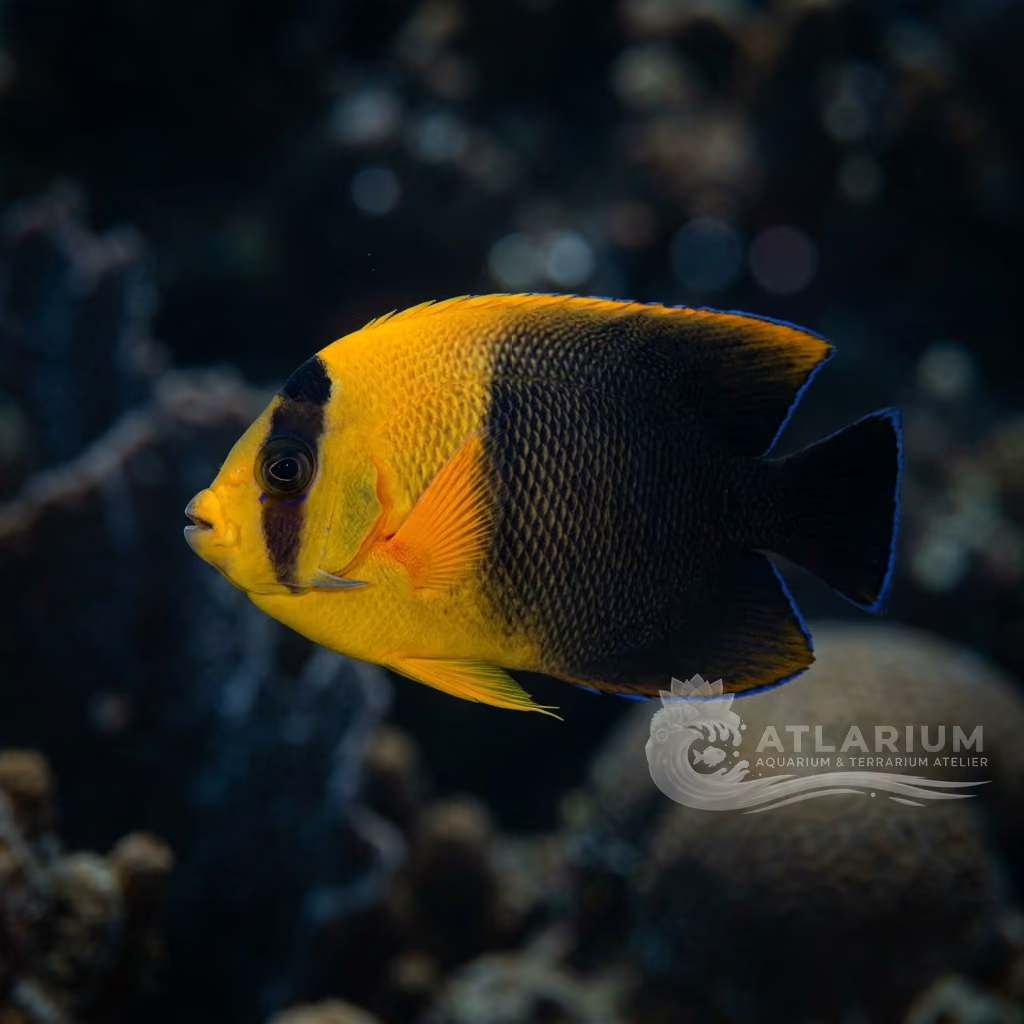
Peppermint Angelfish
Centropyge boylei
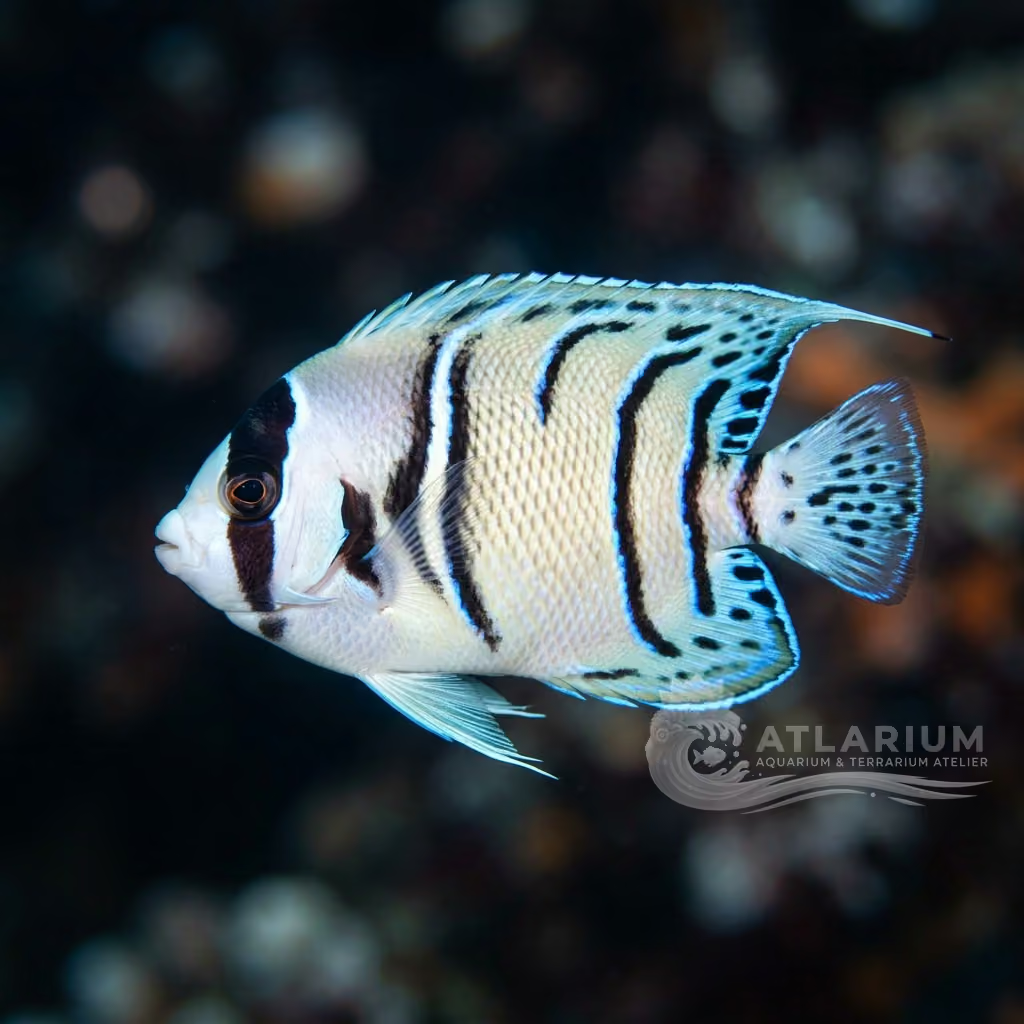
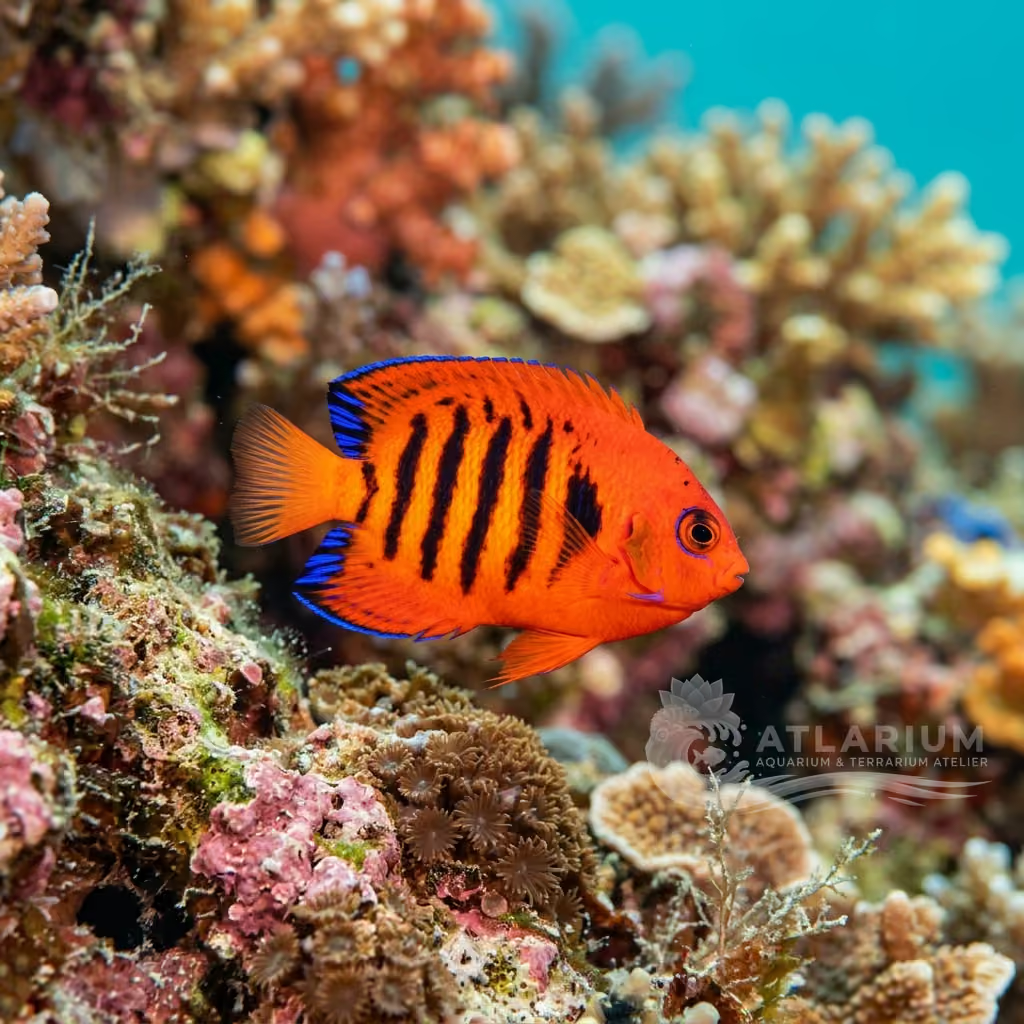
The Peppermint Angelfish is a legendary and extremely rare deep-water marine species, instantly recognized by its striking candy-cane red and white vertical stripes.
Wassertemperatur
18 - 22 °C
pH-Wert
8.1 - 8.4
Wassertyp
Meerwasser
Tankfüllstand
Unten und in der Mitte
Erwachsenengröße
7,5 cm
Mindesttankvolumen
>= 100 L
Mindestgruppe
>= 1
KH
8 - 12 dKH

Artbeschreibung
Geographical Origin and Habitat: This highly prized species is native to the Eastern Central Pacific, recorded primarily around the Cook Islands (especially Rarotonga) and French Polynesia. It inhabits steep outer reef slopes and drop-offs at extreme depths of 50 to 120 meters, living inside cold limestone caves and deep rock fissures.
Taxonomy and Morphology: Belongs to the family Pomacanthidae. It is a dwarf angelfish showcasing the classic oval, laterally compressed body shape with a sharp spine located on the lower margin of the preopercle. It is a small species, reaching a maximum length of approximately 7 cm.
Social Behavior: Secretive, shy, and rarely observed in the wild. It lives in pairs or small family groups of 3-4 individuals inside dark cave systems. It frequently swims upside down along cave ceilings and walls, avoiding bright open water areas to protect itself from predators.
Coloration and Sexual Dimorphism: Features an iconic and unmistakable coloration consisting of alternating, vertical bright red-orange and snow-white stripes, resembling a peppermint candy cane. The dorsal and anal fins are red, trimmed with thin white and blue margins. There is no visible external sexual dimorphism.

Pflege, Zucht und Mitbewohner
Aquarium Setup: Requires a specialized deep-water reef setup of at least 150-200 liters. The design must feature extensive rockwork forming dark caves, overhangs, and swim-throughs. Lighting must be extremely dim, using only weak actinic or blue LED lamps to mimic depth conditions.
Diet and Feeding: Omnivorous but highly selective. Initial feeding requires live foods such as copepods and amphipods to encourage feeding. Gradually transition to premium frozen foods like mysis shrimp, brine shrimp, and specialized foods containing marine sponge material and algae. Feed multiple times daily.
Water Quality: Demands cool and highly stable water temperatures between 20°C and 23°C, requiring a reliable aquarium chiller. Keep water parameters pristine: pH 8.1 to 8.4, specific gravity 1.022 to 1.025, and near-zero nitrates. Ensure maximum dissolved oxygen levels.
Compatibility and Cohabitation: Keep only with very peaceful, non-aggressive tankmates that thrive in cool, deep-water setups (such as small gobies, pipefish, or deep-water anthias). Do not house with other dwarf angelfish to prevent territorial fights. Generally reef-safe with deep-water corals.
Aquarium Breeding: Protogynous hermaphrodite. Captive breeding is completely undocumented in home aquaria. Collection and possession of this species are restricted to specialized public aquariums or advanced collectors due to its extreme depth habitat and high cost.
Risks and Diseases: The primary risk is decompression sickness and stress from import. It is extremely sensitive to thermal shock; water temperatures above 24°C will quickly cause death. Highly susceptible to bacterial infections if water quality is not maintained.

Geografische Herkunft und Verbreitung
This highly prized species is native to the Eastern Central Pacific, recorded primarily around the Cook Islands (especially Rarotonga) and French Polynesia. It inhabits steep outer reef slopes and drop-offs at extreme depths of 50 to 120 meters, living inside cold limestone caves and deep rock fissures.
Ursprung
Tropische Ozeane und Riffe

Fischprofil
- Temperament
- Semi-aggressive
- This dwarf angelfish is primarily peaceful, reclusive, and very shy, spending most of its day foraging quietly among the rocks. However, it can display territorial behavior toward other members of the genus Centropyge or species with a similar body shape and coloration. They are generally non-aggressive toward unrelated tank mates and will keep to themselves if provided with sufficient hiding places. Stress from aggressive tank mates can cause them to retreat permanently, leading to health issues.
- Diät
- Omnivore
- In the wild, the Peppermint Angelfish feeds on sponges, tunicates, algae, and small benthic invertebrates. In captivity, providing a varied diet is essential to mimic this natural intake and stimulate feeding. They should be offered frozen foods such as mysis shrimp, vitamin-enriched brine shrimp, and high-quality preparations containing sponge matter and spirulina. Encouraging them to accept prepared feeds can be challenging, so live food or fresh clam on the half shell may be needed initially.
- Lebenserwartung
- 5-10 years
- Erwachsenengröße
- 7.5 cm
- Geschlechterverhältnis
- Harem
- Like other dwarf angelfish of the genus Centropyge, the Peppermint Angelfish is a protogynous hermaphrodite, with individuals starting life as females and the dominant one transitioning into a male. Due to their extreme rarity and high cost, they are almost exclusively kept as single specimens in home aquariums. If an aquarist attempts to form a pair, it is recommended to introduce a smaller female alongside a larger, established individual. Keeping multiple males together should be avoided as it will lead to severe territorial conflict.
- Fütterungsfrequenz
- 3-4 times daily
- Due to their active foraging behavior and high metabolism, Peppermint Angelfish should be fed small amounts two to three times a day. Frequent feedings help keep them active and reduce the likelihood of them nipping at corals or other sessile invertebrates. Providing food in smaller, manageable portions prevents excess nutrients from degrading the water quality, which must remain pristine. Utilizing an automatic feeder for dry foods is possible once the fish is fully transitioned and comfortable with prepared diets.
- Bioload
- Low
- The biological load of the Peppermint Angelfish is relatively low due to its small adult size of approximately 7 centimeters. However, because it is a highly delicate deep-water species, it requires pristine water quality and excellent filtration. A robust protein skimmer, regular water changes, and a mature biological filter are essential to prevent any accumulation of organic waste. Maintaining stable, low-nutrient parameters is critical for its long-term survival in captivity.
- Fluss
- Strong
- In their native deep-reef habitats, these fish navigate areas with moderate to strong currents along seaward slopes, but they spend most of their time in sheltered microhabitats. In an aquarium, they prefer moderate water flow that provides clean, oxygen-rich water without forcing them to struggle against high-velocity jets. It is beneficial to design the rockwork to create low-flow pockets and calm zones where they can rest. Gentle, laminar flow is ideal for simulating their natural environment while keeping the tank clean.
- Sprungrisiko
- Yes
- The Peppermint Angelfish is a naturally shy and easily startled species that may jump when frightened by sudden movements or lighting changes. Given their exceptional rarity and high financial value, securing the aquarium is of paramount importance. A tight-fitting lid or a fine mesh cover is mandatory to prevent any accidental escape or fatal jumps. Ensuring a quiet environment around the tank can also minimize the stress that triggers this jumping response.
- Reproduktion
- Oviparous
- Breeding the Peppermint Angelfish in captivity is extraordinarily difficult and has only been achieved by specialized research institutions and elite breeding facilities. They are broadcast spawners that release their gametes into the water column, requiring precise environmental cues and massive, deep tanks to stimulate spawning. The microscopic, planktonic larvae are incredibly fragile and require highly specific, tiny live foods like copepods to survive. For the average hobbyist, captive reproduction is currently not feasible due to these complex requirements.
- Kompatibilität & Tankkameraden
- Species only
- The Peppermint Angelfish is compatible with peaceful, deep-water reef species such as certain anthias, gobies, and fairy wrasses that share similar cool-water requirements. They should not be kept with aggressive or highly active fish that might outcompete them for food or stress them into hiding. Caution is advised when keeping them in reef aquariums, as they may nip at large polyp stony corals, clams, and decorative sponges. Conspecifics or other dwarf angelfish should be avoided unless the aquarium is exceptionally large and has numerous territory boundaries.
- Tankfüllstand
- Middle/Bottom
- In their natural habitat, these fish reside at significant depths of 55 to 120 meters, inhabiting steep reef slopes and rocky crevices. In captivity, they display a strong preference for the bottom and middle levels of the aquarium, where they navigate close to the rockwork. They spend most of their time darting in and out of caves, overhangs, and shaded spots, rarely venturing into open water. Providing an environment rich in live rock with plenty of tunnels is necessary to replicate this cryptic behavior.

Wissenschaftliche Modelle & Parameter
FishBase
Zugang zu den offiziellen wissenschaftlichen Daten der Art
FishBase v25.04Daten synchronisiert am: 15.06.2026
- Trophäenniveau
- 2,8 ± 0,3 se
- Belastbarkeit
- Hoch (weniger als 15 Monate)
- Phylogenetische Einzigartigkeit (PD50)
- 0.5
- Bayessche Längen-Gewichts-Beziehung
- a = 0.0302, b = 2.89
- AnfälligkeitGeringe Anfälligkeit (10 / 100)

Verwandte Arten
Empfehlungen gruppiert nach nahen Verwandten, Auswahl von Begleitern und ähnlicher Betreuung.