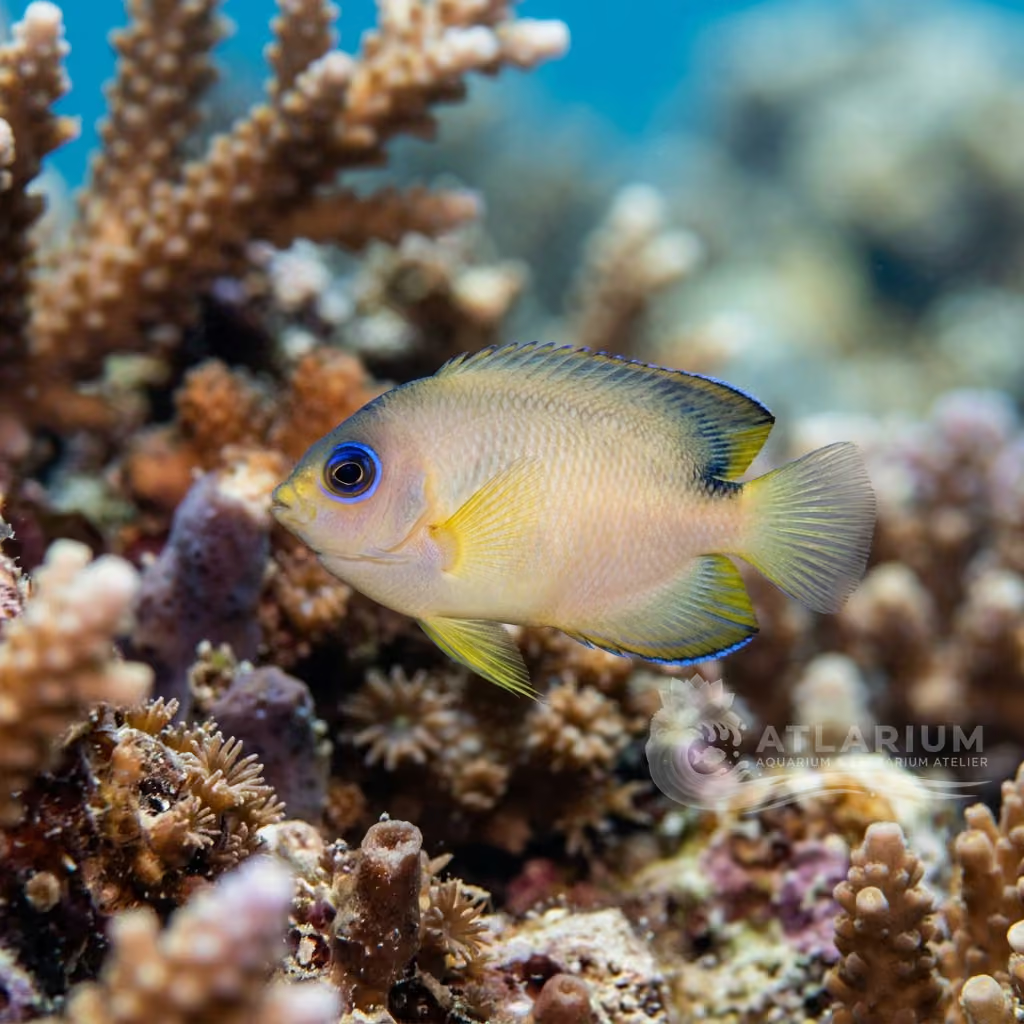
Japanese Pygmy Angelfish
Centropyge interrupta
This rare, highly valued dwarf angelfish from Japan displays an exquisite orange and blue pattern. It requires cooler subtropical waters and extensive rockwork.
Wassertemperatur
20 - 25 °C
pH-Wert
8.1 - 8.4
Wassertyp
Meerwasser
Tankfüllstand
Unten und in der Mitte
Erwachsenengröße
15 cm
Mindesttankvolumen
>= 250 L
Mindestgruppe
>= 1
KH
8 - 12 dKH

Artbeschreibung
Geographical Origin and Habitat: Centropyge interrupta is restricted to the Northwest Pacific Ocean. It is primarily found along the coasts of southern Japan, the Izu Islands, the Ogasawara Islands, and extends eastward to Midway Atoll. It inhabits rocky reefs and deep coral slopes at depths ranging from 15 to 60 meters, where the water is relatively cool and subject to strong currents.
Taxonomy and Morphology: Classified within the family Pomacanthidae, this species is one of the largest members of the genus Centropyge, with adults reaching a maximum length of 15 cm. It possesses an oval, laterally compressed body and a prominent, sharp spine on the preoperculum, which is characteristic of all marine angelfish.
Social Behavior: In the wild, it is found solitary or in small harems consisting of a single dominant male and several females. It is an active, inquisitive, and highly territorial fish. It displays intense intraspecific aggression and will fiercely defend its territory against other dwarf angelfish or similarly colored species.
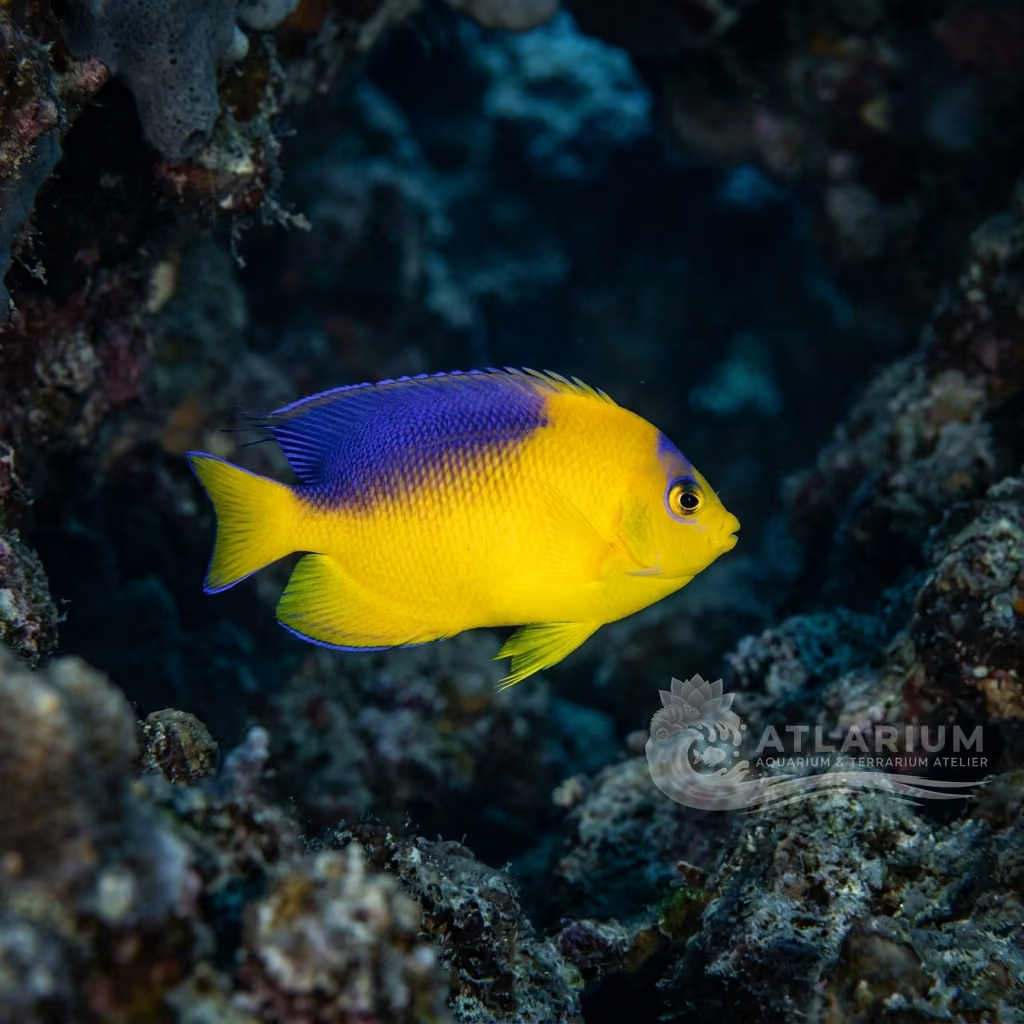
Coloration and Sexual Dimorphism: It exhibits a spectacular coloration: the head and anterior half of the body are bright orange-yellow speckled with neon-blue dots, while the posterior half transitions into a deep bluish-violet. Sexual dimorphism is visible; mature males develop elaborate blue lines on their face and wider blue margins on the caudal and dorsal fins.

Pflege, Zucht und Mitbewohner
Aquarium Setup: Requires a large, established aquarium of at least 250 liters. The tank must be designed with extensive rockwork to form numerous caves, tunnels, and crevices, allowing the fish to shelter and establish territorial boundaries. An open water area is also necessary to accommodate its active swimming habits.
Diet and Feeding: Omnivorous. In their natural habitat, they feed on filamentous algae, detritus, small benthic invertebrates, and sponges. In captivity, provide a varied diet consisting of high-quality frozen mysis and brine shrimp, spirulina-based flakes or pellets, sheet algae (nori), and specialized angelfish foods containing sponge material.
Water Quality: This species originates from cooler subtropical waters and is highly sensitive to warm tropical temperatures. The water temperature should be maintained between 20 and 25 °C, and prolonged exposure to temperatures above 26 °C must be avoided. Keep pH stable at 8.1-8.4, salinity at SG 1.020-1.025, and ensure high oxygenation.
Compatibility and Cohabitation: Reef safe with caution. It may nip at large polyp stony (LPS) and small polyp stony (SPS) corals, as well as clam mantles, particularly if underfed. Do not house with other Centropyge species unless in a very large aquarium, as territorial conflicts can be fatal.
Aquarium Breeding: Protogynous hermaphrodite; all individuals are born female, and the dominant female changes sex to male. While spawning has been achieved in public aquariums and commercial aquaculture settings, rearing the pelagic larvae remains extremely challenging for home aquarists.
Risks and Diseases: Highly susceptible to thermal stress, which weakens its immune system. Prone to marine ich (Cryptocaryon irritans) and velvet (Amyloodinium) if kept in suboptimal water conditions. A proper quarantine protocol is strongly recommended before introducing this valuable fish to the display tank.

Geografische Herkunft und Verbreitung
Centropyge interrupta is restricted to the Northwest Pacific Ocean. It is primarily found along the coasts of southern Japan, the Izu Islands, the Ogasawara Islands, and extends eastward to Midway Atoll. It inhabits rocky reefs and deep coral slopes at depths ranging from 15 to 60 meters, where the water is relatively cool and subject to strong currents.
Ursprung
Tropische Ozeane und RiffeOstasien

Fischprofil
- Temperament
- Semi-aggressive
- This species exhibits a semi-aggressive and highly territorial temperament, particularly toward other dwarf angelfish and similarly shaped species. They are generally peaceful toward unrelated tankmates such as gobies, wrasses, and larger active fish. However, they will aggressively defend their established territory against intruders or competitors. Introducing them as one of the last additions to the aquarium can help minimize territorial disputes.
- Diät
- Omnivore
- The diet of this omnivorous species should consist of both vegetative and meaty foods to mimic their natural grazing habits. They should be offered high-quality marine algae, spirulina, and specialized angelfish preparations containing sponge material. Additionally, supplement their diet with frozen foods like mysis shrimp, brine shrimp, and finely chopped seafood. Providing mature live rock is crucial, as it allows them to browse for microalgae and detritus throughout the day.
- Lebenserwartung
- 6-10 years
- Erwachsenengröße
- 15 cm
- Geschlechterverhältnis
- Harem
- These angelfish are protogynous hermaphrodites that are best kept singly or in a harem consisting of one male and several females. In smaller systems, keeping only one individual is highly recommended to avoid severe territorial aggression. If attempting to form a pair or harem, introduce a single larger male and one or more smaller, immature females simultaneously into a spacious tank. This social structure allows the dominant female to transition into a male if a male is not already present.
- Fütterungsfrequenz
- Twice daily
- To satisfy their active grazing behavior and fast metabolism, these fish should be fed small portions two to three times daily. Providing multiple small feedings throughout the day helps prevent them from nipping at corals or clam mantles out of hunger. Utilizing feeding clips with dried seaweed can also keep them occupied and encourage natural foraging. Consistent feeding schedules contribute significantly to their overall health and stress reduction.
- Bioload
- Medium
- The Japanese Pygmy Angelfish is a moderately active species that produces a medium biological waste load. Because of its constant grazing and requirement for frequent feedings, a robust filtration system is necessary to maintain pristine water quality. Incorporating a high-performance protein skimmer alongside regular water changes will help manage the organic waste effectively. Providing a well-aerated environment with mature live rock helps process dissolved nutrients and supports biological stability.
- Fluss
- Strong
- The Japanese Pygmy Angelfish prefers moderate to strong water flow, which reflects the dynamic reef slopes and rocky walls of their native habitat. Good water movement ensures high oxygenation levels, which are vital for this species. It also prevents detritus from settling on rocks, encouraging clean grazing surfaces. Care should be taken to provide some low-flow areas where the fish can rest comfortably at night.
- Sprungrisiko
- Yes
- Like many dwarf angelfish, the Japanese Pygmy Angelfish is a fast, agile swimmer that can easily jump when startled. Aggression from tankmates or sudden changes in lighting can cause them to dart upward and jump out of the aquarium. It is essential to secure the tank with a tight-fitting lid or a fine mesh cover to prevent any escape. Providing plenty of hiding places will also reduce their stress levels and minimize the urge to jump.
- Reproduktion
- Oviparous
- Reproduction in the aquarium is exceptionally challenging and rarely achieved by hobbyists due to their vertical spawning behavior. They are protogynous hermaphrodites, meaning they transition from female to male based on social hierarchy. Successful spawning typically requires a very tall aquarium to facilitate their courtship rise, precise lighting cycles, and intensive care for the tiny larvae. Most successful breeding operations are conducted in professional facilities with specialized larval rearing protocols.
- Kompatibilität & Tankkameraden
- Territorial
- While they can coexist with a variety of active marine species, they are not entirely reef-safe as they may nip at large polyp stony (LPS) corals, soft corals, and clam mantles. They are best housed with larger, active fish such as wrasses, tangs, and clownfish, while very small or passive species should be monitored closely. Do not house them with other dwarf angelfish unless the aquarium is exceptionally large with distinct territories. Caution is always advised when introducing them to a mixed reef environment.
- Tankfüllstand
- Middle/Bottom
- This species is highly active and occupies the bottom-middle areas of the aquarium, frequently darting in and out of the rockwork. They spend most of their time grazing on algae growing on the surfaces of live rocks and substrate. While they occasionally venture into the upper water column during feeding or courtship, they prefer to stay close to structural cover. A layout with numerous caves, tunnels, and crevices is essential to replicate their natural swimming behavior.

Wissenschaftliche Modelle & Parameter
FishBase
Zugang zu den offiziellen wissenschaftlichen Daten der Art
FishBase v25.04Daten synchronisiert am: 15.06.2026
- Trophäenniveau
- 2,5 ± 0 se
- Belastbarkeit
- Mittel (1,4 - 4,4 Jahre)
- Phylogenetische Einzigartigkeit (PD50)
- 0.5
- Bayessche Längen-Gewichts-Beziehung
- a = 0.0302, b = 2.89
- AnfälligkeitGeringe Anfälligkeit (10 / 100)

Verwandte Arten
Empfehlungen gruppiert nach nahen Verwandten, Auswahl von Begleitern und ähnlicher Betreuung.