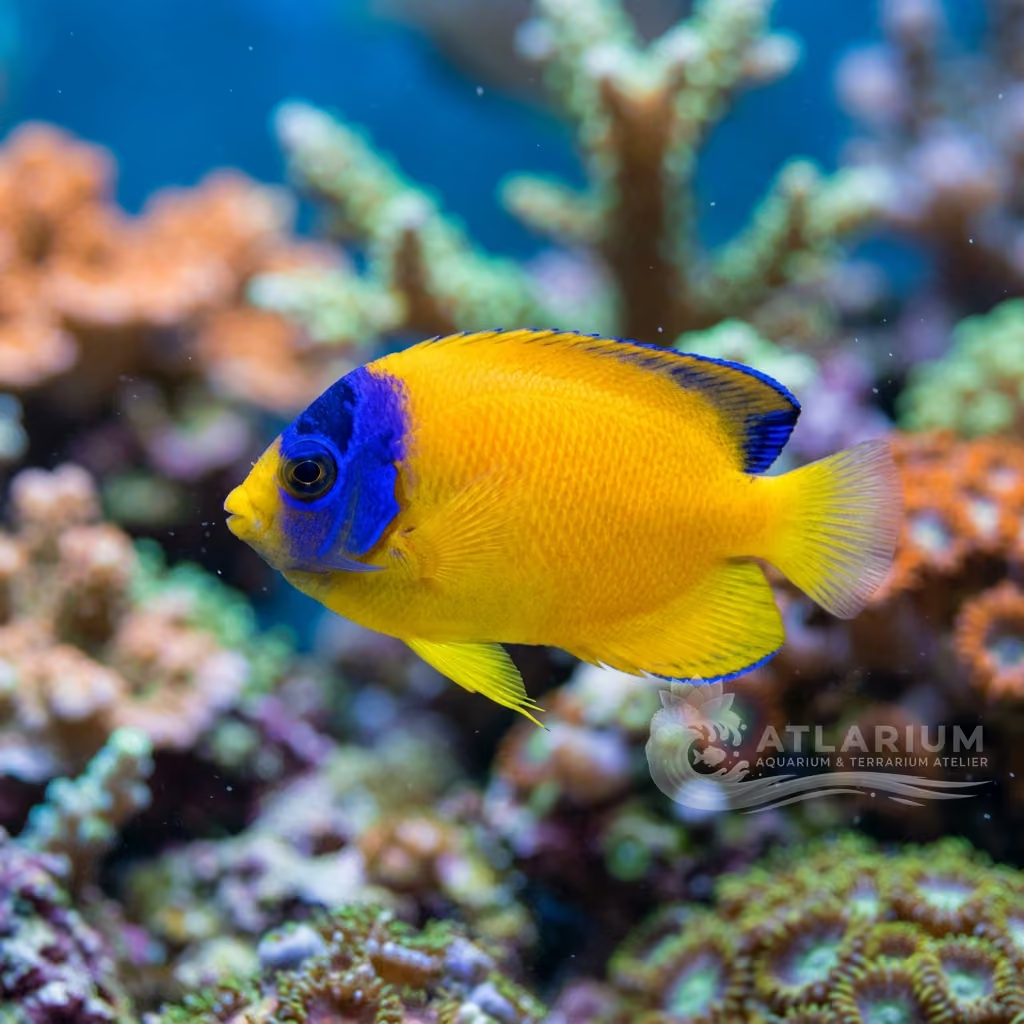
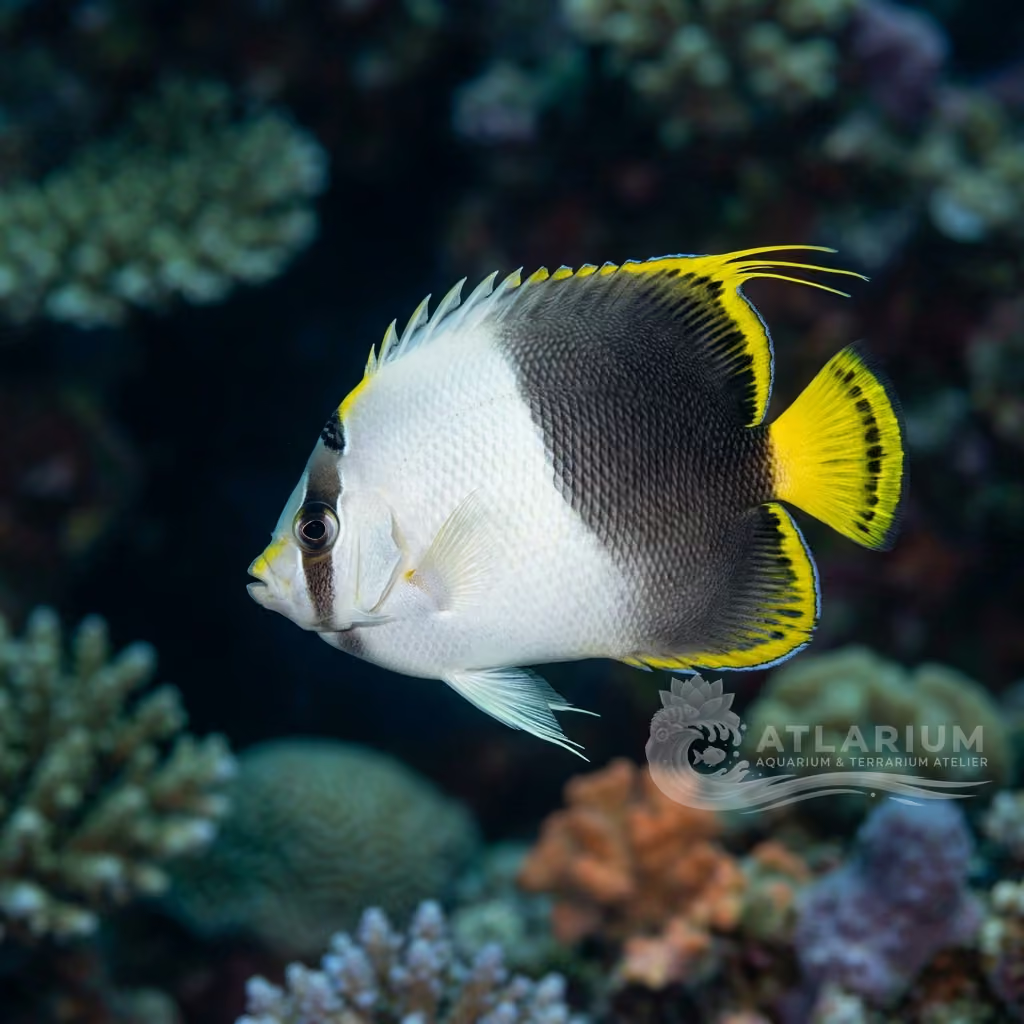
Cortez angelfish
Pomacanthus zonipectus
The Cortez angelfish is an Eastern Pacific giant featuring a vibrant yellow crescent mark. Growing extremely large, it demands a massive, stable aquarium equipped with deep caves and large arches.
Wassertemperatur
21 - 26 °C
pH-Wert
8.1 - 8.4
Wassertyp
Meerwasser
Tankfüllstand
Unten und in der Mitte
Erwachsenengröße
45 cm
Mindesttankvolumen
>= 800 L
Mindestgruppe
>= 1
KH
8 - 11 dKH

Artbeschreibung
Geographical Origin and Habitat: Pomacanthus zonipectus is native to the Eastern Pacific Ocean, with a range extending from the Gulf of California (Mexico) south to northern Peru, including the Galápagos Islands. It inhabits rocky reefs and shallow coral reefs at depths ranging from 2 to 30 meters. Adults prefer areas with moderate to strong currents and abundant rocky crevices where sponges and encrusting organisms grow in large quantities.
Taxonomy and Morphology: Belonging to the family Pomacanthidae and the genus Pomacanthus. Like all large angelfishes, it possesses a deep, laterally compressed body and a sharp, backward-pointing spine on the lower margin of the preoperculum. Its mouth is equipped with strong teeth adapted for tearing pieces of sponge and algae from rocks. Adults can reach a length of 45 centimeters.
Social Behavior: A solitary and highly territorial species. It displays marked aggression toward conspecifics and other large angelfishes. Adults establish and actively defend large territories on the reef. It is a bold and curious species that tends to dominate the aquarium once established. It should be introduced last in community setups.
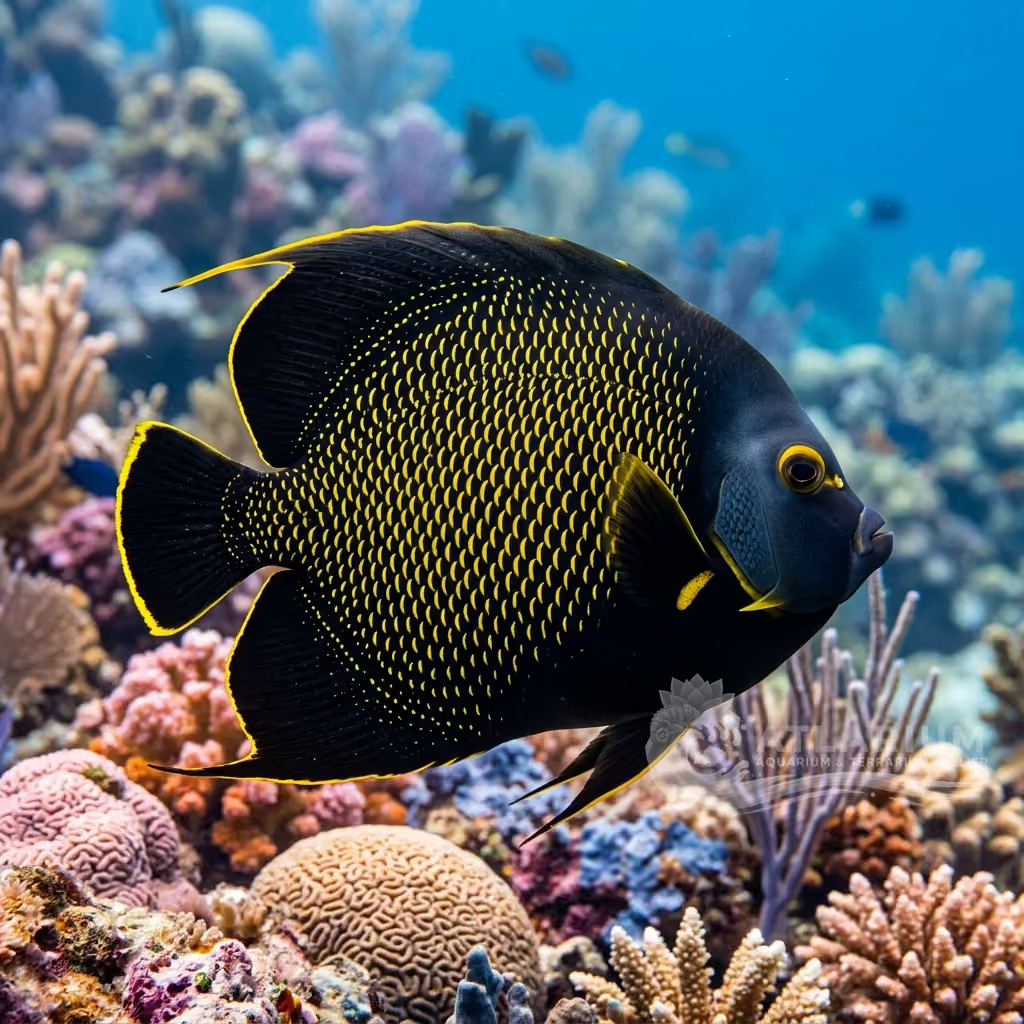
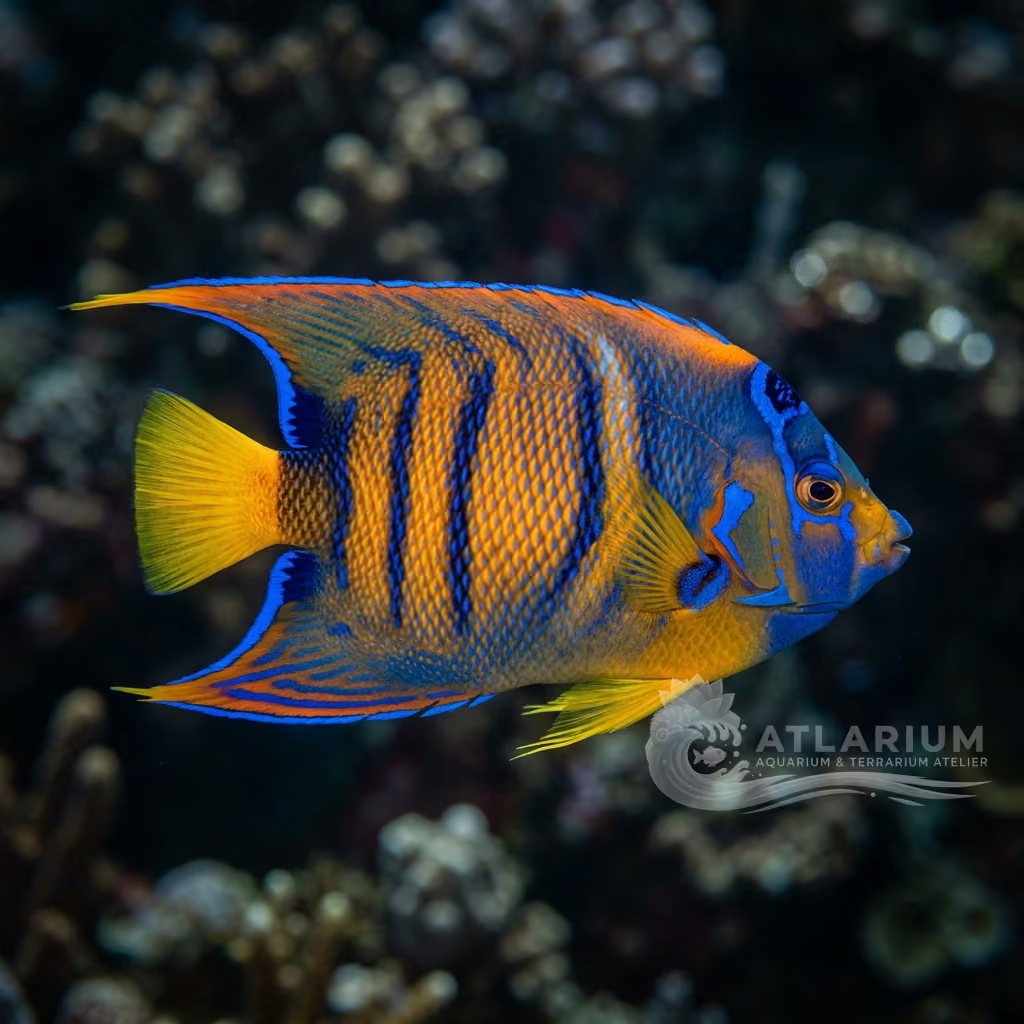
Coloration and Sexual Dimorphism: Undergoes a complete color transformation from juvenile to adult. Juveniles are black with semicircular vertical stripes of yellow and electric blue. Adults display a greyish-brown body with vertical yellow bands behind the head, a checkerboard pattern on the flanks, and blue highlights on the anal and caudal fins. There is no visible sexual dimorphism.

Pflege, Zucht und Mitbewohner
Aquarium Setup: Requires a very large marine aquarium, with a minimum capacity of 700-800 liters (approx. 180-200 gallons) and a tank length of at least 200 cm for an adult specimen. The aquascape should feature large, stable live rock structures that create deep caves and shaded crevices for hiding, while maintaining a large open center for swimming.
Diet and Feeding: A specialized omnivore feeding primarily on sponges, tunicates, macroalgae, and small invertebrates. In captivity, it must be fed high-quality angelfish preparations containing marine sponges and spirulina. Supplement daily with dried seaweed (nori) sheets, frozen foods (mysis, brine shrimp, krill, chopped seafood), and sinking pellets.
Water Quality: Demands clean, well-filtered water with stable parameters. Keep temperature between 22°C and 26°C (72-79°F), pH at 8.1 to 8.4, specific gravity at 1.022 to 1.025, and KH at 8-11 dKH. An efficient protein skimmer and regular water changes are necessary to keep nitrate and phosphate levels low. Avoid sudden water parameter swings.
Compatibility and Cohabitation: Not reef-safe. Adults will nip at large-polyp stony (LPS) corals, soft corals, zoanthids, and clam mantles, making them suitable only for fish-only-with-live-rock (FOWLR) aquariums. They coexist well with large, active tankmates such as tangs, triggerfish, groupers, and large wrasses.
Aquarium Breeding: Spawning in home aquariums is extremely difficult and undocumented due to the vertical swimming space required for courtship. In the wild, they form temporary pairs and release eggs and sperm into the water column at dusk, where the pelagic larvae drift with the currents until they hatch.
Risks and Diseases: Prone to Head and Lateral Line Erosion (HLLE) under poor water quality or vitamin-deficient diets. Susceptible to Marine Ich (Cryptocaryon) and Lymphocystis virus when stressed by transport or sudden temperature drops. A strict quarantine period is essential before introducing this large fish to the main display.

Geografische Herkunft und Verbreitung
Pomacanthus zonipectus is native to the Eastern Pacific Ocean, with a range extending from the Gulf of California (Mexico) south to northern Peru, including the Galápagos Islands. It inhabits rocky reefs and shallow coral reefs at depths ranging from 2 to 30 meters. Adults prefer areas with moderate to strong currents and abundant rocky crevices where sponges and encrusting organisms grow in large quantities.
Ursprung
Tropische Ozeane und RiffeExtra-Amazonas-SüdamerikaMittelamerika und KaribikNordamerika

Fischprofil
- Temperament
- Aggressive
- Semi-aggressive and territorial. Establish them as the last addition. They will dominate smaller timid fish.
- Diät
- Omnivore
- Requires a specialized diet including sponges and algae. Offer high-quality frozen angelfish preparations. Supplement with nori.
- Lebenserwartung
- 15-20 years
- Erwachsenengröße
- 45 cm
- Geschlechterverhältnis
- Solitary
- Usually kept as a single specimen. Pairs can be attempted in very large tanks. Two males will fight to the death.
- Fütterungsfrequenz
- Twice daily
- Feed at least two to three times daily. Small frequent meals are best. Ensure food contains marine sponges.
- Bioload
- High
- Angelfish produce a high bioload due to their size and diet. A strong protein skimmer is highly recommended. Regular maintenance is key.
- Fluss
- Strong
- Moderate to strong flow is preferred. This simulates their natural reef environment. Allow some calm areas behind rocks.
- Sprungrisiko
- No
- Reproduktion
- Oviparous
- Captive breeding is very difficult. They release eggs and sperm into the water column. Larvae are challenging to raise.
- Kompatibilität & Tankkameraden
- Reef safe
- They can nip at corals and clams. Best kept in FOWLR tanks. Avoid keeping with other large angelfish.
- Tankfüllstand
- Middle/Bottom
- They roam across all levels of the aquarium. They need plenty of live rock for grazing. Adequate swimming space is essential.

Wissenschaftliche Modelle & Parameter
FishBase
Zugang zu den offiziellen wissenschaftlichen Daten der Art
FishBase v25.04Daten synchronisiert am: 15.06.2026
- Trophäenniveau
- 3,1 ± 0,32 se
- Belastbarkeit
- Niedrig (4,5 - 14 Jahre)
- Phylogenetische Einzigartigkeit (PD50)
- 0.5001
- Bayessche Längen-Gewichts-Beziehung
- a = 0.02754, b = 2.89
- AnfälligkeitMäßige Anfälligkeit (36 / 100)

Verwandte Arten
Empfehlungen gruppiert nach nahen Verwandten, Auswahl von Begleitern und ähnlicher Betreuung.