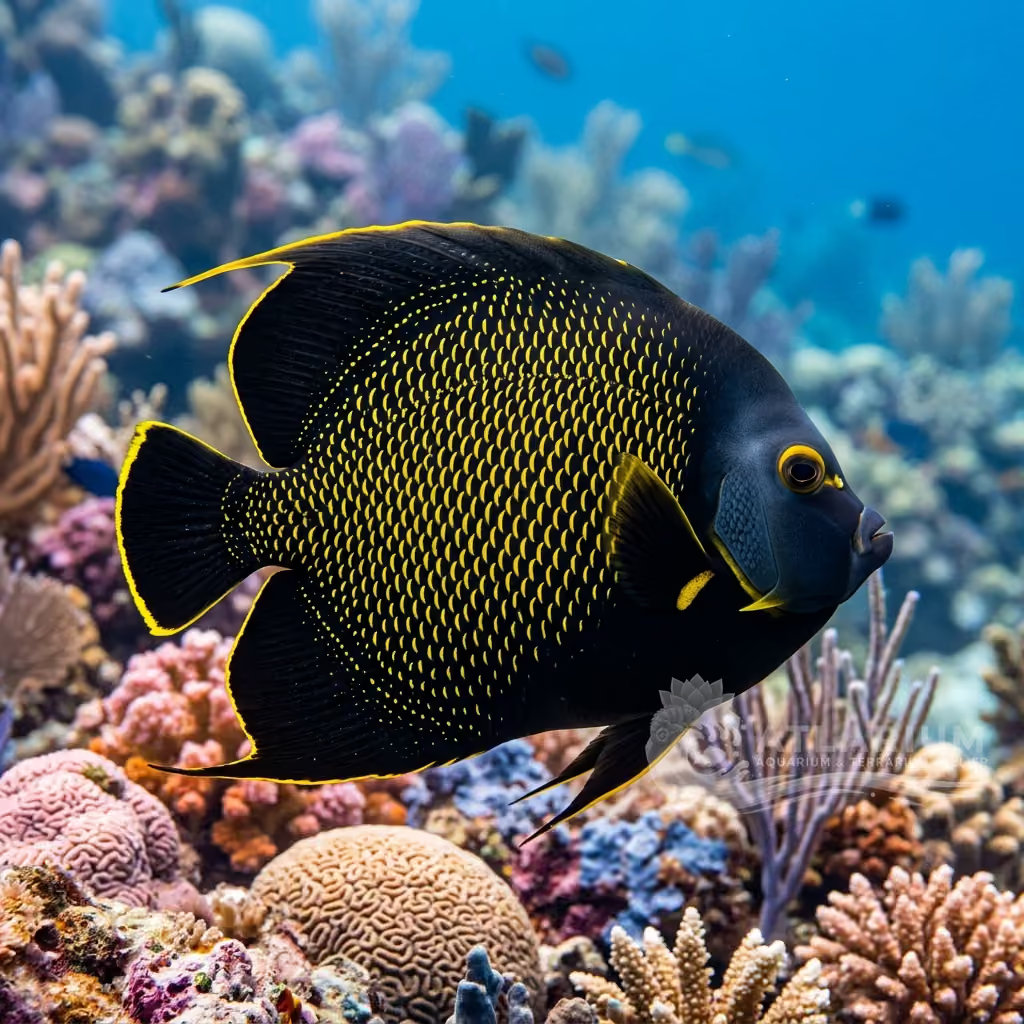
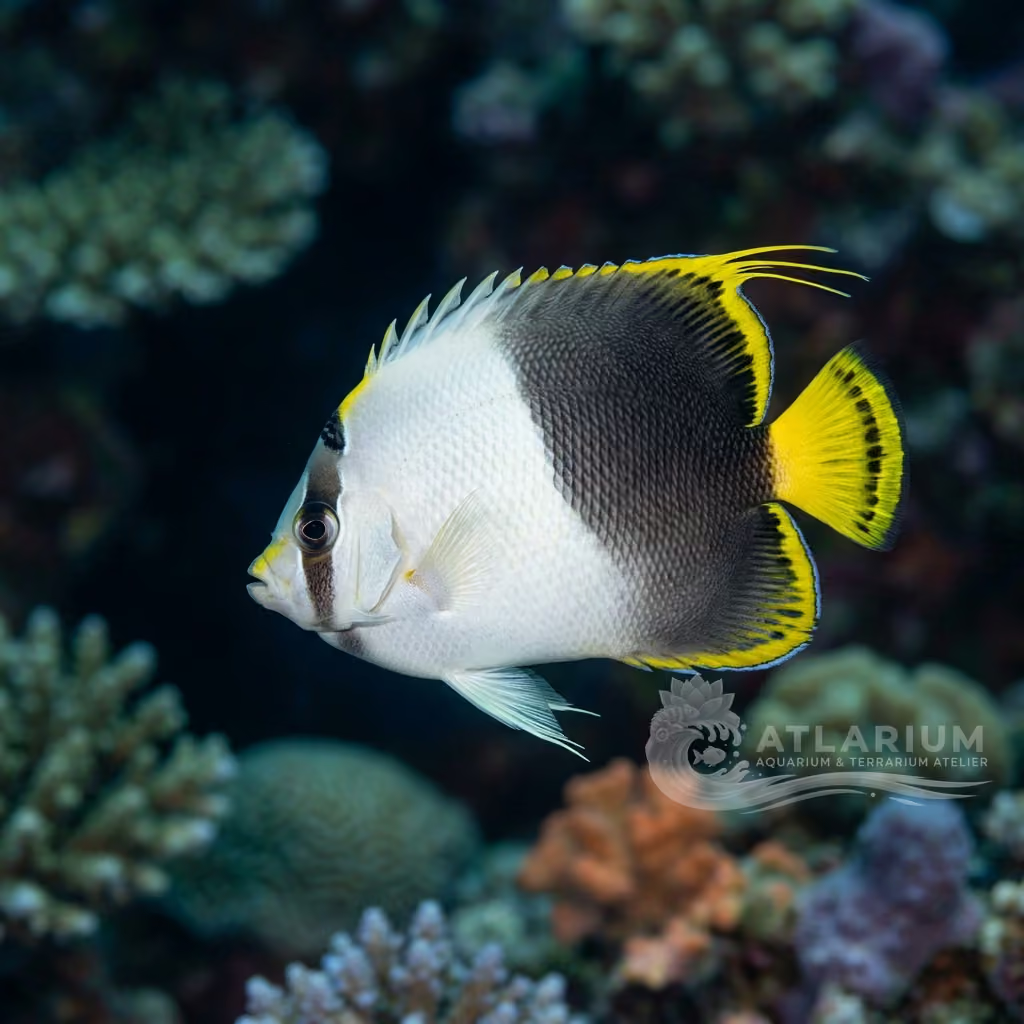
Asfur angelfish
Pomacanthus asfur
Pomacanthus asfur is a stunning large angelfish native to the Red Sea. Featuring a bright yellow crescent on a dark blue body, it requires a very spacious tank.
Wassertemperatur
22 - 28 °C
pH-Wert
8.1 - 8.4
Wassertyp
Meerwasser
Tankfüllstand
Alle Ebenen
Erwachsenengröße
40 cm
Mindesttankvolumen
>= 680 L
Mindestgruppe
>= 1
KH
8 - 12 dKH

Artbeschreibung
Geographical Origin and Habitat:
This species is native to the Red Sea and the Western Indian Ocean, extending along the East African coast to the Gulf of Aden and the Persian Gulf. It primarily inhabits silty coastal coral reefs rich in soft corals and sheltered outer reef slopes at depths between 3 and 30 meters, preferring areas with plenty of caves.
Taxonomy and Morphology:
Belonging to the family Pomacanthidae, it features a tall, oval-shaped, and laterally compressed body. Adults can reach a maximum length of approximately 40 centimeters. It possesses a prominent spine on the preopercle, characteristic of all angelfish. The dorsal and anal fins develop long, flowing filaments as the fish matures.
Social Behavior:
It is a solitary and territorial species. In the wild, it defends large territories on the reef. In captivity, it displays aggressive behavior toward other angelfish, especially those with similar color patterns or sizes, while remaining relatively tolerant of unrelated fish species if given enough space.
Coloration and Sexual Dimorphism:
The adult coloration is magnificent, featuring a deep blue-purple body highlighted by a vibrant vertical yellow crescent on the flank. The caudal fin is entirely bright yellow. Juveniles look completely different, displaying a black body with vertical blue and white stripes. No visible external sexual dimorphism is present.

Pflege, Zucht und Mitbewohner
Aquarium Setup:
Requires a very large aquarium of at least 600 liters for an adult specimen. The layout should feature robust live rock structures arranged to create large caves, archways, and secure hiding places, which are crucial for reducing stress, while still leaving ample open swimming space.
Diet and Feeding:
An omnivorous feeder that specializes in consuming sponges and tunicates in the wild. In the aquarium, it must be offered specialized angelfish preparations containing sponge material, along with dried nori, spirulina, frozen foods like mysis, brine shrimp, and krill. Feed multiple times a day.
Water Quality:
Demands stable water parameters and excellent filtration: temperature between 24°C and 27°C, pH range from 8.1 to 8.4, specific gravity of 1.020 to 1.025, and KH between 8 and 12 dKH. Ammonia and nitrites must be kept at zero, with nitrate levels kept low (under 20 ppm) to prevent health issues.
Compatibility and Cohabitation:
Not entirely safe for reef aquariums containing corals. It will likely nip at soft corals, zoanthids, LPS corals, and clam mantles. It coexists well with other active fish like tangs, wrasses, anthias, and clownfish. Avoid housing with other large angelfish, especially from the Pomacanthus genus.
Aquarium Breeding:
Captive breeding in home aquariums has not been successfully documented. In nature, they are pelagic spawners, pairing at dusk to release gametes into the water column. Raising the larvae is extremely difficult due to their microscopic size and specific initial planktonic food requirements.
Risks and Diseases:
Susceptible to common marine skin parasites like Cryptocaryon irritans and Oodinium, as well as Head and Lateral Line Erosion (HLLE) if exposed to poor water conditions or nutritional deficiencies. A strict quarantine protocol and vitamin-enriched foods are highly recommended.

Geografische Herkunft und Verbreitung
This species is native to the Red Sea and the Western Indian Ocean, extending along the East African coast to the Gulf of Aden and the Persian Gulf. It primarily inhabits silty coastal coral reefs rich in soft corals and sheltered outer reef slopes at depths between 3 and 30 meters, preferring areas with plenty of caves.
Ursprung
Tropische Ozeane und RiffeAfrika und MadagaskarSüd- und Südostasien

Fischprofil
- Temperament
- Semi-aggressive
- The Arabian Angelfish is known for its relatively bold, sometimes pugnacious temperament, quickly establishing dominance over the aquarium. While generally less aggressive than the Emperor Angelfish, it will not hesitate to firmly establish its authority over weaker tank mates. It is heavily advised to introduce this striking fish as the final addition to a well-established community.
- Diät
- Omnivore
- The Arabian Angelfish is an omnivore whose natural diet is heavily reliant on sponges, tunicates, and marine algae. In the aquarium, it absolutely must receive a sponge-enriched angelfish diet mixed with ample spirulina and marine nori. Supplementing with meaty items like mysis and chopped clam ensures a complete nutritional profile that sustains its vivid coloration.
- Lebenserwartung
- 15-20 years
- Erwachsenengröße
- 40 cm
- Geschlechterverhältnis
- Group
- There is no definitive external way to reliably sex Arabian Angelfish, as both genders share the same stunning coloration and body shape. Given their extreme territoriality, it is a strict rule to house only a single specimen per aquarium. Attempting to keep multiple individuals usually results in relentless bullying and eventually, the death of the subdominant fish.
- Fütterungsfrequenz
- Twice daily
- To properly support its active metabolism and reduce territorial aggression, this angelfish should be fed two to three times daily. Offering smaller, more frequent meals prevents water fouling while satisfying their natural instinct to constantly graze. Leaving a sheet of marine algae on a clip provides excellent supplemental grazing between main feedings.
- Bioload
- High
- The Arabian Angelfish is a significantly large and robust species that inevitably creates a high bioload in the marine aquarium. A powerful protein skimmer and a highly mature, expansive biological filtration system are non-negotiable requirements. Maintaining pristine water conditions through diligent, massive water changes is crucial for their long-term survival and disease resistance.
- Fluss
- Strong
- Originating from the turbulent reefs of the Red Sea and Gulf of Aden, the Arabian Angelfish greatly prefers moderate to strong water movement. Vigorous flow provides necessary exercise, mimics their highly dynamic natural habitat, and aids in maintaining elevated dissolved oxygen levels. Powerheads should be positioned to create varied, turbulent currents rather than a single, unidirectional blast.
- Sprungrisiko
- No
- Reproduktion
- Rare / not documented
- Successful captive breeding of the Arabian Angelfish in a home setting is fundamentally impossible due to their complex pelagic spawning cycle. In the wild, pairs broadcast spawn at the reef's edge, sending fertilized eggs drifting into the open ocean. Rearing the delicate larvae requires microscopic, precisely timed live feeds that only advanced commercial hatcheries can provide.
- Kompatibilität & Tankkameraden
- Territorial
- This species is moderately aggressive and will aggressively defend its chosen territory from similarly shaped or colored fishes. It pairs well with other large, semi-aggressive species such as tangs, large damselfish, and robust groupers. As a known corallivore, it will systematically destroy most fleshy stony corals, zoanthids, and delicate clam mantles.
- Tankfüllstand
- All levels
- This highly active angelfish freely utilizes all levels of the aquarium, boldly exploring the open water column throughout the day. It critically requires expansive rockwork with numerous, appropriately sized caves for hiding and establishing a secure territory. A harmonious balance of wide-open swimming space and complex structures is essential for its psychological well-being.

Wissenschaftliche Modelle & Parameter
FishBase
Zugang zu den offiziellen wissenschaftlichen Daten der Art
FishBase v25.04Daten synchronisiert am: 15.06.2026
- Trophäenniveau
- 2,7 ± 0 se
- Belastbarkeit
- Niedrig (4,5 - 14 Jahre)
- Phylogenetische Einzigartigkeit (PD50)
- 0.5001
- Bayessche Längen-Gewichts-Beziehung
- a = 0.02754, b = 2.89
- AnfälligkeitGeringe bis mäßige Anfälligkeit (30 / 100)

Verwandte Arten
Empfehlungen gruppiert nach nahen Verwandten, Auswahl von Begleitern und ähnlicher Betreuung.