Lemonpeel angelfish
Centropyge flavissima
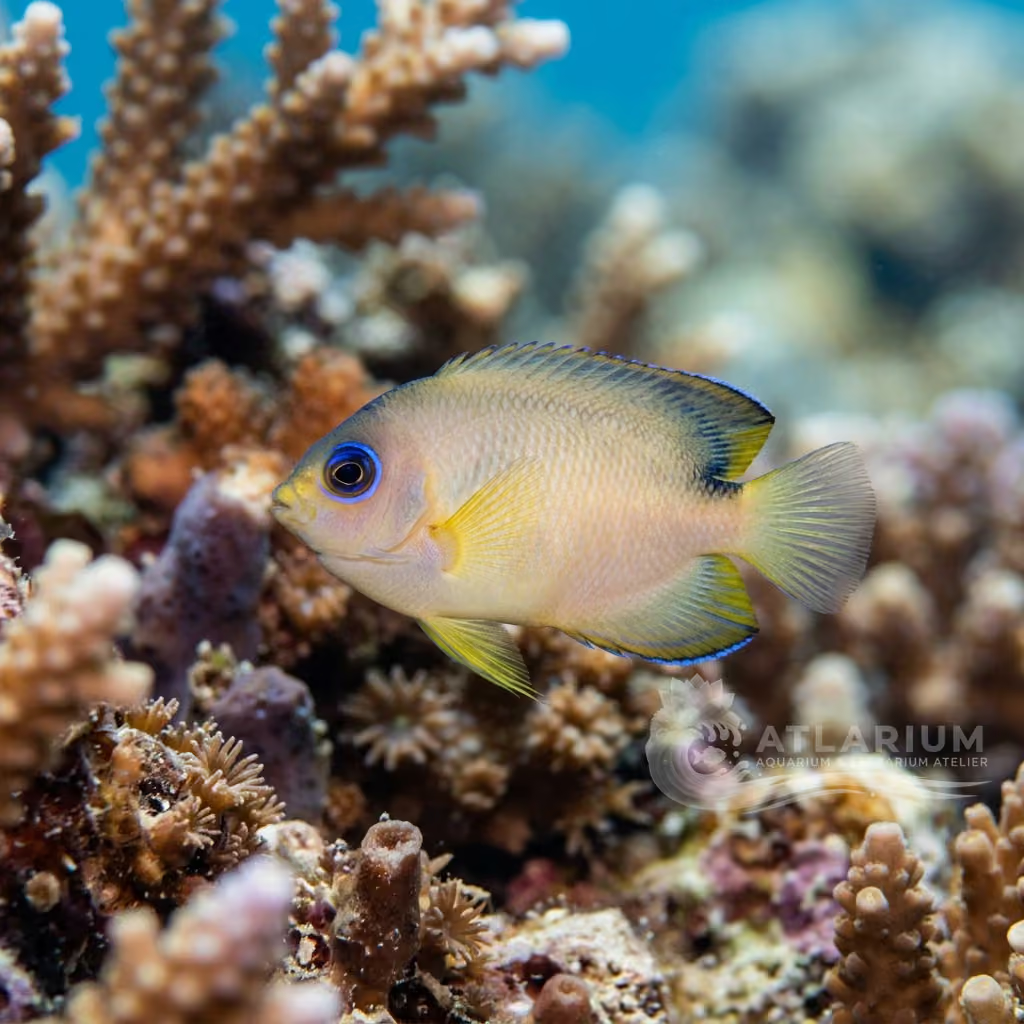
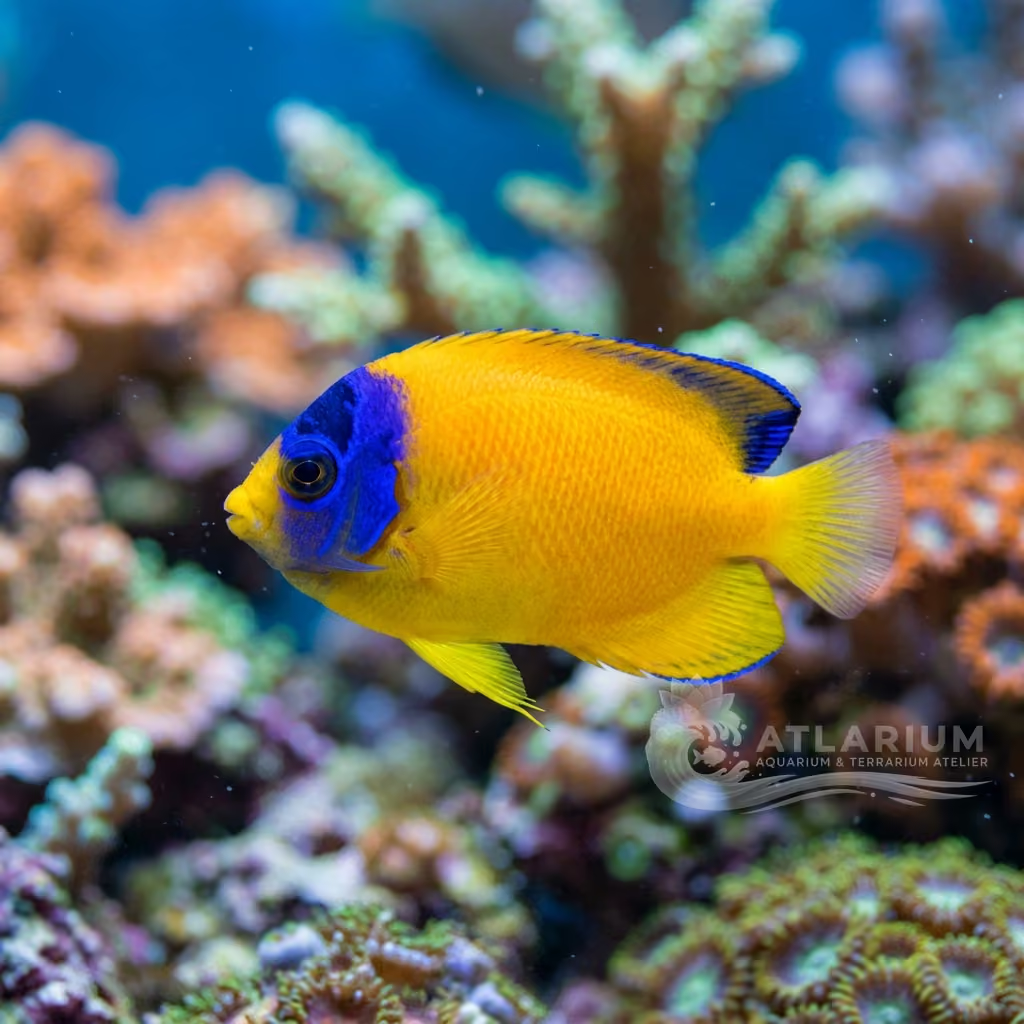
The lemonpeel angelfish is a striking marine dwarf angelfish species known for its vibrant yellow body, distinct blue rings around its eyes, and blue fin margins.
Wassertemperatur
24 - 28 °C
pH-Wert
8.1 - 8.4
Wassertyp
Meerwasser
Tankfüllstand
Unten und in der Mitte
Erwachsenengröße
14 cm
Mindesttankvolumen
>= 150 L
Mindestgruppe
>= 1
KH
8 - 12 dKH

Artbeschreibung
Geographical Origin and Habitat: The lemonpeel angelfish is native to the tropical Indo-Pacific, widely distributed across Micronesia, Polynesia, and the Christmas Islands. It typically inhabits coral-rich lagoons and seaward reefs, preferring shallow, oxygen-rich waters exposed to mild currents, at depths ranging from 2 to 50 meters.
Taxonomy and Morphology: Belonging to the family Pomacanthidae, this dwarf angelfish features a compressed oval body shape. Adults can grow to a maximum length of 14 centimeters. It possesses a sharp preopercular spine, a diagnostic trait of the genus Centropyge, which easily entangles in nets during handling.
Social Behavior: It is a highly territorial species, particularly towards conspecifics or other fish sharing similar shapes and bright yellow coloration. In the wild, they live in small harems consisting of one dominant male and several females. In home aquariums, keeping them singly is recommended unless the tank is exceptionally large.
Coloration and Sexual Dimorphism: The body is a solid, brilliant lemon-yellow color. It displays a prominent neon-blue ring around each eye, a blue accent on the gill cover margin, and fine blue edging along the dorsal, anal, and caudal fins. There is no major sexual dimorphism, though males are often slightly larger than females.

Pflege, Zucht und Mitbewohner
Aquarium Setup: An established marine aquarium of at least 250 liters is required, featuring ample live rock arranged to create numerous caves, tunnels, and hiding spots. The live rock serves as a crucial foraging substrate for algae grazing. Good water movement and strong lighting are necessary to promote natural algal growth.
Diet and Feeding: Omnivorous with a strong herbivorous tendency. Their diet should consist of marine algae (nori), spirulina-based flakes or pellets, mysis shrimp, brine shrimp, and high-quality frozen preparations for angelfish. Feeding small portions multiple times a day is ideal to mimic their constant grazing behavior.
Water Quality: Water parameters must be kept stable with a specific gravity of 1.020-1.025, pH between 8.1 and 8.4, and temperature maintained at 24-28°C. Keep nitrate levels low (under 10 ppm) and phosphates near zero. A robust protein skimmer and regular partial water changes are essential.
Compatibility and Cohabitation: Suitable for community tanks with moderately active, non-aggressive fish. However, this species is notorious for nipping at stony corals (SPS), soft corals, and clam mantles. Caution must be exercised if introducing them into a reef aquarium, as they can cause damage to sessile invertebrates.
Aquarium Breeding: Breeding in home aquariums is extremely challenging. They are protogynous hermaphrodites, meaning all individuals are born female, and the dominant female in a group will change sex to male. They spawn in open water, and raising the microscopic, planktonic larvae requires specialized live feeds.
Risks and Diseases: Vulnerable to marine ich (Cryptocaryon irritans) and marine velvet (Oodinium ocellatum), especially when stressed. Poor nutrition can lead to lateral line erosion and digestive blockages. A quarantine period is highly recommended before introducing the fish to the display tank.

Geografische Herkunft und Verbreitung
The lemonpeel angelfish is native to the tropical Indo-Pacific, widely distributed across Micronesia, Polynesia, and the Christmas Islands. It typically inhabits coral-rich lagoons and seaward reefs, preferring shallow, oxygen-rich waters exposed to mild currents, at depths ranging from 2 to 50 meters.
Ursprung
Tropische Ozeane und Riffe

Fischprofil
- Temperament
- Semi-aggressive
- The Lemonpeel Angelfish is semi-aggressive and highly territorial, particularly toward other dwarf angelfish or species with similar shapes and bright yellow coloration. They establish clear territories within the tank and will actively defend them against intruders. While they are generally peaceful toward unrelated, non-competitive species like clownfish, wrasses, and gobies, they can become belligerent in cramped quarters. To minimize aggression, it is crucial to provide a spacious tank with plenty of live rock to break lines of sight.
- Diät
- Omnivore
- This species is an omnivore with a strong herbivorous preference, requiring a diet rich in microalgae and detritus. In the aquarium, they must be provided with high-quality spirulina, marine algae, and specialized frozen preparations for sponge-eating angelfish. They should also receive meaty foods such as mysis shrimp, brine shrimp, and finely chopped seafood to round out their nutritional needs. Insufficient feeding or lack of natural algae in the tank will often prompt them to nip at coral polyps and clam mantles.
- Lebenserwartung
- 5-11 years
- Erwachsenengröße
- 14 cm
- Geschlechterverhältnis
- Harem
- In the wild, the Lemonpeel Angelfish is a protogynous smoker/hermaphrodite that naturally forms harems consisting of a single dominant male and several females. In a home aquarium, they are best kept singly to avoid severe territorial aggression, unless the tank is exceptionally large. If attempting to keep multiple individuals, they should be introduced simultaneously as a harem containing one male and multiple smaller females. Keeping a simple 1:1 pair is also possible, but it requires careful monitoring to ensure the male does not overly harass the female.
- Fütterungsfrequenz
- 2-3 times daily
- Because of their high activity levels and constant grazing behavior, Lemonpeel Angelfish should be fed small amounts two to three times daily. Providing multiple small feedings prevents them from starving and helps deter them from nipping at corals or clam mantles. Supplementing their diet with dried seaweed (nori) attached to a veggie clip allows them to graze continuously throughout the day. A mature aquarium with plenty of natural algae growth on the rocks will also provide a constant food source between feedings.
- Bioload
- Medium
- The Lemonpeel Angelfish produces a moderate amount of biological waste due to its active nature and constant grazing habits. To maintain the pristine water quality this species requires, a robust filtration system and a well-established biological filter are essential. Regular water changes of 10% to 20% weekly or bi-weekly are highly recommended to keep nitrate and phosphate levels low. A large amount of mature live rock not only assists with biological filtration but also provides essential grazing surfaces that help manage the waste cycle naturally.
- Fluss
- Moderate
- The Lemonpeel Angelfish thrives in aquariums with moderate to strong water flow, which mimics the shallow, wave-swept coral reefs of their natural Pacific habitat. Adequate water movement is important for keeping the water well-oxygenated and helping to distribute food particles. However, there should also be calmer areas within the rockwork where the fish can rest and escape strong currents. Utilizing wavemakers or adjustable powerheads is an excellent way to achieve this dynamic and healthy water motion.
- Sprungrisiko
- Yes
- Although they are not characterized as chronic jumpers, Lemonpeel Angelfish pose a moderate risk of jumping, especially when startled, stressed, or introduced to a new environment. Their fast and darting swimming patterns can easily carry them out of an uncovered tank if they are chased by aggressive tankmates. To prevent tragic accidents, a secure, tight-fitting lid or mesh cover is highly recommended for any aquarium housing this species. Additionally, providing ample hiding spaces in the rockwork will give them safe retreats, reducing the likelihood of panic flights.
- Reproduktion
- Oviparous
- In the wild, Centropyge flavissima is a broadcast spawner that releases eggs and sperm into the water column, usually at dusk. Breeding them in captivity is extremely difficult and rarely achieved by casual hobbyists due to their complex spawning behaviors and the tiny size of the larvae. Successful breeding requires a large, mature setup, a compatible pair or harem, and pristine water parameters. The newly hatched larvae require specialized, microscopic live foods such as copepod nauplii and rotifers, which are difficult to culture and maintain.
- Kompatibilität & Tankkameraden
- Territorial
- The Lemonpeel Angelfish is generally not considered reef-safe, as it is notorious for nipping at large polyp stony (LPS) corals, zoanthids, and giant clam mantles. They are best housed in a fish-only-with-live-rock (FOWLR) system or with noxious soft corals like leathers and mushrooms that they usually ignore. In terms of tankmates, they are compatible with active, semi-aggressive fish such as tangs, wrasses, damselfish, and larger clownfish. They should not be kept with other dwarf angelfish, particularly those with yellow coloration, unless the tank is very large.
- Tankfüllstand
- Middle/Bottom
- The Lemonpeel Angelfish is an active swimmer that primarily occupies the bottom-middle and middle levels of the aquarium. They spend the majority of their time darting in and out of rockwork, caves, and crevices in search of algae to graze on. They rarely venture to the very top surface of the tank except during feeding times or spawning rituals. Providing a complex aquascape with plenty of visual barriers in these lower zones will help them feel secure and exhibit natural behaviors.

Wissenschaftliche Modelle & Parameter
FishBase
Zugang zu den offiziellen wissenschaftlichen Daten der Art
FishBase v25.04Daten synchronisiert am: 15.06.2026
- Trophäenniveau
- 2,8 ± 0,33 se
- Belastbarkeit
- Hoch (weniger als 15 Monate)
- Phylogenetische Einzigartigkeit (PD50)
- 0.5
- Bayessche Längen-Gewichts-Beziehung
- a = 0.02884, b = 2.93
- AnfälligkeitGeringe Anfälligkeit (10 / 100)

Verwandte Arten
Empfehlungen gruppiert nach nahen Verwandten, Auswahl von Begleitern und ähnlicher Betreuung.