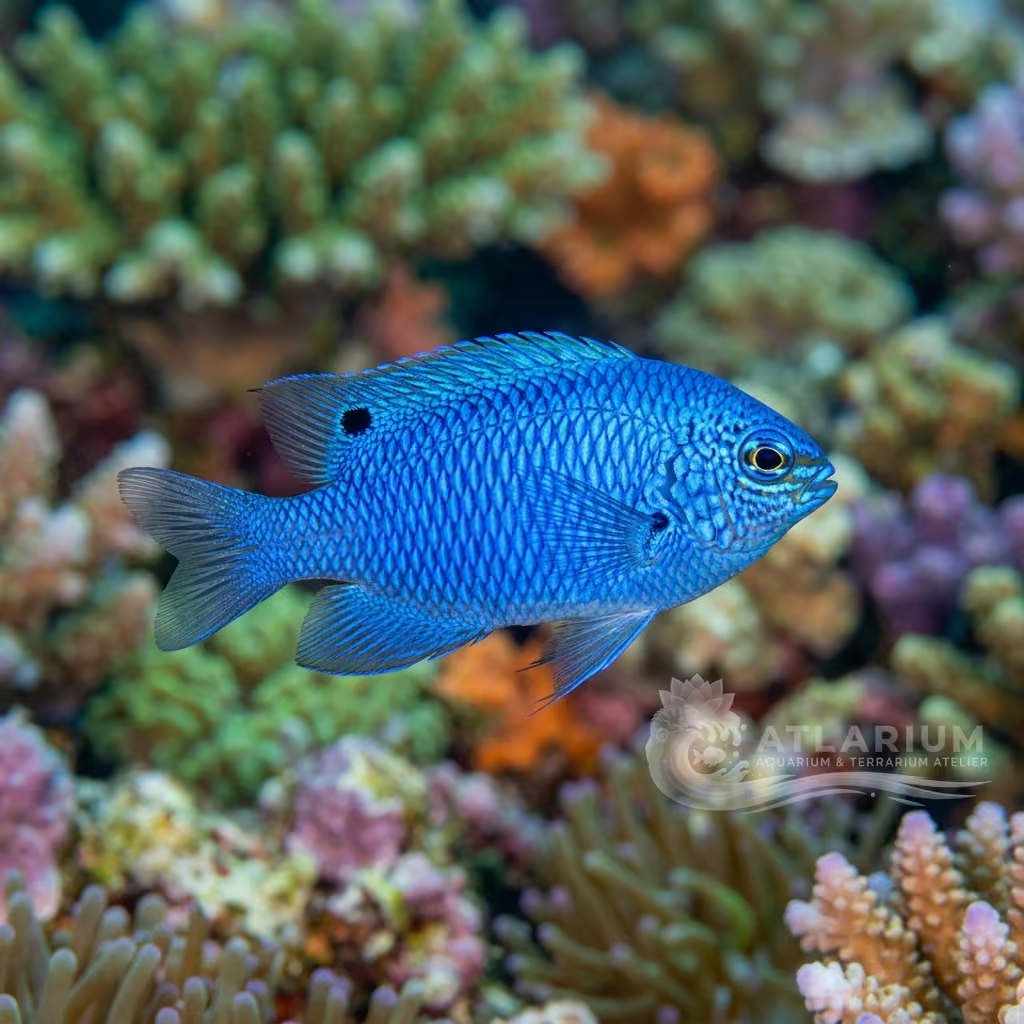
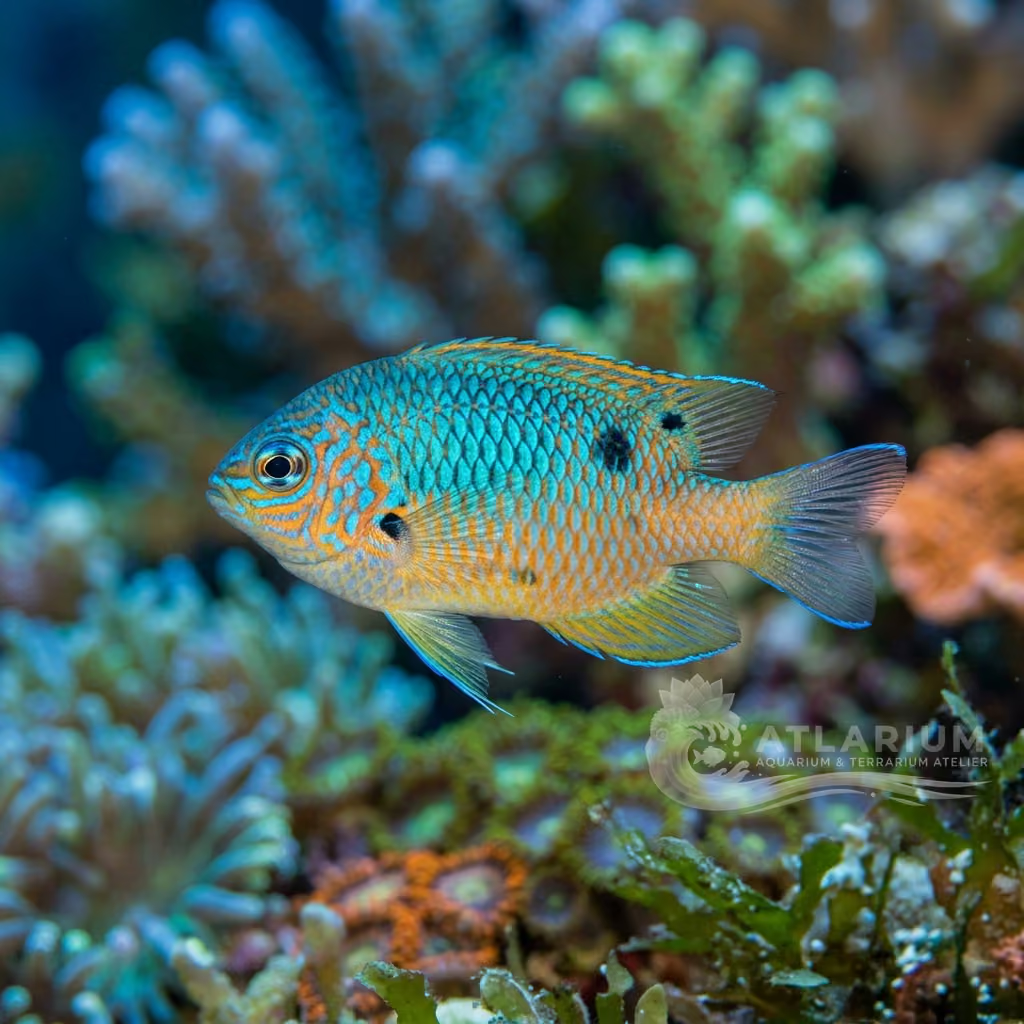
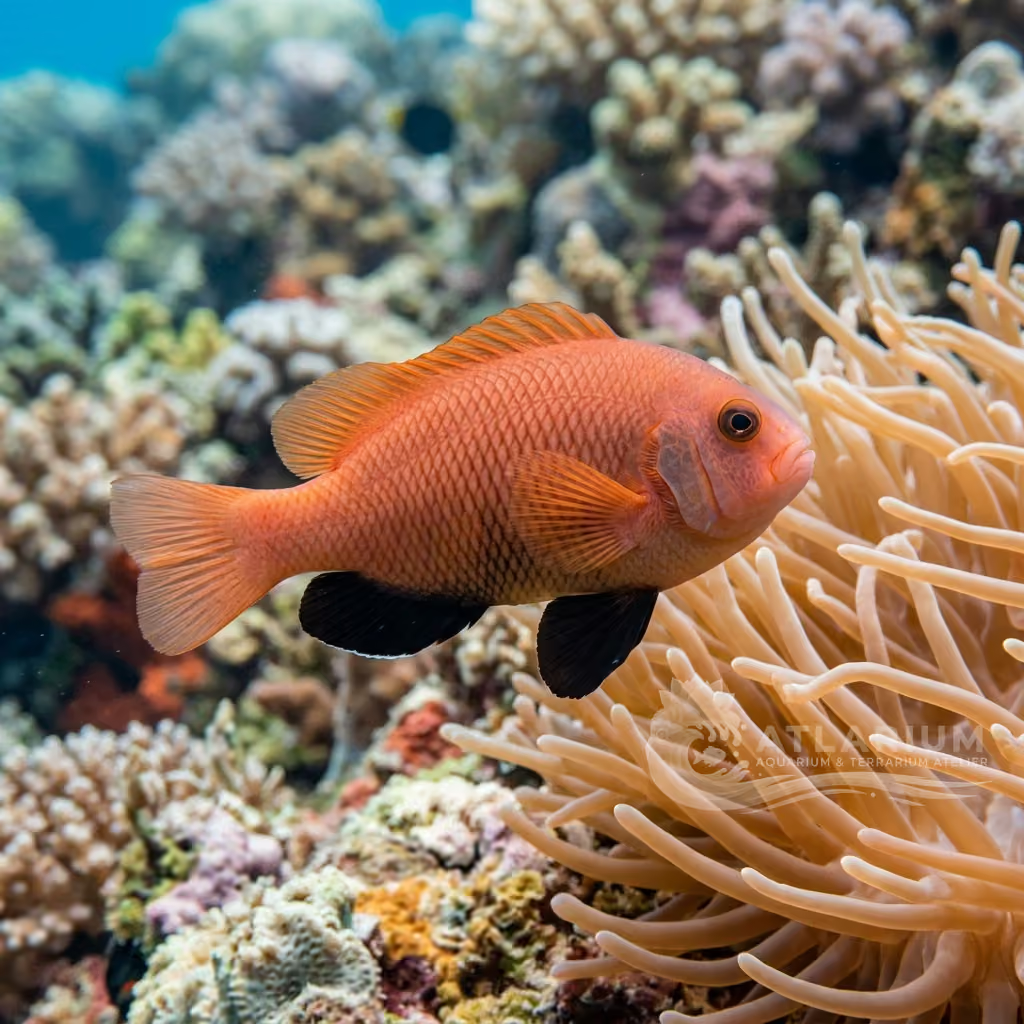
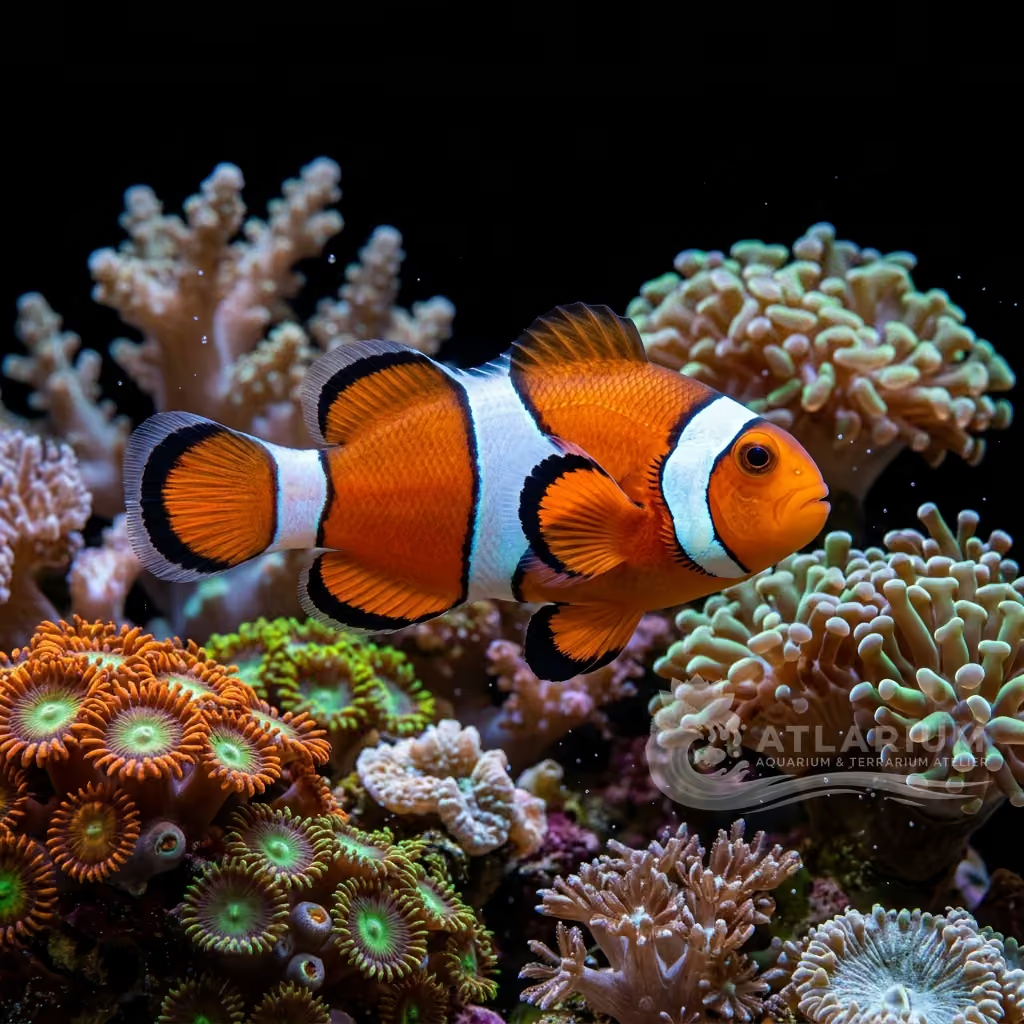
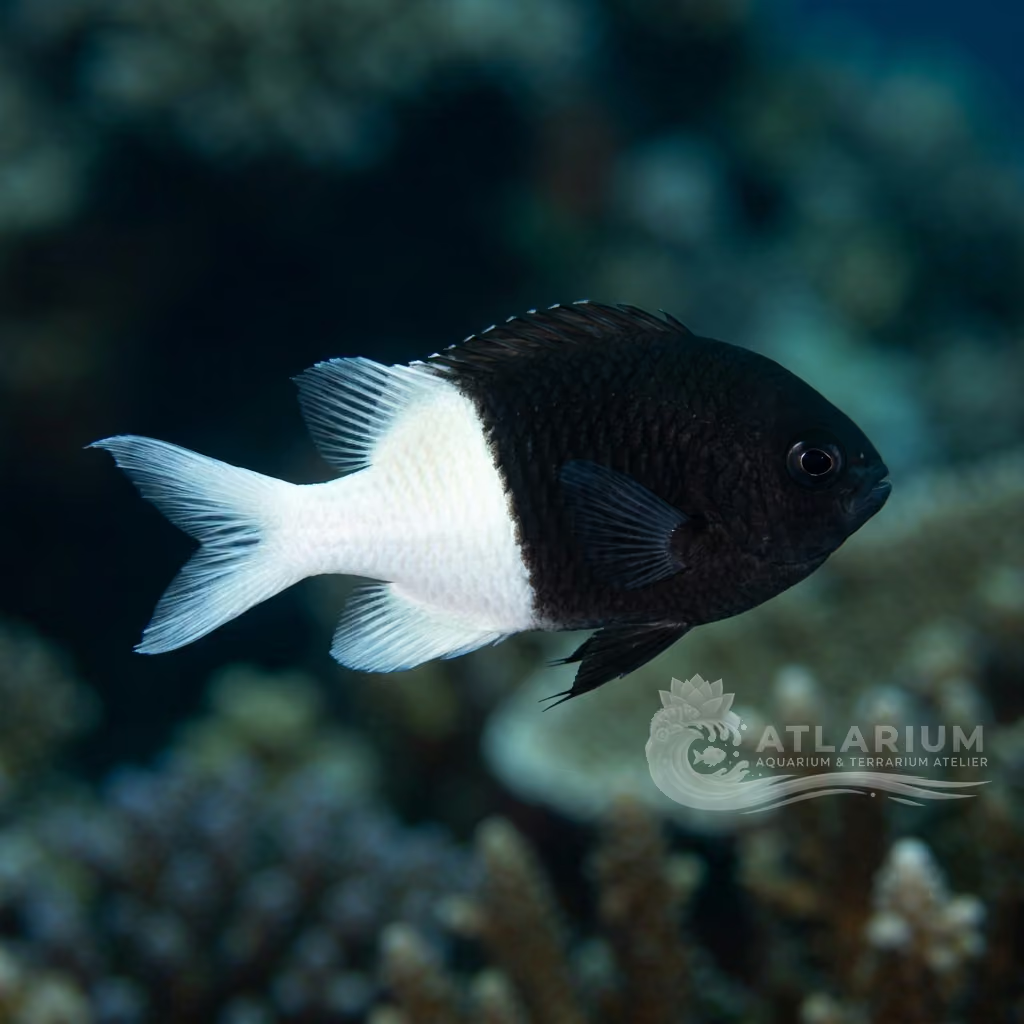
Rolland's damselfish
Chrysiptera rollandi
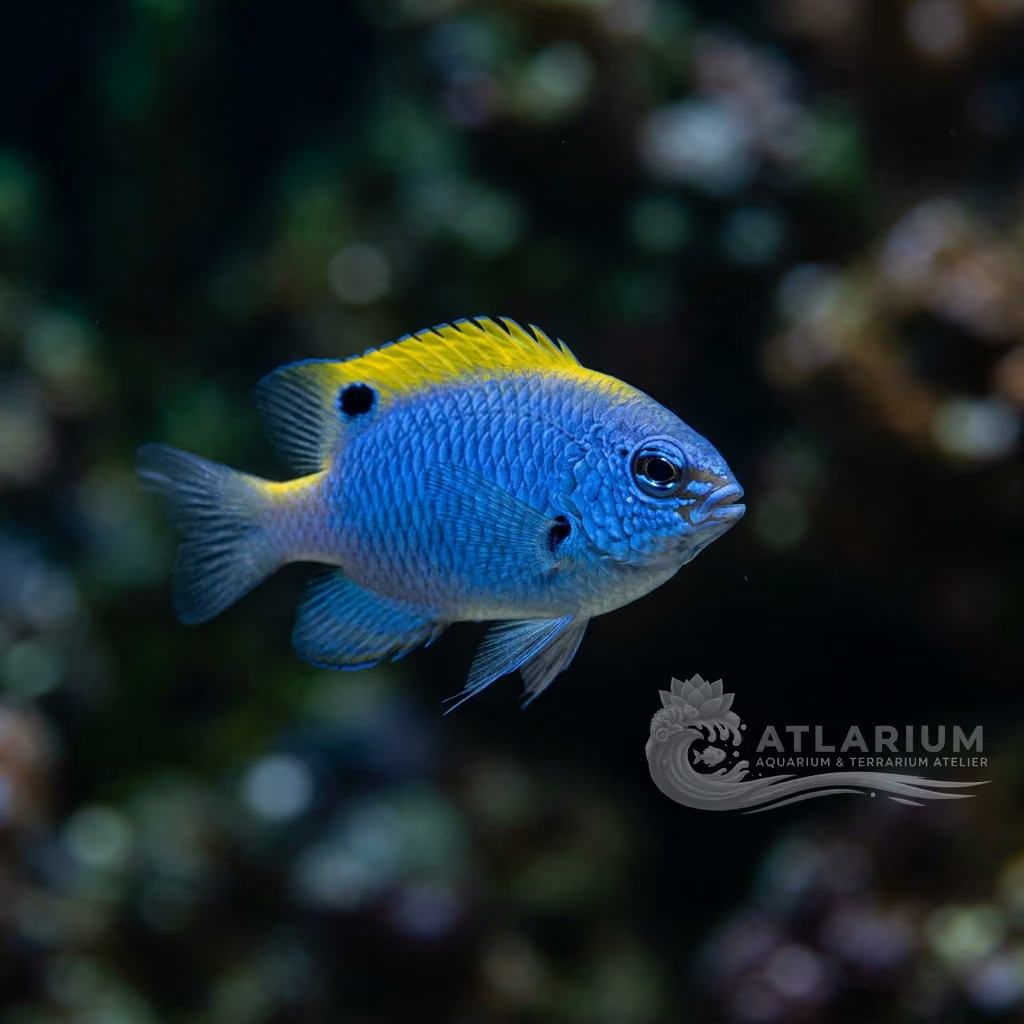
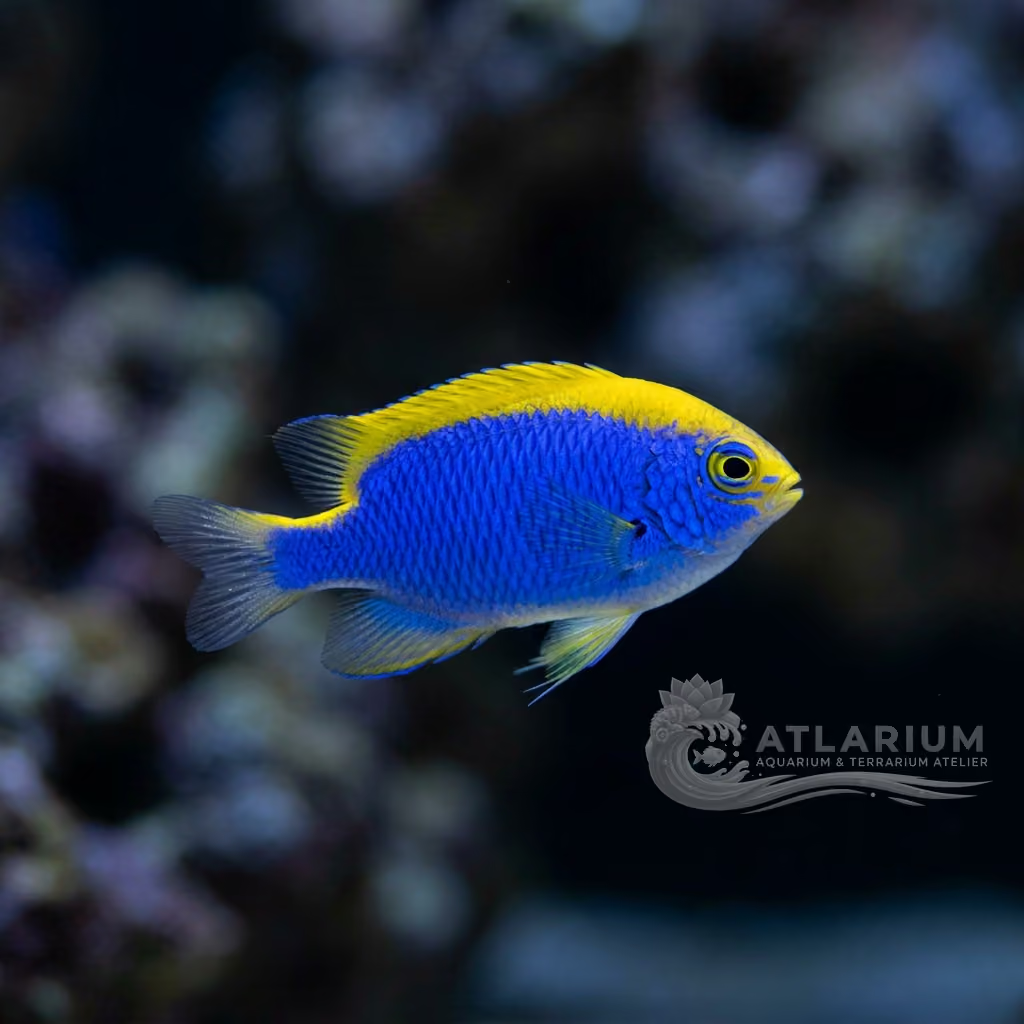
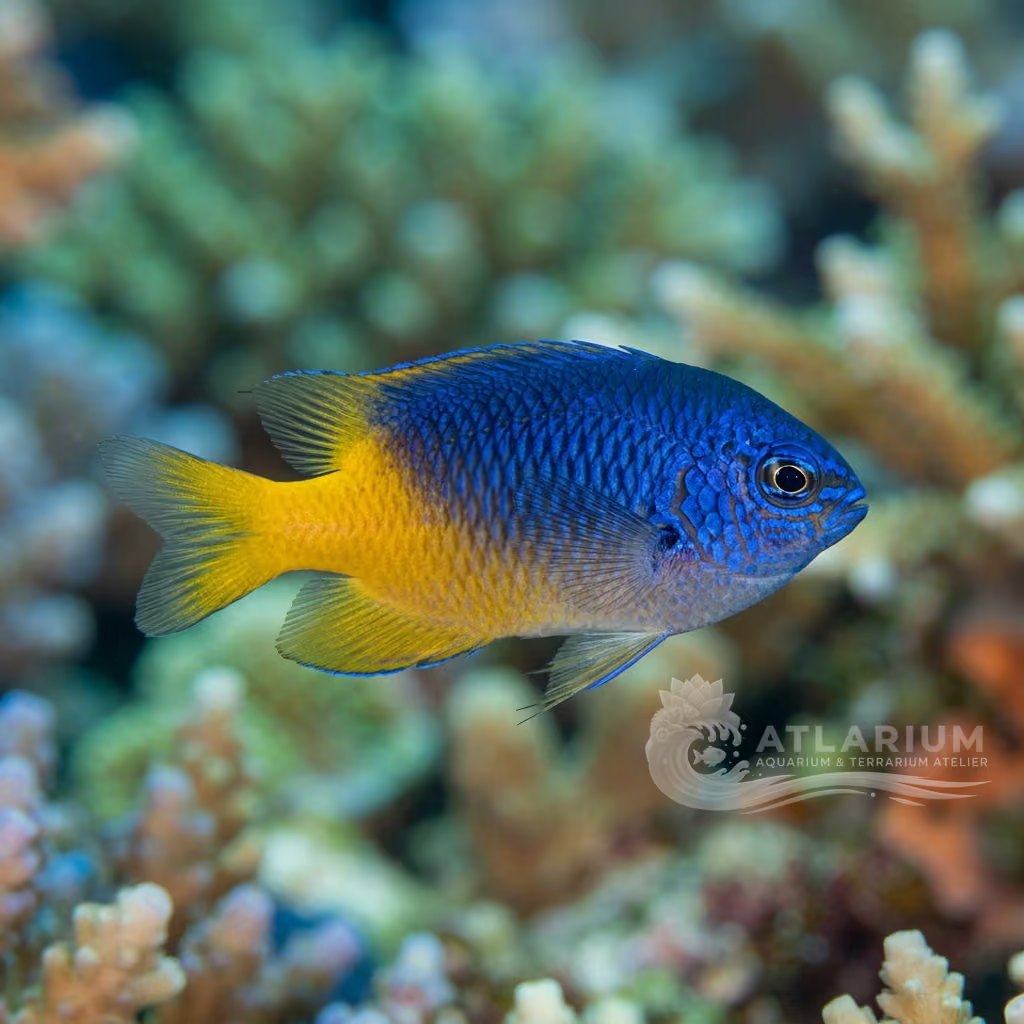
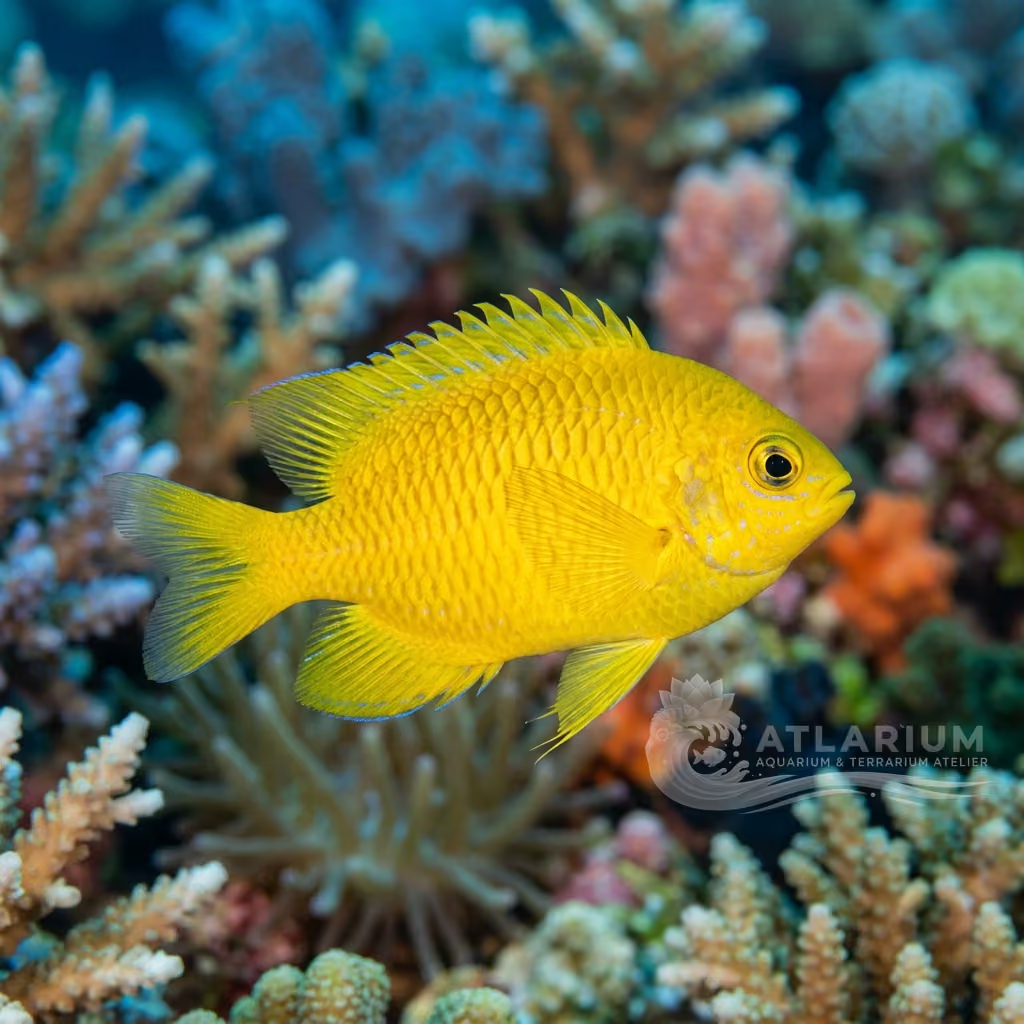
Rolland's Damselfish is a hardy, bicolor species with a dark blue head and light yellow posterior. Peaceful for its kind, it's perfect for beginner marine setups.
Wassertemperatur
23 - 28 °C
pH-Wert
8.1 - 8.4
Wassertyp
Meerwasser
Tankfüllstand
Unten und in der Mitte
Erwachsenengröße
7,5 cm
Mindesttankvolumen
>= 115 L
Mindestgruppe
>= 1
KH
8 - 12 dKH

Artbeschreibung
Geographical Origin and Habitat: Chrysiptera rollandi is widely distributed throughout the Western Pacific, including Indonesia, Malaysia, the Philippines, Papua New Guinea, the Great Barrier Reef in Australia, and the Solomon Islands. It inhabits sheltered coastal lagoons and outer reef slopes, ranging in depth from 2 to 35 meters. It is commonly associated with branching hard coral colonies and sandy-rubble areas that offer quick retreats.
Taxonomy and Morphology: Belongs to the family Pomacentridae and subfamily Pomacentrinae. It features an oval, laterally compressed, and compact body shape typical of damselfishes. Adults reach a maximum length of approximately 6 to 7 centimeters. It has large eyes and a small terminal mouth adapted for feeding on zooplankton and filamentous algae.
Social Behavior: Compared to other members of the genus Chrysiptera, this species is considered relatively peaceful, although it still defends its immediate territory around its preferred shelter. They generally live solitary lives or form small groups where a size-based dominance hierarchy is established.
Coloration and Sexual Dimorphism: The species exhibits a distinctive bicolor pattern: the head and anterior portion of the body (including the front half of the dorsal fin) are dark blue or blackish-blue, while the posterior portion and caudal fin are light yellow or creamy white. There is no distinct external sexual dimorphism, though nesting males may intensify in coloration.

Pflege, Zucht und Mitbewohner
Aquarium Setup: An aquarium of at least 80 liters is sufficient for a single specimen or a small group. The aquascape should feature plenty of live rock arranged to create numerous caves, crevices, and hiding spots where the fish can establish territories. It is 100% reef-safe and compatible with all types of corals.
Diet and Feeding: An omnivorous and opportunistic feeder. In captivity, it readily accepts a wide range of foods, including frozen mysis and brine shrimp, high-quality dry flakes or pellets, and foods enriched with spirulina algae. Feeding once or twice a day in small amounts is ideal to keep the fish active and healthy.
Water Quality: Standard tropical marine parameters are required: water temperature between 24 and 28 °C, pH levels of 8.1 to 8.4, and specific gravity of 1.020 to 1.025. It is tolerant of minor fluctuations in water chemistry, which makes it an excellent choice for newly established marine tanks.
Compatibility and Cohabitation: Can be housed with most community reef fish of similar size, such as wrasses, clownfish, dwarf angels, and gobies. Avoid keeping it with large predators or highly aggressive tankmates. If keeping a group, introduce all individuals at the same time to diffuse territorial behavior.
Aquarium Breeding: Breeding in captivity has been achieved. They are substrate spawners; the male clears a flat rock surface or cave where the female deposits adhesive eggs. The male then guards and aerates the nest until they hatch. Rearing the larvae requires specialized cultures of rotifers and copepods.
Risks and Diseases: Exceptionally hardy and resistant to common marine ailments like Marine Ich (Cryptocaryon irritans). However, stress from overcrowding or harassment by dominant tankmates can lead to health decline. Maintaining basic water quality and a peaceful environment will prevent most issues.

Geografische Herkunft und Verbreitung
Chrysiptera rollandi is widely distributed throughout the Western Pacific, including Indonesia, Malaysia, the Philippines, Papua New Guinea, the Great Barrier Reef in Australia, and the Solomon Islands. It inhabits sheltered coastal lagoons and outer reef slopes, ranging in depth from 2 to 35 meters. It is commonly associated with branching hard coral colonies and sandy-rubble areas that offer quick retreats.
Ursprung
Tropische Ozeane und RiffeAfrika und MadagaskarSüd- und SüdostasienOstasienAustralien, Neuguinea und Ozeanien

Fischprofil
- Temperament
- Semi-aggressive
- The temperament of this damselfish is semi-aggressive, manifesting mainly as territorial defense of the rocky crevice chosen as its shelter. It is a vigilant and active fish that establishes a hierarchy within its group based on the physical size of the individuals. In suitable tanks with plenty of hiding spots, it displays tolerant and balanced behavior toward other aquarium inhabitants.
- Diät
- Omnivore
- It is an omnivorous and undemanding species that feeds on zooplankton and filamentous algae in the wild. In the aquarium, it readily accepts dry flake or pellet foods, frozen foods such as mysis, brine shrimp, and copepods, and vegetable preparations containing spirulina. Providing a varied diet ensures the fish receives all necessary nutrients to maintain its characteristic bright bicolor coloration.
- Lebenserwartung
- 3-6 years
- Erwachsenengröße
- 7.5 cm
- Geschlechterverhältnis
- Flexible
- Single or pair
- Fütterungsfrequenz
- Twice daily
- It is advisable to feed this species twice daily with moderate portions that can be entirely consumed in a short time. Feeding small amounts frequently suits their high metabolism and mimics the continuous grazing behavior typical of coral reefs. This feeding schedule also helps mitigate food competition and aggression with other tankmates.
- Bioload
- Low to Medium
- Rolland's damselfish is a small-bodied species that generates a relatively low biological load in the marine environment. Their modest dietary needs mean that they produce little waste, making them highly manageable for both beginner setups and complex reef tanks. Standard filtration, including a properly sized protein skimmer and regular water changes, is perfectly adequate for keeping nutrients in check. They are a safe addition for aquarists aiming to maintain excellent water parameters without overtaxing the system's biological capacity.
- Fluss
- Moderate
- This species prefers moderate water movement, reflecting the protected environment of coastal lagoons and outer reef slopes where it lives. A well-distributed flow promotes proper oxygenation of the tank and stimulates the fish to swim, without tiring it excessively. It is crucial to ensure that the layout offers sheltered areas among the rocks where the fish can find refuge from currents to rest.
- Sprungrisiko
- No
- Reproduktion
- Oviparous
- This species is oviparous and deposits adhesive benthic eggs on properly cleaned solid surfaces, usually inside caves or rocky crevices. The male takes care of vigorously defending the clutch and constantly aerating it to ensure proper oxygenation until hatching. Larval development in captivity is complex and requires rearing microscopic live zooplankton, such as rotifers, to feed the tiny larvae during the initial pelagic stage.
- Kompatibilität & Tankkameraden
- Reef safe
- It is considered a moderately peaceful damselfish compared to other members of the family, and is 100% compatible with reef aquariums (reef-safe). It can coexist peacefully with community fish of similar or larger size, such as wrasses, tangs, clownfish, and gobies. It is important to avoid keeping it with overly aggressive tankmates or large predators that might view it as easy prey.
- Tankfüllstand
- Middle/Bottom
- Rolland's damselfish can be observed darting rapidly between the middle and lower zones of the aquarium column. They are highly dependent on the aquascape for shelter and tend to hover just above their preferred rocky outcroppings. While they may briefly visit the top layers to snatch a passing morsel of food, they feel most secure near the substrate. Structuring the tank with vertical rock faces and numerous overhangs perfectly suits their natural swimming patterns.

Wissenschaftliche Modelle & Parameter
FishBase
Zugang zu den offiziellen wissenschaftlichen Daten der Art
FishBase v25.04Daten synchronisiert am: 15.06.2026
- Trophäenniveau
- 2,7 ± 0,3 se
- Belastbarkeit
- Hoch (weniger als 15 Monate)
- Phylogenetische Einzigartigkeit (PD50)
- 0.5
- Bayessche Längen-Gewichts-Beziehung
- a = 0.01445, b = 3
- AnfälligkeitGeringe Anfälligkeit (10 / 100)

Verwandte Arten
Empfehlungen gruppiert nach nahen Verwandten, Auswahl von Begleitern und ähnlicher Betreuung.