Sergeant major
Abudefduf saxatilis
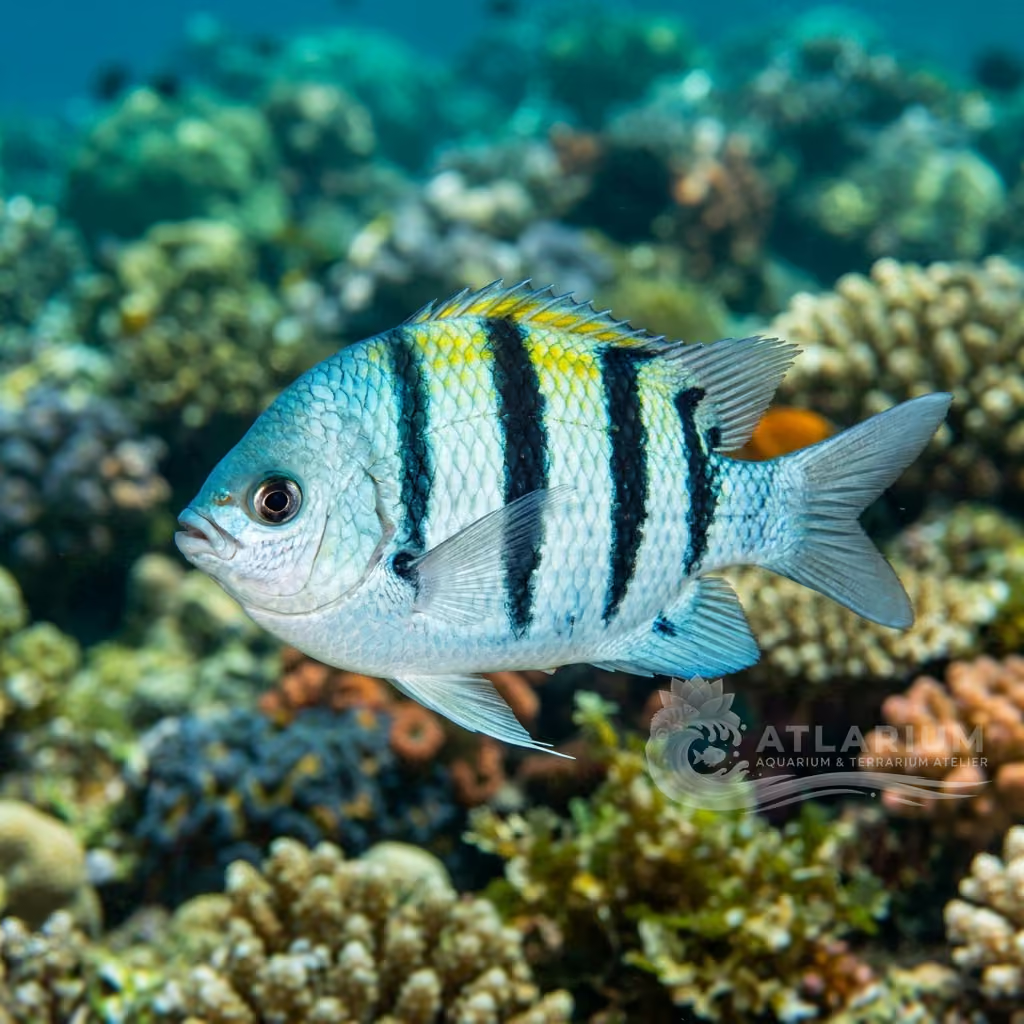
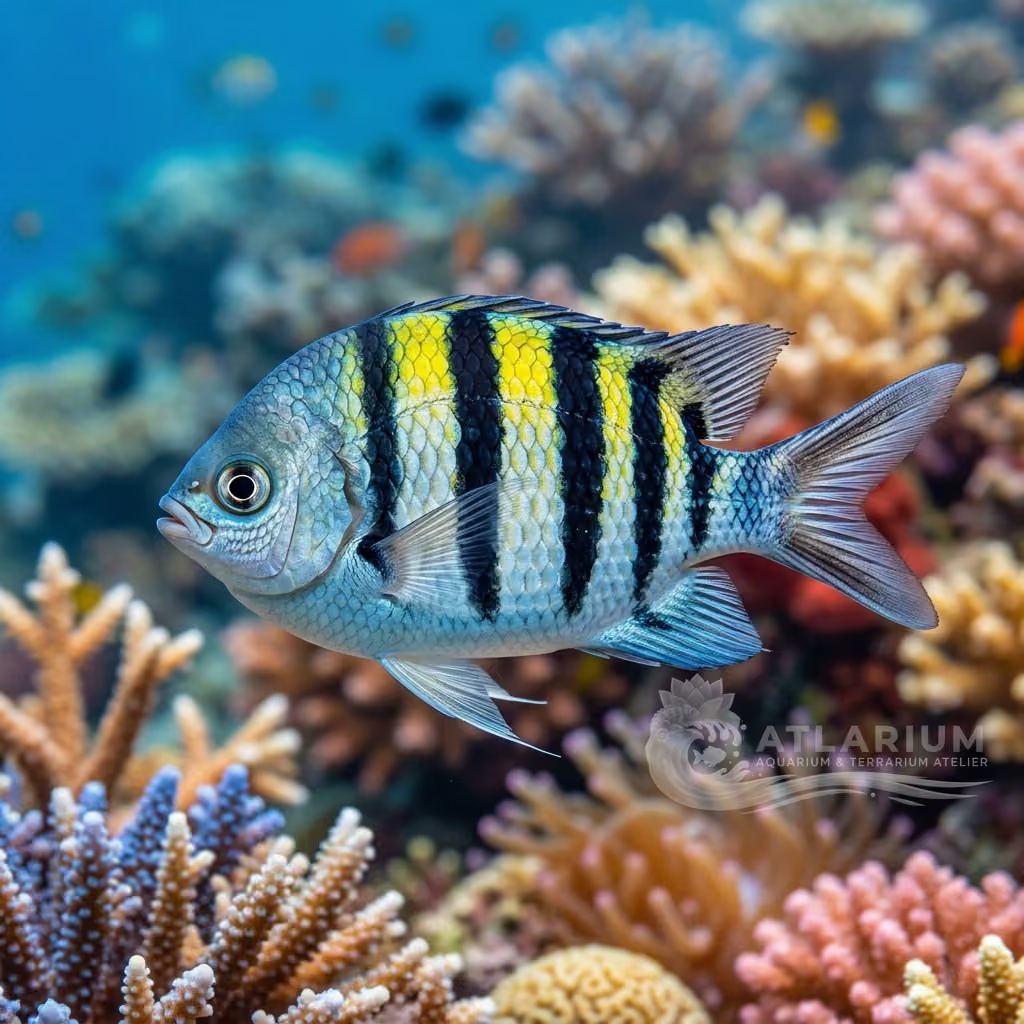
The sergeant major is an extremely hardy and active Atlantic damselfish, recognized by its five black vertical stripes. It can become highly aggressive as an adult.
Wassertemperatur
22 - 27 °C
pH-Wert
8.1 - 8.4
Wassertyp
Meerwasser
Tankfüllstand
Mitte
Erwachsenengröße
20 cm
Mindesttankvolumen
>= 300 L
Mindestgruppe
>= 5
KH
8 - 12 dKH

Artbeschreibung
Geographical Origin and Habitat:
This species is native to the tropical and subtropical waters of the Atlantic Ocean. It is highly abundant in the Western Atlantic, ranging from southern Canada and Bermuda to Uruguay, including the Gulf of Mexico and the Caribbean Sea. It is also found in the Eastern Atlantic, from Portugal to Angola. It inhabits coral reefs, rocky shorelines, tide pools, and artificial structures like piers and shipwrecks at depths of 1 to 20 meters.
Taxonomy and Morphology:
Belonging to the family Pomacentridae, Abudefduf saxatilis features a deep, oval, laterally compressed body with a rounded snout and a small terminal mouth. The scales are large and distinct. Adults can reach an impressive maximum length of 15-20 centimeters, which is quite large for a damselfish. Its deeply forked tail allows for powerful and rapid swimming.
Social Behavior:
Juveniles form large, active schools that forage in open water or seek shelter in shallow tide pools. Adults are either solitary or form small feeding aggregations. During the breeding season, males become intensely territorial. They select a nesting site on flat rock surfaces and defend it aggressively against any intruders, including divers and larger fish.
Coloration and Sexual Dimorphism:
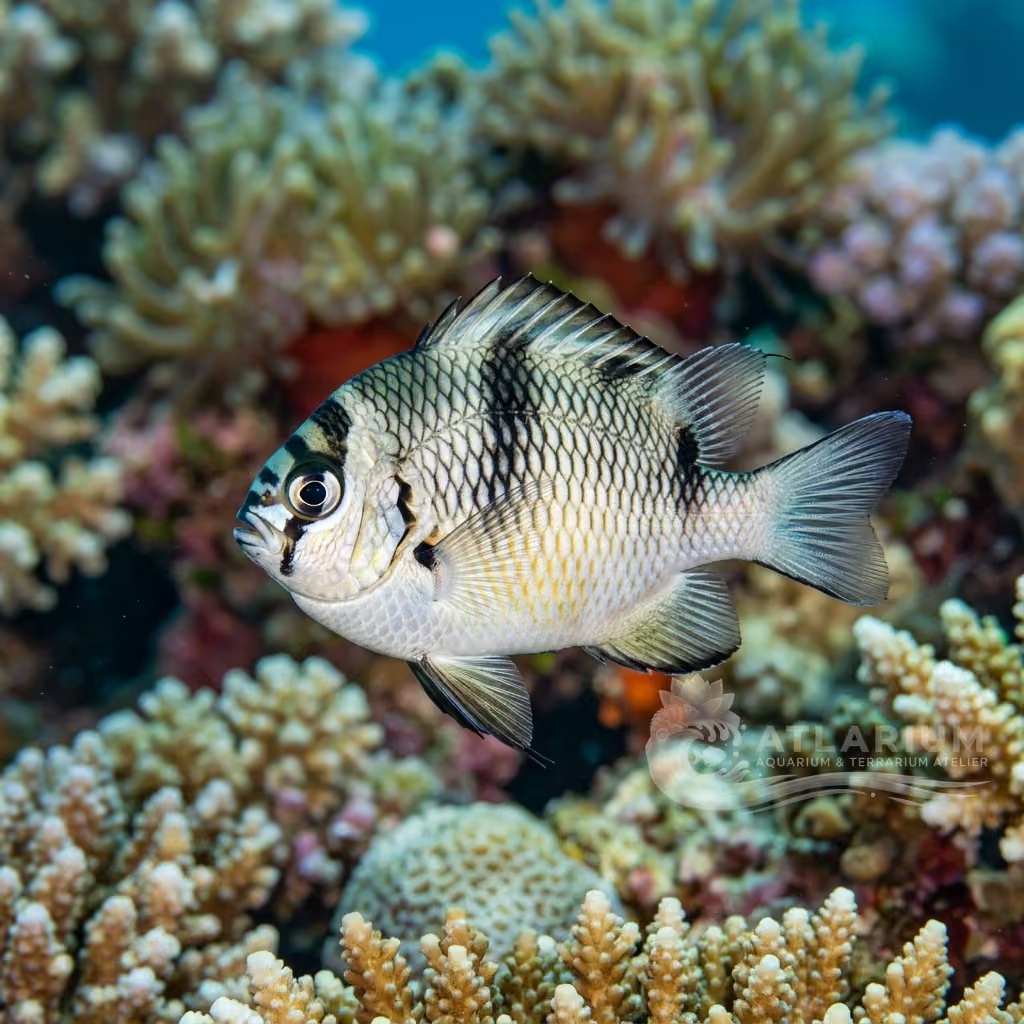
The body coloration is yellow-green on the back, fading to silvery-white on the flanks, marked by five prominent vertical black bands. During spawning or when defending a nest, mature males undergo a dramatic color change, turning a solid dark blue or slate-gray, which partially obscures their vertical bands. No other external sexual dimorphism is present.

Pflege, Zucht und Mitbewohner
Aquarium Setup:
Requires a large aquarium of at least 350-400 liters for a single specimen or a small group due to its highly active nature and territorial behavior. The aquascape must feature sturdy live rock arranged to create large caves, crevices, and visual barriers to break lines of sight. Provide plenty of open space for vigorous swimming.
Diet and Feeding:
An opportunistic omnivore. In the wild, it feeds on zooplankton, small crustaceans, worms, fish eggs, and benthic algae. In captivity, it will accept almost any food offered, including frozen mysis and brine shrimp, high-quality dry flakes, pellets, and herbivore preparations. Feed a varied diet to maintain its long-term health.
Water Quality:
An exceptionally hardy and tolerant species. It can withstand a wide range of water conditions, but thrives in standard marine parameters: temperature between 22°C and 27°C, pH between 8.1 and 8.4, specific gravity (SG) from 1.020 to 1.025, and carbonate hardness (KH) of 8 to 12 dKH. Keep nitrates under 30 ppm.
Compatibility and Cohabitation:
While juveniles are relatively peaceful, adults become highly territorial and aggressive. It should not be housed with shy, slow-moving, or small fish. It is reef safe regarding corals but may harass small invertebrates. Best housed with robust tankmates such as tangs, triggerfish, large wrasses, and puffers.
Aquarium Breeding:
Breeding has been achieved in captivity. The male cleans a flat rock surface and courts a female to lay adhesive eggs. The male then fertilizes them and guards the nest, aggressively fanning the eggs with his fins until they hatch (typically in 4-5 days). Rearing the microscopic planktonic larvae requires specialized live foods.
Risks and Diseases:
Highly resistant to most marine diseases and parasites, rarely getting sick under normal conditions. The primary risk is the harm it can inflict on other tankmates due to its aggressive behavior in cramped setups. It is strongly advised to introduce this fish as the last inhabitant to a community tank of robust species.

Geografische Herkunft und Verbreitung
This species is native to the tropical and subtropical waters of the Atlantic Ocean. It is highly abundant in the Western Atlantic, ranging from southern Canada and Bermuda to Uruguay, including the Gulf of Mexico and the Caribbean Sea. It is also found in the Eastern Atlantic, from Portugal to Angola. It inhabits coral reefs, rocky shorelines, tide pools, and artificial structures like piers and shipwrecks at depths of 1 to 20 meters.
Ursprung
Tropische Ozeane und RiffeExtra-Amazonas-SüdamerikaMittelamerika und KaribikNordamerikaAfrika und Madagaskar

Fischprofil
- Temperament
- Territorial
- The temperament of the Abudefduf saxatilis is notoriously aggressive, bold, and unapologetically territorial. As they mature, they are known to harass, nip, and bully nearly any other fish they perceive as a threat or competitor. Their pugnacious attitude makes them unsuitable for peaceful community reef tanks or setups with delicate species. They possess a 'take-charge' personality that requires equally tough tank mates to maintain a balanced hierarchy. Aquarists must be fully prepared to deal with their dominant behavior.
- Diät
- Omnivore
- The Abudefduf saxatilis is an opportunistic omnivore that will aggressively consume almost anything offered to it. In the wild, they form large aggregations to feed on zooplankton, algae, and small benthic invertebrates. In the aquarium, they thrive on a varied diet of meaty frozen foods, high-quality pellets, and herbivore preparations containing spirulina or nori. Their aggressive feeding behavior ensures they never miss a meal, but care must be taken so they don't outcompete other fish. A well-rounded diet is crucial for maintaining their striking vertical stripes and overall health.
- Lebenserwartung
- 10-15 years
- Erwachsenengröße
- 20 cm
- Geschlechterverhältnis
- School
- Male and female Abudefduf saxatilis are virtually indistinguishable to the naked eye for most of the year. During the spawning season, males undergo a distinct color change, adopting a dark bluish tint to signal their readiness and dominance. Outside of this period, there are no reliable morphometric differences between the sexes. Aquarists typically do not attempt to sex them unless observing them closely during reproductive behaviors. Keeping a mixed group usually results in a natural ratio, but requires an exceptionally large tank.
- Fütterungsfrequenz
- Twice daily
- Given their active nature, the Abudefduf saxatilis should be fed at least two to three times a day. They are exceptionally fast and aggressive eaters, often darting to the surface the moment food hits the water. This feeding frenzy means that slower fish may struggle to get their share if not monitored carefully. Offering a mix of floating and sinking foods can help distribute the meal throughout the water column. Overfeeding is a common risk because they constantly beg for food, so portion control is important.
- Bioload
- Medium to High
- The Abudefduf saxatilis, commonly known as the Sergeant Major, has a significantly high bioload due to its voracious appetite and active swimming behavior. As a larger damselfish species, it consumes substantial amounts of food and consequently produces a corresponding amount of waste. A highly efficient filtration system, including a powerful protein skimmer, is mandatory to maintain excellent water quality. Frequent water changes are necessary to keep nitrates and phosphates in check. Their fast metabolism means they put more strain on the biological filter than smaller damsels.
- Fluss
- Strong
- The Abudefduf saxatilis thrives in high-flow environments that simulate the surge zones and reef crests of their natural habitat. Strong water movement allows them to exercise their powerful swimming muscles and prevents lethargy. Robust circulation also aids in rapid gas exchange, which is critical for such active, high-metabolism fish. Providing strong currents with powerheads ensures they display their natural schooling and foraging behaviors. They actively seek out the strongest currents in the tank to swim against.
- Sprungrisiko
- No
- Reproduktion
- Oviparous
- The Abudefduf saxatilis is known to readily spawn in the wild, laying large purple egg patches on hard substrates, but captive breeding is rare. Males become fiercely territorial and aggressive when guarding the nest, attacking anything that comes near, including scuba divers in the ocean. In the aquarium, their extreme aggression during spawning can cause severe stress or death to other tank inhabitants. The larvae are pelagic and microscopic, making them exceptionally difficult to rear in a home setting. For these reasons, captive breeding is generally left to specialized public aquariums.
- Kompatibilität & Tankkameraden
- Highly aggressive
- Compatibility can be a serious issue with the Abudefduf saxatilis, as they are known to be quite aggressive and highly territorial. While they might start out peaceful as juveniles, adults will terrorize smaller or more docile tank mates. They are generally considered reef safe, but their boisterous nature can cause stress to delicate corals and shy invertebrates. They should only be kept with large, robust fish such as triggers, large angelfish, or tangs that can easily tolerate their attitude. Keeping them in a standard community tank is strongly discouraged.
- Tankfüllstand
- Middle
- The Abudefduf saxatilis requires a very large aquarium with vast expanses of open swimming space to accommodate their size and activity level. They occupy all levels of the water column, constantly patrolling the tank from top to bottom. While they need open water, they also require large rock structures to provide visual barriers and sleeping quarters. Without adequate space, their aggressive tendencies become highly magnified, leading to disastrous tank dynamics. A minimum of 100 gallons is recommended, but larger is always better for adult specimens.

Wissenschaftliche Modelle & Parameter
FishBase
Zugang zu den offiziellen wissenschaftlichen Daten der Art
FishBase v25.04Daten synchronisiert am: 15.06.2026
- Trophäenniveau
- 3,8 ± 0,2 se
- Belastbarkeit
- Mittel (1,4 - 4,4 Jahre)
- Phylogenetische Einzigartigkeit (PD50)
- 0.5
- Bayessche Längen-Gewichts-Beziehung
- a = 0.01778, b = 3.08
- AnfälligkeitGeringe Anfälligkeit (13 / 100)

Verwandte Arten
Empfehlungen gruppiert nach nahen Verwandten, Auswahl von Begleitern und ähnlicher Betreuung.