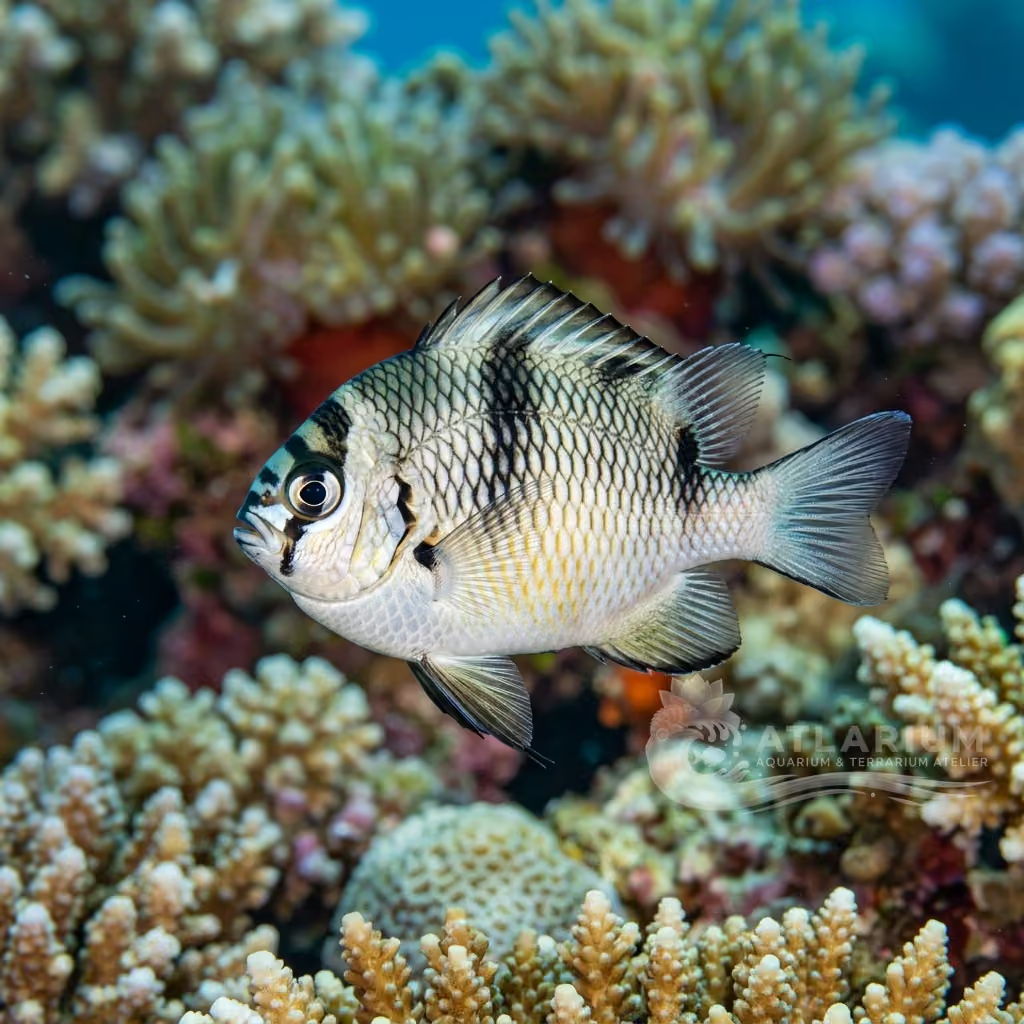
Orange-fin Clownfish
Amphiprion chrysopterus
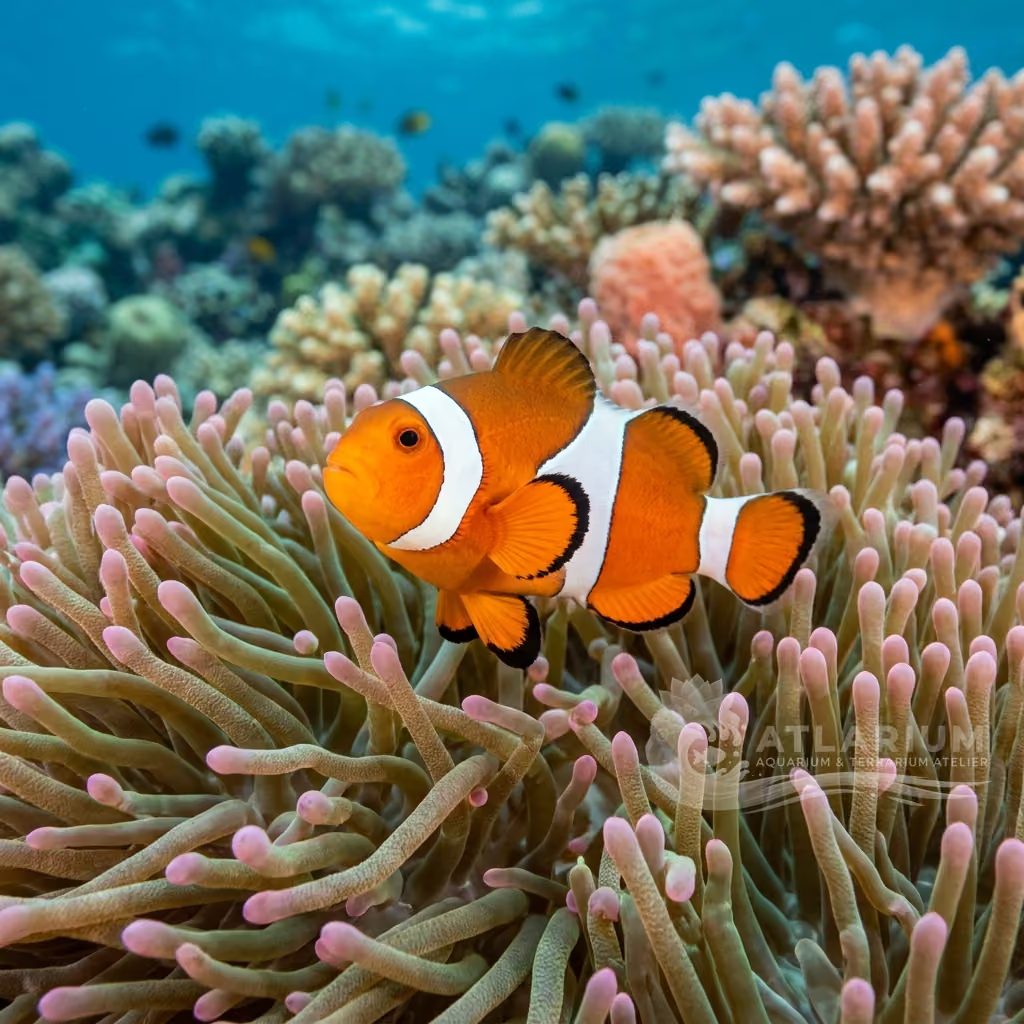
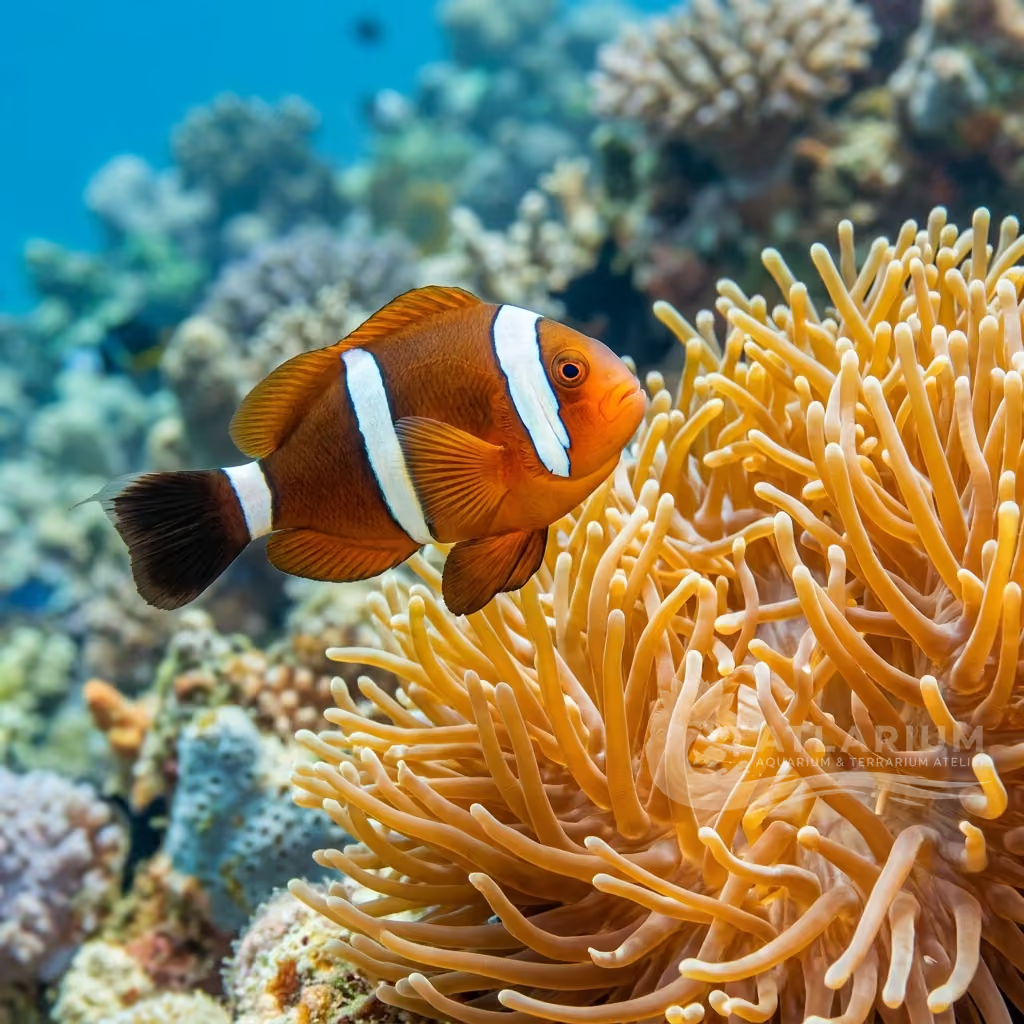
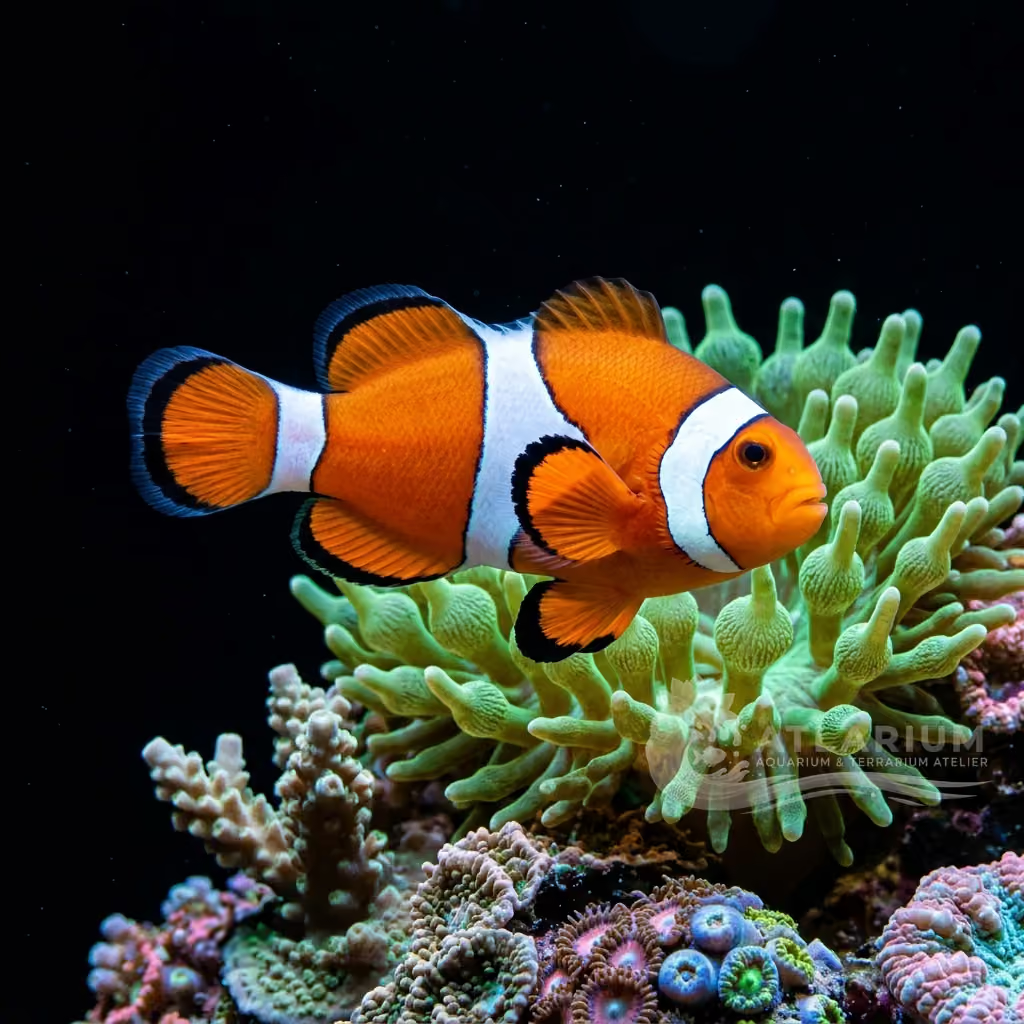
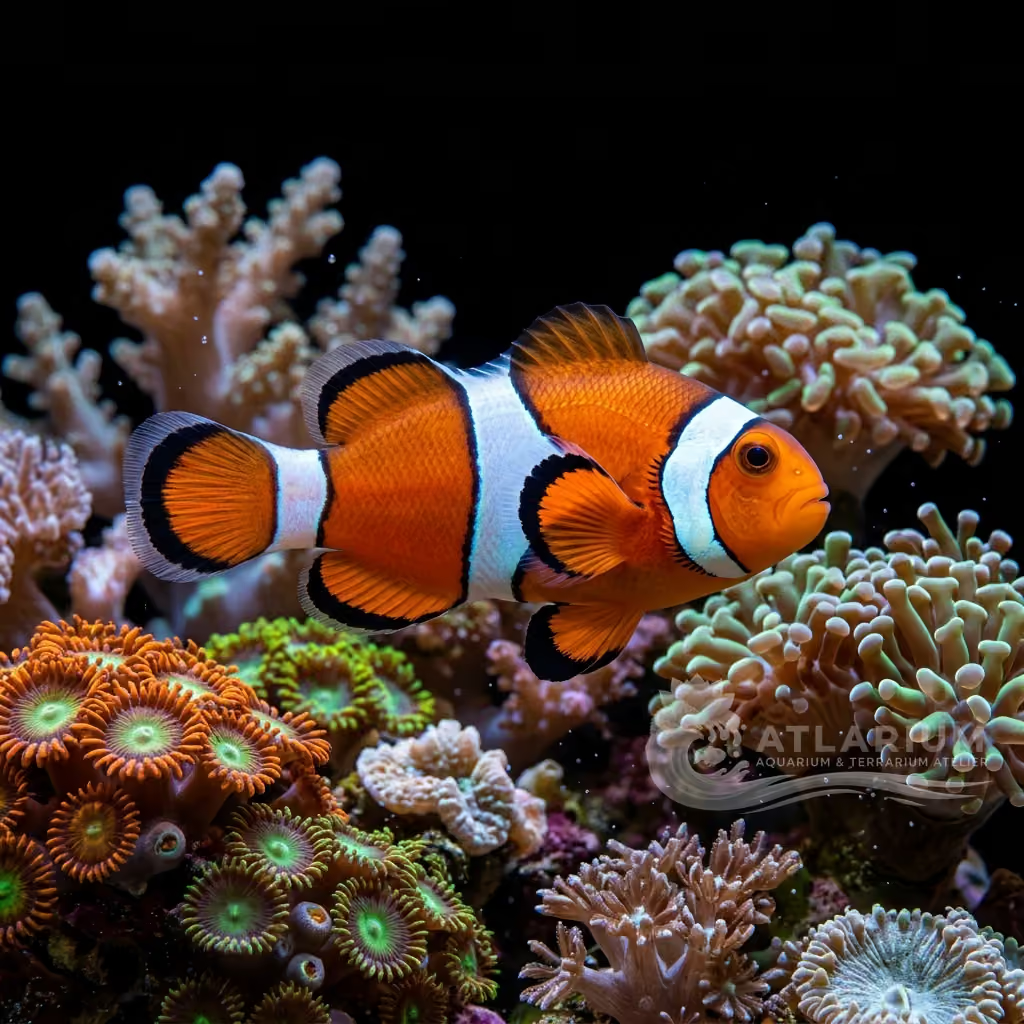
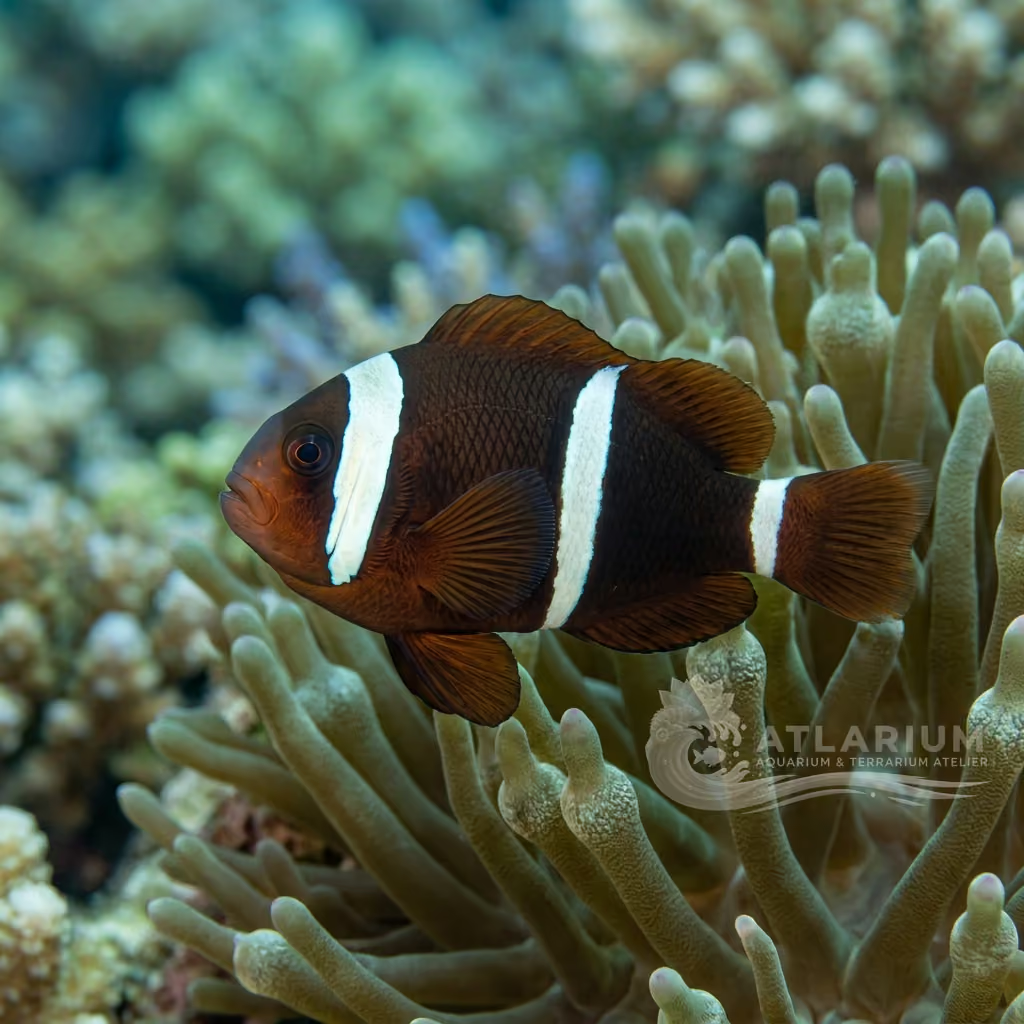
Among the largest clownfish species, it boasts a striking dark body with bright orange fins and dual bluish-white bars. Highly territorial, it forms mutualistic bonds with sea anemones on the reef.
Wassertemperatur
24 - 28 °C
pH-Wert
8.1 - 8.4
Wassertyp
Meerwasser
Tankfüllstand
Mitte
Erwachsenengröße
17 cm
Mindesttankvolumen
>= 200 L
Mindestgruppe
>= 2

Artbeschreibung
Geographical Origin and Habitat: Native to the coral reefs of the Western Pacific Ocean, including Samoa, the Mariana Islands, and the Caroline Islands. Inhabits shallow, well-oxygenated lagoon and seaward reefs.
Taxonomy and Morphology: Belongs to the family Pomacentridae. Features a robust, laterally compressed body with well-developed orange or golden-yellow fins. Reaches a maximum size of 17 cm, which is large for the genus.
Social Behavior: Highly territorial species that forms monogamous pairs. Lives in close symbiotic association with sea anemones. Exhibits a strict dominance hierarchy led by a dominant female.
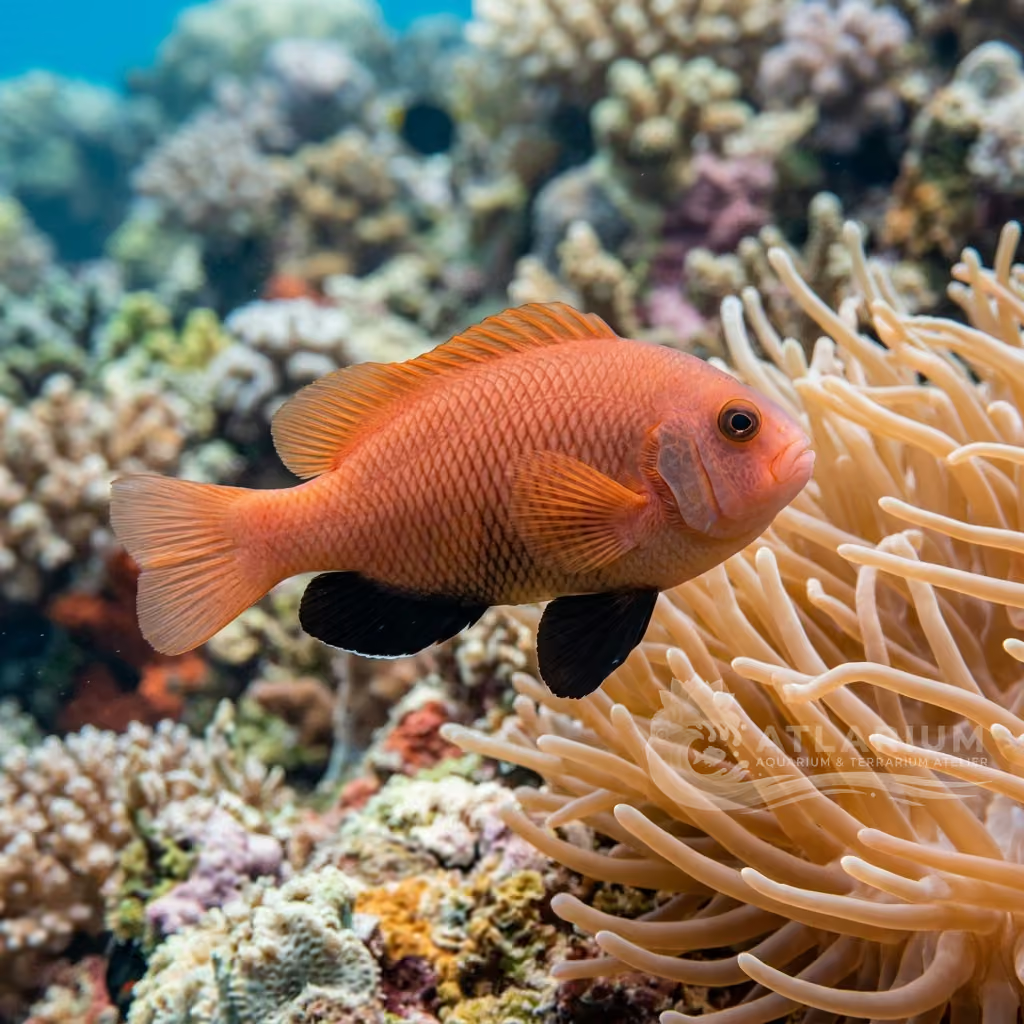
Coloration and Sexual Dimorphism: Dark brown to blackish body with two vertical bluish-white bars. Fins are a striking bright orange or golden yellow. Females are significantly larger than males.

Pflege, Zucht und Mitbewohner
Aquarium Setup: Requires spacious aquariums of at least 200 liters with plenty of live rock to create caves and territories. An anemone host is highly recommended for natural behavior.
Diet and Feeding: Omnivorous diet. Readily accepts frozen foods such as mysis shrimp, brine shrimp, and krill, supplemented with high-quality flakes, pellets, and marine algae.
Water Quality: Standard marine parameters. Temperature 24-28 °C, pH 8.1-8.4, specific gravity 1.020-1.025. Requires efficient filtration and regular water changes.
Compatibility and Cohabitation: Suitable for reef tanks with robust tankmates. Can show strong aggression toward other anemonefish and similarly sized species that encroach on its territory.
Aquarium Breeding: Oviparous, protandrous hermaphrodite. The pair deposits adhesive eggs on rocky surfaces near the base of the host anemone. The male guards and fans the clutch.
Risks and Diseases: Susceptible to common marine parasites such as Brooklynella, Marine Velvet (Oodinium), and Marine Ich. Quarantine protocols are essential for wild specimens.

Geografische Herkunft und Verbreitung
Native to the coral reefs of the Western Pacific Ocean, including Samoa, the Mariana Islands, and the Caroline Islands. Inhabits shallow, well-oxygenated lagoon and seaward reefs.
Ursprung
Tropische Ozeane und Riffe

Fischprofil
- Temperament
- Territorial
- While generally peaceful when young, the Orange-fin Anemonefish develops a semi-aggressive and highly territorial temperament as it matures. The female, in particular, will vigorously defend her mate, anemone, and eggs against any perceived threats, sometimes even biting the aquarist's hand. This territoriality is confined to a specific area rather than the entire tank. Providing ample space and choosing compatible tank mates minimizes potential conflicts.
- Diät
- Omnivore
- The Orange-fin Anemonefish is an omnivore that requires a varied diet to thrive and maintain its vibrant colors. In the wild, they feed on zooplankton, copepods, and various types of algae. In the home aquarium, they eagerly accept high-quality marine flakes, pellets, and frozen foods like mysis and brine shrimp. Supplementing their diet with spirulina or other algae-based foods is highly beneficial for their overall health.
- Lebenserwartung
- 20-25 years
- Erwachsenengröße
- 17 cm
- Geschlechterverhältnis
- Pair
- A pair of Amphiprion chrysopterus consists of a larger, dominant female and a smaller male. If a group of juveniles is introduced to an aquarium, the largest and most dominant individual will become the female, while the next in line becomes the breeding male. The remaining fish will stay as sexually immature males, often relegated to the outskirts of the territory. It is highly recommended to keep them individually or in bonded pairs to avoid severe aggression.
- Fütterungsfrequenz
- Twice daily
- To mimic their natural foraging habits, it is best to feed the Orange-fin Anemonefish small amounts of food 1 to 2 times a day. Overfeeding should be avoided to prevent uneaten food from degrading water quality. They are generally enthusiastic eaters and will quickly swim to the surface during feeding time. Target feeding their host anemone is also an important practice to ensure both fish and host are nourished.
- Bioload
- Medium to High
- The Orange-fin Anemonefish (Amphiprion chrysopterus) has a moderate bioload that is easily managed in most standard marine aquariums. While not overly messy eaters, they do consume hearty meals and produce a proportional amount of waste. A properly sized protein skimmer and regular mechanical filtration maintenance will keep water parameters in check. Consistent bi-weekly water changes are recommended to dilute dissolved organics.
- Fluss
- Moderate
- Amphiprion chrysopterus needs steady, moderate circulation distributed across the aquarium rather than a narrow, forceful jet. Requires spacious aquariums of at least 200 liters with plenty of live rock to create caves and territories. An anemone host is highly recommended for natural behavior. This preserves useful water exchange while retaining calmer shelter for rest and feeding.
- Sprungrisiko
- No
- Reproduktion
- Oviparous
- The Orange-fin Anemonefish is a protandrous hermaphrodite, meaning all individuals are born male and the most dominant fish transitions into a female. They are substrate spawners, laying hundreds of eggs on a flat surface near their host anemone. The male meticulously cleans the spawning site, fertilizes the eggs, and aggressively defends the nest until they hatch. Captive breeding is very common and forms the backbone of the marine ornamental aquaculture industry.
- Kompatibilität & Tankkameraden
- Aggressive
- This species is generally reef-safe and can be kept with a wide variety of peaceful to semi-aggressive tank mates. However, once paired and established, they become fiercely territorial around their chosen host anemone or territory. They may aggressively chase away fish that venture too close to their home. It is best to avoid housing them with highly aggressive predators or other clownfish species.
- Tankfüllstand
- Middle
- The Orange-fin Anemonefish typically occupies the middle to lower levels of the aquarium, closely associating with its host anemone or chosen territory. It rarely strays far from its home base, preferring to stay within a protective radius. While it will swim to the surface to feed, it immediately returns to its secure location. Their strong site fidelity makes them an excellent focal point in a reef tank.

Wissenschaftliche Modelle & Parameter
FishBase
Zugang zu den offiziellen wissenschaftlichen Daten der Art
FishBase v25.04Daten synchronisiert am: 15.06.2026
- Trophäenniveau
- 2,2 ± 0 se
- Belastbarkeit
- Hoch (weniger als 15 Monate)
- Generierungszeit
- 1,4 Jahre
- Phylogenetische Einzigartigkeit (PD50)
- 0.5
- Bayessche Längen-Gewichts-Beziehung
- a = 0.02344, b = 2.98
- AnfälligkeitGeringe Anfälligkeit (16 / 100)

Verwandte Arten
Empfehlungen gruppiert nach nahen Verwandten, Auswahl von Begleitern und ähnlicher Betreuung.