Zebra angelfish
Genicanthus caudovittatus
A sexually dimorphic, swallowtail angelfish that naturally schools above reefs. A reef-safe planktivore, it adds lively open-water movement but requires substantial swimming space and strong flow.
Wassertemperatur
22 - 26 °C
pH-Wert
8.1 - 8.4
Wassertyp
Meerwasser
Tankfüllstand
Mitte
Erwachsenengröße
20 cm
Mindesttankvolumen
>= 350 L
Mindestgruppe
>= 1
KH
8 - 12 dKH

Artbeschreibung
Geographical Origin and Habitat: Genicanthus caudovittatus is distributed throughout the Western Indian Ocean and the Red Sea, with populations concentrated along the coasts of East Africa, Madagascar, Reunion, and Mauritius. It inhabits outward-facing coral reefs and deep seaward slopes exposed to strong currents, typically at depths between 15 and 70 meters. Unlike other angelfishes, it swims in open water several meters above the reef structure to hunt.
Taxonomy and Morphology: Belonging to the family Pomacanthidae and the genus Genicanthus (swallowtail angelfishes). It features a slender, oval body with a distinct lyre-shaped or swallowtail caudal fin, which develops long filaments in mature males. It has a small, terminal mouth adapted for seizing planktonic organisms in open water. Adult specimens reach a maximum length of approximately 20 centimeters.
Social Behavior: A peaceful, active species that naturally lives in haremic groups consisting of a single dominant male and several females. It displays no aggression toward other reef species and spends most of its time swimming in the upper water column. Males will defend their territory against other Genicanthus males. Keeping them in small harems is highly recommended.
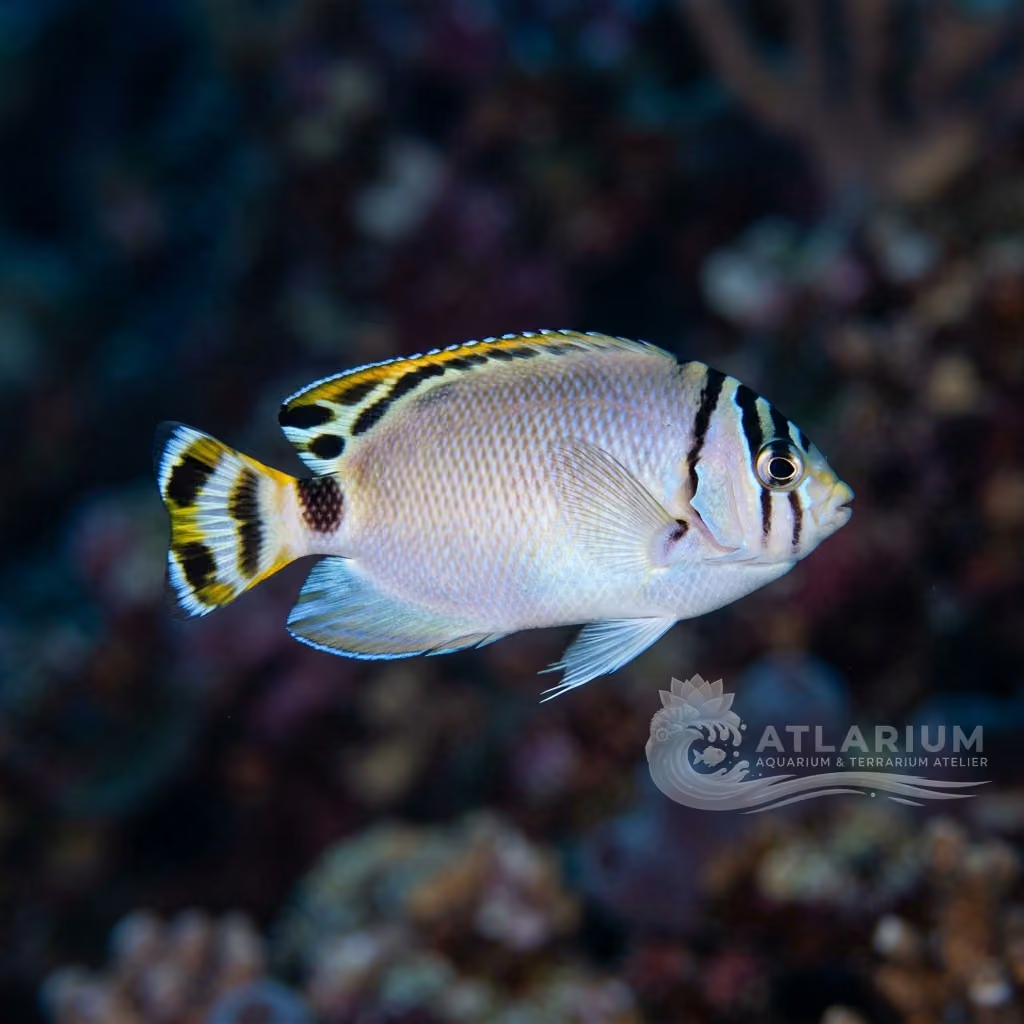
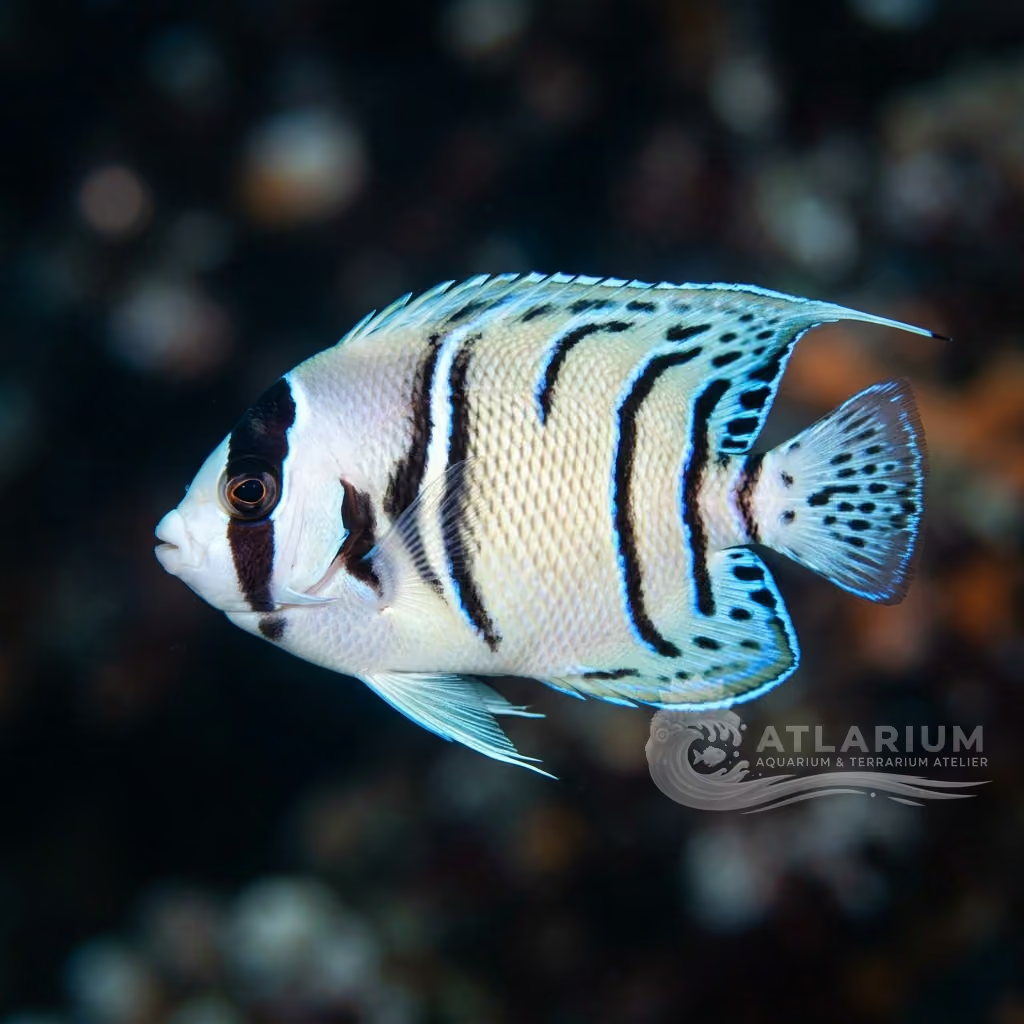
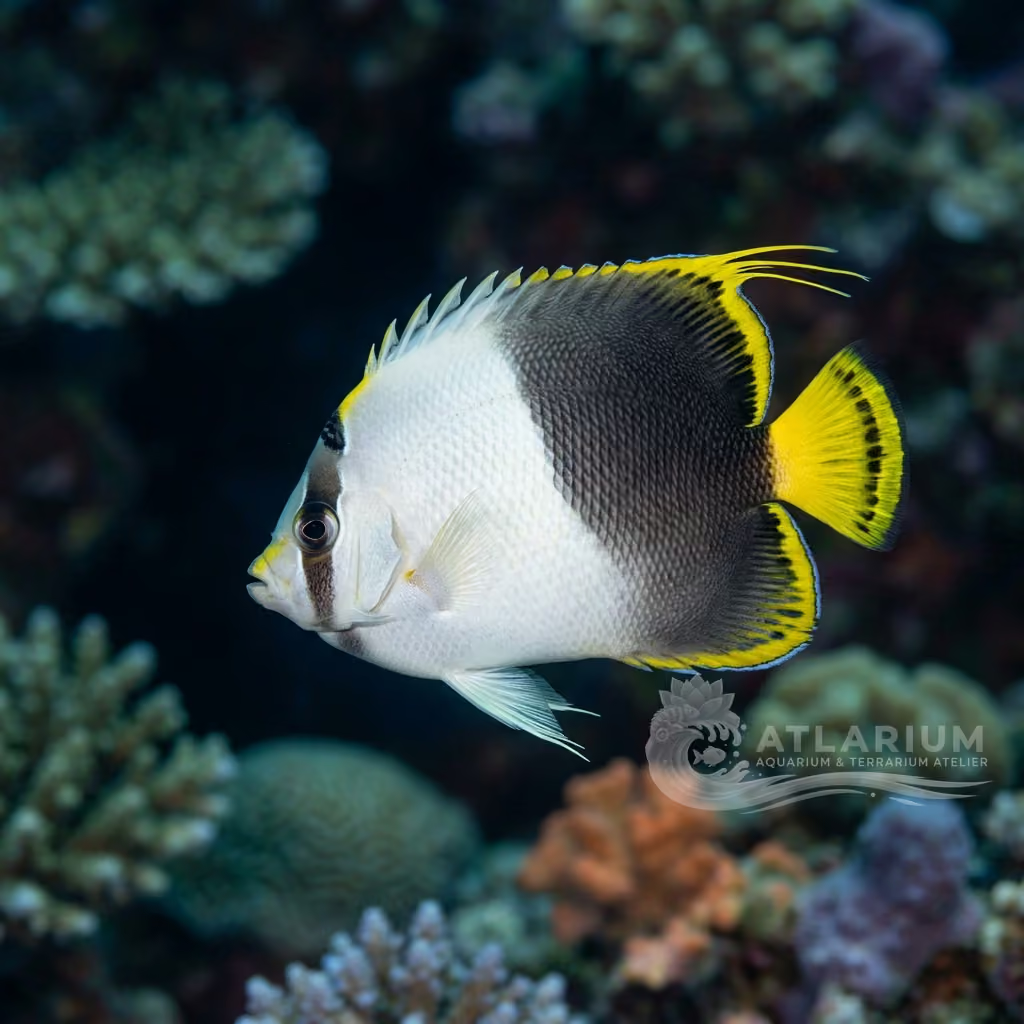
Coloration and Sexual Dimorphism: Displays one of the most striking examples of sexual dimorphism among marine fish. Females exhibit a light grey-blue or silvery body with a dark band over the eyes and dark stripes on the upper and lower margins of the tail. Males display a spectacular zebra-like pattern, with numerous vertical black and brown stripes crossing a silvery body, and yellow tints on the dorsal fin.

Pflege, Zucht und Mitbewohner
Aquarium Setup: Requires a spacious aquarium of at least 350-400 liters (approx. 90-100 gallons), with a layout that maximizes open swimming space in the middle and upper regions of the tank. Live rock should be arranged on the bottom and sides to create caves and shaded retreats. Wavemakers should be installed to provide moderate to strong water flow. Cover the tank.
Diet and Feeding: A specialized zooplanktivore. In captivity, it must be fed 2 to 3 times per day with small frozen foods such as mysis shrimp, enriched brine shrimp, calanus, and lobster eggs. They will also readily accept high-quality marine flakes and sinking pellets. A varied diet is essential to maintain their vibrant coloration and fin health.
Water Quality: Demands clean, highly oxygenated water. Keep temperature stable between 23°C and 27°C (73-81°F), pH at 8.1 to 8.4, specific gravity at 1.022 to 1.025, and KH at 8-12 dKH. An efficient protein skimmer is essential to handle the organic load from frequent feedings. Regular water changes and carbon filtration are recommended.
Compatibility and Cohabitation: One of the very few truly 100% reef-safe angelfish, as they do not nip at stony corals, soft corals, or ornamental clams. They coexist peacefully with passive reef species such as clownfish, anthias, gobies, wrasses, and tangs. Avoid housing them with overly aggressive or boisterous tankmates that might bully them.
Aquarium Breeding: Breeding in home aquariums is extremely difficult and rarely documented. They are protogynous hermaphrodites, meaning all specimens are born female, and the dominant individual in a harem transitions into a male. Courtship involves vertical swimming displays at dusk, releasing pelagic eggs into the water column.
Risks and Diseases: Susceptible to shipping stress and rapid temperature drops during acclimation. Prone to typical marine parasites like Cryptocaryon and Velvet if stressed. They are active jumpers, making a tight-fitting lid or screen cover absolutely mandatory to prevent them from jumping out of the aquarium.

Geografische Herkunft und Verbreitung
Genicanthus caudovittatus is distributed throughout the Western Indian Ocean and the Red Sea, with populations concentrated along the coasts of East Africa, Madagascar, Reunion, and Mauritius. It inhabits outward-facing coral reefs and deep seaward slopes exposed to strong currents, typically at depths between 15 and 70 meters. Unlike other angelfishes, it swims in open water several meters above the reef structure to hunt.
Ursprung
Selektive Züchtung und SortenAfrika und MadagaskarSüd- und SüdostasienTropische Ozeane und Riffe

Fischprofil
- Temperament
- Peaceful
- The temperament of the Genicanthus caudovittatus is generally peaceful, active, and highly engaging. They are an elegant addition to the aquarium, constantly moving and adding dynamic life to the mid-water regions. They are completely safe with corals and do not bother smaller, peaceful tank mates. However, the males are strictly intolerant of other males of the same genus and will fight relentlessly if housed together. Provided they are given enough space and the correct harem structure, they are model citizens in a reef tank.
- Diät
- Omnivore
- In the wild, the Genicanthus caudovittatus is a mid-water planktivore, spending its time catching tiny organisms drifting in the current. In the aquarium, they quickly learn to accept a wide variety of prepared foods, making them quite hardy. Their diet should consist of high-quality meaty foods such as frozen mysis shrimp, fortified brine shrimp, and finely chopped seafood. They will also readily consume high-quality marine pellets and flakes. Providing a varied, protein-rich diet is essential for maintaining the male's striking contrasting coloration and the female's subtle beauty.
- Lebenserwartung
- 10-15 years
- Erwachsenengröße
- 20 cm
- Geschlechterverhältnis
- Harem
- The Genicanthus caudovittatus is highly sexually dimorphic, making it exceptionally easy to tell males and females apart. Males boast a striking zebra-stripe pattern on their sides, a dark band near the tail, and an elongated lyretail. Females are more subdued, presenting a clean, silvery-grey body with a black band masking their eyes and edging their tail. Interestingly, they are protogynous hermaphrodites, meaning all individuals are born female, and the most dominant female can morph into a male if one is not present. This makes acquiring a natural pair quite easy if buying two females.
- Fütterungsfrequenz
- Twice daily
- Given their highly active nature and planktivorous feeding habits, the Genicanthus caudovittatus requires multiple feedings throughout the day. It is highly recommended to feed them at least three small meals daily to sustain their fast metabolism. They are eager eaters and will aggressively swim in the open water to snatch food as it drifts by. Utilizing an automatic feeder with high-quality pellets is an excellent way to provide mid-day meals while away. Consistent, frequent feeding prevents them from slowly wasting away and keeps their immune system strong.
- Bioload
- Medium to High
- The Genicanthus caudovittatus generates a moderate bioload that is easily managed in well-established marine systems. Unlike other large angelfish, their diet consists primarily of zooplankton, resulting in somewhat less heavy waste production. However, their high energy levels and requirement for frequent feedings mean that excellent filtration is still mandatory. A high-quality protein skimmer and regular water changes will efficiently process their metabolic output. They are highly active fish, so maintaining high levels of dissolved oxygen through good surface agitation is important.
- Fluss
- Strong
- The Genicanthus caudovittatus originates from deep reef slopes and drop-offs characterized by strong, sweeping ocean currents. They require robust and turbulent water movement in the home aquarium to feel comfortable and exhibit natural behaviors. High flow not only provides them with essential swimming exercise but also keeps their food suspended in the water column longer. Properly placed wavemakers ensure that detritus does not settle, maintaining the pristine water conditions they require. They will actively swim directly into the strongest currents provided by powerheads.
- Sprungrisiko
- Yes
- Because they are swift, mid-water swimmers, the Genicanthus caudovittatus possesses a significant risk of jumping out of the aquarium. When frightened by sudden movement or aggressive tank mates, their first instinct is to dart upwards with incredible speed. A tightly fitting, securely fastened mesh screen top is an absolute requirement for keeping this species. Standard egg crate is often insufficient as their streamlined bodies can sometimes squeeze through. Ensuring the tank is completely covered will prevent an unnecessary and tragic loss.
- Reproduktion
- Oviparous
- The Genicanthus caudovittatus is a pelagic spawner and, like most marine angelfish, successfully breeding them in captivity is incredibly rare and difficult. In nature, a dominant male will court females in his harem, rushing toward the surface to release gametes into the current. The eggs and subsequent larvae drift in the ocean's pelagic zone for an extended period. Rearing the microscopic fry requires specific live food cultures and highly specialized larval tanks. While they may display spawning behavior in large aquariums, the larvae rarely survive.
- Kompatibilität & Tankkameraden
- Peaceful
- The Genicanthus caudovittatus is widely celebrated as one of the few truly reef-safe angelfish available to hobbyists. Because their natural diet is zooplankton rather than benthic organisms, they completely ignore corals, clams, and decorative invertebrates. They are a fantastic addition to mixed reef tanks and get along wonderfully with most peaceful community fish. While peaceful towards heterospecifics, males can be violently aggressive toward other males of the Genicanthus genus. Therefore, they are best kept singly or as a mated pair or small harem with only one male.
- Tankfüllstand
- Middle
- The Genicanthus caudovittatus is a highly active, open-water swimmer that requires a large tank, preferably 125 gallons or more. They need massive amounts of unobstructed swimming space spanning the entire length of the aquarium to thrive. While they spend most of their time in the open water column, they also need access to large rockwork structures with sizable caves for resting at night. A minimalist aquascape that provides hiding spots but maximizes swimming lanes is ideal. Cramped quarters will lead to severe stress and pacing behavior.

Wissenschaftliche Modelle & Parameter
FishBase
Zugang zu den offiziellen wissenschaftlichen Daten der Art
FishBase v25.04Daten synchronisiert am: 15.06.2026
- Trophäenniveau
- 3,4 ± 0,45 se
- Belastbarkeit
- Mittel (1,4 - 4,4 Jahre)
- Phylogenetische Einzigartigkeit (PD50)
- 0.501
- Bayessche Längen-Gewichts-Beziehung
- a = 0.01122, b = 3.04
- AnfälligkeitGeringe Anfälligkeit (10 / 100)

Verwandte Arten
Empfehlungen gruppiert nach nahen Verwandten, Auswahl von Begleitern und ähnlicher Betreuung.