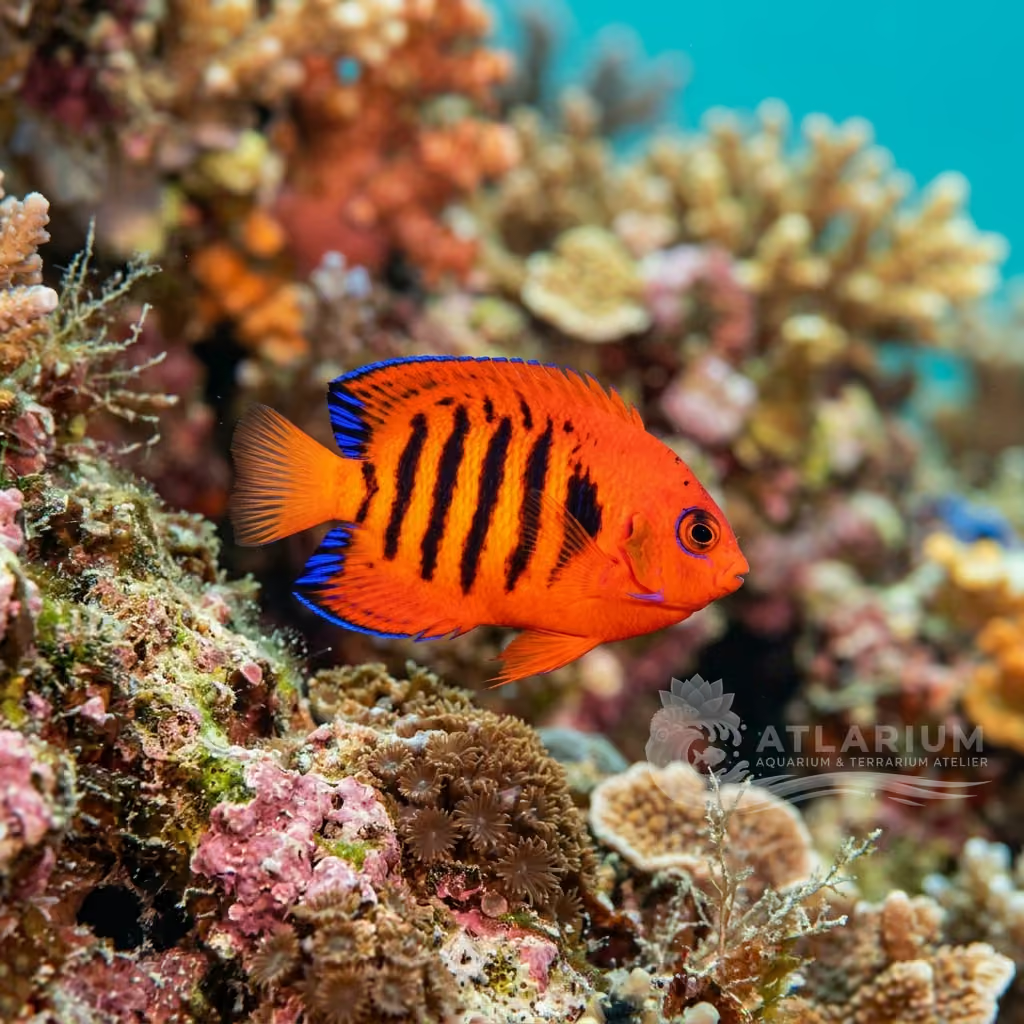
Joculator Angelfish
Centropyge joculator
Endemic to the Cocos Islands, this sought-after pygmy angelfish boasts a bold yellow and blue-black body, needing stable parameters and plenty of caves.
Wassertemperatur
22 - 26 °C
pH-Wert
8.1 - 8.4
Wassertyp
Meerwasser
Tankfüllstand
Unten und in der Mitte
Erwachsenengröße
9 cm
Mindesttankvolumen
>= 260 L
Mindestgruppe
>= 1
KH
8 - 12 dKH

Artbeschreibung
Geographical Origin and Habitat: Endemic to the Cocos (Keeling) Islands and Christmas Island in the eastern Indian Ocean. It inhabits the outer reef slopes and drop-offs at depths ranging from 15 to 80 meters, closely associated with steep rocky walls.
Taxonomy and Morphology: Member of the Pomacanthidae family, genus Centropyge. It reaches a maximum length of about 9 cm (3.5 inches). Features the typical oval, deep-bodied shape of pygmy angelfishes, with a sharp spine on the lower edge of the gill cover.
Social Behavior: Territorial yet relatively shy, spending much of its time darting in and out of rocky crevices. It typically lives in small harems consisting of one dominant male and one or two females, defending a small territory.
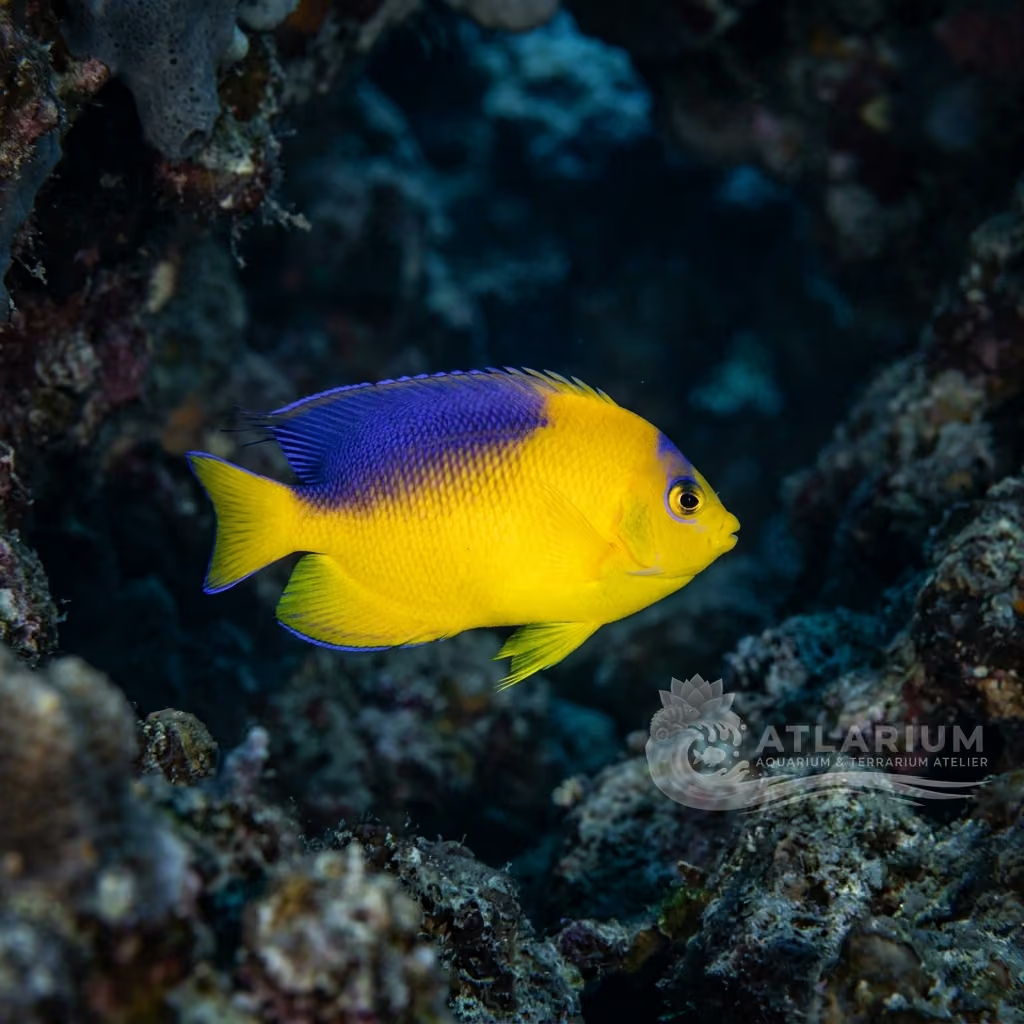
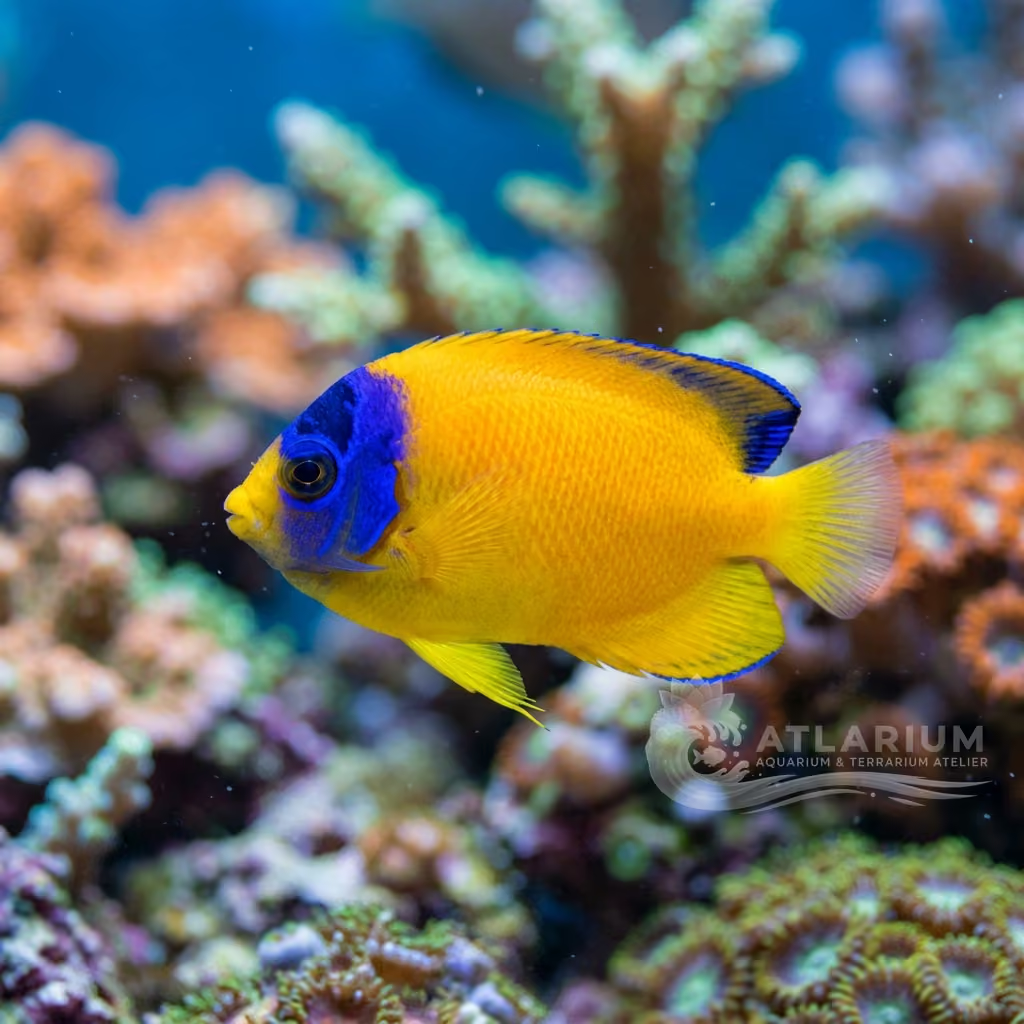
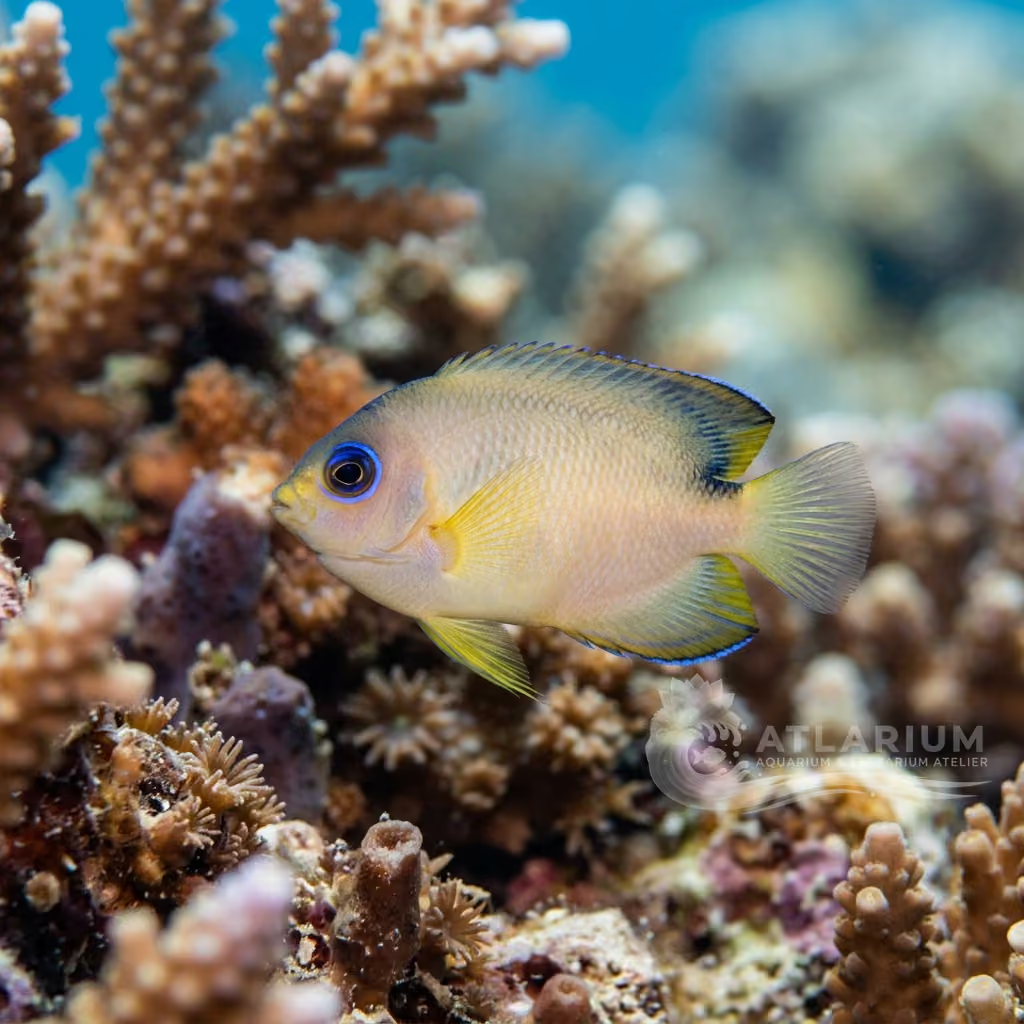
Coloration and Sexual Dimorphism: The front half of the body and head is a brilliant golden-yellow, which transitions sharply to a deep blue-black color on the rear half. Features a prominent neon blue ring around the eye. Males are slightly larger than females.

Pflege, Zucht und Mitbewohner
Aquarium Setup: Requires a well-established tank of at least 200 liters (55 gallons) with plenty of live rock arranged to create numerous caves, overhangs, and swim-throughs. The presence of natural microalgae growth on rocks is highly recommended.
Diet and Feeding: Omnivorous, grazing on algae, detritus, and small invertebrates. In captivity, feed high-quality angelfish preparations (containing sponge), frozen foods like mysis and brine shrimp, and sheets of dried nori algae.
Water Quality: Keep parameters highly stable: temperature 24-26°C (75-79°F), pH 8.1-8.4, salinity 1.022-1.025. Efficient filtration and moderate to strong water movement are required. Pygmy angelfish are sensitive to elevated nitrate levels.
Compatibility and Cohabitation: Reef-safe with caution. It may nip at large-polyp stony (LPS) corals, soft corals, and clam mantles if underfed. Avoid housing with similarly colored or sized Centropyge species to prevent severe fighting.
Aquarium Breeding: Extremely challenging to breed in home aquaria. Spawning occurs at dusk with pelagic eggs. Successfully rearing the tiny, fragile larvae requires specialized greenwater systems and microscopic live foods.
Risks and Diseases: Vulnerable to common marine parasites such as ich (Cryptocaryon) and velvet (Oodinium). The sharp preopercular spine easily gets tangled in fish nets, which can cause injury; use a specimen container for handling rather than nets.

Geografische Herkunft und Verbreitung
Endemic to the Cocos (Keeling) Islands and Christmas Island in the eastern Indian Ocean. It inhabits the outer reef slopes and drop-offs at depths ranging from 15 to 80 meters, closely associated with steep rocky walls.
Ursprung
Tropische Ozeane und RiffeSüd- und Südostasien

Fischprofil
- Temperament
- Semi-aggressive
- The Joculator Angelfish is generally considered semi-aggressive, displaying a shy demeanor when first introduced to a new environment. Once acclimated, they become bold, active, and highly territorial over their established home ranges. They are particularly intolerant of conspecifics and other dwarf angelfish of similar coloration or shape. While peaceful toward unrelated species, they may chase smaller or more passive tankmates that enter their territory.
- Diät
- Omnivore
- This species is an omnivore with a strong preference for detritus, filamentous algae, and microalgae. In the aquarium, they should be provided with a diverse diet that includes spirulina, high-quality marine algae, and commercial angelfish preparations containing sponge. Meaty foods like mysis shrimp, brine shrimp, and finely chopped seafood should also be offered to ensure balanced nutrition. Regular grazing on mature live rock is essential to satisfy their natural feeding instincts.
- Lebenserwartung
- 6-10 years
- Erwachsenengröße
- 9 cm
- Geschlechterverhältnis
- Harem
- This species is a protogynous hermaphrodite, meaning all individuals are born female and the dominant one in a group transitions into a male. In the wild, they naturally form harems consisting of one male and several females. In the home aquarium, it is recommended to keep them singly unless you are a highly experienced keeper with a very large tank. Introducing a male and a smaller female simultaneously is the only reliable method to form a mated pair in captivity.
- Fütterungsfrequenz
- Twice daily
- To replicate their natural continuous grazing behavior, the Joculator Angelfish should be fed two to three times daily. Offering small portions that are consumed within a few minutes helps prevent excess food from decaying and polluting the water. In addition to scheduled feedings, the aquarium should contain ample mature live rock covered in natural algae films. This allows the fish to graze throughout the day, which keeps their digestive systems healthy and reduces stress.
- Bioload
- Low to Medium
- The Cocos Pygmy Angelfish has a low-to-medium biological waste production relative to its small adult size. However, because it requires frequent feeding and constant grazing to maintain its health, it can indirectly impact water quality if filtration is inadequate. A well-established aquarium with a highly efficient protein skimmer and regular water changes is necessary to manage its waste. Providing high-quality biological media will further ensure that ammonia and nitrite levels remain at zero.
- Fluss
- Strong
- Hailing from deep, outer reef slopes, the Joculator Angelfish prefers moderate to strong water flow. Excellent water movement ensures high oxygen levels, which mimics the energetic oceanic environment of their native habitat. Dynamic flow patterns also help keep detritus suspended, allowing the aquarium's filtration system to export waste efficiently. While they appreciate high flow, it is important to provide low-flow resting areas within the rockwork for nighttime shelter.
- Sprungrisiko
- Yes
- Like most members of the Centropyge genus, the Joculator Angelfish poses a moderate to high risk of jumping. They are easily startled by sudden light changes, maintenance activities, or aggressive tankmates, which can cause them to leap from the water. Additionally, their natural spawning behavior involves a vertical rise that can lead to accidental escapes. A tight-fitting lid or a secure mesh cover is absolutely essential to prevent tragic losses.
- Reproduktion
- Rare / not documented
- Reproduction in captivity is extremely challenging and remains primarily within the domain of professional aquaculturists. They are broadcast spawners that perform a complex courtship ritual ending in a vertical rise to release pelagic eggs. The resulting larvae are extremely small and require specialized live foods, such as copepod nauplii, to survive. While pairing is possible in large tanks, successfully rearing the fry to settlement requires advanced skills and dedicated rearing setups.
- Kompatibilität & Tankkameraden
- Territorial
- The Joculator Angelfish is compatible with a wide range of active marine species such as wrasses, tangs, and larger damselfish. However, they should not be housed with other dwarf angelfish unless the aquarium is exceptionally large and offers multiple visual barriers. Caution is required when keeping them in reef tanks, as they may nip at large polyp stony corals, zoanthids, and clam mantles. Keeping them well-fed is the best way to minimize the risk of damage to sessile invertebrates.
- Tankfüllstand
- Middle/Bottom
- The Joculator Angelfish is a benthic-dwelling species that is typically found in the lower to middle zones of the aquarium. They spend most of their time darting in and out of rockwork, caves, and crevices where they forage for food. While they will swim into the open water to feed during meal times, they rarely venture to the upper surface. Providing an environment rich in live rock structures mimics their natural habitat on steep reef slopes.

Wissenschaftliche Modelle & Parameter
FishBase
Zugang zu den offiziellen wissenschaftlichen Daten der Art
FishBase v25.04Daten synchronisiert am: 15.06.2026
- Trophäenniveau
- 2,8 ± 0,32 se
- Belastbarkeit
- Hoch (weniger als 15 Monate)
- Phylogenetische Einzigartigkeit (PD50)
- 0.5
- Bayessche Längen-Gewichts-Beziehung
- a = 0.0302, b = 2.89
- AnfälligkeitGeringe Anfälligkeit (10 / 100)

Verwandte Arten
Empfehlungen gruppiert nach nahen Verwandten, Auswahl von Begleitern und ähnlicher Betreuung.