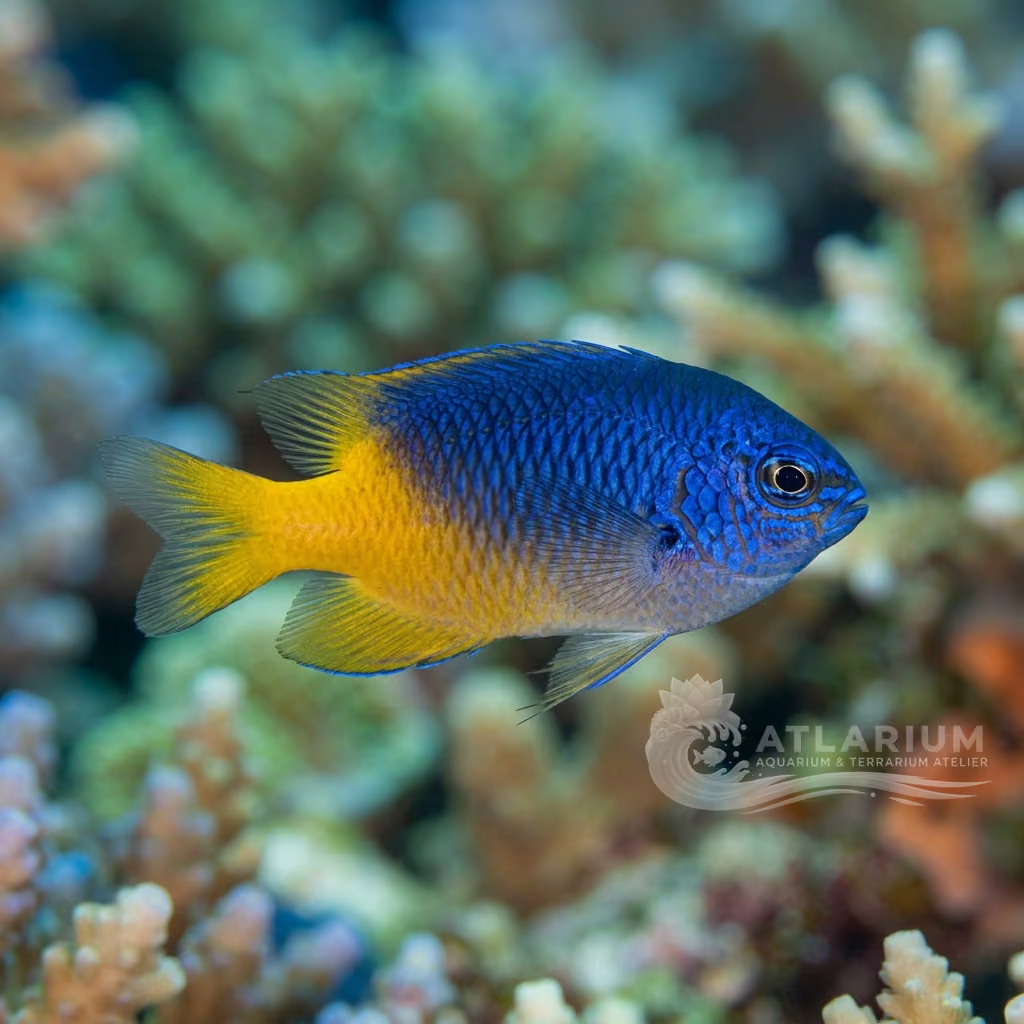
Threeband damselfish
Amblypomacentrus tricinctus
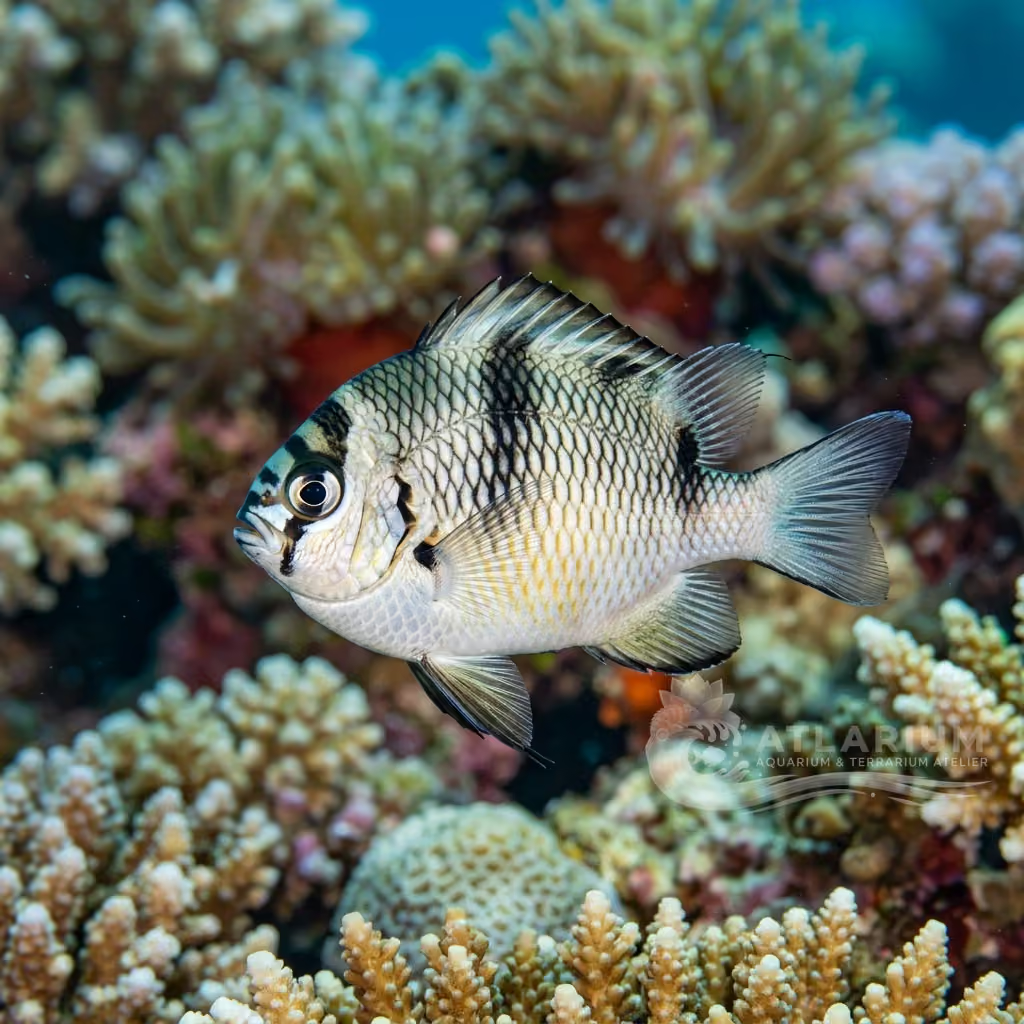
The Three-Band Damselfish features a milky white body with three jet-black vertical bands. Hardy and territorial, it's a great addition to robust community marine aquariums.
Wassertemperatur
22 - 26 °C
pH-Wert
8.1 - 8.4
Wassertyp
Meerwasser
Tankfüllstand
Alle Ebenen
Erwachsenengröße
6 cm
Mindesttankvolumen
>= 110 L
Mindestgruppe
>= 1
KH
8 - 12 dKH

Artbeschreibung
Geographical Origin and Habitat: Chrysiptera tricincta is native to the Western Pacific Ocean, ranging from the waters of Indonesia to the Great Barrier Reef in Australia, Vanuatu, New Caledonia, and the Solomon Islands. It primarily inhabits shallow coastal reefs, sandy lagoon flats, and areas dominated by rubble and seagrass beds, typically found at depths between 1 to 15 meters.
Taxonomy and Morphology: Belongs to the family Pomacentridae, subfamily Pomacentrinae. It features a compact, oval, and laterally compressed body, reaching a maximum adult size of approximately 6 to 7 centimeters. It possesses robust dorsal spines and a small terminal mouth with tiny teeth suited for picking small invertebrates and algae from surfaces.
Social Behavior: Like most damselfishes, it exhibits bold and highly territorial behavior. It vigorously defends a small home range centered around a preferred rock crevice or cave, especially against its own species. Group housing is only successful in larger tanks where geographic boundaries can be established using rockwork.
Coloration and Sexual Dimorphism: The color pattern is highly distinct: a milky white to pale yellow base body crossed by three vertical jet-black bands. The first band runs through the eye, the second extends from the middle of the dorsal fin down to the pelvic fins, and the third marks the caudal peduncle. There is no visible external sexual dimorphism.

Pflege, Zucht und Mitbewohner
Aquarium Setup: A minimum aquarium volume of 100 liters is recommended. The layout must incorporate plenty of live rock to construct caves, overhangs, and visual barriers, allowing the fish to claim a territory and feel secure. This species is entirely reef-safe and will not damage corals or sessile invertebrates.
Diet and Feeding: An opportunistic omnivore. In the aquarium, it readily consumes frozen foods (such as brine shrimp, mysis, and copepods), dry flakes, pellets, and foods containing spirulina or marine algae. Feed twice daily in moderate amounts, ensuring all food is consumed within a few minutes to prevent water fouling.
Water Quality: Keep parameters within standard tropical reef limits: water temperature of 24 to 28 °C, pH 8.1 to 8.4, and specific gravity of 1.020 to 1.025. It is highly resilient to minor chemical fluctuations, making it suitable for beginners and newly cycled marine aquariums.
Compatibility and Cohabitation: Best housed with robust, active tankmates such as tangs, wrasses, dwarf angelfish, and larger clownfish. Avoid keeping it with slow-moving, shy, or delicate species like pipefish and small gobies, which may be bullied. Introduce this damselfish last to prevent territorial dominance.
Aquarium Breeding: Oviparous. Breeding in home aquariums can be achieved; the male prepares a nesting site on a flat rock surface and courts the female. After she lays adhesive eggs, the male guards and fans them until they hatch (usually 3 to 5 days). Raising the pelagic larvae requires live rotifers.
Risks and Diseases: While exceptionally hardy, it can contract common marine diseases like Marine Ich (Cryptocaryon irritans) under severe stress or sudden temperature drops. The primary management challenge is controlling its territorial aggression, which can be mitigated by providing sufficient space and hiding spots.

Geografische Herkunft und Verbreitung
Chrysiptera tricincta is native to the Western Pacific Ocean, ranging from the waters of Indonesia to the Great Barrier Reef in Australia, Vanuatu, New Caledonia, and the Solomon Islands. It primarily inhabits shallow coastal reefs, sandy lagoon flats, and areas dominated by rubble and seagrass beds, typically found at depths between 1 to 15 meters.
Ursprung
Tropische Ozeane und RiffeSüd- und SüdostasienOstasienAustralien, Neuguinea und Ozeanien

Fischprofil
- Temperament
- Semi-aggressive
- It exhibits a semi-aggressive temperament and courageously and persistently defends its chosen rocky territory within the aquarium. It is an active and curious fish that loves to patrol the rocks in search of food. In a well-structured and spacious tank, its territorial aggression remains localized and does not disturb the overall balance of the marine community.
- Diät
- Omnivore
- This species is omnivorous and requires a balanced diet consisting of protein and plant-based elements to preserve its health. In the aquarium, it eagerly accepts commercial dry pellet and flake foods, supplemented with frozen food such as mysis, brine shrimp, and copepods. Offering foods enriched with spirulina algae is important to support its natural digestive needs and avoid imbalances.
- Lebenserwartung
- 4-8 years
- Erwachsenengröße
- 6 cm
- Geschlechterverhältnis
- Flexible
- Solitary or mated pairs
- Fütterungsfrequenz
- Twice daily
- It is recommended to feed the fish twice daily in moderate doses that can be quickly consumed by the fish. Regular feeding supports its active metabolism and reduces the occurrence of territorial aggression due to food competition. Overfeeding should be avoided to prevent polluting the water and altering the stability of the tank parameters.
- Bioload
- Low to Medium
- The three-band damselfish introduces a moderate biological load into the marine aquarium environment. As very active swimmers and eager eaters, they consume a fair amount of meaty and herbivorous foods daily, leading to consistent waste generation. While their bioload is not overwhelming, aquariums with these fish should have robust protein skimming and regular water change routines. They are well-suited for established systems with sufficient live rock to handle the biological filtration demands.
- Fluss
- Strong
- In the wild, it inhabits coastal reefs and protected lagoons, showing a preference for moderate to strong water movement. A well-distributed and constant water flow promotes oxygenation and keeps the overall marine environment healthy. It is essential that the aquarium features rockwork arranged to offer cavities protected from currents, where the fish can take refuge.
- Sprungrisiko
- No
- Reproduktion
- Oviparous
- This oviparous species deposits adhesive benthic eggs inside rocky crevices or hard shelters previously cleaned by the male. The male actively guards the nest and takes care of aerating the clutch until the eggs hatch, defending it from other fish. Rearing the fry in captivity is extremely difficult due to the pelagic larval stage and the need for specific microscopic live food.
- Kompatibilität & Tankkameraden
- Semi-aggressive
- This damselfish is semi-aggressive and displays territoriality toward conspecifics and other fish with similar liveries or behaviors. It is completely safe for corals and reef invertebrates, making it suitable for marine reef aquariums. It is recommended to keep it with active and robust fish that can handle its lively temperament, preferably introducing it among the last tank guests.
- Tankfüllstand
- All levels
- This species spends the vast majority of its time darting among the middle and lower levels of the aquarium. They claim specific rocky outcrops or coral heads as their territory and rarely stray far from these designated safe zones. They avoid the uppermost levels of the water column, viewing open water as a zone of high vulnerability to predators. A structurally diverse aquascape with plenty of visual barriers is ideal for keeping them comfortably settled in the mid-to-lower sections.

Wissenschaftliche Modelle & Parameter
FishBase
Zugang zu den offiziellen wissenschaftlichen Daten der Art
FishBase v25.04Daten synchronisiert am: 15.06.2026
- Trophäenniveau
- 2,7 ± 0,31 se
- Belastbarkeit
- Hoch (weniger als 15 Monate)
- Phylogenetische Einzigartigkeit (PD50)
- 0.5156
- Bayessche Längen-Gewichts-Beziehung
- a = 0.01445, b = 3
- AnfälligkeitGeringe Anfälligkeit (10 / 100)

Verwandte Arten
Empfehlungen gruppiert nach nahen Verwandten, Auswahl von Begleitern und ähnlicher Betreuung.