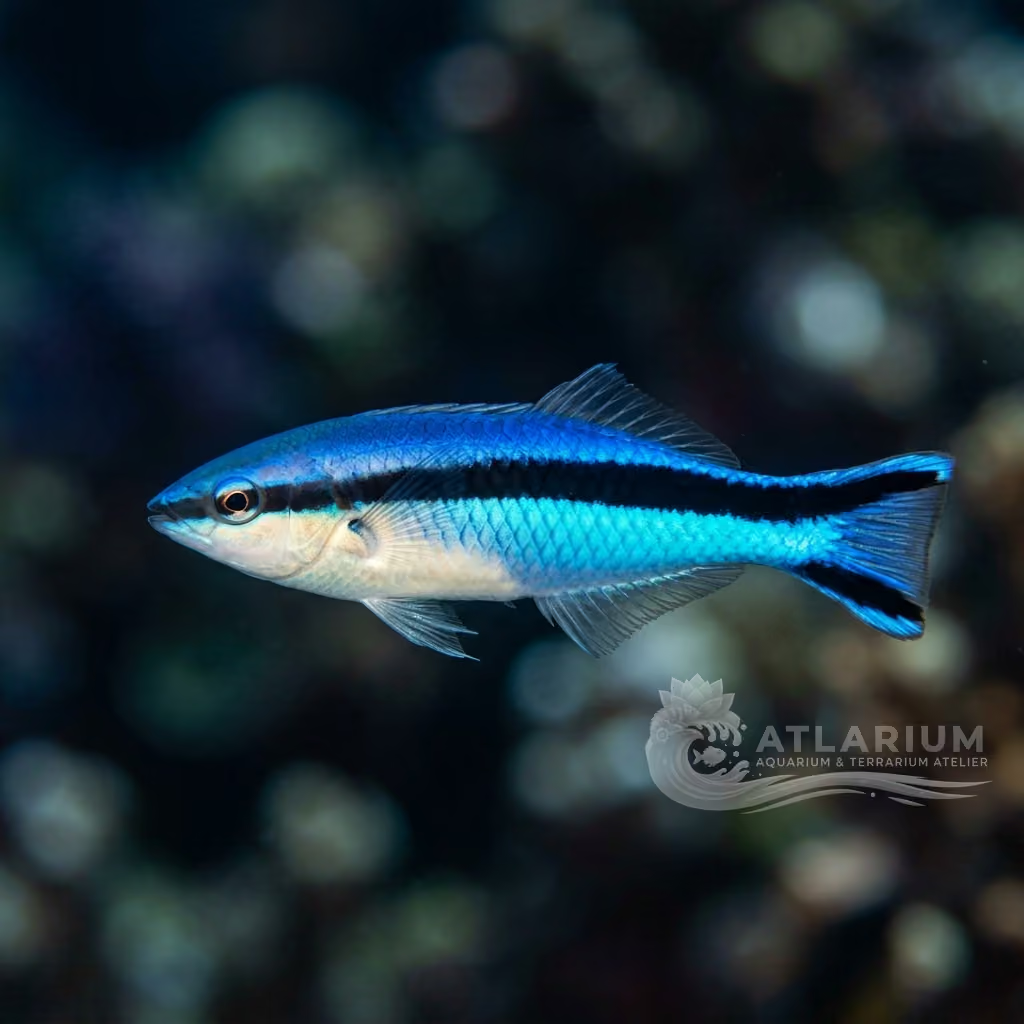
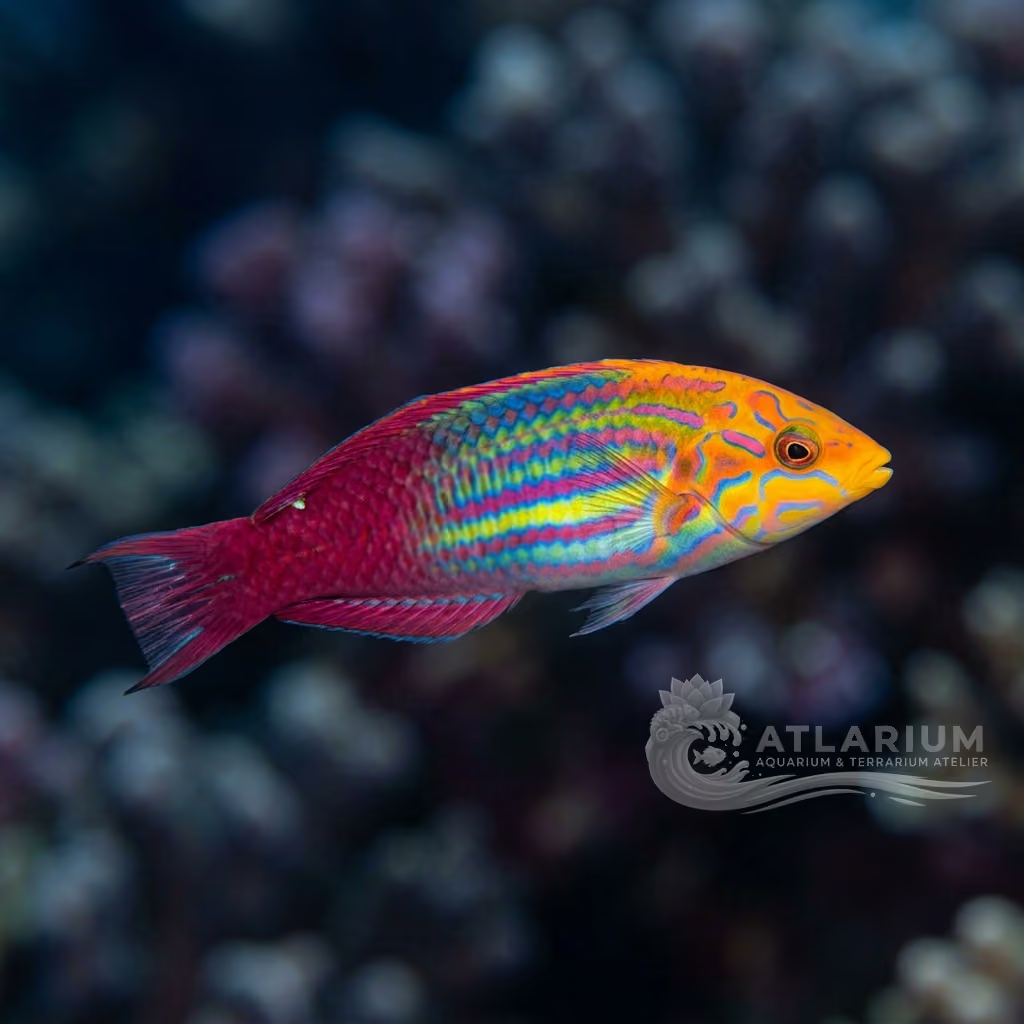
Flame wrasse
Cirrhilabrus jordani
Endemic to Hawaii, the Flame Fairy Wrasse is a spectacular, active fish with brilliant red and yellow colors. It is completely reef-safe but highly prone to jumping.
Wassertemperatur
22 - 26 °C
pH-Wert
8.1 - 8.4
Wassertyp
Meerwasser
Tankfüllstand
Unten und in der Mitte
Erwachsenengröße
10 cm
Mindesttankvolumen
>= 200 L
Mindestgruppe
>= 1
KH
8 - 12 dKH

Artbeschreibung
Geographical Origin and Habitat: This species is endemic to the Hawaiian Islands and Johnston Atoll in the central Pacific Ocean. It primarily inhabits deep seaward reefs and outer reef slopes, usually at depths ranging from 20 to 100 meters, preferring areas with strong currents and mixed substrates of coral rubble and sand, where they find shelter among hard corals.
Taxonomy and Morphology: Cirrhilabrus jordani belongs to the Labridae family, under the subfamily Cheilininae. It exhibits the typical elongated and slightly compressed body shape of fairy wrasses, with large, prominent eyes and well-developed dorsal and anal fins. Adults reach a maximum length of approximately 10 cm.
Social Behavior: It is an active, gregarious fish that lives in harems composed of a single dominant male and several females. It is peaceful toward other species, but males display strong intraspecific aggression to defend their territory and harem, especially during courtship and spawning.
Coloration and Sexual Dimorphism: Sexual dimorphism is highly pronounced. Adult males feature brilliant red and golden-yellow coloration, with a bright yellow dorsal fin and iridescent neon blue or purple stripes. Females are predominantly red or pink with a lighter belly, lacking the intense colors and elaborate fins of dominant males.

Pflege, Zucht und Mitbewohner
Aquarium Setup: Requires an aquarium of at least 200 liters, well-established and equipped with a tight-fitting lid, as they are exceptional jumpers when startled. The aquascape should include plenty of live rock forming caves and crevices for shelter, while still providing ample open space for swimming in the water column. A fine sand substrate is highly recommended.
Diet and Feeding: It is a carnivorous micro-predator that feeds mainly on zooplankton in the wild. In the aquarium, it readily accepts frozen foods such as mysis, brine shrimp, finely chopped krill, and copepods. It also acclimates well to high-quality dry pellets or flakes, which should be enriched with vitamins to preserve their vibrant coloration.
Water Quality: Stable parameters are essential: temperature between 23°C and 26°C, pH between 8.1 and 8.4, salinity/specific gravity between 1.020 and 1.025, and nitrate and phosphate levels kept close to zero. Strong water movement and an efficient protein skimmer are recommended to maintain high oxygen levels and keep organic waste low.
Compatibility and Cohabitation: It is an ideal reef-safe fish, as it does not harm corals or sessile invertebrates. It coexists well with other peaceful reef fish such as anthias, gobies, blennies, and surgeonfish. Avoid housing it with other males of the same species or similar-looking Cirrhilabrus species to prevent territorial fighting.
Aquarium Breeding: Breeding in home aquariums is extremely rare and complex. They are protogynous hermaphrodites, meaning all individuals are born female, and the dominant female changes sex to male if the harem male is lost. Courtship involves spectacular nuptial displays (flashing) by the male before spawning in the open water column.
Risks and Diseases: Besides their tendency to jump out of the tank when frightened, they are susceptible to external parasites such as Oodinium or marine ich (Cryptocaryon irritans). Transport stress or introduction to an immature system can weaken their immune system, making a quarantine period highly recommended before introduction.

Geografische Herkunft und Verbreitung
This species is endemic to the Hawaiian Islands and Johnston Atoll in the central Pacific Ocean. It primarily inhabits deep seaward reefs and outer reef slopes, usually at depths ranging from 20 to 100 meters, preferring areas with strong currents and mixed substrates of coral rubble and sand, where they find shelter among hard corals.
Ursprung
Tropische Ozeane und Riffe

Fischprofil
- Temperament
- Active
- The Flame Fairy Wrasse has a highly active, curious, and gentle temperament, spending most of its time in the water column. It is a social fish that establishes a clear harem-based hierarchy within its group. At night, it builds a protective mucus cocoon to shield its scent from benthic predators while sleeping in rock crevices. Due to its propensity to jump when startled, a secure and tightly sealed aquarium lid is essential.
- Diät
- Carnivore
- The Flame Fairy Wrasse is a carnivorous zooplanktivore requiring a varied diet rich in marine proteins. In the aquarium, it should be offered high-quality frozen foods such as mysis shrimp, enriched brine shrimp, copepods, and marine eggs. Providing vitamin-enriched dry foods, such as pellets and flakes, helps supplement their nutritional intake and maintain their bright colors. Incorporating fatty acids like EPA and DHA into their meals supports their immune system and overall vigor.
- Lebenserwartung
- 5-8 years
- Erwachsenengröße
- 10 cm
- Geschlechterverhältnis
- Harem
- Solitary or in harem (one male, multiple females).
- Fütterungsfrequenz
- Twice daily
- Due to its constant activity and high metabolism, this wrasse should be fed two to three times daily. Offering multiple small meals throughout the day simulates their natural zooplankton-feeding habits in the wild. This frequency prevents physical wasting, which can occur if the fish is underfed in a community setup. Care should be taken to adjust filtration capacity to handle the increased nutrient load from frequent feedings.
- Bioload
- Low to Medium
- Flame Fairy Wrasses are extremely active and constantly burn energy, which means they must be fed a highly nutritious, varied diet at least twice a day. The continuous introduction of food into the water column makes them a moderate burden on the aquarium's biological filtration. Aquarists must be prepared to export these extra nutrients to maintain pristine water conditions for sensitive corals.
- Fluss
- Strong
- The Flame Fairy Wrasse thrives in environments with moderate to strong water flow, reflecting its native Hawaiian deep slope reefs. This water movement supports high oxygen saturation, which is vital for this highly active swimmer. The flow should be designed to encourage natural swimming patterns and simulate zooplankton drift. However, the aquascape must include rockwork caves and overhangs where the wrasse can seek shelter and rest at night.
- Sprungrisiko
- Yes
- Being easily spooked by sudden changes in their environment, the Flame Fairy Wrasse is at a massive risk of jumping out of open aquariums. Their primary defense mechanism is erratic upward flight, making them highly susceptible to floor surfing if a lid is not in place. A tightly fitted mesh top is crucial to allow gas exchange while preventing these beautiful fish from escaping.
- Reproduktion
- Oviparous
- Breeding the Flame Fairy Wrasse in a home aquarium is exceptionally difficult and rarely achieved. They are protogynous hermaphrodites, meaning they all begin life as females and the dominant individual transitions to a male. In nature, they engage in pelagic spawning where gametes are released simultaneously into the water column. The male performs vibrant flashing displays to court the females of his harem, but rearing the pelagic larvae in captivity remains a major hurdle.
- Kompatibilität & Tankkameraden
- Peaceful
- This wrasse is peaceful and reef-safe, making it an excellent addition to reef aquariums containing corals and larger invertebrates. It can be successfully kept in a harem configuration of one male and multiple females if they are introduced simultaneously. It should not be housed with aggressive fish like large triggerfish, dottybacks, or groupers, which may bully it. Avoid keeping it with closely related or similar-looking fairy wrasses to prevent territorial disputes.
- Tankfüllstand
- Middle/Bottom
- Mid-water

Wissenschaftliche Modelle & Parameter
FishBase
Zugang zu den offiziellen wissenschaftlichen Daten der Art
FishBase v25.04Daten synchronisiert am: 15.06.2026
- Trophäenniveau
- 3,4 ± 0,45 se
- Belastbarkeit
- Hoch (weniger als 15 Monate)
- Phylogenetische Einzigartigkeit (PD50)
- 0.5
- Bayessche Längen-Gewichts-Beziehung
- a = 0.01072, b = 3.03
- AnfälligkeitGeringe Anfälligkeit (10 / 100)

Verwandte Arten
Empfehlungen gruppiert nach nahen Verwandten, Auswahl von Begleitern und ähnlicher Betreuung.