Blackcap Basslet
Gramma melacara
The Blackcap Basslet is a deep-water Caribbean fish with an electric purple body and a black cap. Reef-safe and peaceful, it needs dim lighting, plenty of caves, and a varied carnivorous diet.
Wassertemperatur
24 - 27 °C
pH-Wert
8.1 - 8.4
Wassertyp
Meerwasser
Tankfüllstand
Unten und in der Mitte
Erwachsenengröße
10 cm
Mindesttankvolumen
>= 120 L
Mindestgruppe
>= 1
KH
8 - 12 dKH

Artbeschreibung
Geographical Origin and Habitat: Endemic to the tropical Western Atlantic, common in the Caribbean, Bahamas, and Central American coasts. Inhabits deep reef drop-offs, preferring steep vertical cliffs, caves, and overhangs at depths of 10 to 180 meters. They are frequently found along vertical reef drop-offs where plankton concentrations are highest.
Taxonomy and Morphology: Member of the Grammatidae family. Reaches a maximum size of 10 cm (4 inches). Features a moderately elongated body with a large mouth. The compact, muscular body of this species allows it to make sudden, rapid retreats into tiny rock crevices.
Social Behavior: Peaceful but territorial. Frequently swims upside down along cave ceilings or vertically against rock walls. Defends its chosen cave against other basslets. In aquariums, they will establish a home cave and defend it actively against similar-looking species.
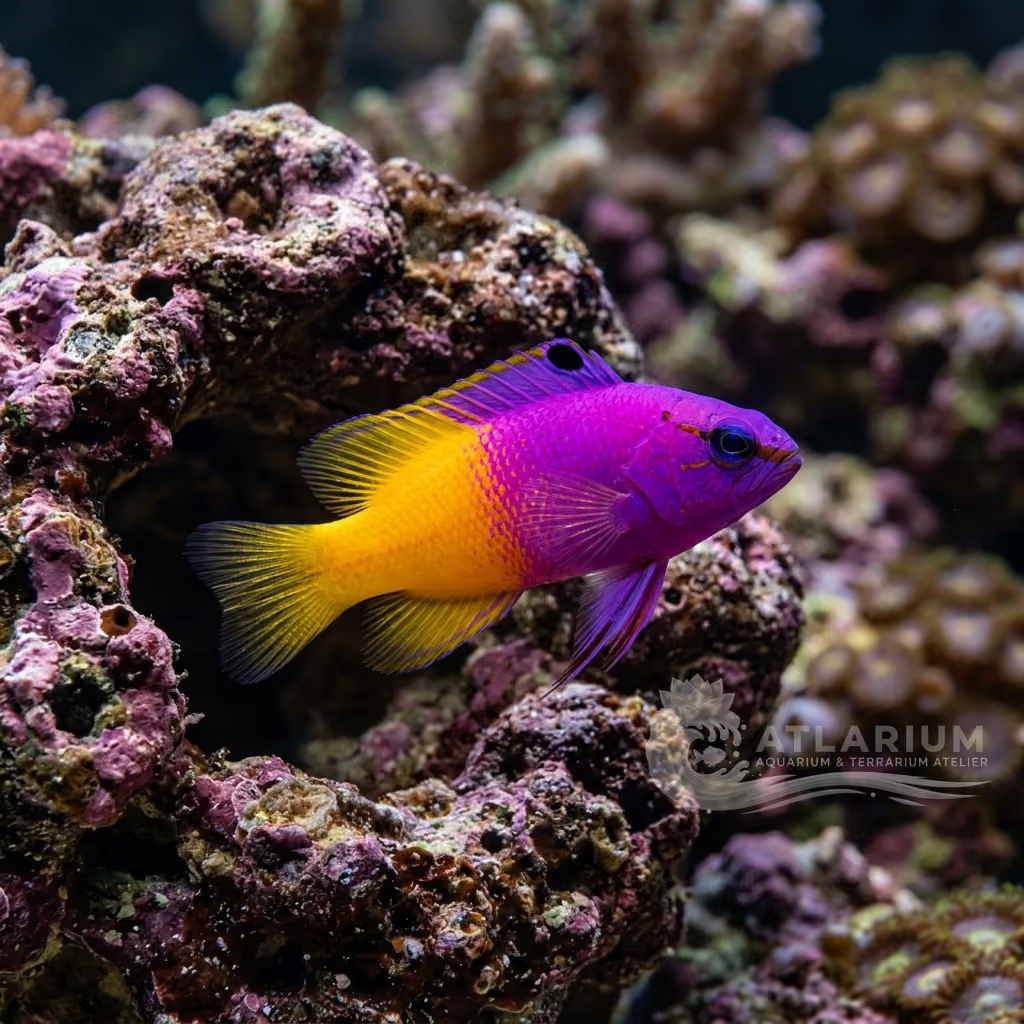
Coloration and Sexual Dimorphism: Striking coloration: deep, electric magenta-purple body, with a prominent black cap running diagonally from the snout to the front of the dorsal fin. No visible sexual dimorphism. Spawning coloration can become slightly more intense in dominant individuals during mating sequences.

Pflege, Zucht und Mitbewohner
Aquarium Setup: Needs at least 120 liters with plenty of live rock arranged to create vertical overhangs, crevices, and shady caves. Lower lighting levels are preferred. A tight lid is necessary to prevent jumps. Arrange the aquascape to include plenty of dark spots and overhangs to simulate their deep-water environment.
Diet and Feeding: Carnivorous. Feeds on zooplankton. Provide frozen mysis, brine shrimp, cyclops, chopped shrimp, and high-quality small pellets. Feed 1-2 times daily. Feeding small portions multiple times a day is ideal for maintaining their energetic metabolism.
Water Quality: Prefers stable reef conditions: temperature 24-26°C (75-79°F), pH 8.1-8.4, specific gravity 1.022-1.025, GH 15-25, and KH 8-12. Regular water changes are essential to keep nitrate and phosphate levels within acceptable parameters.
Compatibility and Cohabitation: 100% reef-safe. Excellent reef community fish. Keep only one per tank unless the aquarium is very large (500L+). Do not keep with aggressive dottybacks. Provide tankmates that share a similar peaceful temperament to prevent the basslet from becoming overly reclusive.
Aquarium Breeding: Rare. The male constructs a nest of algae and detritus in a rock crevice to receive the female's eggs, guarding them until they hatch. In a large setup, a pair may form, with the male defending the nesting territory from all intruders.
Risks and Diseases: High jumping risk. May become extremely shy and stay hidden if the tank lighting is too bright or if housed with aggressive competitors. Keep a close eye on their behavioral patterns; persistent hiding may indicate stress or aggressive tankmates.

Geografische Herkunft und Verbreitung
Endemic to the tropical Western Atlantic, common in the Caribbean, Bahamas, and Central American coasts. Inhabits deep reef drop-offs, preferring steep vertical cliffs, caves, and overhangs at depths of 10 to 180 meters. They are frequently found along vertical reef drop-offs where plankton concentrations are highest.
Ursprung
Tropische Ozeane und RiffeMittelamerika und Karibik

Fischprofil
- Temperament
- Territorial
- They are peaceful but reclusive and territorial over their favorite cave. They use gaping mouth displays to ward off potential threats. They are a deeply rewarding and beautiful deep-water gem.
- Diät
- Carnivore
- They are strictly carnivorous. A diet of mysis shrimp, chopped seafood, and vitamin-enriched brine shrimp is perfect. They will quickly learn to accept high-quality pellet foods as well.
- Lebenserwartung
- 5-10 years
- Erwachsenengröße
- 10 cm
- Geschlechterverhältnis
- Solitary
- Keeping a single specimen is the standard recommendation. Pairs can be attempted if added at the same time in large tanks. Males are highly intolerant of each other.
- Fütterungsfrequenz
- Twice daily
- Two small feedings per day are recommended. They are eager feeders that will dart out of hiding to eat. Keeping them well-fed significantly reduces any minor territorial aggression.
- Bioload
- Low to Medium
- The Blackcap Basslet contributes a minor bioload to the system. Their small size makes them very manageable for medium setups. Standard protein skimming keeps their environment pristine.
- Fluss
- Strong
- They prefer a moderate water flow environment. Coming from deep water drop-offs, they appreciate steady currents. They require caves where the flow is reduced for resting.
- Sprungrisiko
- Yes
- There is a moderate jump risk, especially when initially introduced. Startled basslets might dart upward instead of into a rock. A tight-fitting lid is strongly advised for their safety.
- Reproduktion
- Oviparous
- Like the Royal Gramma, they build nests in small crevices. The male tends to the eggs with impressive dedication. Breeding them in home aquaria requires specialized rotifer feeding for fry.
- Kompatibilität & Tankkameraden
- Reef safe
- They are a reef-safe and generally peaceful community fish. They get along with most similarly sized tank mates. They will assert dominance over other basslets and similar shaped species.
- Tankfüllstand
- Middle/Bottom
- They stick closely to the middle and lower rockwork. They prefer dimly lit caves or overhangs to mimic their deep-water origins. They rarely swim out in the open brightly lit water.

Wissenschaftliche Modelle & Parameter
FishBase
Zugang zu den offiziellen wissenschaftlichen Daten der Art
FishBase v25.04Daten synchronisiert am: 15.06.2026
- Trophäenniveau
- 3,5 ± 0,5 se
- Phylogenetische Einzigartigkeit (PD50)
- 0.5313
- Bayessche Längen-Gewichts-Beziehung
- a = 0.00389, b = 3.12
- AnfälligkeitGeringe Anfälligkeit (10 / 100)

Verwandte Arten
Empfehlungen gruppiert nach nahen Verwandten, Auswahl von Begleitern und ähnlicher Betreuung.