Carpenter's Flasher Wrasse
Paracheilinus carpenteri
Carpenter's Flasher Wrasse is a peaceful, vividly colored marine species. Famous for dramatic fin-flaring courtship dances, it needs open swimming areas and secure tank covers.
Wassertemperatur
24 - 27 °C
pH-Wert
8.1 - 8.4
Wassertyp
Meerwasser
Tankfüllstand
Oberfläche und Mitte
Erwachsenengröße
8 cm
Mindesttankvolumen
>= 120 L
Mindestgruppe
>= 1
KH
8 - 12 dKH

Artbeschreibung
Geographical Origin and Habitat: Native to the Western Pacific coral reefs, ranging from the Philippines to Taiwan. Inhabits coral-rich slopes and outer reef edges at depths of 15 to 45 meters. Native to the Western Pacific, inhabiting outer reef slopes and rubble areas exposed to moderate currents at depths ranging from 10 to 40 meters.
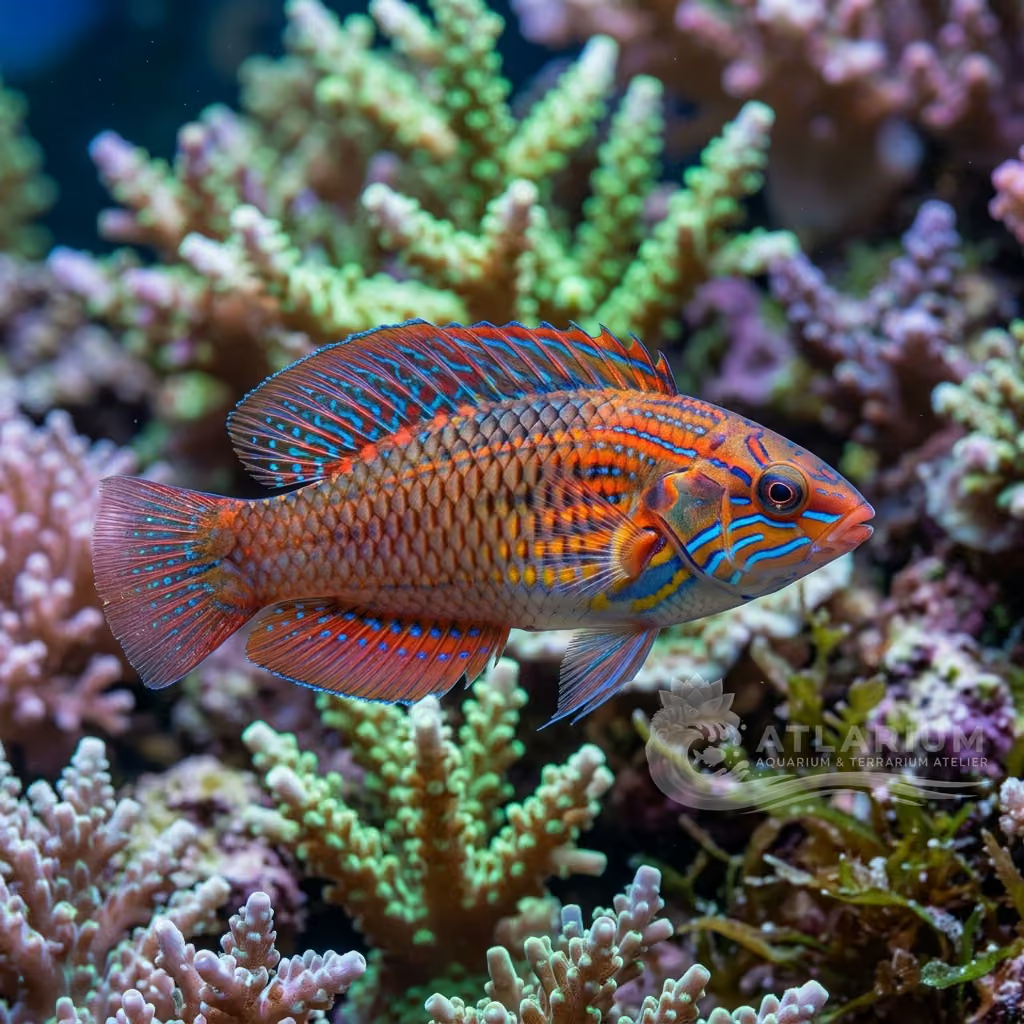
Taxonomy and Morphology: Belongs to the family Labridae, genus Paracheilinus. Reaches a maximum size of 8 cm (3.1 inches). Males feature prolonged filaments on the dorsal fin. Possesses a slender, streamlined body with soft fins. Males develop elongated dorsal fin filaments that they display during courtship dances.
Social Behavior: Peaceful and social. Naturally lives in loose aggregations dominated by a single male. Sleeps in a protective mucous cocoon in rock crevices at night. Peaceful and schooling species. Prefers to swim in groups in open water, often mixing with other flasher wrasses above branching coral formations.
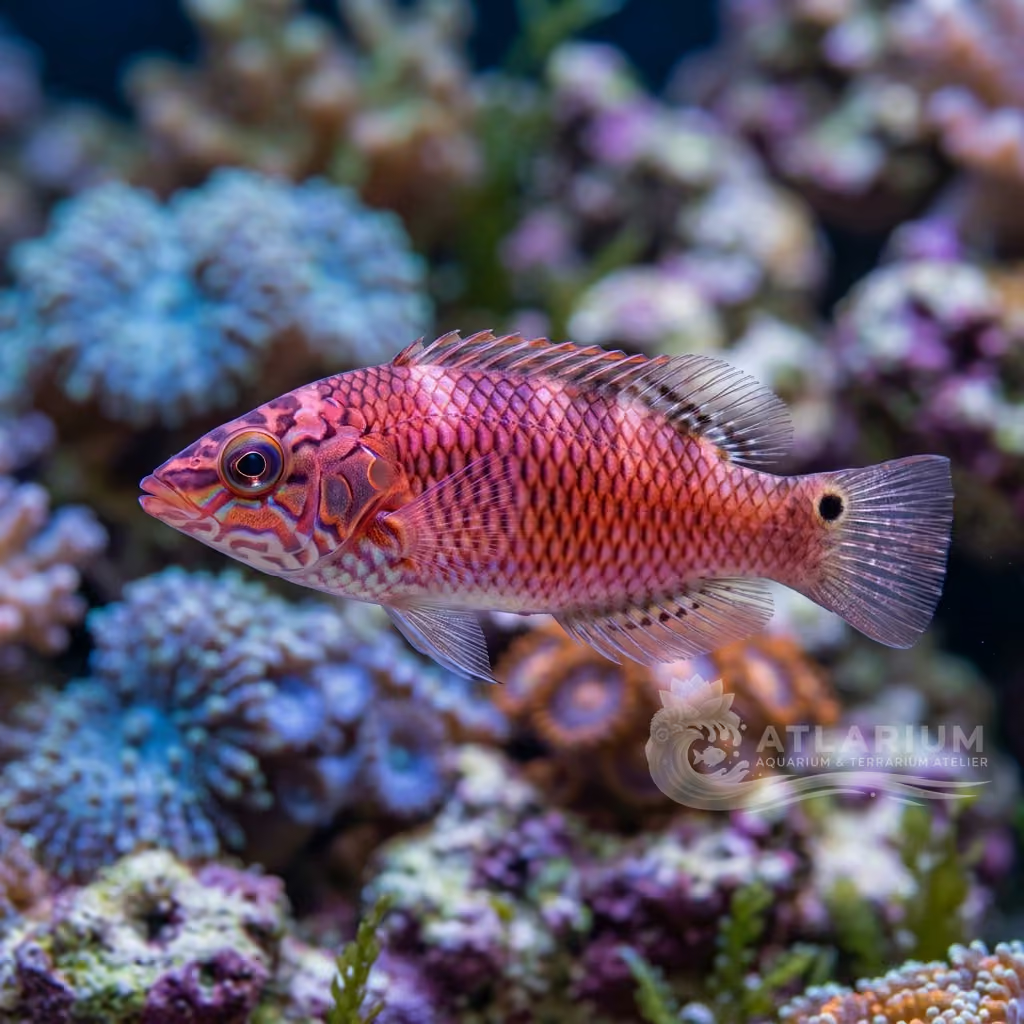
Coloration and Sexual Dimorphism: Males display bright orange-red bodies with blue horizontal stripes, a yellow dorsal fin with red filaments, and red anal fins. Females are smaller and mostly uniform pinkish-orange. Vibrant orange-red body with horizontal blue stripes. During courtship, the male flashes stunning, iridescent colors to attract females.

Pflege, Zucht und Mitbewohner
Aquarium Setup: Requires a tank of at least 120 liters with plenty of live rock for hiding and open water for swimming. A tight-fitting lid or mesh net is mandatory to prevent jumps. Requires an aquarium of at least 150 liters (40 gallons) with plenty of open swimming space and rockwork to provide shelter and sleeping sites.
Diet and Feeding: Planktivorous. Provide small frozen foods like mysis, brine shrimp, and copepods, as well as high-quality small pellets or flake food multiple times daily. Planktonivore. Feed a diet of small frozen foods like mysis, brine shrimp, copepods, and high-quality small pellets or crushed flakes.
Water Quality: Requires stable marine parameters: temperature 24-26°C (75-79°F), pH 8.1-8.4, specific gravity 1.022-1.025, GH 15-25, and KH 8-12. Maintain standard reef water parameters: temperature 23-26°C, pH 8.1-8.4, specific gravity 1.020-1.025, and high dissolved oxygen levels.
Compatibility and Cohabitation: Planktivorous. Provide small frozen foods like mysis, brine shrimp, and copepods, as well as high-quality small pellets or flake food multiple times daily. Very peaceful. Perfect for reef community tanks with calm tankmates. Avoid housing with aggressive fish that may bully them or cause stress.
Aquarium Breeding: Completely reef-safe. Peaceful community fish. Keeping one male with multiple females is highly recommended to see flashing behavior. Avoid aggressive tankmates. Captive breeding is rare. Males perform spectacular flashing displays to court females, culminating in pelagic spawning in the water column.
Risks and Diseases: High jumping risk, especially when startled by sudden lights or aggressive tankmates. Susceptible to marine ich if stressed. Main risks include stress during acclimation and a high tendency to jump from the aquarium, making a tight-fitting mesh lid absolutely necessary.

Geografische Herkunft und Verbreitung
Native to the Western Pacific coral reefs, ranging from the Philippines to Taiwan. Inhabits coral-rich slopes and outer reef edges at depths of 15 to 45 meters. Native to the Western Pacific, inhabiting outer reef slopes and rubble areas exposed to moderate currents at depths ranging from 10 to 40 meters.
Ursprung
Kosmopolitisch oder eingeführtSüd- und SüdostasienOstasienTropische Ozeane und Riffe

Fischprofil
- Temperament
- Peaceful
- They have an incredibly peaceful and shy disposition. Males flash their fins but rarely harm tank mates. They are easily bullied by more boisterous tank species.
- Diät
- Planktivore
- They are planktivores that feed on zooplankton. In captivity, they readily accept frozen mysis and brine shrimp. High-quality marine flakes can also be offered daily.
- Lebenserwartung
- 4-7 years
- Erwachsenengröße
- 8 cm
- Geschlechterverhältnis
- Harem
- Keep a single male with multiple females for natural behavior. Multiple males will fight unless the tank is massive. One male to three females is the ideal ratio.
- Fütterungsfrequenz
- 2-3 times daily
- They have a fast metabolism and need frequent feeding. Offer small meals two to three times per day. Consistent feeding maintains their vibrant colors and health.
- Bioload
- Low to Medium
- This species produces a low biological load. Their small size means they generate minimal waste. Standard protein skimming and regular water changes are adequate.
- Fluss
- Moderate
- They prefer moderate to strong water movement. Good flow keeps their zooplankton food suspended for foraging. Ensure there are lower flow areas for resting at night.
- Sprungrisiko
- Yes
- They have a notorious reputation for jumping. A tight-fitting lid or mesh screen is absolutely mandatory. Even tiny gaps can provide enough space to escape.
- Reproduktion
- Oviparous
- They are protogynous hermaphrodites, with females becoming males. The dominant fish typically becomes a brightly colored male. Captive breeding is rare but courtship is common.
- Kompatibilität & Tankkameraden
- Reef safe with caution
- They are highly peaceful reef community fish. Avoid housing them with aggressive or large predatory species. They mix well with other peaceful wrasses in large tanks.
- Tankfüllstand
- Top/Middle
- These wrasses swim in the middle to upper levels. They actively cruise open water looking for suspended food. At night, they seek shelter in bottom rock crevices.

Wissenschaftliche Modelle & Parameter
FishBase
Zugang zu den offiziellen wissenschaftlichen Daten der Art
FishBase v25.04Daten synchronisiert am: 15.06.2026
- Trophäenniveau
- 3,4 ± 0,45 se
- Belastbarkeit
- Hoch (weniger als 15 Monate)
- Phylogenetische Einzigartigkeit (PD50)
- 0.5
- Bayessche Längen-Gewichts-Beziehung
- a = 0.01072, b = 3.03
- AnfälligkeitGeringe Anfälligkeit (10 / 100)

Verwandte Arten
Empfehlungen gruppiert nach nahen Verwandten, Auswahl von Begleitern und ähnlicher Betreuung.