Filamentous Flasher Wrasse
Paracheilinus filamentosus
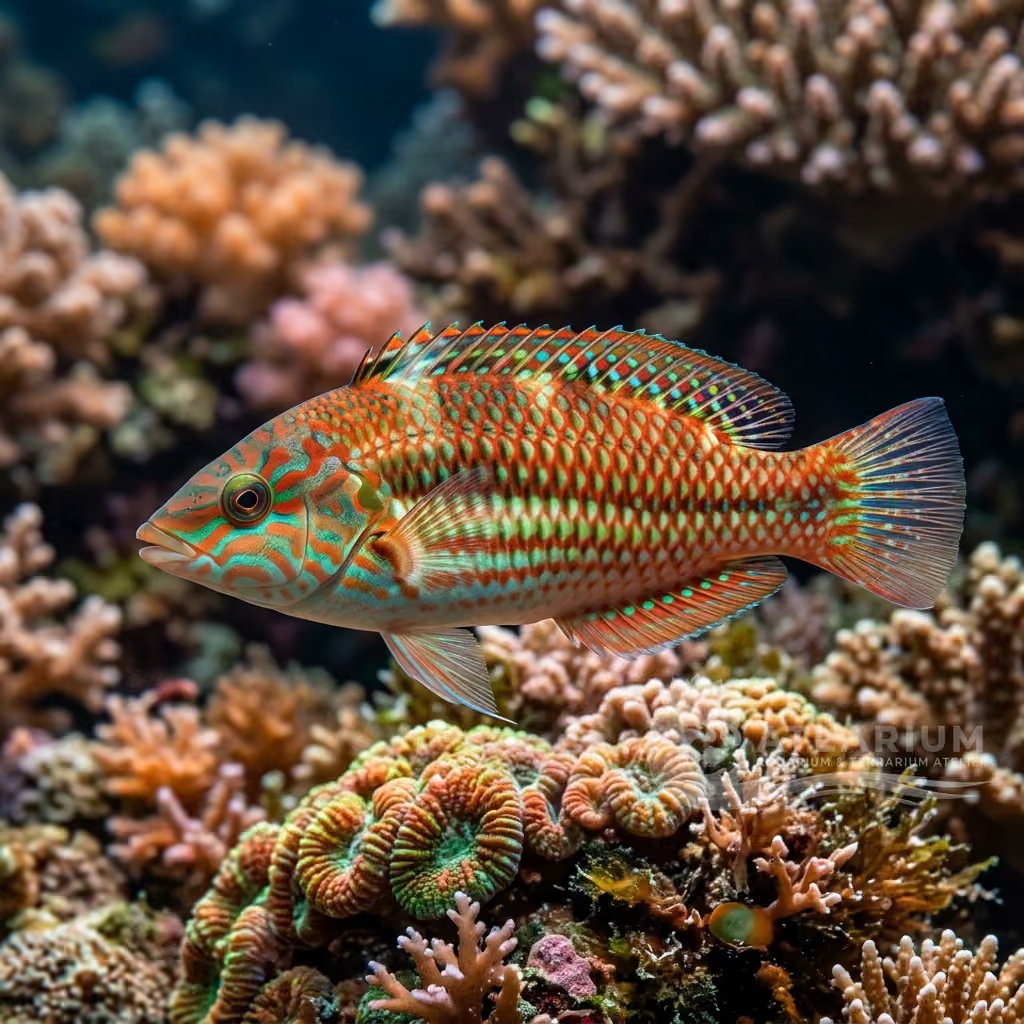
The Filamented Flasher Wrasse is a vibrant Indo-Pacific marine fish. Males feature spectacular long filamentous dorsal rays, commanding attention in spacious reef aquariums.
Wassertemperatur
24 - 27 °C
pH-Wert
8.1 - 8.4
Wassertyp
Meerwasser
Tankfüllstand
Oberfläche und Mitte
Erwachsenengröße
10 cm
Mindesttankvolumen
>= 150 L
Mindestgruppe
>= 1
KH
8 - 12 dKH

Artbeschreibung
Geographical Origin and Habitat: Paracheilinus filamentosus is native to the central-western Indo-Pacific, widely distributed from the Philippines, Indonesia, and New Guinea to the Solomon Islands and the Great Barrier Reef of Australia. It inhabits sheltered seaward reef slopes, shallow lagoons, and coral flats at depths of 5 to 35 meters in areas with gentle to moderate currents.
Taxonomy and Morphology: Belonging to the family Labridae and the genus Paracheilinus, it is commonly known as the Filamentous Flasher Wrasse. It features a slender, laterally compressed body, a small head, and large eyes. Adults reach a maximum length of about 8-10 cm. Its main morphological feature is the presence of multiple long filaments extending from the dorsal fin.
Social Behavior: A highly active and gregarious species that lives in small groups comprising a single dominant male and several females. The male spends much of his time hovering above the coral reef, performing rapid, flashing courtship displays to attract females, during which his colors intensify instantly. It is peaceful toward other tankmates.
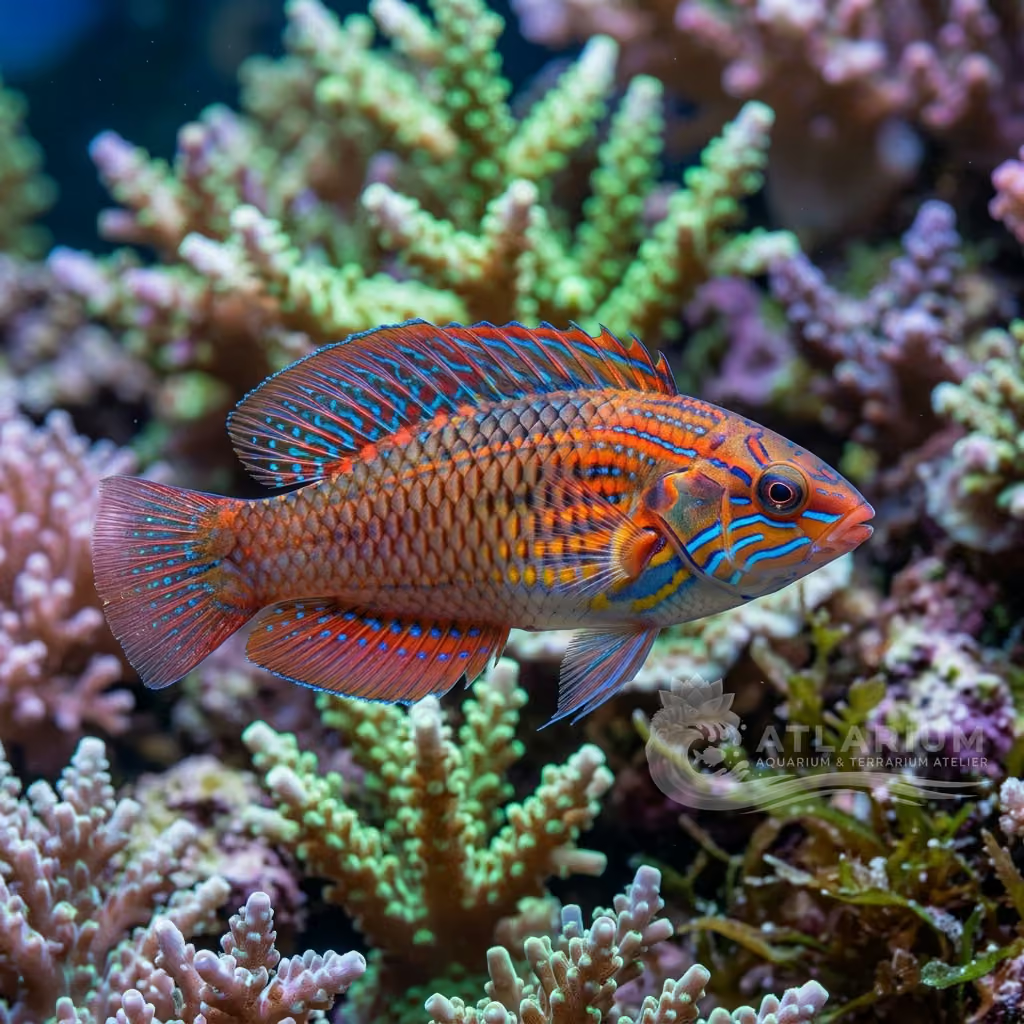
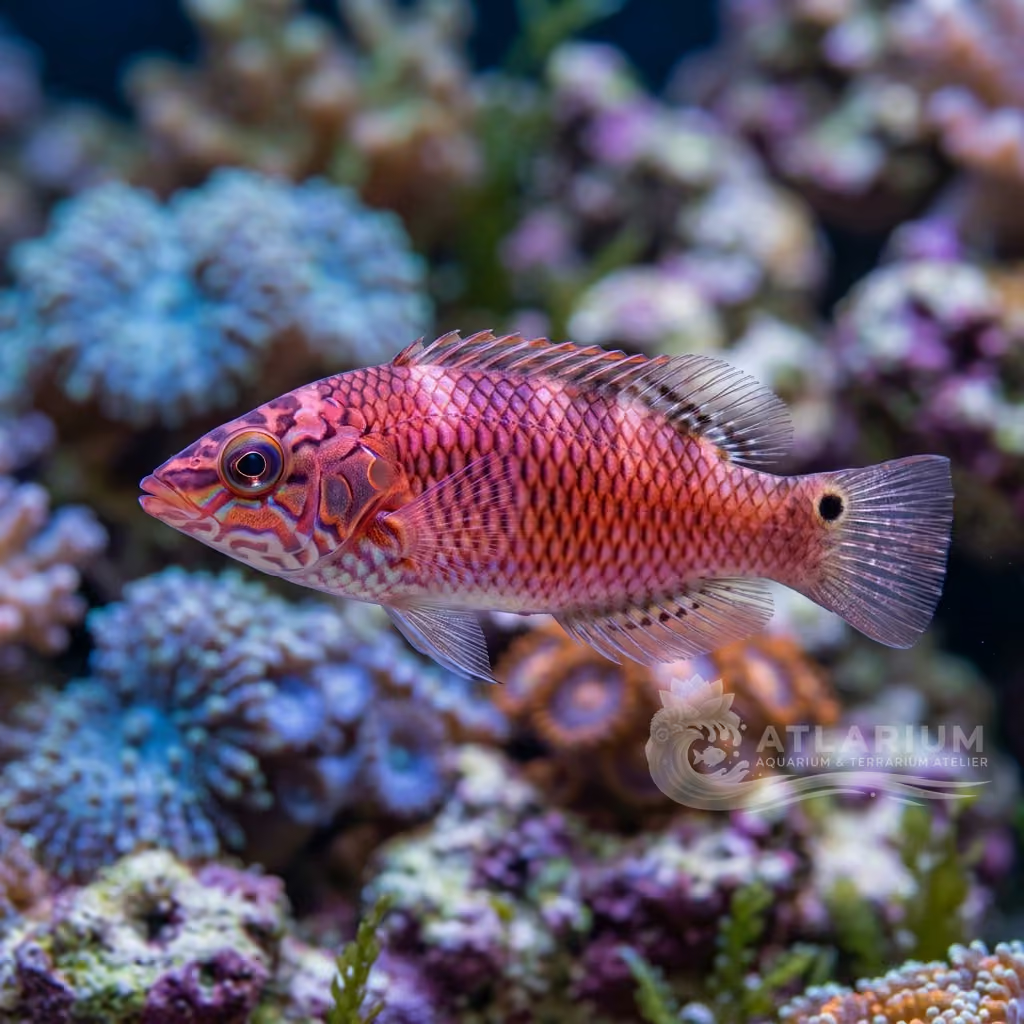
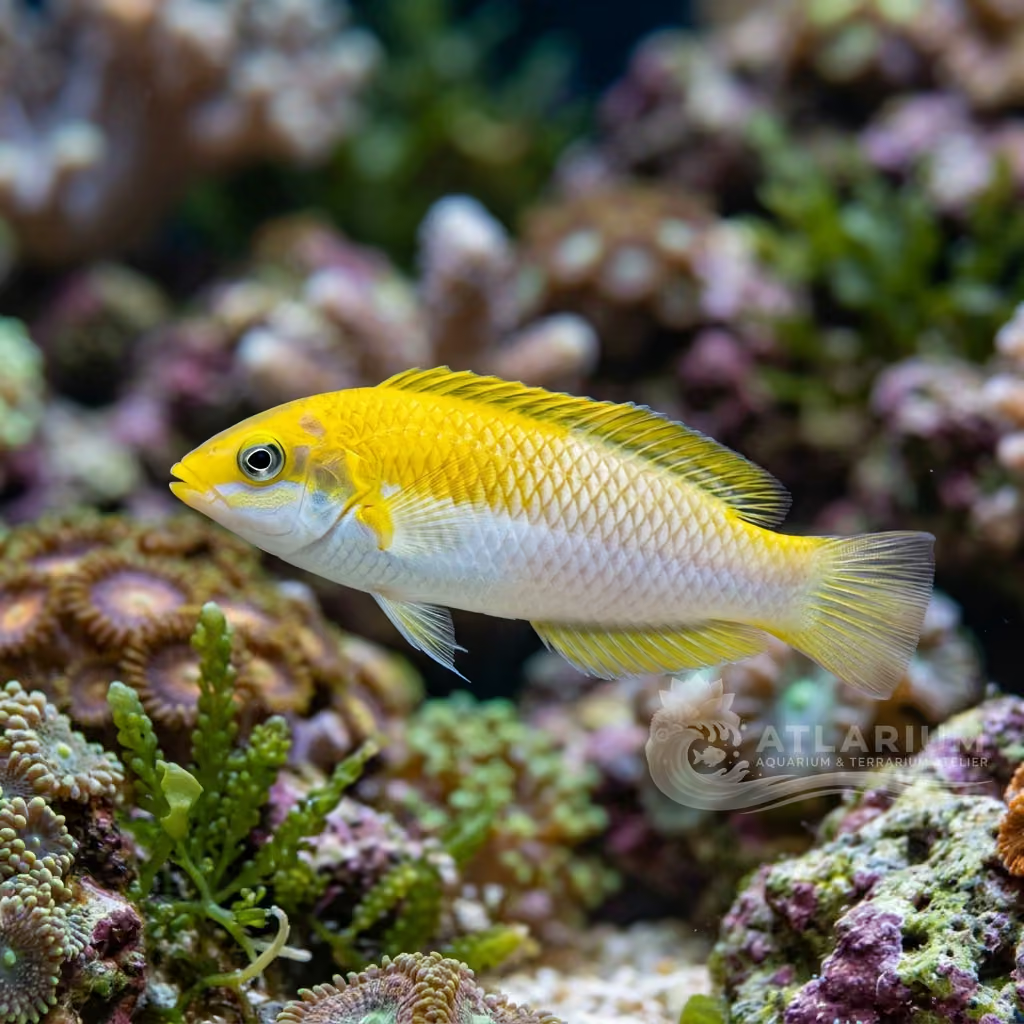
Coloration and Sexual Dimorphism: Sexual dimorphism is highly pronounced. Males exhibit a brilliant coloration of red, orange, and yellow hues with iridescent electric blue lines running along the body and fins, alongside 2 to 4 long red dorsal filaments. Females are much smaller, duller in color (usually plain pinkish-orange), and lack any dorsal filaments.

Pflege, Zucht und Mitbewohner
Aquarium Setup: Requires an established reef aquarium of at least 150 liters for a small harem (one male and 2-3 females). The aquascape should feature a complex rock structure with plenty of caves and crevices for shelter. A tight-fitting lid or mesh screen is absolutely mandatory, as they are exceptional jumpers when startled.
Diet and Feeding: Carnivorous planktivore. In captivity, feed a varied diet of small frozen foods such as mysis, brine shrimp, copepods, and lobster eggs. They will also readily accept high-quality dry flakes and pellets. Feed small amounts multiple times a day to sustain their active swimming lifestyle and fast metabolism.
Water Quality: Maintain stable reef conditions: temperature 24-28°C (75-82°F), specific gravity 1.020-1.025, and pH 8.1-8.4. High dissolved oxygen levels and good water movement are required. Keep ammonia and nitrites at zero, with nitrates maintained below 15 ppm through regular water changes.
Compatibility and Cohabitation: Excellent candidate for peaceful community reef tanks. It is reef-safe and does not bother corals or sessile invertebrates. Compatible with clownfish, gobies, anthias, and peaceful tangs. Do not house multiple males of the same or closely related Paracheilinus species together to prevent territorial fighting.
Aquarium Breeding: Breeding in home aquariums is extremely difficult. They are pelagic spawners, performing a daily spawning rise at dusk where the pair rushes toward the surface to release eggs and sperm. Rearing the delicate pelagic larvae requires specialized rearing tanks and intensive live zooplankton cultures.
Risks and Diseases: Jumping from open aquariums is the single greatest risk. At night, they sleep in a protective mucus cocoon spun among the rocks to mask their scent from nocturnal predators. They are moderately hardy but can contract marine ich if subjected to sudden temperature fluctuations or transport stress.

Geografische Herkunft und Verbreitung
Paracheilinus filamentosus is native to the central-western Indo-Pacific, widely distributed from the Philippines, Indonesia, and New Guinea to the Solomon Islands and the Great Barrier Reef of Australia. It inhabits sheltered seaward reef slopes, shallow lagoons, and coral flats at depths of 5 to 35 meters in areas with gentle to moderate currents.
Ursprung
Tropische Ozeane und RiffeAfrika und MadagaskarSüd- und SüdostasienAustralien, Neuguinea und Ozeanien

Fischprofil
- Temperament
- Peaceful
- They have an incredibly peaceful and shy disposition. Males flash their fins but rarely harm tank mates. They are easily bullied by more boisterous tank species.
- Diät
- Carnivore
- They are planktivores that feed on zooplankton. In captivity, they readily accept frozen mysis and brine shrimp. High-quality marine flakes can also be offered daily.
- Lebenserwartung
- 3-5 years
- Erwachsenengröße
- 10 cm
- Geschlechterverhältnis
- Harem
- Keep a single male with multiple females for natural behavior. Multiple males will fight unless the tank is massive. One male to three females is the ideal ratio.
- Fütterungsfrequenz
- 2-3 times daily
- They have a fast metabolism and need frequent feeding. Offer small meals two to three times per day. Consistent feeding maintains their vibrant colors and health.
- Bioload
- Medium
- This species produces a low biological load. Their small size means they generate minimal waste. Standard protein skimming and regular water changes are adequate.
- Fluss
- Moderate
- They prefer moderate to strong water movement. Good flow keeps their zooplankton food suspended for foraging. Ensure there are lower flow areas for resting at night.
- Sprungrisiko
- Yes
- They have a notorious reputation for jumping. A tight-fitting lid or mesh screen is absolutely mandatory. Even tiny gaps can provide enough space to escape.
- Reproduktion
- Oviparous
- They are protogynous hermaphrodites, with females becoming males. The dominant fish typically becomes a brightly colored male. Captive breeding is rare but courtship is common.
- Kompatibilität & Tankkameraden
- Reef safe
- They are highly peaceful reef community fish. Avoid housing them with aggressive or large predatory species. They mix well with other peaceful wrasses in large tanks.
- Tankfüllstand
- Top/Middle
- These wrasses swim in the middle to upper levels. They actively cruise open water looking for suspended food. At night, they seek shelter in bottom rock crevices.

Wissenschaftliche Modelle & Parameter
FishBase
Zugang zu den offiziellen wissenschaftlichen Daten der Art
FishBase v25.04Daten synchronisiert am: 15.06.2026
- Trophäenniveau
- 3,4 ± 0,45 se
- Belastbarkeit
- Hoch (weniger als 15 Monate)
- Phylogenetische Einzigartigkeit (PD50)
- 0.5
- Bayessche Längen-Gewichts-Beziehung
- a = 0.01072, b = 3.03
- AnfälligkeitGeringe Anfälligkeit (10 / 100)

Verwandte Arten
Empfehlungen gruppiert nach nahen Verwandten, Auswahl von Begleitern und ähnlicher Betreuung.