Elegant coris
Coris venusta
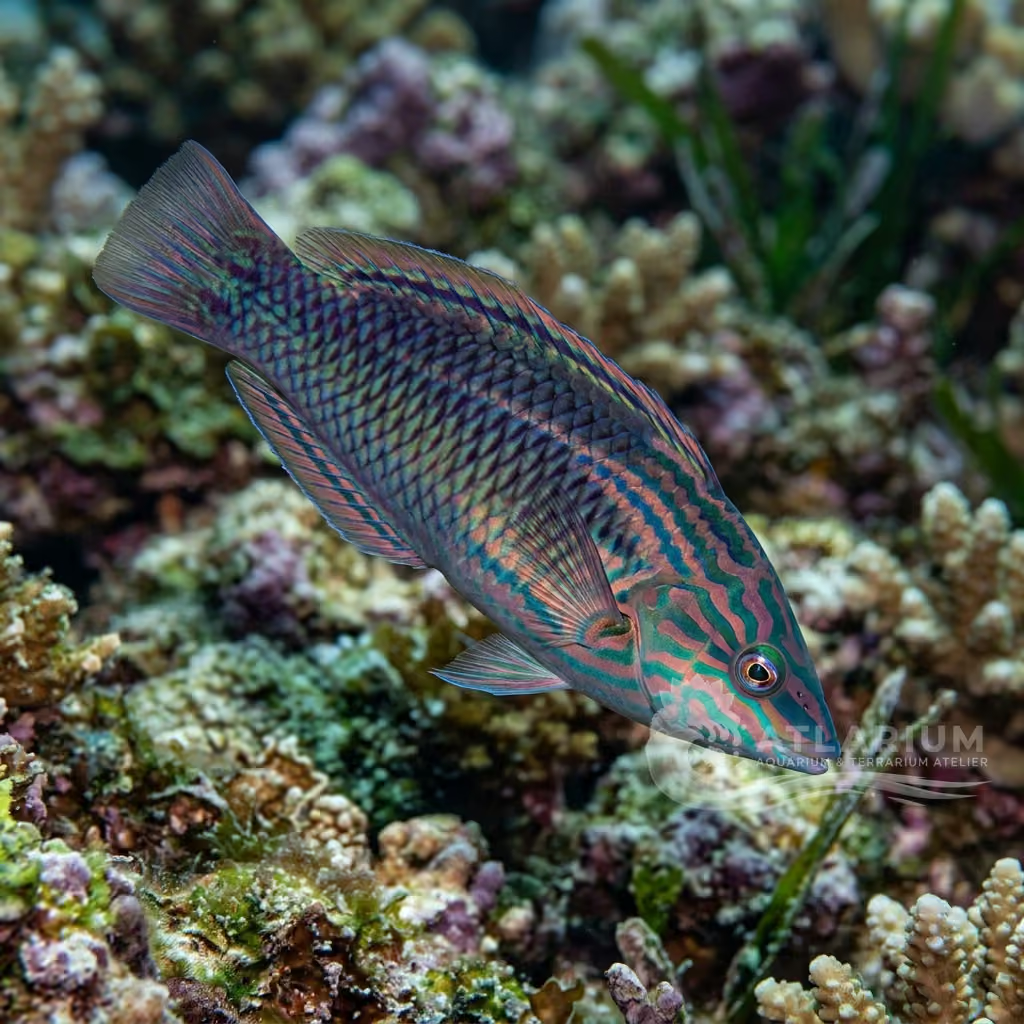
Endemic to Hawaii, this slender, active wrasse boasts stunning red and blue stripes. It requires a deep, fine sand bed to bury itself and is reef safe with caution.
Wassertemperatur
23 - 27 °C
pH-Wert
8.1 - 8.4
Wassertyp
Meerwasser
Tankfüllstand
Alle Ebenen
Erwachsenengröße
20 cm
Mindesttankvolumen
>= 300 L
Mindestgruppe
>= 1
KH
8 - 12 dKH

Artbeschreibung
Geographical Origin and Habitat: Coris venusta is a marine fish endemic to the Hawaiian Islands and Midway Atoll in the central Pacific Ocean. It primarily inhabits protected coral reefs, sandy lagoons, and mixed rock-sand zones at depths ranging from 2 to 30 meters. This species is closely associated with mixed substrates where it spends daylight hours foraging for small benthic invertebrates in the sand.
Taxonomy and Morphology: Belonging to the family Labridae, it displays an elongated, slender, and laterally compressed body shape typical of the genus Coris. The mouth is small but equipped with strong, protruding teeth used to crush the shells of small crustaceans and mollusks. Juveniles exhibit a completely different morphology and coloration than adults, a common trait among wrasses. It reaches a maximum length of 18 cm.
Social Behavior: It is a highly active, diurnal fish. During the day, it swims constantly near the substrate, blowing into the sand and flipping small pieces of rubble with its snout to uncover prey. At sunset or when threatened, it dives headfirst into the sand bed, burying itself completely to sleep or escape predators. It exhibits territorial behavior toward conspecifics.
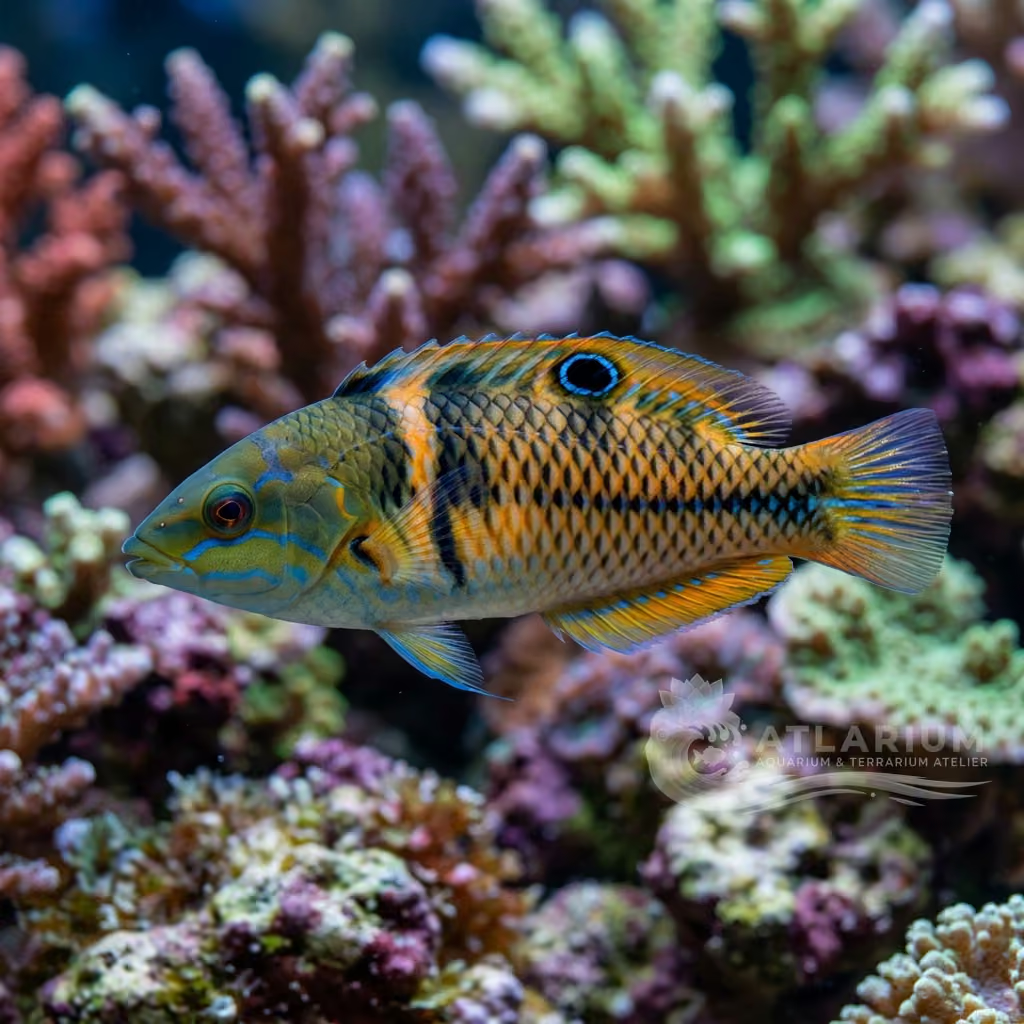
Coloration and Sexual Dimorphism: The coloration of mature adults is exceptionally vibrant and elegant: the body features a complex pattern of longitudinal red, golden-brown, green, and blue-violet stripes. The head is decorated with intricate pinkish-orange and blue lines radiating from the eyes. The caudal fin is rounded and displays colorful highlights. Juveniles show simpler dark bands and a lighter body color.

Pflege, Zucht und Mitbewohner
Aquarium Setup: Requires an aquarium of at least 250 liters with one critical setup requirement: a deep bed of fine, soft sand (at least 7-10 cm deep). Coarse substrate or sharp gravel must be avoided at all costs, as they can cause severe physical damage to the fish's skin and mouth when it buries itself. The aquarium must be fitted with a secure lid to prevent jumping.
Diet and Feeding: The diet must be strictly carnivorous. In the wild, it feeds on small crustaceans, mollusks, crabs, shrimp, and worms. In captivity, provide a protein-rich diet consisting of frozen mysis, brine shrimp, chopped krill, clam meat, and fresh table shrimp. It will also accept high-quality sinking pellets. Feed two to three times daily to support its high activity levels.
Water Quality: Maintain clean and stable water parameters: temperature 23-26 °C, pH 8.1-8.4, specific gravity 1.020-1.025, and KH 8-12. An efficient biological filtration system and a protein skimmer are necessary to handle the waste load. Because this fish actively stirs up the sand, mechanical filtration socks should be cleaned regularly.
Compatibility and Cohabitation: It is reef safe with caution. While it does not harm hard or soft corals, it will actively hunt and consume small ornamental shrimp, crabs, hermit crabs, starfish, and snails. Good tankmates include active, medium-sized fish such as tangs, larger clownfish, and non-aggressive wrasses. Avoid housing it with small, slow-moving fish.
Aquarium Breeding: Breeding in home aquariums has not been achieved. In nature, Coris venusta is a pelagic spawner. During the breeding season, temporary pairs rise rapidly toward the surface at dusk to release gametes. The fertilized eggs are planktonic, drifting with ocean currents, and the larvae undergo a long planktonic development stage before settling.
Risks and Diseases: Primary health risks include skin infections or physical injury if the sand bed is unsuitable, and jumping out of uncovered tanks. Acclimation can be stressful; new specimens often remain buried in the sand for several days. Do not attempt to dig the fish up, as this causes severe stress and can lead to death.

Geografische Herkunft und Verbreitung
Coris venusta is a marine fish endemic to the Hawaiian Islands and Midway Atoll in the central Pacific Ocean. It primarily inhabits protected coral reefs, sandy lagoons, and mixed rock-sand zones at depths ranging from 2 to 30 meters. This species is closely associated with mixed substrates where it spends daylight hours foraging for small benthic invertebrates in the sand.
Ursprung
Tropische Ozeane und Riffe

Fischprofil
- Temperament
- Active
- They are active, curious, and generally very peaceful fish in a community. They mind their own business while constantly hunting for copepods and amphipods. Occasionally, they might gently pester very small, docile tankmates.
- Diät
- Carnivore
- They are active carnivores that constantly hunt for small benthic invertebrates. Offer them a varied diet of mysis shrimp, brine shrimp, and high-quality flakes. Feeding multiple small, nutritious meals is ideal for their health.
- Lebenserwartung
- 5-8 years
- Erwachsenengröße
- 20 cm
- Geschlechterverhältnis
- Solitary
- Keep them singly or as a male-female pair if introduced simultaneously to the tank. Two males will almost certainly fight each other to the death. Protogynous hermaphroditism makes early sex determination quite tricky.
- Fütterungsfrequenz
- 2-3 times daily
- This highly active fish should ideally be fed two to three times daily. A constant supply of small live foods is also very beneficial. They possess a high metabolism requiring frequent energy intake.
- Bioload
- Medium to High
- The bioload of this small wrasse is considered very moderate. It processes food efficiently and creates standard levels of waste. Regular tank maintenance is usually perfectly sufficient.
- Fluss
- Strong
- They prefer moderate water movement throughout the entire aquarium. This simulates the natural rolling currents of the Hawaiian reefs. Good flow also helps keep their environment clean and highly oxygenated.
- Sprungrisiko
- Yes
- Like many wrasse species, they are notorious and highly skilled jumpers. A tightly fitting lid or fine mesh screen is absolutely mandatory. They will often jump when startled or chased by other fish.
- Reproduktion
- Oviparous
- Spawning has not been successfully or widely achieved in home aquariums. They likely require specific environmental triggers and large water volumes. Larval rearing would also be extremely difficult for hobbyists.
- Kompatibilität & Tankkameraden
- Not reef safe
- It is generally peaceful and suitable for a standard community reef tank. Avoid keeping it with very aggressive or significantly larger species. Do not house with small ornamental shrimp as they may eventually be eaten.
- Tankfüllstand
- All levels
- They primarily occupy the lower to middle regions of the aquarium setup. A thick, fine sand bed is crucial as they bury themselves to sleep safely. They spend their days constantly darting among the rocks.

Wissenschaftliche Modelle & Parameter
FishBase
Zugang zu den offiziellen wissenschaftlichen Daten der Art
FishBase v25.04Daten synchronisiert am: 15.06.2026
- Trophäenniveau
- 3,6 ± 0 se
- Belastbarkeit
- Hoch (weniger als 15 Monate)
- Phylogenetische Einzigartigkeit (PD50)
- 0.5
- Bayessche Längen-Gewichts-Beziehung
- a = 0.00977, b = 3.07
- AnfälligkeitGeringe Anfälligkeit (10 / 100)

Verwandte Arten
Empfehlungen gruppiert nach nahen Verwandten, Auswahl von Begleitern und ähnlicher Betreuung.