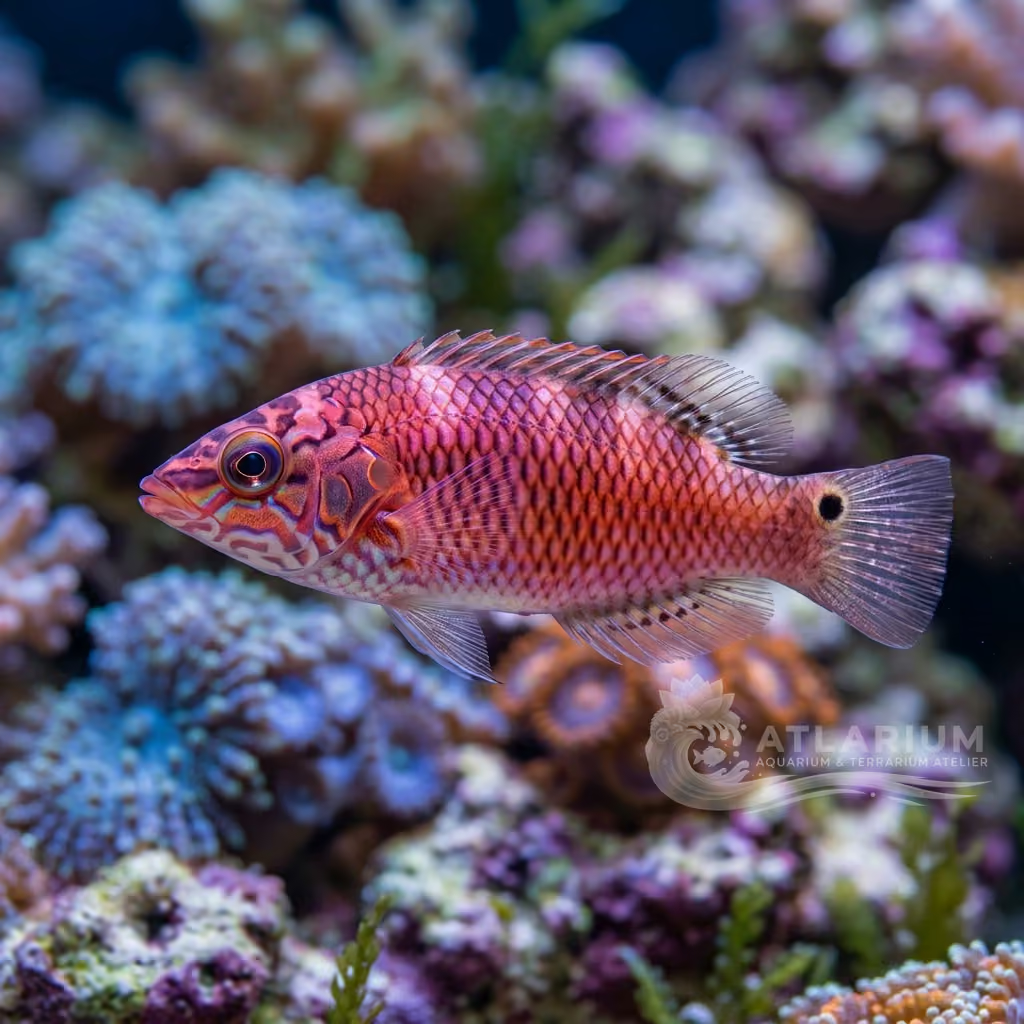
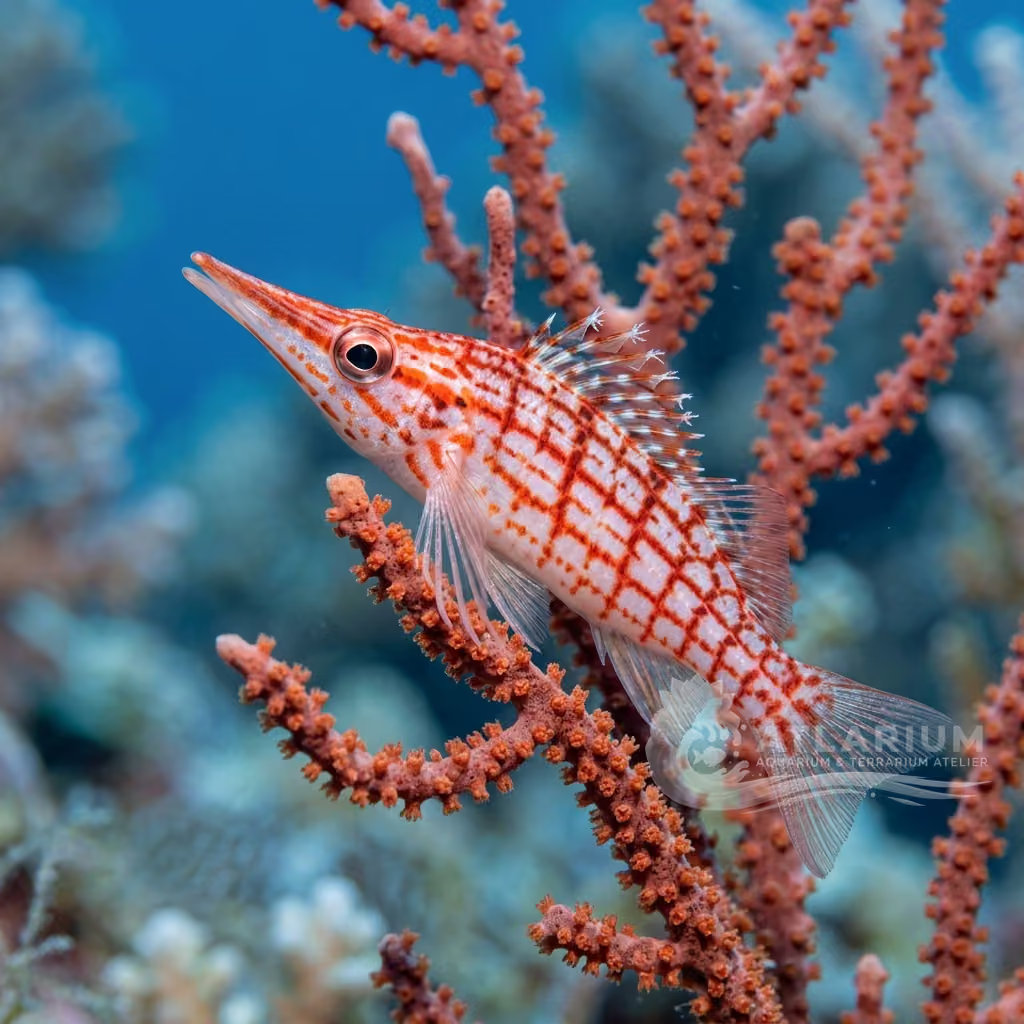
Flower Cardinalfish
Ostorhinchus fleurieu
A peaceful, larger-sized cardinalfish displaying elegant yellow-ochre stripes and a distinct black caudal band. A superb addition to stable, well-structured reef aquariums.
Wassertemperatur
24 - 27 °C
pH-Wert
8.1 - 8.4
Wassertyp
Meerwasser
Tankfüllstand
Unten und in der Mitte
Erwachsenengröße
14 cm
Mindesttankvolumen
>= 150 L
Mindestgruppe
>= 2
KH
8 - 12 dKH

Artbeschreibung
Geographical Origin and Habitat: Ostorhinchus fleurieu is native to the tropical waters of the Indo-West Pacific. Its range extends from the eastern coasts of India and Sri Lanka through the Philippines and Indonesia to northern Australia, and north to southern Japan. It inhabits sheltered coastal reefs, silty lagoons, harbors, and shallow rocky shores at depths of 2 to 30 meters.
Taxonomy and Morphology: Belonging to the family Apogonidae, this species is a relatively large cardinalfish, reaching a maximum adult length of 14 cm. It features a deep, laterally compressed body, exceptionally large eyes adapted for night vision, and two distinct, well-separated dorsal fins.
Social Behavior: It is a peaceful, nocturnal species. During the day, it aggregates in small, stationary groups under coral overhangs, inside caves, or around artificial structures like piers. At night, it disperses to hunt actively in the water column, feeding on small planktonic crustaceans.
Coloration and Sexual Dimorphism: The body has a pinkish-beige background color with prominent golden-yellow or ochre longitudinal stripes. A thick, well-defined vertical black band wraps around the caudal peduncle. A thin, iridescent blue line runs horizontally through the eye. No external sexual dimorphism is present.

Pflege, Zucht und Mitbewohner
Aquarium Setup: Requires a stable marine aquarium of at least 150 liters. The tank must have plenty of live rock arranged to create overhangs, caves, and shaded spots to mimic its natural daytime shelter. Moderate or dim lighting is preferred, or the tank can be shaded with macroalgae.
Diet and Feeding: Carnivorous. In captivity, it must be fed high-quality frozen foods such as mysis shrimp, chopped krill, brine shrimp, and fish eggs. It can gradually be trained to accept soft pellet foods. Feed twice daily, ideally in the evening to match its natural hunting cycle.
Water Quality: Standard marine parameters must be kept stable: temperature 24-27 °C, pH 8.1-8.4, and salinity at SG 1.020-1.025. It requires efficient filtration and a protein skimmer to keep nitrates and phosphates low, as this species is sensitive to poor water quality over time.
Compatibility and Cohabitation: 100% reef safe and highly peaceful. It makes an excellent inhabitant for community reef aquariums containing corals and ornamental invertebrates. Avoid keeping it with large, aggressive, or fast-swimming predatory species that could harass or consume it.
Aquarium Breeding: Displays paternal mouthbrooding behavior. After fertilization, the male collects the egg mass in his mouth and holds them until they hatch, fasting completely for about two weeks. Successfully rearing the tiny pelagic larvae requires dedicated nursery tanks and live rotifer cultures.
Risks and Diseases: It is a hardy species once acclimated. However, it is sensitive to sudden changes in salinity and temperature. If stressed, it may contract common marine parasites like Cryptocaryon (marine ich), which can be managed by maintaining high water stability.

Geografische Herkunft und Verbreitung
Ostorhinchus fleurieu is native to the tropical waters of the Indo-West Pacific. Its range extends from the eastern coasts of India and Sri Lanka through the Philippines and Indonesia to northern Australia, and north to southern Japan. It inhabits sheltered coastal reefs, silty lagoons, harbors, and shallow rocky shores at depths of 2 to 30 meters.
Ursprung
Tropische Ozeane und RiffeSüd- und SüdostasienOstasienAustralien, Neuguinea und Ozeanien

Fischprofil
- Temperament
- Aggressive
- They are shy and peaceful shoaling fish. A group of at least five individuals is recommended to make them feel comfortable and encourage natural behaviors. They are slow swimmers that add a calm presence to the aquarium.
- Diät
- Carnivore
- They are carnivorous and prefer small, meaty foods. Provide a diet consisting of frozen mysis, cyclops, and finely chopped seafood. They will also adapt to high-quality micro-pellets and flakes.
- Lebenserwartung
- 3-5 years
- Erwachsenengröße
- 14 cm
- Geschlechterverhältnis
- Flexible
- Males and females look nearly identical. It is best to purchase a small group and let pairs form naturally over time. If kept in a sufficiently large tank, the group will coexist peacefully even after pairing.
- Fütterungsfrequenz
- Twice daily
- Feed them small portions one or two times a day. Since they are somewhat shy, monitor feedings to ensure they get enough to eat. They are more likely to feed aggressively under subdued lighting.
- Bioload
- Medium
- Fleurieu's Cardinalfish carries a low bioload suitable for peaceful community reef tanks. They produce minimal waste, especially since they are not heavy eaters. Regular maintenance and a good skimmer keep the water pristine.
- Fluss
- Strong
- They prefer a gentle to moderate water flow. Too much flow will stress them and force them to constantly expend energy. Provide plenty of rockwork where they can escape strong currents.
- Sprungrisiko
- No
- Reproduktion
- Mouthbrooder
- They are mouthbrooders, with the male carrying the eggs until hatching. Males carrying eggs will have a noticeably distended jaw and will refuse to eat. Rearing the fry in a home aquarium requires dedicated setups and live foods.
- Kompatibilität & Tankkameraden
- Reef safe
- This is a very peaceful and completely reef-safe species. They do well with other docile fish and are safe with ornamental shrimp and corals. Avoid highly active or aggressive species that might outcompete them for food.
- Tankfüllstand
- Middle/Bottom
- They generally hover in the lower to middle sections of the tank. They prefer to stay close to rocky structures, caves, and overhangs. You will rarely see them swimming in the upper, exposed areas of the water column.

Wissenschaftliche Modelle & Parameter
FishBase
Zugang zu den offiziellen wissenschaftlichen Daten der Art
FishBase v25.04Daten synchronisiert am: 15.06.2026
- Trophäenniveau
- 3,6 ± 0,4 se
- Belastbarkeit
- Hoch (weniger als 15 Monate)
- Phylogenetische Einzigartigkeit (PD50)
- 0.5
- Bayessche Längen-Gewichts-Beziehung
- a = 0.01288, b = 3.15
- AnfälligkeitGeringe Anfälligkeit (10 / 100)

Verwandte Arten
Empfehlungen gruppiert nach nahen Verwandten, Auswahl von Begleitern und ähnlicher Betreuung.