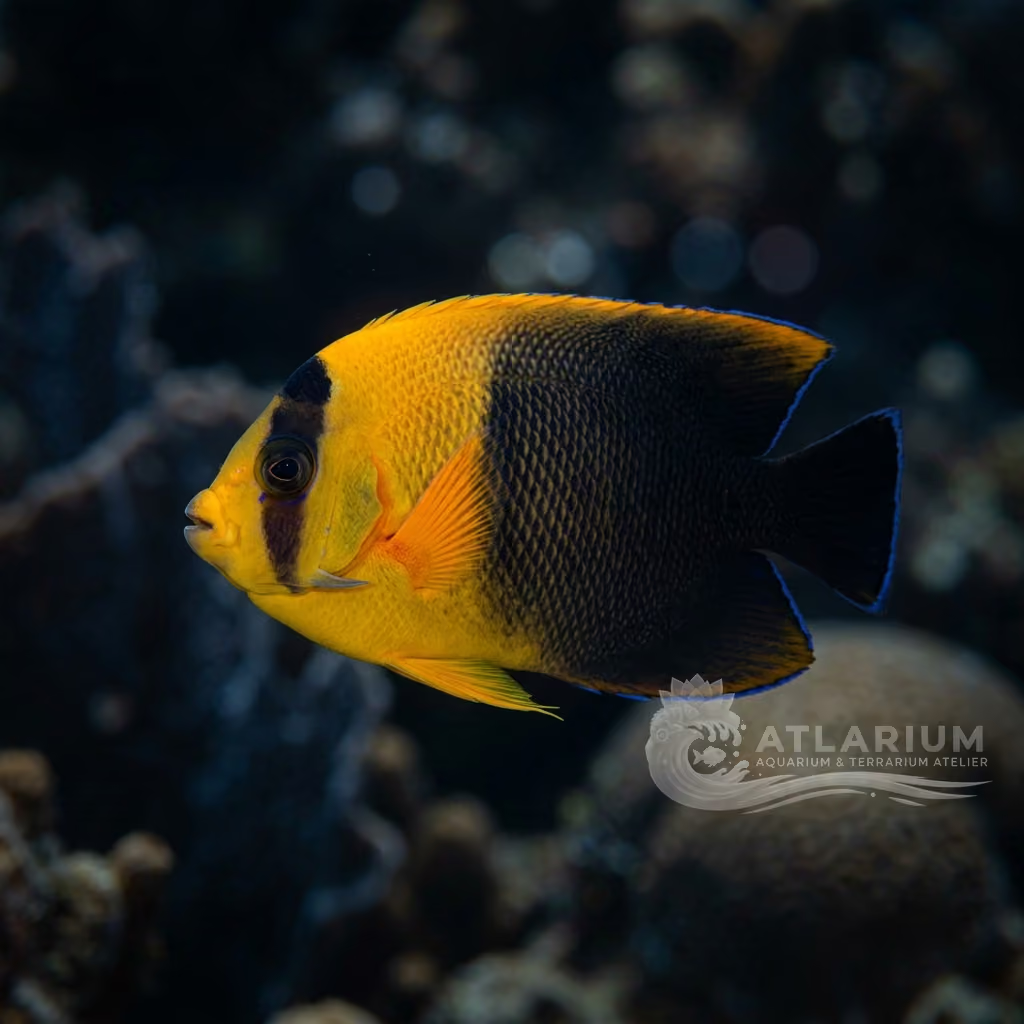
Herald's angelfish
Centropyge heraldi
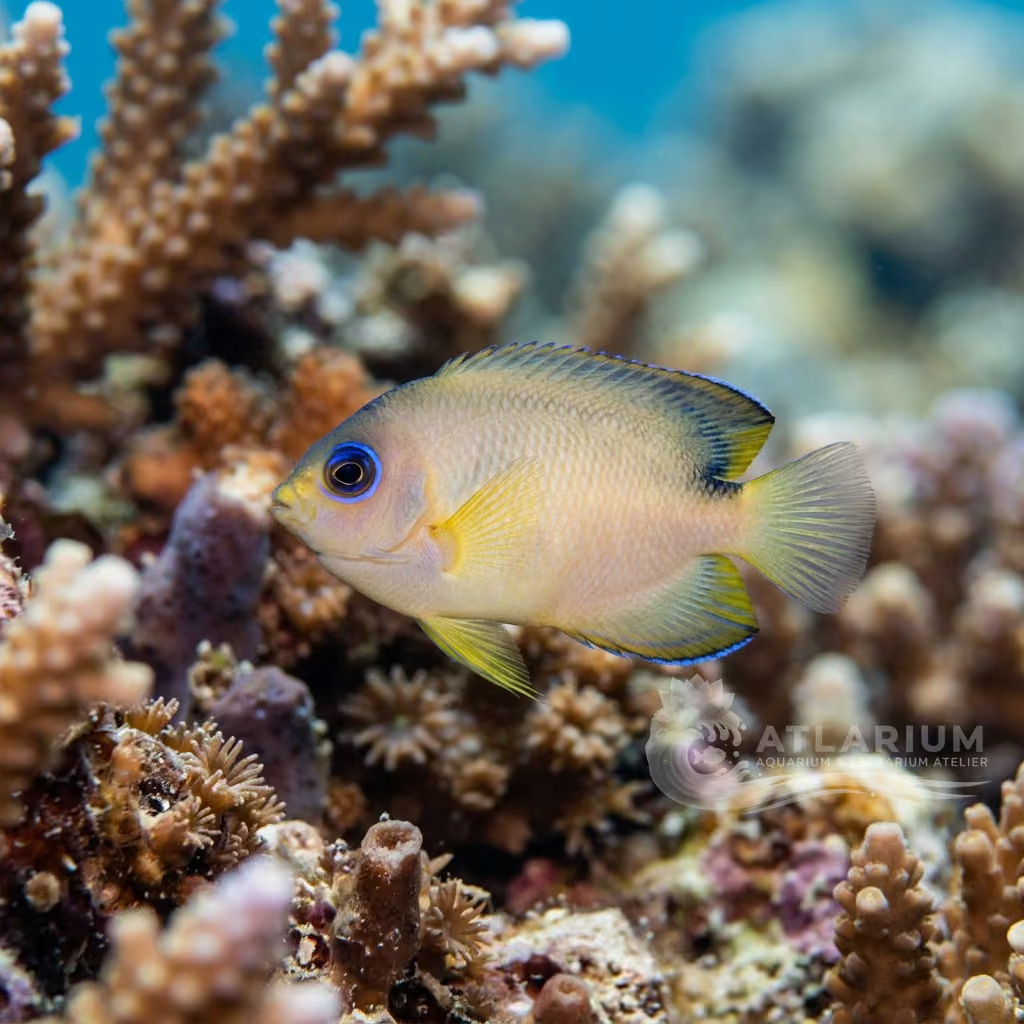
Herald's angelfish features a vivid lemon-yellow coloration. It is a highly territorial, active grazer that requires a mature tank with ample live rock.
Wassertemperatur
24 - 27 °C
pH-Wert
8.1 - 8.4
Wassertyp
Meerwasser
Tankfüllstand
Unten und in der Mitte
Erwachsenengröße
12 cm
Mindesttankvolumen
>= 150 L
Mindestgruppe
>= 1
KH
8 - 12 dKH

Artbeschreibung
Geographical Origin and Habitat: Centropyge heraldi, commonly known as Herald's angelfish, is native to the tropical waters of the Central and Western Pacific Ocean. Its distribution ranges from Taiwan and the southern Philippines to the Marshall Islands, Tuamotu Archipelago, and the Great Barrier Reef of Australia. It primarily inhabits seaward reef slopes exposed to wave action and deep lagoons at depths ranging from 10 to 45 meters, preferring steep drop-offs and coral-rich areas.
Taxonomy and Morphology: It belongs to the family Pomacanthidae and the genus Centropyge. It features a laterally compressed, oval body with a sharp preopercular spine on the lower cheek margin, characteristic of all marine angelfish. Adults typically grow to a maximum length of 12 cm (4.7 inches). It is closely related to other yellow dwarf angelfishes such as Centropyge flavissima, but can be distinguished by the complete absence of blue eye rings and blue opercular margins.
Social Behavior: In the wild, this species lives in small, stable harems consisting of a single dominant male and two to four females. It is active and constantly grazes on rock surfaces. In an aquarium, it is highly territorial toward other dwarf angelfish, especially yellow-colored species or tankmates with similar shapes. It is best kept as the only dwarf angelfish in the tank to avoid aggressive territorial disputes.
Coloration and Sexual Dimorphism: Its coloration is a uniform, solid lemon-yellow across its entire body and fins, lacking any blue highlights. Dominant adult males often develop a dark, dusky olive or blackish patch behind the eye and on the upper edge of the dorsal fin. Sexual dimorphism is expressed through these facial markings and the fact that adult males are generally larger than females.

Pflege, Zucht und Mitbewohner
Aquarium Setup: Requires a mature reef aquarium of at least 150 liters (40 gallons) for a single individual. The tank should be styled with a large amount of live rock arranged to create deep caves, overhangs, and visual barriers. This setup helps the fish establish its territory and reduce stress by providing secure retreats.
Diet and Feeding: It is an omnivore that feeds primarily on filamentous algae and organic detritus in nature. In captivity, it should be offered a varied diet of dried nori sheets, spirulina-enriched flakes or pellets, and frozen foods such as mysis shrimp, brine shrimp, and krill. Foods containing marine sponge material are highly beneficial for their health.
Water Quality: Demands high-quality water with stable parameters and efficient filtration. Maintain water temperature between 24°C and 27°C (75-81°F), pH between 8.1 and 8.4, specific gravity between 1.020 and 1.025, and KH between 8 and 12. Regular water changes and a high-performance protein skimmer are recommended.
Compatibility and Cohabitation: Generally compatible with a wide variety of peaceful reef fish. However, it is reef-safe with caution: underfed or bored individuals may nip at the polyps of large polyp stony (LPS) corals, soft corals, zoanthids, and the fleshy mantles of Tridacna clams.
Aquarium Breeding: It is a protogynous hermaphrodite, where dominant females can change sex to male if the harem leader dies. Captive breeding is extremely difficult in home aquaria due to their pelagic broadcast spawning behavior and the tiny size of the larvae, which require specialized microscopic live foods.
Risks and Diseases: Susceptible to common marine parasites such as marine ich (Cryptocaryon) and marine velvet (Oodinium). Transport stress or bullying by aggressive tankmates can compromise its immune system. A quarantine period is highly recommended before introducing the fish to the main display tank.

Geografische Herkunft und Verbreitung
Centropyge heraldi, commonly known as Herald's angelfish, is native to the tropical waters of the Central and Western Pacific Ocean. Its distribution ranges from Taiwan and the southern Philippines to the Marshall Islands, Tuamotu Archipelago, and the Great Barrier Reef of Australia. It primarily inhabits seaward reef slopes exposed to wave action and deep lagoons at depths ranging from 10 to 45 meters, preferring steep drop-offs and coral-rich areas.
Ursprung
Tropische Ozeane und RiffeSüd- und SüdostasienOstasienAustralien, Neuguinea und Ozeanien

Fischprofil
- Temperament
- Semi-aggressive
- This species exhibits a semi-aggressive temperament, which is characteristic of the dwarf angelfish genus Centropyge. While generally peaceful towards unrelated species with different shapes and colors, it is highly territorial towards conspecifics and other dwarf angelfish. It may also show hostility towards other bright yellow fish or species with similar dietary habits that it perceives as competitors. Introducing this fish as one of the last additions to the tank can help mitigate its initial territorial behavior.
- Diät
- Omnivore
- The diet of Centropyge heraldi is omnivorous, leaning heavily towards herbivory and detritivory in the wild. In an aquarium, they require a varied diet that includes specialized angelfish preparations containing sponge material and spirulina, along with high-quality marine algae or nori sheets. Supplementing their diet with frozen foods like mysis shrimp, brine shrimp, and finely chopped krill will ensure they receive adequate protein. Access to mature live rock for natural grazing is highly beneficial for their digestive health.
- Lebenserwartung
- 5-10 years
- Erwachsenengröße
- 12 cm
- Geschlechterverhältnis
- Harem
- In their natural habitat, these fish live in small harems consisting of one dominant male and up to three females. In home aquariums, unless the tank is exceptionally large (over 100-120 gallons), it is highly recommended to keep only a single specimen or an established male-female pair. Introducing multiple individuals of the same sex or similar-looking dwarf angelfish will likely result in intense territorial aggression. While sexing can be difficult, mature males are typically larger and may develop slightly pointed dorsal and anal fins.
- Fütterungsfrequenz
- Twice daily
- It is recommended to feed this species two to three times daily in small portions that they can consume within a few minutes. In nature, Centropyge heraldi is a continuous grazer that spends its day foraging for food across the reef. Multiple small feedings throughout the day mimic this natural feeding pattern and help reduce nutritional stress. Additionally, having a tank with healthy algae growth allows them to graze between scheduled meals.
- Bioload
- Low to Medium
- The biological waste produced by Centropyge heraldi is considered low-medium to medium. As a dwarf angelfish reaching about 10-12 cm in length, it requires a well-maintained filtration system with an efficient protein skimmer to handle its waste. Maintaining low nitrate and phosphate levels is crucial for its long-term health and vitality. A mature aquarium setup with a large amount of established live rock will significantly aid in biological filtration and nutrient processing.
- Fluss
- Moderate
- This species prefers moderate to strong water flow, which replicates the conditions of the outer coral reefs and lagoons they inhabit. Good water movement keeps the environment highly oxygenated and prevents organic waste from settling on the rockwork. However, it is important to ensure there are calmer zones and crevices within the aquascape where the fish can rest comfortably. Proper surface agitation is also recommended to support optimal gas exchange.
- Sprungrisiko
- Yes
- Although not notorious for jumping compared to some other species, this dwarf angelfish can jump out of the aquarium if startled or chased by aggressive tank mates. Sudden changes in lighting or loud ambient noises near the tank can trigger a flight response, causing the fish to leap upward. To prevent accidental loss, a tight-fitting lid or a fine-mesh screen cover is strongly recommended. Providing plenty of secure hiding spaces will also reduce its stress and the likelihood of jumping.
- Reproduktion
- Protogynous hermaphrodite
- Breeding Centropyge heraldi in captivity is extremely challenging and rarely achieved by home aquarists. They are sequential protogynous hermaphrodites, meaning all individuals develop as females first, with the largest and most dominant individual transitioning into a male. Courtship and spawning take place at dusk, when the pair ascends into the water column to release pelagic eggs and sperm simultaneously. The resulting larvae are incredibly tiny and require specialized, microscopic live foods such as copepod nauplii, making them very difficult to raise.
- Kompatibilität & Tankkameraden
- Not reef safe
- Centropyge heraldi is compatible with many peaceful to semi-aggressive reef fish, including tangs, damsels, and wrasses. However, caution is advised when housing them in reef tanks containing stony corals (SPS and LPS) or clams, as they may nip at polyps and mantles, particularly if underfed. Keeping them with other dwarf angelfish or yellow-colored species should be avoided to prevent aggressive encounters. They are generally safe with larger ornamental invertebrates, though tiny shrimps could occasionally be picked at.
- Tankfüllstand
- Middle/Bottom
- Centropyge heraldi primarily occupies the bottom and middle zones of the aquarium, swimming actively around the rockwork. It spends most of its time weaving through caves, crevices, and arches, grazing on algae and searching for small organisms. It rarely ventures to the top section of the tank, except during feeding times or when performing courtship displays at dusk. Providing a complex rock layout is essential to make the fish feel secure in its preferred swimming zone.

Wissenschaftliche Modelle & Parameter
FishBase
Zugang zu den offiziellen wissenschaftlichen Daten der Art
FishBase v25.04Daten synchronisiert am: 15.06.2026
- Trophäenniveau
- 2,8 ± 0,33 se
- Belastbarkeit
- Hoch (weniger als 15 Monate)
- Phylogenetische Einzigartigkeit (PD50)
- 0.5
- Bayessche Längen-Gewichts-Beziehung
- a = 0.0302, b = 2.89
- AnfälligkeitGeringe Anfälligkeit (10 / 100)

Verwandte Arten
Empfehlungen gruppiert nach nahen Verwandten, Auswahl von Begleitern und ähnlicher Betreuung.