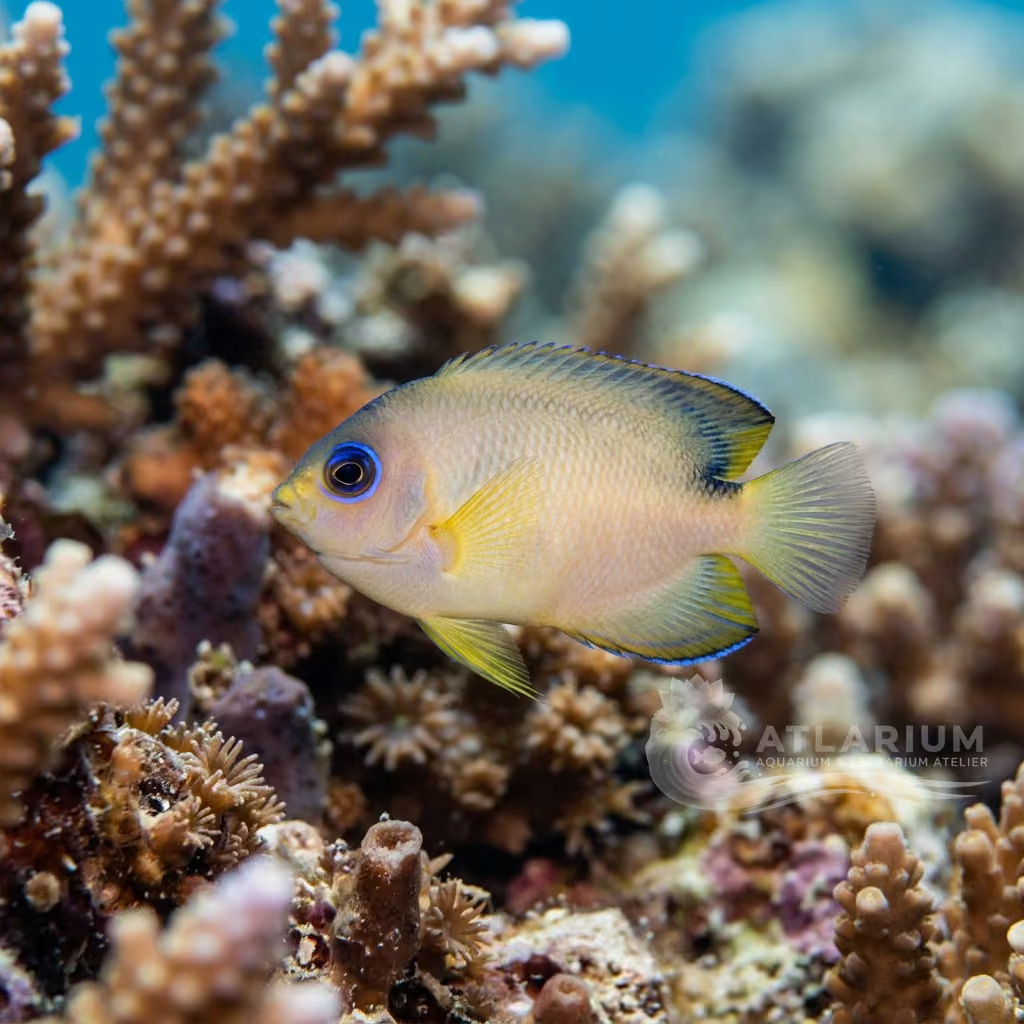
Sixbar Angelfish
Pomacanthus sexstriatus
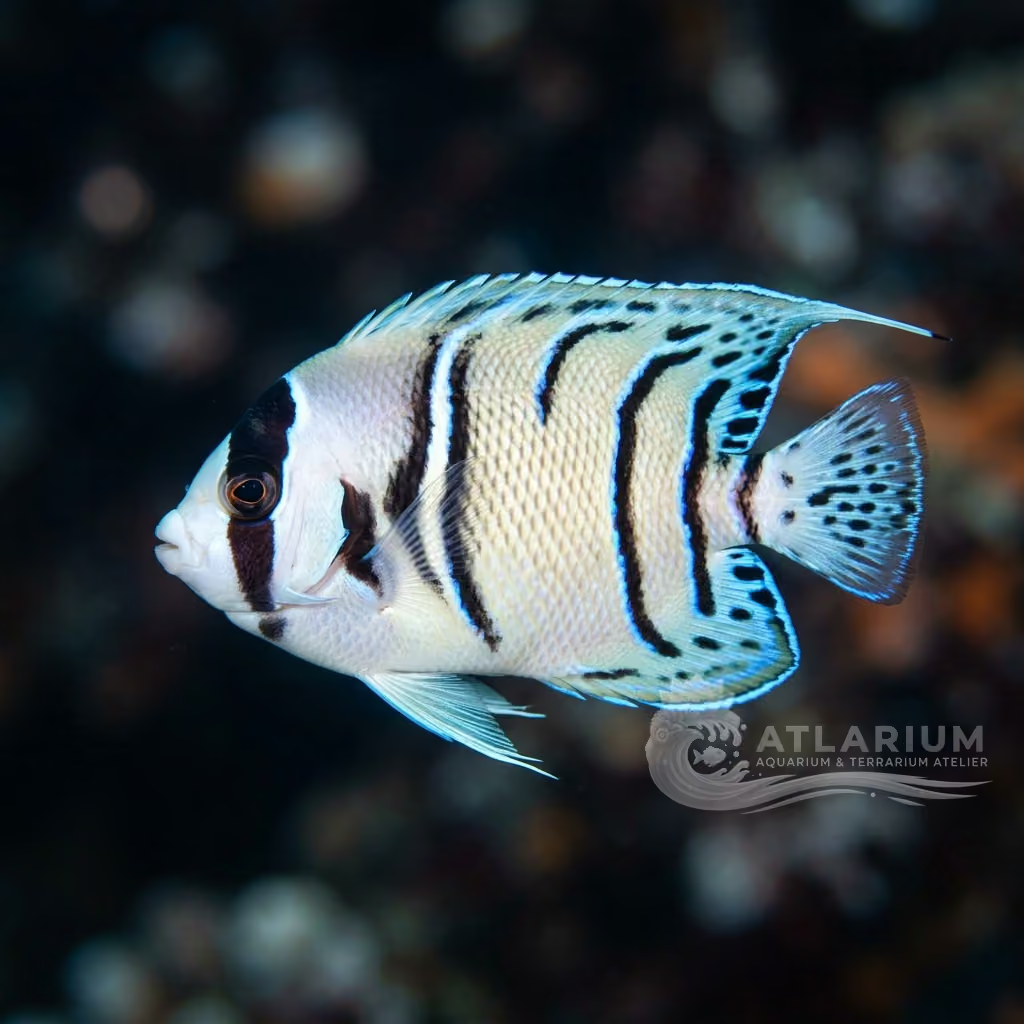
Characterized by vertical black bars, this massive Indo-Pacific angelfish demands a 1000L tank. It is highly territorial and destructive to coral reef setups.
Wassertemperatur
24 - 28 °C
pH-Wert
8.1 - 8.4
Wassertyp
Meerwasser
Tankfüllstand
Alle Ebenen
Erwachsenengröße
46 cm
Mindesttankvolumen
>= 1.000 L
Mindestgruppe
>= 1
KH
8 - 12 dKH

Artbeschreibung
Geographical Origin and Habitat: Broadly distributed in the tropical Indo-Pacific, from Indonesia, Philippines, and Solomon Islands to northern Australia and the Great Barrier Reef. Inhabits silty lagoons and outer reef slopes down to 40 meters. They are commonly found in coastal reefs with moderate turbidity, often around structures that provide shelter.
Taxonomy and Morphology: Member of the family Pomacanthidae. Features a deep, compressed body with a sharp opercular spine. Can reach a maximum length of 46 cm. The preopercular spine is highly developed and can cause painful wounds during handling or to potential predators.
Social Behavior: Solitary or in pairs. Shy but highly territorial. Adults produce a loud clicking/grunt warning sound when startled or defending territory. They communicate through low-frequency clicking sounds, especially when defending their caves or during stress.
Coloration and Sexual Dimorphism: Pale yellowish-brown body with 6 vertical black bars. Head is dark with a white vertical bar behind the eye. Juveniles are dark blue with vertical white and blue stripes. No sexual dimorphism. The transformation from juvenile blue stripes to adult vertical bars is a major morphological change.

Pflege, Zucht und Mitbewohner
Aquarium Setup: Requires a massive tank of at least 1000 liters. Rockwork must be stable and leave open swimming paths. Good water flow is required. The aquarium should feature solid, secure rock arches that allow the fish to turn around easily without injury.
Diet and Feeding: Omnivorous. Wild diet consists mainly of sponges, tunicates, and algae. Accepts frozen mysis, krill, chopped seafood, and sponge-based angelfish formulas. Incorporating fresh marine algae and sponge-rich preparations will ensure proper development and shell growth.
Water Quality: Maintain stable values: temperature 24-28 °C, pH 8.1-8.4, salinity SG 1.020-1.025. Heavy protein skimming and regular water changes are required. Keep nitrates low and maintain a high redox potential using ozone or strong chemical filtration.
Compatibility and Cohabitation: Not Reef Safe. Will prey on corals, anemones, and clams. Best kept in a large fish-only setup with active, robust species. Highly destructive to reef setups; it should be kept only in a fish-only tank with larger, active species.
Aquarium Breeding: Broadcast pelagic spawners. No captive breeding records exist in home aquaria due to space and larval feeding limitations. Successful breeding in home aquaria requires deep tanks and is rarely attempted due to the complex larval stages.
Risks and Diseases: Susceptible to Head and Lateral Line Erosion (HLLE) without sponge-rich nutrition. Prone to skin parasites under stressful conditions. Susceptible to secondary bacterial infections if the skin is damaged by rough netting or aggressive tankmates.

Geografische Herkunft und Verbreitung
Broadly distributed in the tropical Indo-Pacific, from Indonesia, Philippines, and Solomon Islands to northern Australia and the Great Barrier Reef. Inhabits silty lagoons and outer reef slopes down to 40 meters. They are commonly found in coastal reefs with moderate turbidity, often around structures that provide shelter.
Ursprung
Tropische Ozeane und RiffeSüd- und SüdostasienAustralien, Neuguinea und Ozeanien

Fischprofil
- Temperament
- Aggressive
- They are highly aggressive, incredibly bold, and unapologetically dominant. They will actively challenge any new additions to the aquarium without hesitation. Despite this pugnacious attitude, they become highly interactive with their caretakers.
- Diät
- Omnivore
- This large omnivore heavily relies on marine sponges naturally found on reefs. High-quality commercial angelfish foods containing sponge extracts are non-negotiable for their health. Supplement heavily with marine algae, nori, and chunky meaty seafoods.
- Lebenserwartung
- 15-21 years
- Erwachsenengröße
- 46 cm
- Geschlechterverhältnis
- Solitary
- Always keep this intensely territorial species completely solitary. Combining two individuals will inevitably lead to horrific aggression and eventual death. They naturally claim massive areas of the reef exclusive to themselves.
- Fütterungsfrequenz
- 2-3 times daily
- Provide highly nutritious meals two to three times every day. Allowing them to actively graze on seasoned live rock provides necessary supplemental nutrition. Underfed individuals will quickly lose their vibrant coloration and succumb to disease.
- Bioload
- Extreme
- The Sixbar angelfish generates a massive bioload due to its large appetite and eventual size. Robust, oversized filtration systems are absolutely mandatory for keeping this fish healthy. Strict water changing schedules must be maintained to control accumulating dissolved organics.
- Fluss
- Moderate
- Strong, chaotic water flow is highly preferred to simulate deep reef currents. It provides the essential gas exchange needed to support their immense oxygen requirements. It also stimulates their natural, active swimming behaviors.
- Sprungrisiko
- No
- Reproduktion
- Oviparous
- Successful breeding inside a private home aquarium has never been documented. They practice broadcast spawning which demands deep, open oceanic water columns. The microscopic larvae are notoriously difficult to feed and keep alive.
- Kompatibilität & Tankkameraden
- Reef safe
- It is aggressively territorial toward other angelfish and will dominate passive tankmates. It is entirely unsuitable for reef tanks as it will enthusiastically consume most corals. Keep only with similarly large, aggressive fish in expansive fish-only systems.
- Tankfüllstand
- All levels
- They dynamically utilize the entire vertical space of the aquarium environment. Enormous open swimming channels must be provided alongside massive, sturdy rock structures. They will constantly weave through the rockwork inspecting for food.

Wissenschaftliche Modelle & Parameter
FishBase
Zugang zu den offiziellen wissenschaftlichen Daten der Art
FishBase v25.04Daten synchronisiert am: 15.06.2026
- Trophäenniveau
- 2,6 ± 0 se
- Belastbarkeit
- Niedrig (4,5 - 14 Jahre)
- Phylogenetische Einzigartigkeit (PD50)
- 0.5001
- Bayessche Längen-Gewichts-Beziehung
- a = 0.03548, b = 2.86
- AnfälligkeitMäßige Anfälligkeit (36 / 100)

Verwandte Arten
Empfehlungen gruppiert nach nahen Verwandten, Auswahl von Begleitern und ähnlicher Betreuung.