Dubois' Cichlid
Tropheus duboisi
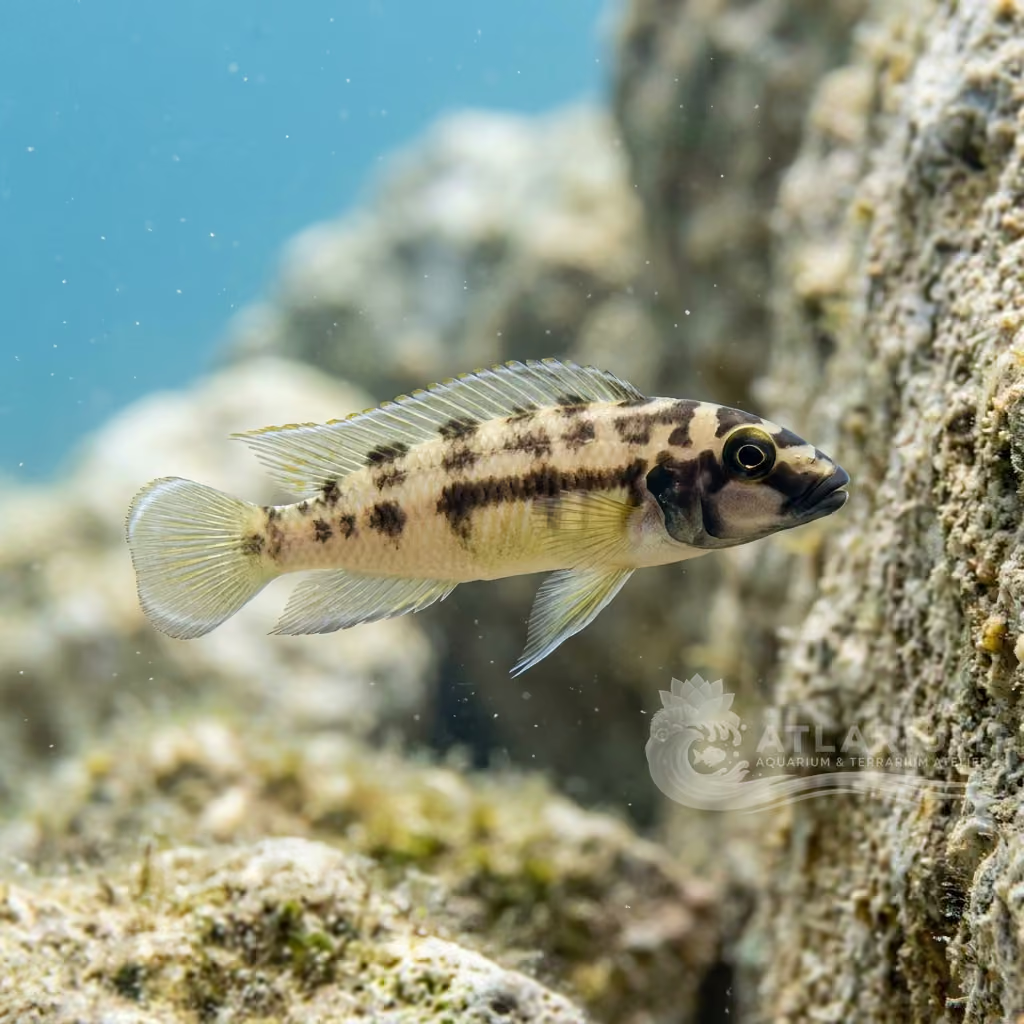
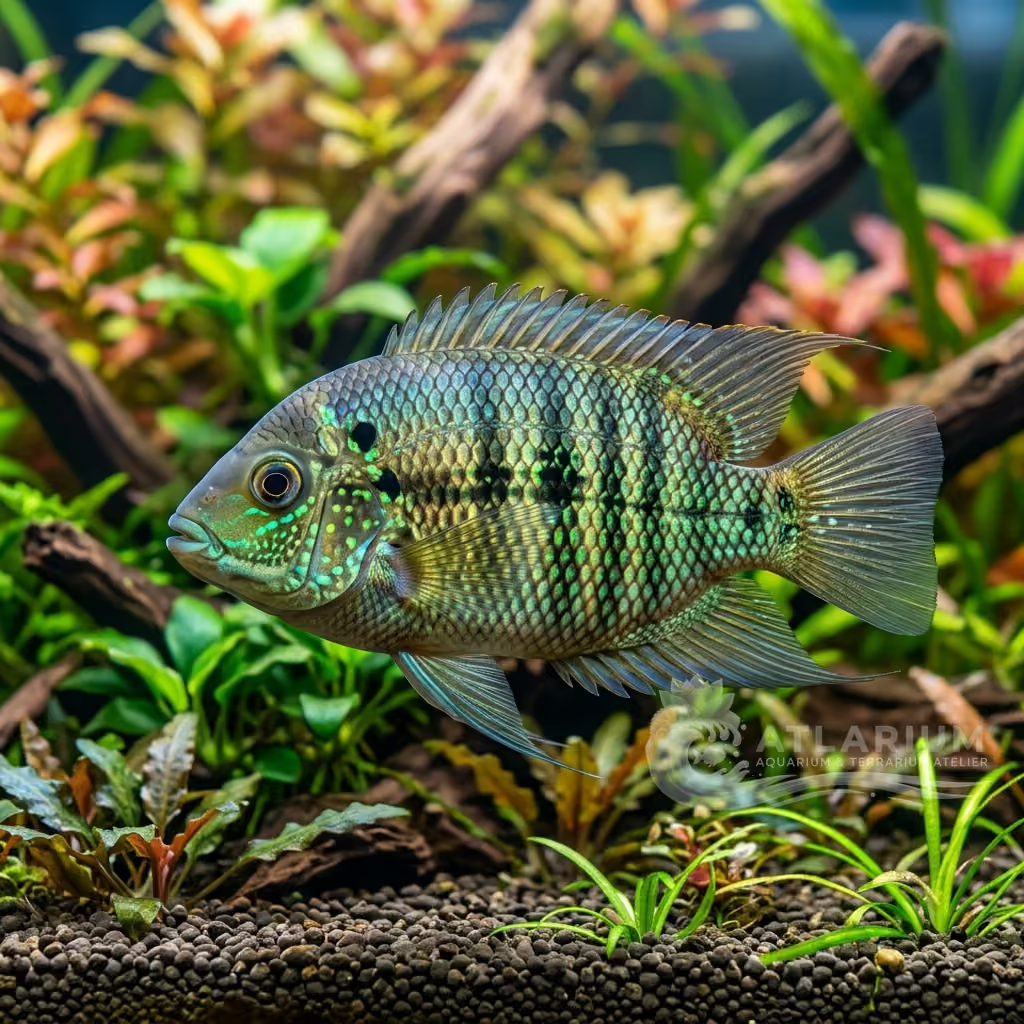
The 'Polka-Dot' Cichlid of Tanganyika (12 cm / 5 inches). Highly sought-after for its shocking metamorphosis: it is born as a pure velvet-black fish covered entirely in bright glowing white polka-dots, but as it matures, it loses all spots and transforms into a deep-blue/black powerhouse with a single, incredibly stark yellow or white vertical 'belt' across its body. A beautiful but demanding fish that requires massive tanks, strict vegan diets, and huge colonies to disperse their wildly aggressive, murderous behavior.
Wassertemperatur
24 - 28 °C
pH-Wert
8 - 9
Wassertyp
Süßwasser
Tankfüllstand
Unten und in der Mitte
Erwachsenengröße
12 cm
Mindesttankvolumen
>= 100 L
Mindestgruppe
>= 1
GH
10 - 25 dGH
KH
5 - 12 dKH
TDS
200 - 495 ppm
Leitfähigkeit
313 - 773 uS/cm
Artbeschreibung
Geographical Origin and Habitat: Vastly distributed along the northern wave-battered, rocky rubble coasts of Lake Tanganyika. This species represents the Tanganyika equivalent of the Malawi Mbunas. They spend every single minute of their lives relentlessly picking and violently scraping at the extremely thick, flat green algae carpets ('Aufwuchs') covering the rocky reefs in the top 5 to 15 meters of water.
Taxonomy and Morphology: A key member of the notoriously difficult and rewarding Tropheus genus. Peaks around 12 cm (5 inches) in length. They are built like tanks: highly cylindrical, incredibly muscular, thick-set, and tall. Their mouth is situated underneath the snout (sub-terminal), equipped with specialized brushing, chisel-like teeth designed explicitly by millions of years of evolution to scrape micro-algae and organisms flat against rough stone surfaces.
Social Behavior: Absolutely hyperactive, neurotic, and incredibly brutal. Tropheus are universally known for their explosive 'Intraspecific Aggression' (they violently hate and attempt to murder members of their own exact species). A single dominant Alpha male will tirelessly and viciously pursue, bite, and beat submissive Dubois cichlids in his territory. To prevent murder, they must be kept in highly 'overstocked' swarms where the Alpha's fury is divided among twenty fish instead of just one victim. They are constantly swimming in endless motion.
Coloration and Sexual Dimorphism: The ultimate example of an 'Ontogenetic Shift' (color change as it ages). This is why everyone buys them: The juveniles are staggeringly beautiful. They are inky, jet-black, heavily saturated with hundreds of perfectly round, brilliant glowing white or neon-blue spots (the 'Starry Night' or 'Polka Dot' look). But beware the magic ends: At 5 to 6 cm (2-3 inches), the spots completely fade away and vanish forever. The adult turns a solid, very dark bluish-charcoal or pitch black, and develops ONE MASSIVE, incredibly striking, solid vertical band (a thick 'belt' or 'stripe') across its mid-section. This band is either blazing white, or bright buttery-yellow (the highly prized 'Maswa' variant). Males and females are completely identical to the naked eye.
Pflege, Zucht und Mitbewohner
Aquarium Setup: Due to their swimming energy and violent social structure, massive tanks are mandatory. Minimum 150 cm (5 feet) footprint, or 100+ gallons. THE ROCKSCAPE RULE: Do not build enclosed caves. Build enormous, solid barriers and piles of huge, smooth river rocks or limestone directly under extremely bright, intense LED lighting. The goal is to grow massive carpets of natural green algae on the rocks for them to graze continuously, 16 hours a day. Huge water flow from powerheads is needed to mimic wave action and heavily oxygenate the water.
Diet and Feeding: OBLIGATE BENTHIC HERBIVORE (Aufwuchs Grazer). DIET IS THE #1 KILLER OF THIS FISH. They possess incredibly long, fragile digestive tracts designed only for low-nutrient, high-fiber algae. YOU MUST FEED THEM STRICTLY PREMIUM VEGETARIAN/SPIRULINA FLAKES OR PELLETS. Never switch brands of food suddenly, as the enteric shock will kill them. ABSOLUTE DEATH SENTENCE: Even a single feeding of Bloodworms, Beefheart, frozen brine shrimp, or cheap tropical flakes will inevitably rot in their gut, triggering the universally fatal, agonizing disease 'TROPHEUS BLOAT'. They will swell like balloons and die in 48 hours.
Water Quality: African Rift Lake Chemistry is a must. Needs crystal clear, incredibly hard, alkaline water. pH 8.0-9.2. High GH and KH buffers (crushed coral substrate helps). Temp 24-27°C (75-80°F). Pristine water is an absolute requirement. High nitrates or slight pH crashes will stress the colony, triggering 'Bloat' and wiping out hundreds of dollars of fish in a week. Extreme heavy mechanical filtration and weekly large water changes are vital.
Compatibility and Cohabitation: THE 'MASS COLONY' AND 'ONE-SHOT' RULES: 1. You MUST buy a massive group of at least 15 to 20 juvenile Dubois all at once, and put them into the giant tank together on the very same day. This spreads the aggression so no one fish gets bullied to death. 2. NEVER, ever try to add a new 'stranger' Dubois to an established colony months later; the colony will brutally murder the newcomer in under 10 minutes. 3. NEVER mix two different species of Tropheus (like T. moorii) or they will hybridize into ugly mutts and fight to the death. Only keep with robust Gobies or Julidochromis.
Aquarium Breeding: Extremely difficult for beginners due to the extreme violence involved. The Alpha male 'shimmies' and aggressively bites at a female to force her into a rocky depression. She drops huge eggs, scoops them into her mouth, and noses the male's anal fin for fertilization. She will then retreat into the rocks, literally starving herself for a brutal 4-week holding period while her chin swells grotesquely. She eventually releases 10-15 giant, perfectly formed polka-dot fry. If the tank ratio is wrong (not enough females), the male will batter the pregnant female to death instantly after breeding.
Risks and Diseases: 1. 'TROPHEUS BLOAT' EPIDEMIC: Instant, incurable swelling and death of the entire tank caused by the owner feeding them carnivorous treats or cheap community flakes instead of high-grade spirulina. 2. 'The Lone Survivor': If you buy only 3 or 4 of these fish, the dominant male will quickly torture the others to death until he is the only one left alive. 3. New-addition massacre (adding fish to an established group).
Geografische Herkunft und Verbreitung
Vastly distributed along the northern wave-battered, rocky rubble coasts of Lake Tanganyika. This species represents the Tanganyika equivalent of the Malawi Mbunas. They spend every single minute of their lives relentlessly picking and violently scraping at the extremely thick, flat green algae carpets ('Aufwuchs') covering the rocky reefs in the top 5 to 15 meters of water.
Ursprung
Selektive Züchtung und SortenAfrika und Madagaskar
Fischprofil
- Temperament
- Semi-aggressive
- Their temperament is highly aggressive and socially complex. They establish a strict dominance hierarchy that dictates access to food and breeding rights. Disrupting the colony by adding new adults can cause severe chaos and fighting until a new pecking order is established.
- Diät
- Omnivore
- They are strict herbivores that graze on algae-covered rocks in the wild. Their captive diet must be dominated by high-quality spirulina flakes or algae wafers to prevent deadly digestive issues like Malawi bloat. Animal proteins like bloodworms or beef heart must be strictly avoided at all costs.
- Lebenserwartung
- 5-10 years
- Erwachsenengröße
- 12 cm
- Geschlechterverhältnis
- Specific M:F ratio
- Maintaining the correct sex ratio is critical to dispersing the male's intense aggression. A ratio of one male to at least four or five females is strongly recommended. Attempting to keep too many males in a standard tank usually results in fatal territorial disputes.
- Fütterungsfrequenz
- Twice daily
- They should be fed small amounts two to three times daily rather than one large meal. Their specialized, long digestive tracts are designed for constant, low-protein grazing. Careful observation during feeding time is necessary to ensure no individual is bullied away from the food.
- Bioload
- Medium
- These highly active cichlids have a surprisingly heavy bioload for their size. They are enthusiastic eaters that constantly graze and consequently produce significant waste. Over-filtration and substantial weekly water changes are mandatory to maintain the pristine water conditions they require.
- Fluss
- Stagnant
- They appreciate a strong, well-oxygenated water flow that replicates the surge zones of Lake Tanganyika. Powerful filtration and wavemakers help keep the water pristine and highly oxygenated. Brisk surface agitation is essential to drive off CO2 and maintain a high pH.
- Sprungrisiko
- Yes
- They are powerful swimmers and can jump out of the aquarium during territorial disputes. A heavy, tight-fitting glass or acrylic lid is essential to keep them safely contained. Care should be taken during maintenance, as panicked individuals may dart upward and break the surface.
- Reproduktion
- Oviparous
- They are maternal mouthbrooders that exhibit fascinating breeding behaviors. The female will pick up the fertilized eggs and hold them in her mouth for up to four weeks. During this time, she will eat very little, eventually spitting out fully formed, independent fry.
- Kompatibilität & Tankkameraden
- Species only
- They are famously aggressive and highly territorial, especially towards their own kind. They must be kept in large, species-only setups or with other very robust Lake Tanganyika cichlids. Mixing different Tropheus species is generally discouraged due to the high risk of crossbreeding and severe aggression.
- Tankfüllstand
- Middle/Bottom
- They are incredibly active fish that will utilize every inch of the aquarium. While they spend much of their time grazing on rockwork near the bottom and middle, they frequently swim in open water. A tank heavily aquascaped with large rocks provides necessary visual barriers and territories.

Wissenschaftliche Modelle & Parameter
FishBase
Zugang zu den offiziellen wissenschaftlichen Daten der Art
FishBase v25.04Daten synchronisiert am: 15.06.2026
- Trophäenniveau
- 3,3 ± 0,4 se
- Belastbarkeit
- Hoch (weniger als 15 Monate)
- Phylogenetische Einzigartigkeit (PD50)
- 0.5156
- Bayessche Längen-Gewichts-Beziehung
- a = 0.01905, b = 3.01
- AnfälligkeitGeringe Anfälligkeit (10 / 100)