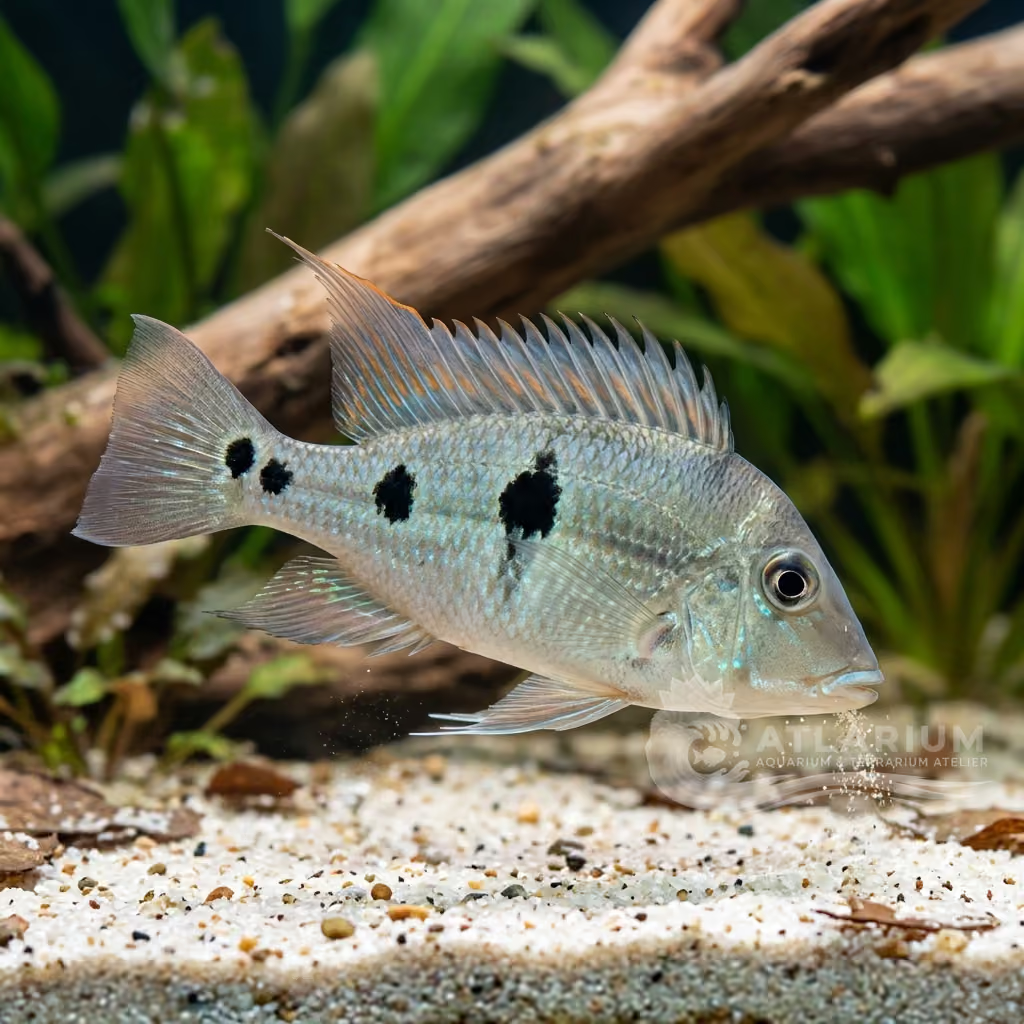
Cuban Cichlid
Nandopsis tetracanthus
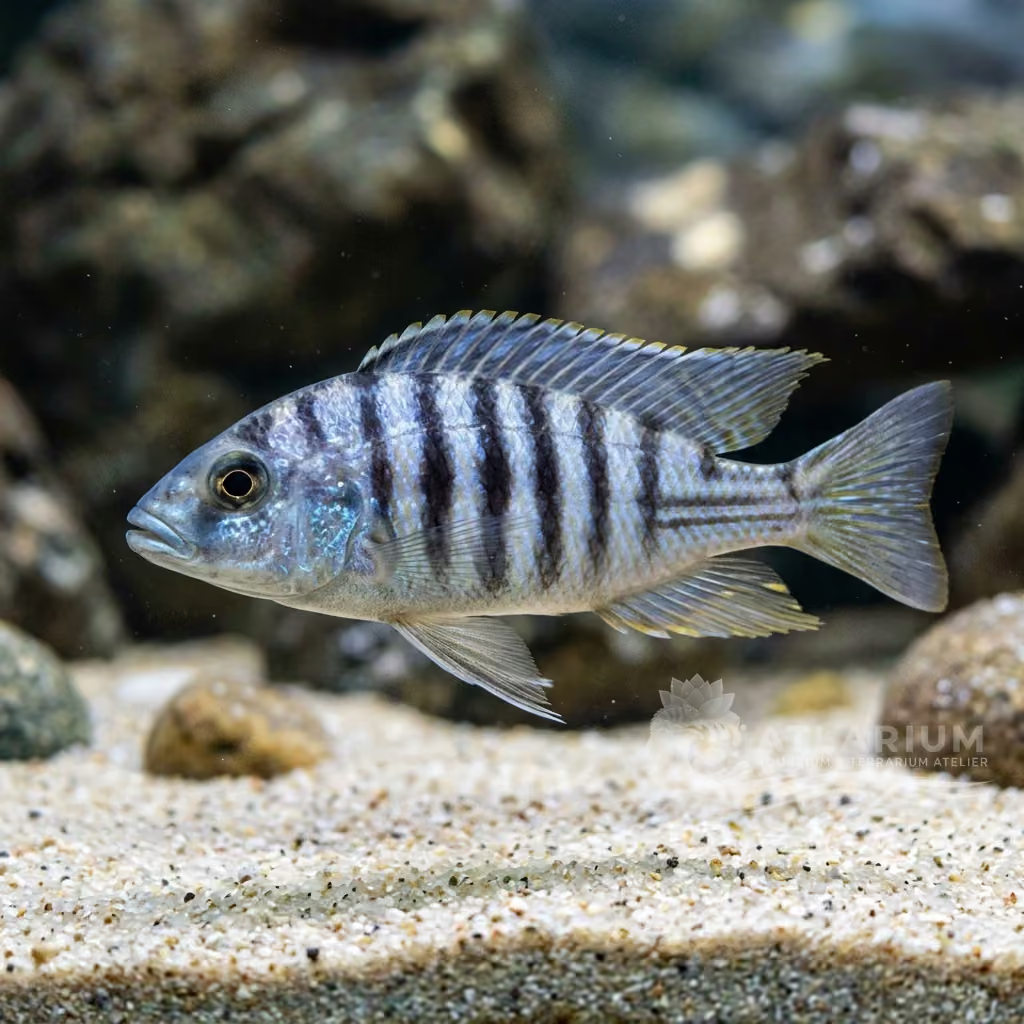
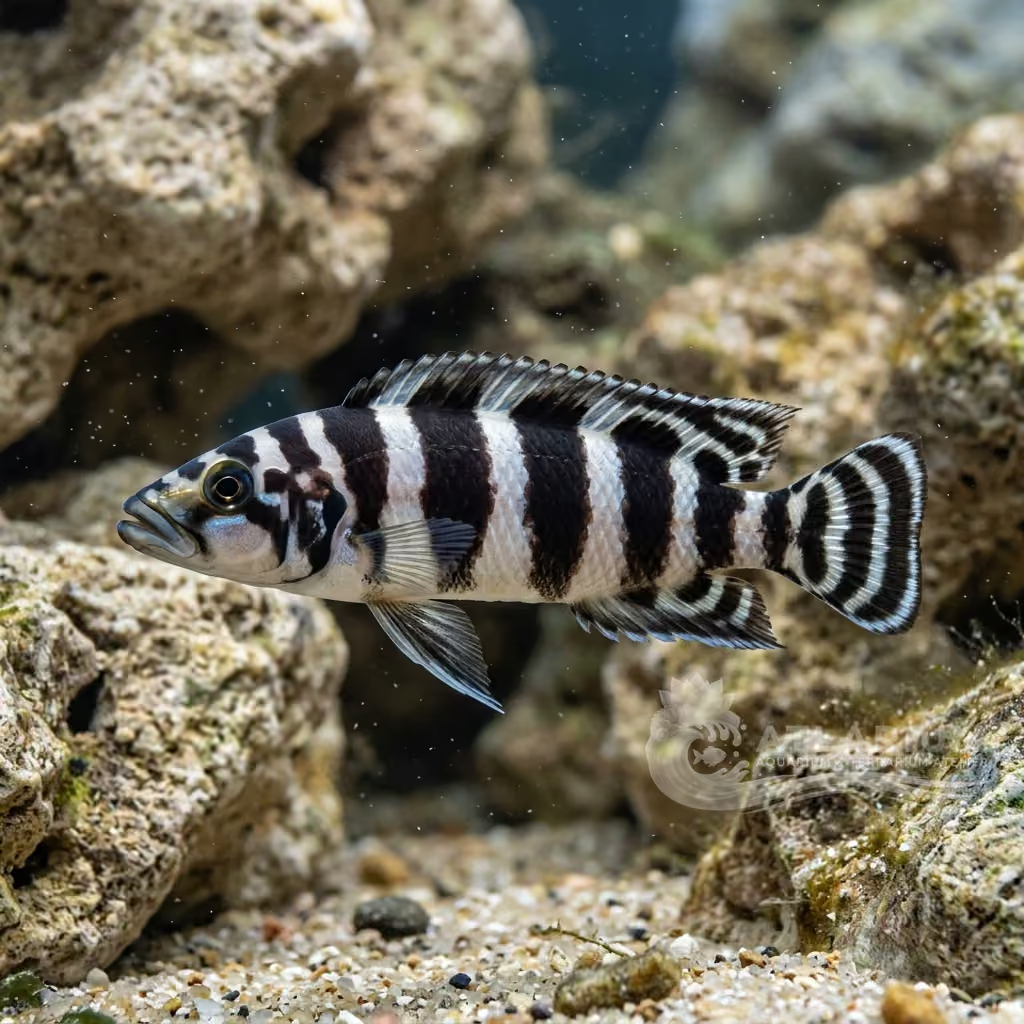
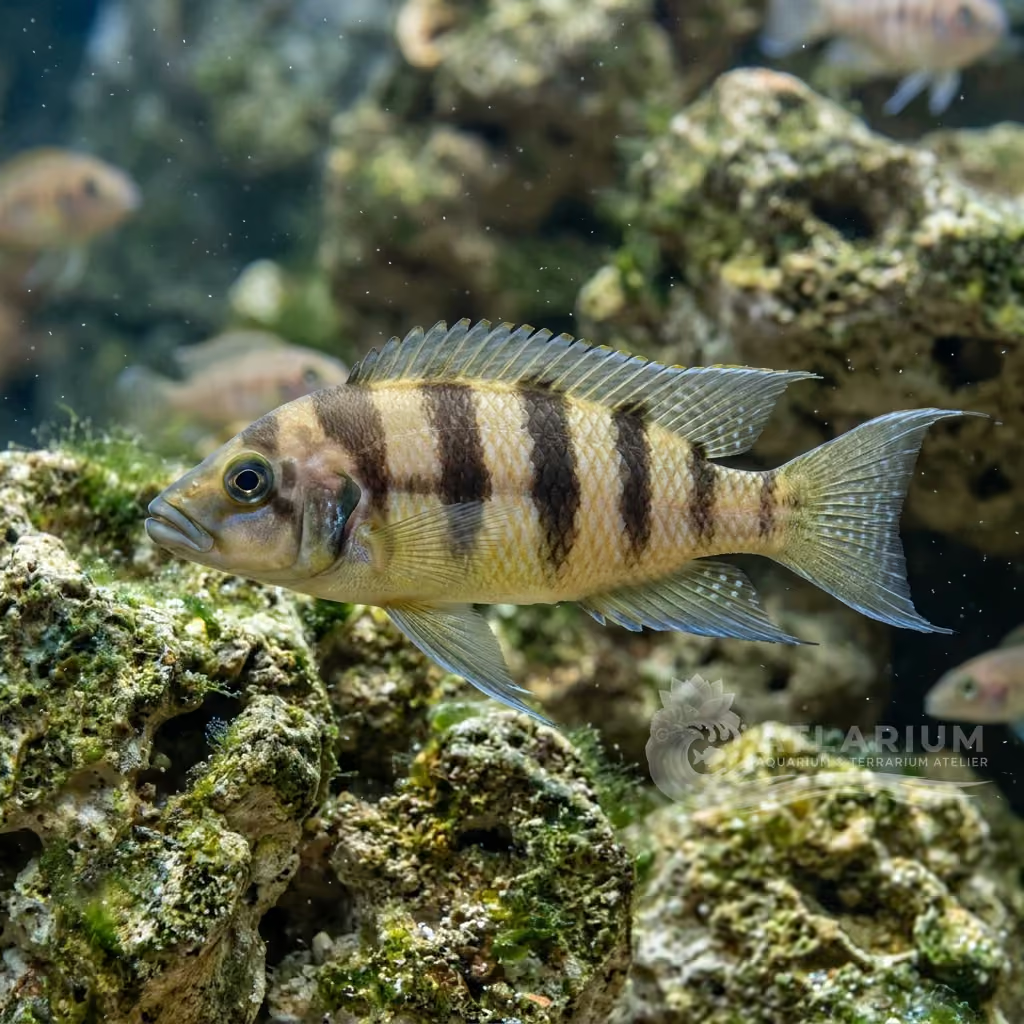
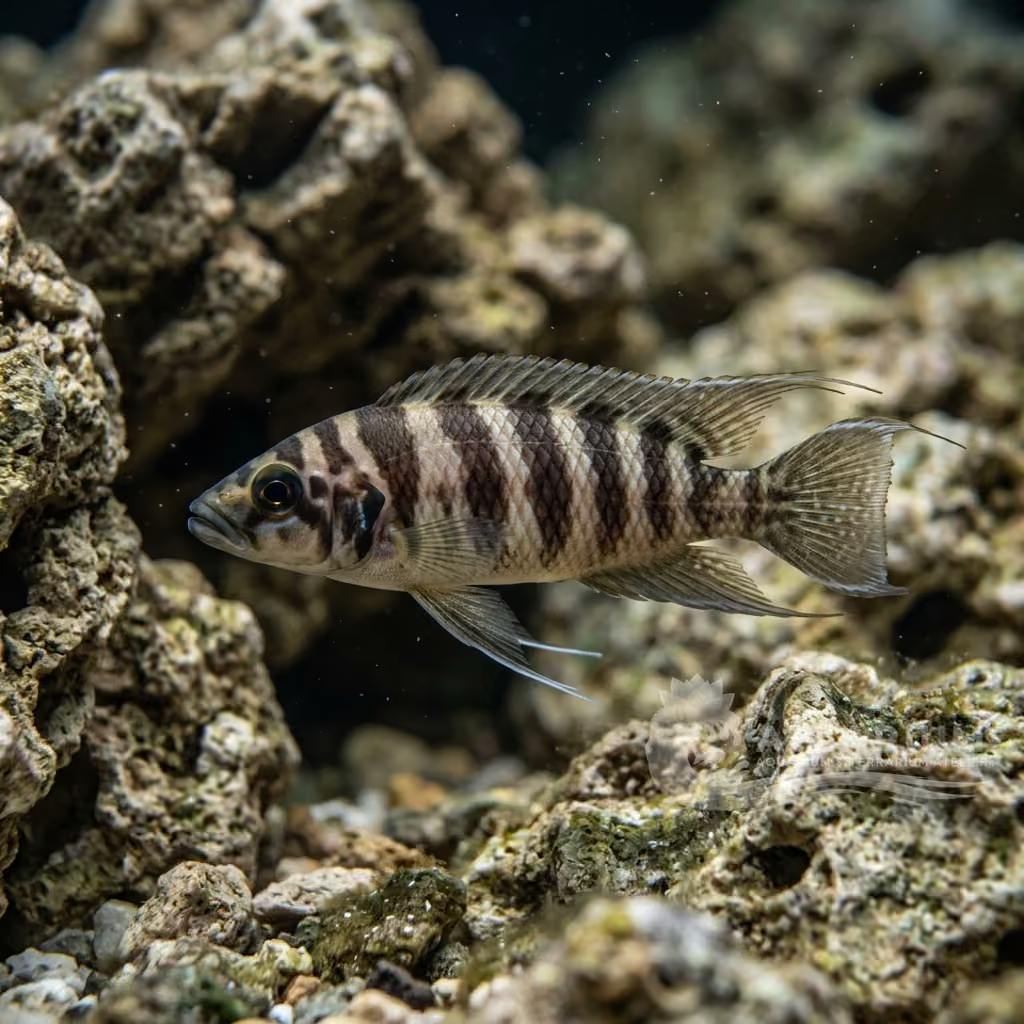
Cuba's top predator. A spectacular black-and-white mosaic cichlid that completely inverts its colors when breeding. Viciously aggressive and requires hard, alkaline or even brackish water.
Wassertemperatur
24 - 30 °C
pH-Wert
7 - 8.5
Wassertyp
Süßwasser
Tankfüllstand
Unten und in der Mitte
Erwachsenengröße
25 cm
Mindesttankvolumen
>= 300 L
Mindestgruppe
>= 1
GH
10 - 25 dGH
KH
5 - 12 dKH
TDS
200 - 495 ppm
Leitfähigkeit
313 - 773 uS/cm

Artbeschreibung
Geographical Origin and Habitat: Endemic to Cuba. Inhabits slow-flowing rivers, lakes, and does not disdain at all the brackish waters of estuaries and coastal mangrove lagoons.
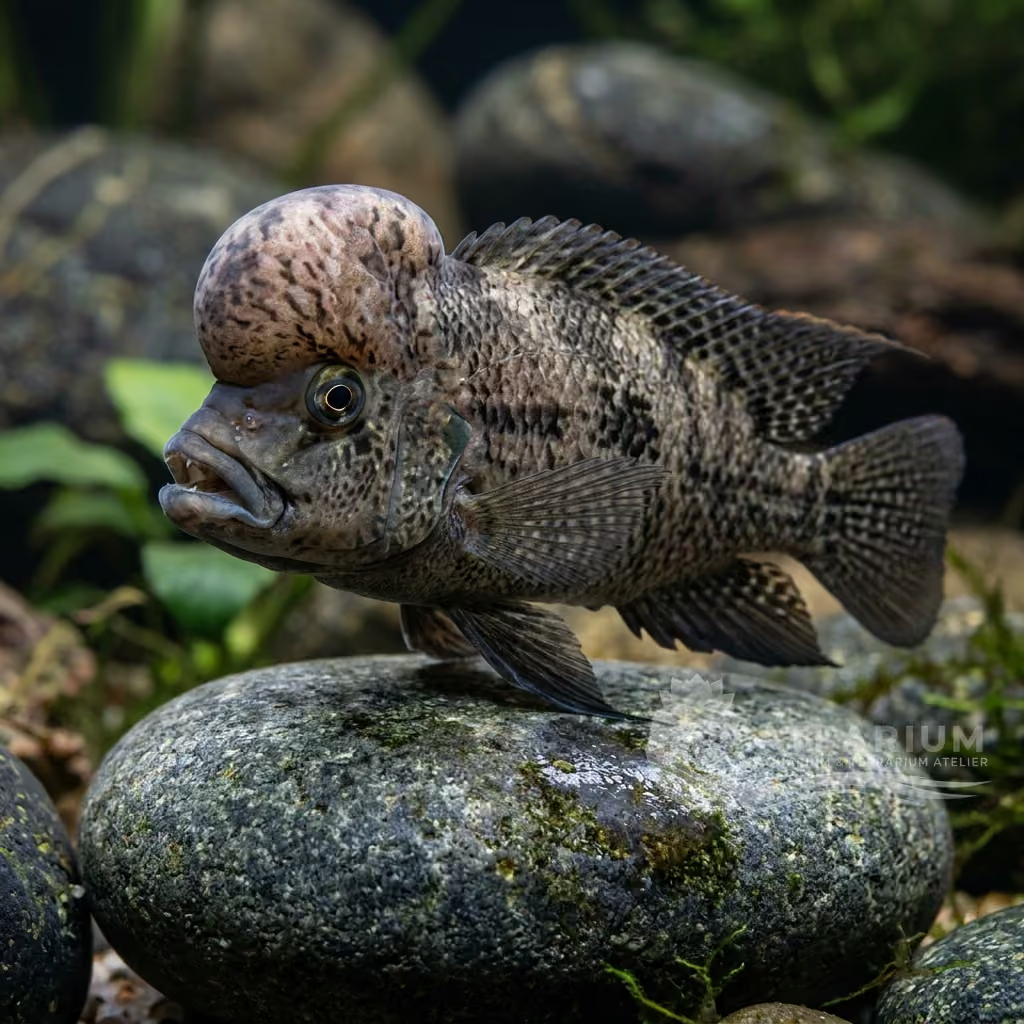
Taxonomy and Morphology: Cuban Cichlid (Nandopsis tetracanthus). Large Central American cichlid (Guapote). Powerful profile, large head with extensible mouth of a formidable predator and robust scales.
Social Behavior: Highly aggressive and intolerant. It is a "guapote" (predatory cichlid) and will act as such, claiming large chunks of territory. Forms extremely tight but violent pair bonds.
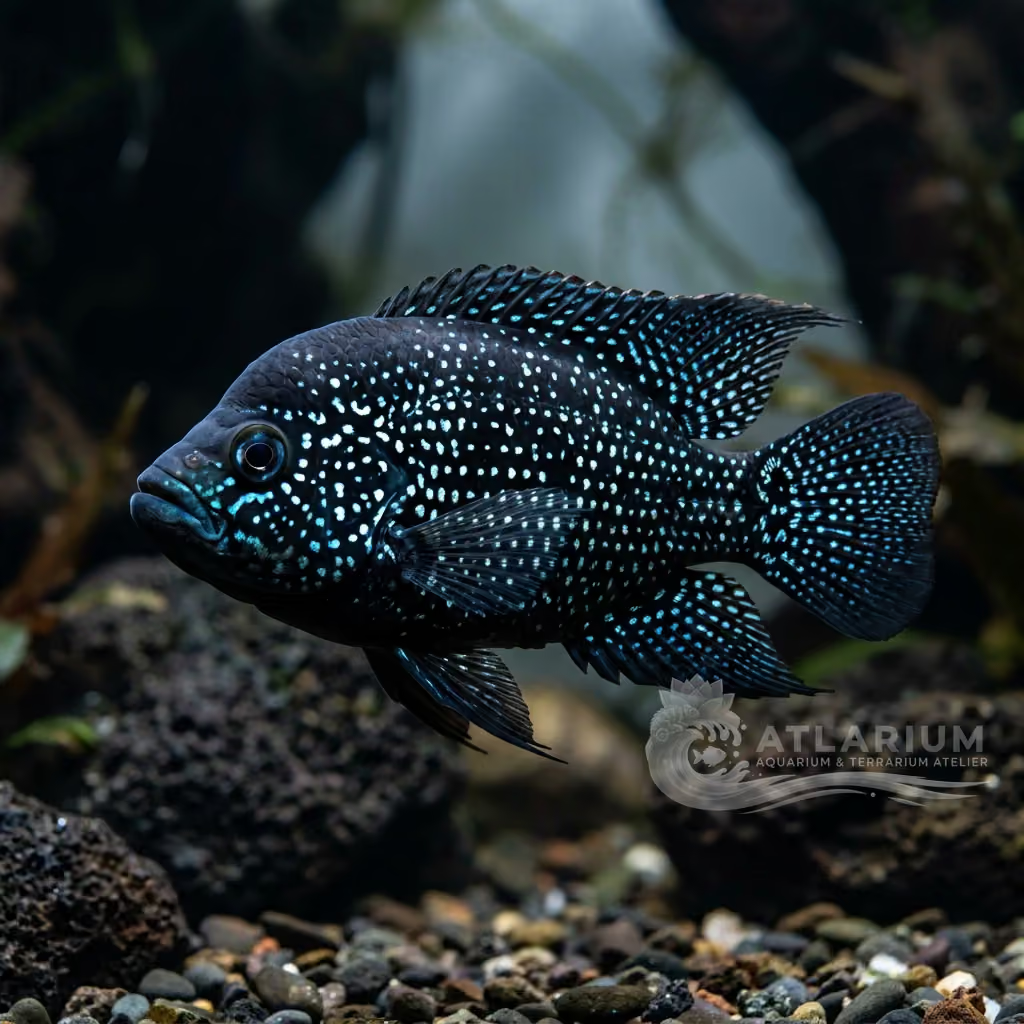
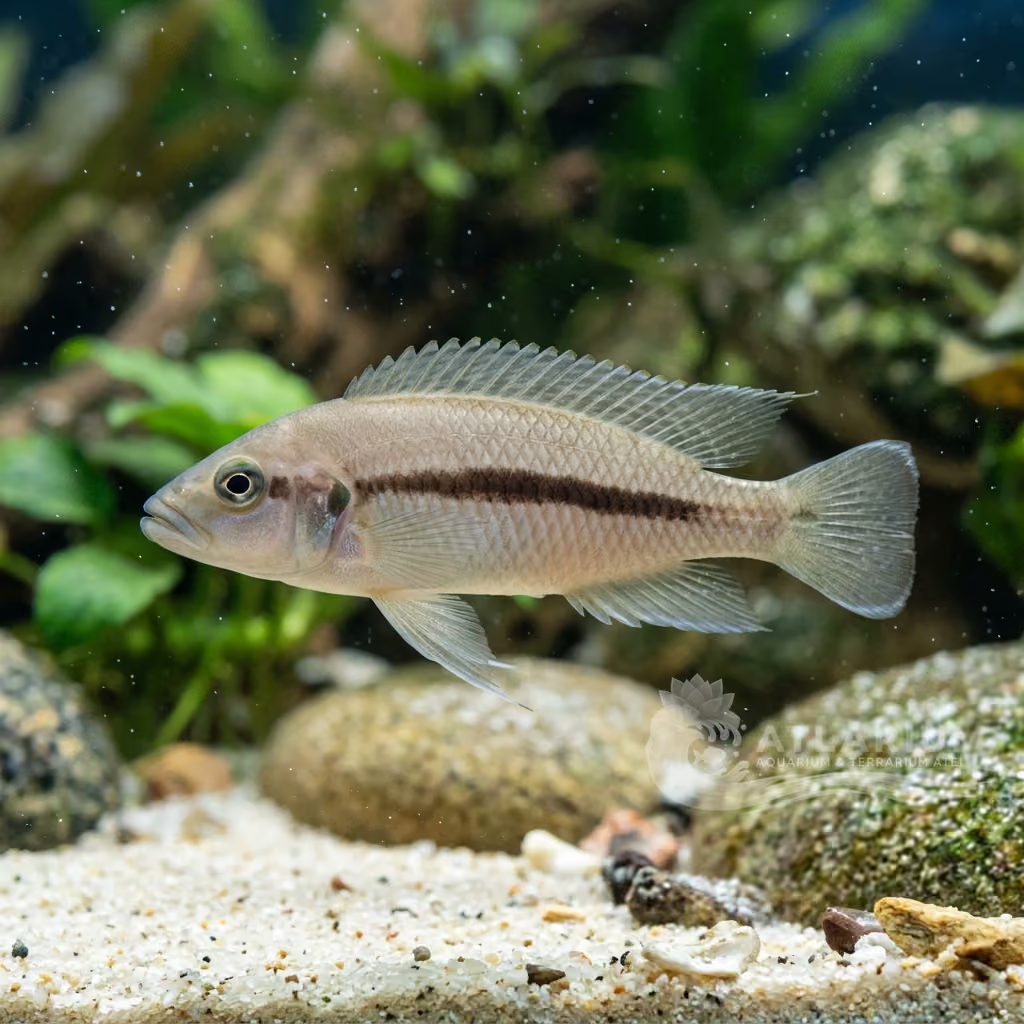
Coloration and Sexual Dimorphism: Stunning "checkerboard" livery. Silvery or golden light background heavily spotted with high contrast raven black. Adult males sport a nuchal hump and extended fins. In breeding, the lower part becomes opaque raven black.

Pflege, Zucht und Mitbewohner
Aquarium Setup: Tank for beasts (minimum 150 cm / 60 inches). Requires huge rocks and heavy woods to delimit the territory. No plants (would dig them up). The substrate will be moved continuously, so avoid fragile or fertile bottoms.
Diet and Feeding: Opportunistic Piscivore/Omnivore. Will eat crabs, giant insects and fish. In the aquarium they devour large pellets for carnivores, shelled shrimp, earthworms. Do not overfeed to avoid obesity.
Water Quality: Extreme tolerance to salts. Requires hard and alkaline water (ph 7.5-8.5). The addition of sea salt is excellent if they show signs of stress. They soil enormously, oversized filtration is needed.
Compatibility and Cohabitation: Impossible with community fish. Pair (in huge tanks) only with other armored Central American monsters (Jaguar Cichlid, Midas, large Plecostomus) or keep them in a single pair in a dedicated tank.
Aquarium Breeding: Spawners on flat rocks. Pre-reproductive skirmishes look like attempted murders (brutal "Lip-locking"). They lay up to 1000 eggs; the pair will massacre anyone approaching within a meter of the nest.
Risks and Diseases: Lethal Divorce. The "close-knit" pair can suddenly break up. The male will turn on the female killing her in a few hours if there are no "target" fish (giant dither fish) to vent the aggression on, or if the tank is too narrow.

Geografische Herkunft und Verbreitung
Endemic to Cuba. Inhabits slow-flowing rivers, lakes, and does not disdain at all the brackish waters of estuaries and coastal mangrove lagoons.
Ursprung
Mittelamerika und Karibik

Fischprofil
- Temperament
- Semi-aggressive
- Their temperament is notoriously aggressive, highly territorial, and unforgiving towards intruders. They will boldly interact with their owners but attack tank invaders. Careful planning of tank decor is required to provide sightline breaks.
- Diät
- Omnivore
- In the wild, they are formidable predators feeding on fish and crustaceans. In the home aquarium, they should be fed high-quality cichlid pellets. Live or frozen meaty foods like earthworms help maintain their coloration.
- Lebenserwartung
- 9-12 years
- Erwachsenengröße
- 25 cm
- Geschlechterverhältnis
- Solitary
- Cuban Cichlids are best kept as a single male-female bonded pair for breeding. For general display purposes, a single specimen of either sex is safest. Keeping multiple males in the same tank usually results in fatal conflicts.
- Fütterungsfrequenz
- Twice daily
- Adults typically only need to be fed once or twice a day. Overfeeding should be avoided to prevent excessive waste and water quality issues. Juveniles can be fed slightly more often to support rapid growth.
- Bioload
- Medium
- The Cuban Cichlid produces a substantial bioload typical of large predators. Their messy eating habits demand heavy, oversized filtration to maintain pristine water conditions. Frequent massive water changes are vital to keep nitrates low.
- Fluss
- Stagnant
- They prefer moderate water flow that provides good oxygenation without overpowering them. Strong filtration naturally creates sufficient current for their environment. Excessive turbulence should be avoided to allow them comfortable resting areas.
- Sprungrisiko
- Yes
- While not notorious jumpers, their powerful build means they can breach the surface. A secure, heavy lid is recommended to keep them safely contained. A fully covered tank also prevents them from splashing water out.
- Reproduktion
- Oviparous
- They are biparental substrate spawners that become extremely aggressive during breeding. The female lays eggs on a flat rock while the male defends the territory. Both parents provide excellent care to the fry against any threats.
- Kompatibilität & Tankkameraden
- Highly aggressive
- This is a highly aggressive and territorial species that dislikes tank mates. They are best kept either as a single wet pet or a bonded pair. If housed with others, companions must be equally large and robust.
- Tankfüllstand
- Middle/Bottom
- They predominantly occupy the middle to lower levels of the water column. They are known to dig and rearrange substrate to establish territories. Ample swimming space above the substrate is necessary for their patrols.

Wissenschaftliche Modelle & Parameter
FishBase
Zugang zu den offiziellen wissenschaftlichen Daten der Art
FishBase v25.04Daten synchronisiert am: 15.06.2026
- Trophäenniveau
- 3,7 ± 0,58 se
- Belastbarkeit
- Hoch (weniger als 15 Monate)
- Phylogenetische Einzigartigkeit (PD50)
- 0.625
- Bayessche Längen-Gewichts-Beziehung
- a = 0.02692, b = 3.02
- AnfälligkeitGeringe Anfälligkeit (14 / 100)

Verwandte Arten
Empfehlungen gruppiert nach nahen Verwandten, Auswahl von Begleitern und ähnlicher Betreuung.