Venustus Cichlid / Giraffe Cichlid
Nimbochromis venustus
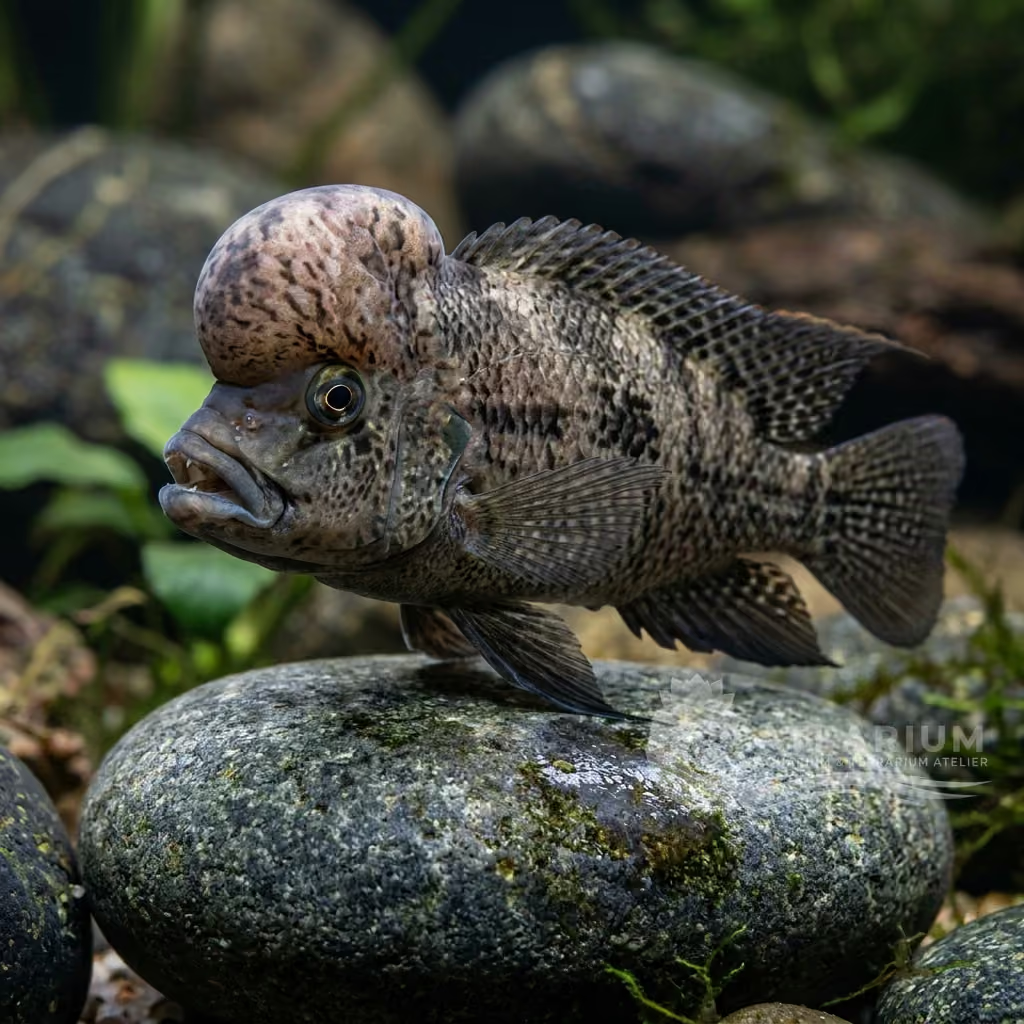
The genius 'Dead-Faking' predator of Lake Malawi. A massive 25 cm (10-inch) cichlid covered in yellow and olive-green 'giraffe' spots. Adult males develop a stunning, blazing sapphire-blue head. It is a highly intelligent, deadly fish-eater that requires massive aquariums and only giant tankmates.
Wassertemperatur
24 - 28 °C
pH-Wert
7.8 - 8.6
Wassertyp
Süßwasser
Tankfüllstand
Alle Ebenen
Erwachsenengröße
25 cm
Mindesttankvolumen
>= 300 L
Mindestgruppe
>= 1
GH
10 - 25 dGH
KH
5 - 12 dKH
TDS
200 - 495 ppm
Leitfähigkeit
313 - 773 uS/cm

Artbeschreibung
Geographical Origin and Habitat: Endemic to Lake Malawi. They patrol the 'transition zones'—the deep water areas (15-20 meters) where the giant underwater cliffs and rocky rubble meet the vast expanses of soft sandy plains. They use the sand for their unique hunting strategies.
Taxonomy and Morphology: A heavyweight predator of the 'Haplochromis' flock. It grows quickly to a formidable 25 cm (10 inches) and develops a very thick, muscular body profile. It has a massively wide, slung mouth designed to swallow prey whole. Unlike the typical solid blue or silver 'Haps', the Venustus is famous for its heavily disrupted, blotchy, camouflage pattern.
Social Behavior: An ambush predator with a phenomenal, highly evolved hunting technique known as 'Death-Feigning'. It will intentionally sink to the bottom, lay slightly on its side in the sand, and remain perfectly motionless like a corpse for minutes at a time. The camouflage spots break up its outline. When small fish swim over to investigate the 'dead' fish, the Venustus explodes upwards, swallowing them in milliseconds. In the tank, they are very active, boisterous, and dominant open-water swimmers.
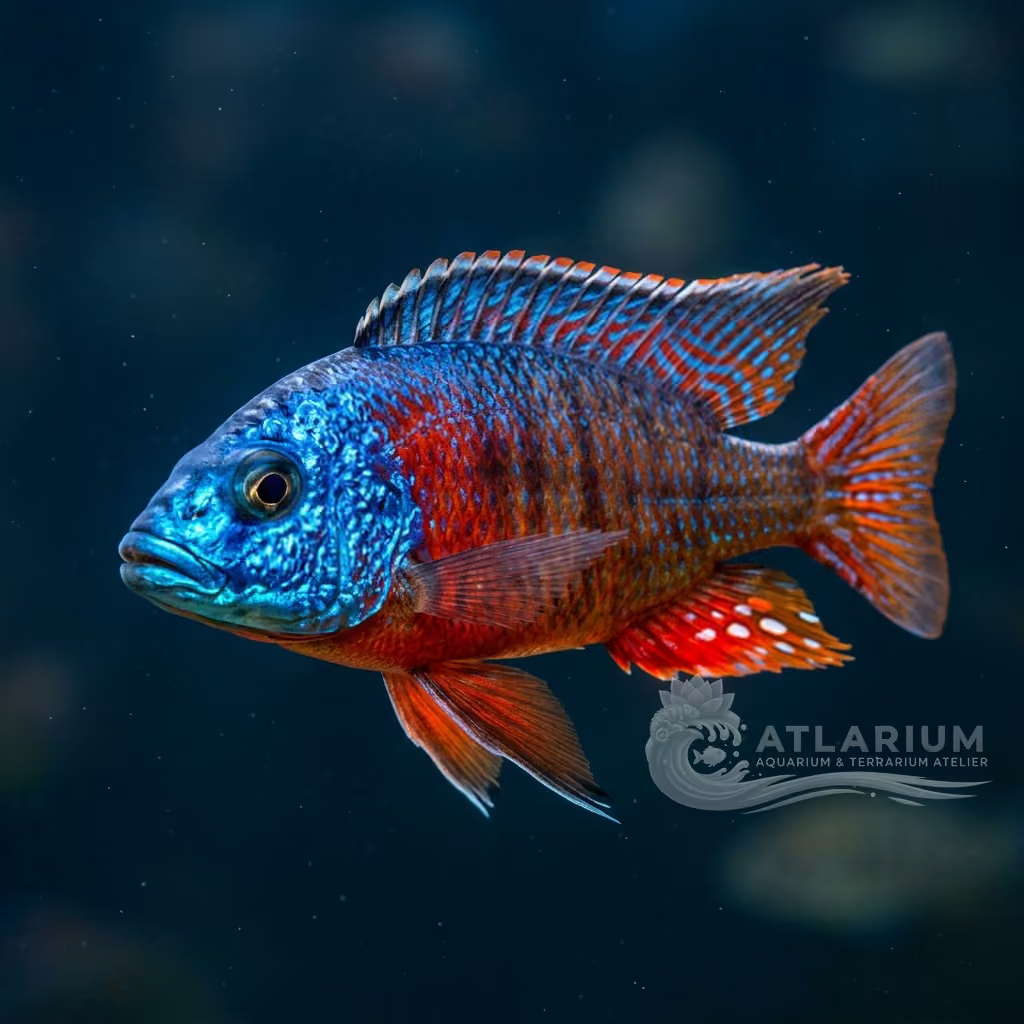
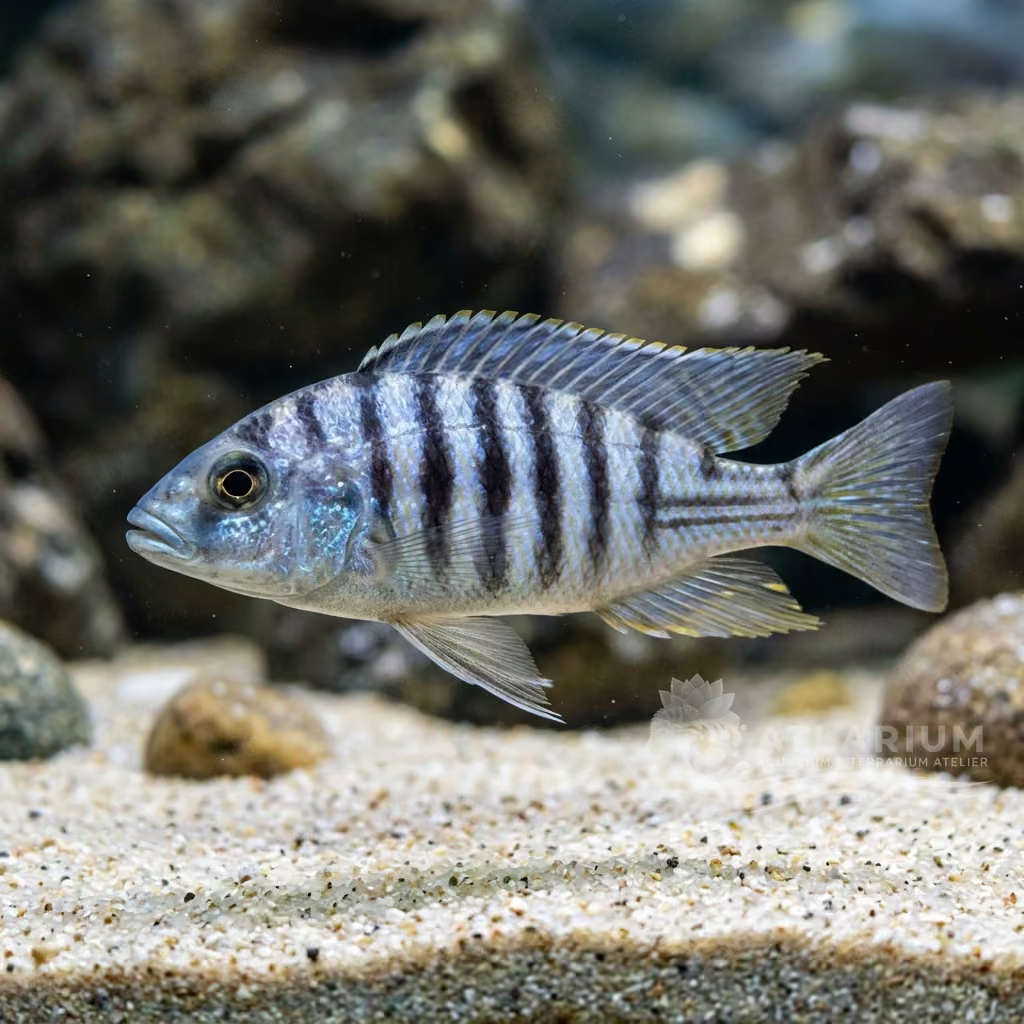
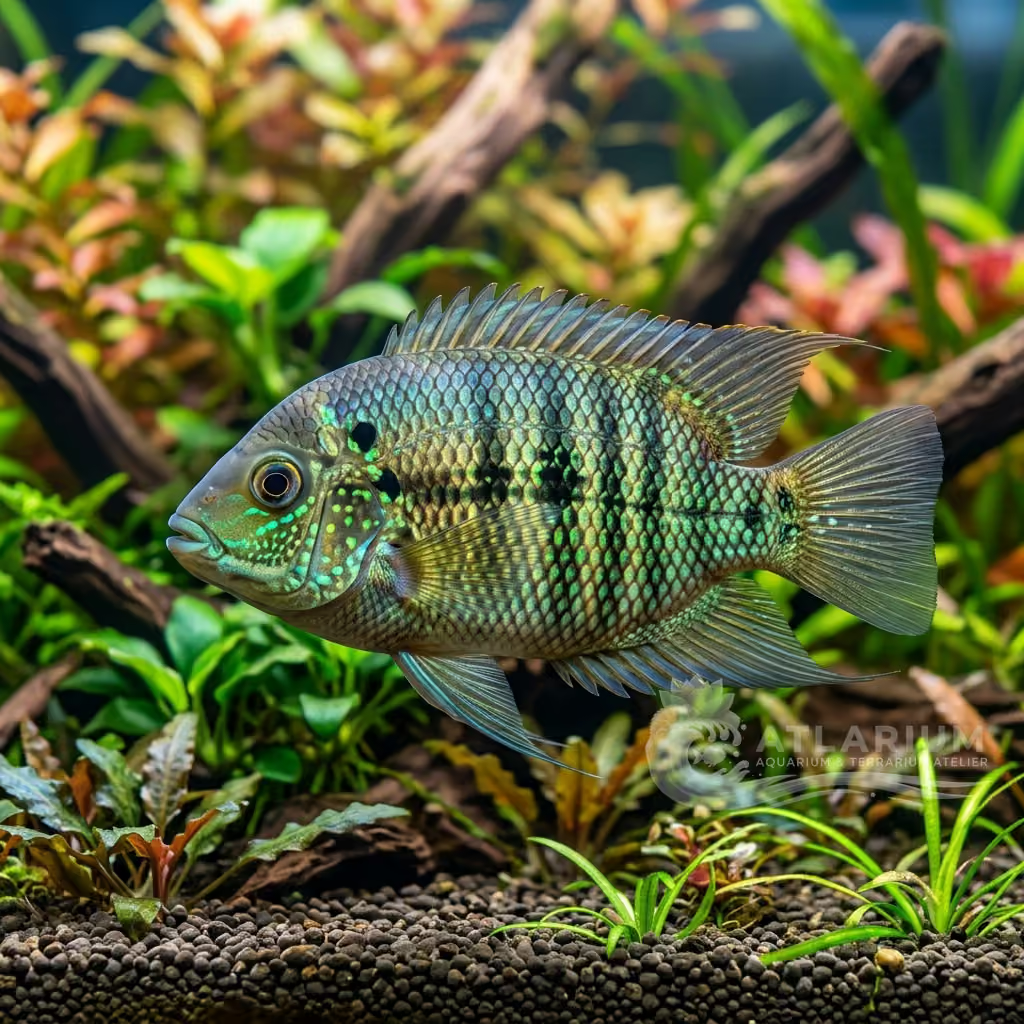
Coloration and Sexual Dimorphism: Juveniles and adult females look like aquatic giraffes: a beautiful golden-yellow base color covered in massive, irregular dark olive-green blotches. As males mature and hit breeding age, a stunning transformation occurs: the yellow base fades slightly, the giraffe spots blur, and the ENTIRE HEAD (from snout to gills) turns a brilliant, metallic sapphire-blue. The top of the dorsal fin and the nose stripe remain a blazing sulfur-yellow.

Pflege, Zucht und Mitbewohner
Aquarium Setup: A true giant needing massive space. Minimum tank size is a 150-180 cm (5 to 6 foot) footprint (125-150 gallons). SWIMMING ROOM IS CRITICAL. The tank MUST have a fine sand substrate (to allow for their resting/ambush behavior safely) with heavy rock formations built only at the back or sides of the tank. Do not clutter the middle of the tank with rocks. Giant canister filters are mandatory.
Diet and Feeding: Dedicated Piscivore (Fish-eater). Unbelievably greedy. While they eat live feeder fish in the wild, DO NOT use feeder goldfish in captivity due to fatal parasite and fatty-liver risks. Feed them jumbo floating cichlid carnivore pellets, thick chunks of white fish, raw peeled shrimp, and krill. Be warned: they will splash violently at the surface during feeding time and out-compete smaller fish.
Water Quality: Requires strict Rift Lake water parameters. Must be hard and alkaline. pH 7.8-8.6. GH 10-20. Temp 24-28°C (75-82°F). Because of their massive, meat-heavy diet, ammonia spikes are a serious risk in under-filtered tanks. Weekly 50% water changes are crucial to prevent the blue coloration from turning dull grey.
Compatibility and Cohabitation: THE PREDATOR RULE: If a fish can physically fit into the Venustus's deceptively huge mouth, it will be eaten in the dark. Absolutely NO small Mbuna, tetras, or slender fish. Must be kept ONLY in a community of large, robust Malawi Haps and Peacocks (Frontosa, Blue Dolphins, Dimidiochromis) that are 5+ inches long. Keep as a harem (1 male to 3+ females). If you put two adult males in a 4-foot tank, the dominant one will relentlessly batter the other to death.
Aquarium Breeding: Classic maternal mouthbrooders. Males will violently chase away all other fish, dig a massive pit in the sand, and court the female. She will pick up to 100 eggs in her mouth and hold them for 3-4 weeks. The fry are quite large when spit out.
Risks and Diseases: 1. VANISHING TANKMATES: The Venustus will slowly swallow any fish under 4 inches in the tank. 2. Fatal physical injuries to sub-dominant males in undersized tanks. 3. Tank fouling (ammonia spikes) if filtration is too weak for their massive carnivore bio-load.

Geografische Herkunft und Verbreitung
Endemic to Lake Malawi. They patrol the 'transition zones'—the deep water areas (15-20 meters) where the giant underwater cliffs and rocky rubble meet the vast expanses of soft sandy plains. They use the sand for their unique hunting strategies.
Ursprung
NordamerikaAfrika und MadagaskarOstasien

Fischprofil
- Temperament
- Semi-aggressive
- Aggressive, predatory, and highly active. They are the apex predator of their aquarium domain and act accordingly. They are not suitable for beginners or standard community setups.
- Diät
- Omnivore
- A renowned ambush predator that requires a highly carnivorous diet. Feed them a mix of large cichlid pellets, chopped prawn, and frozen silversides. They should not be fed terrestrial mammalian meat, which can cause severe digestive issues.
- Lebenserwartung
- 8-12 years
- Erwachsenengröße
- 25 cm
- Geschlechterverhältnis
- Harem
- Should be kept in a harem of one male to multiple females to disperse the male's aggressive mating behavior. Two males in the same tank will fight relentlessly until one is eliminated. Females are generally peaceful towards each other.
- Fütterungsfrequenz
- Twice daily
- Adults require feeding once a day or every other day with substantial portions. Juveniles can be fed twice daily to support rapid growth. Ensure no food is left rotting at the bottom.
- Bioload
- Medium to High
- A heavy waste producer due to its large adult size and protein-heavy diet. Over-filtration is absolutely essential for this species. Water parameters must be strictly monitored to prevent rapid deterioration.
- Fluss
- Stagnant
- Thrives in well-oxygenated water with a strong current. Powerheads are highly recommended to simulate their natural environment and keep waste suspended for filtration. They enjoy swimming directly against the current at times.
- Sprungrisiko
- Yes
- Very prone to jumping, especially when chasing prey or being chased by a dominant male. A heavy, secure lid is mandatory. They can easily knock off light, unsecured plastic lids.
- Reproduktion
- Oviparous
- A maternal mouthbrooder where the female incubates the eggs for several weeks. Males display intense colors to attract females to their sandy spawning pit. Once released, the fry are self-sufficient and require tiny protein-rich foods.
- Kompatibilität & Tankkameraden
- Semi-aggressive
- Can only be kept with other large, aggressive Malawian cichlids. Any fish smaller than half its size will eventually be viewed as a meal. Fast-swimming Haps and Peacocks make the best tank mates.
- Tankfüllstand
- All levels
- They utilize all areas of the tank but spend a lot of time near the sand bed hunting. They need massive amounts of open swimming space. Rockwork should be limited to the edges to provide hiding spots without restricting movement.

Wissenschaftliche Modelle & Parameter
FishBase
Zugang zu den offiziellen wissenschaftlichen Daten der Art
FishBase v25.04Daten synchronisiert am: 15.06.2026
- Trophäenniveau
- 4,2 ± 0,73 se
- Belastbarkeit
- Mittel (1,4 - 4,4 Jahre)
- Phylogenetische Einzigartigkeit (PD50)
- 0.5312
- Bayessche Längen-Gewichts-Beziehung
- a = 0.01445, b = 2.99
- AnfälligkeitGeringe Anfälligkeit (15 / 100)

Verwandte Arten
Empfehlungen gruppiert nach nahen Verwandten, Auswahl von Begleitern und ähnlicher Betreuung.