SüßwasserEinfach
©AI Generated·Proprietary
Neolamprologus brichardi — Fairy Cichlid / Princess of Burundi

Fairy Cichlid / Princess of Burundi

Neolamprologus brichardi

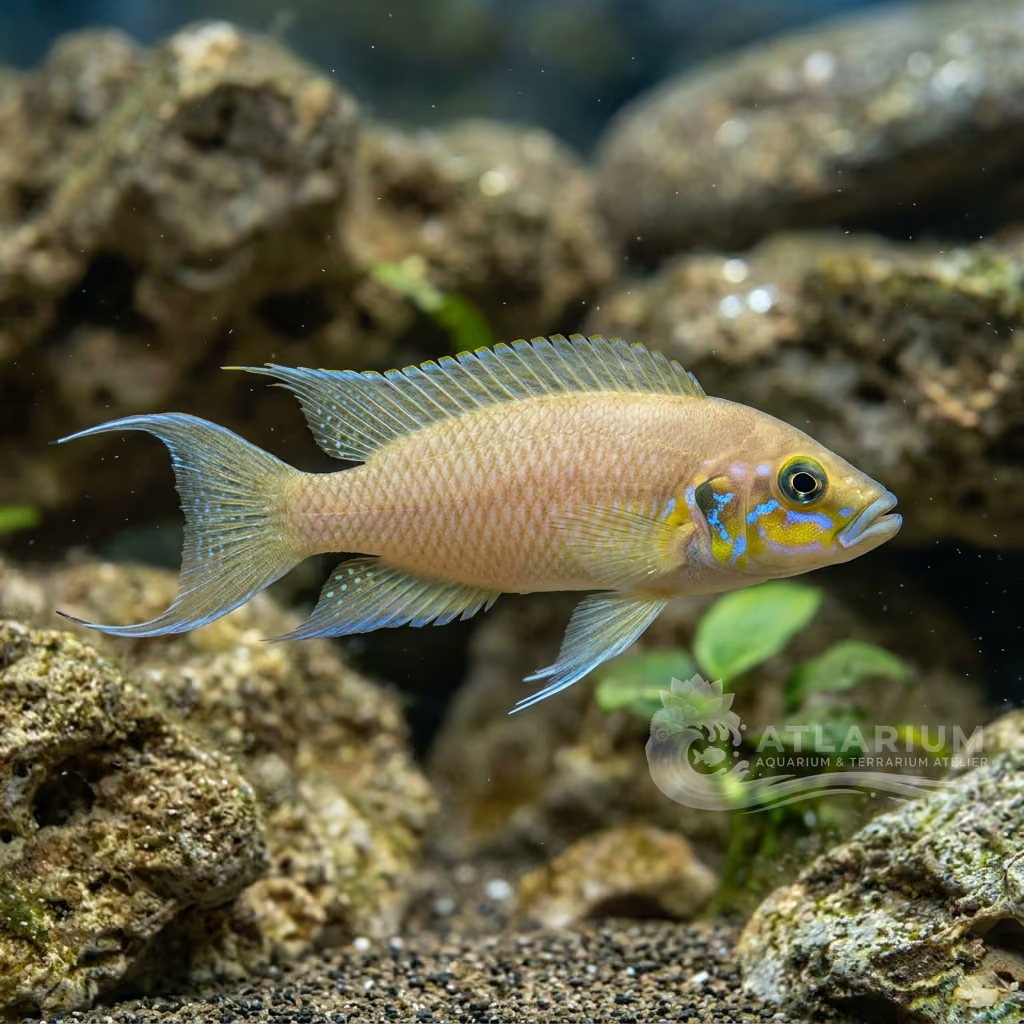
The 'Eusocial' Masterpiece of Lake Tanganyika (10 cm / 4 inches). Exquisitely elegant, pale sand-colored fish with piercing blue eyes, famous for possessing incredibly long, flowing white filaments trailing from every fin. More importantly, they form intense 'Dynasties': older sibling generations refuse to leave the cave and instead act as a massive private army to protect and raise their tiny new brothers and sisters.

Wassertemperatur

24 - 28 °C

pH-Wert

8 - 9

Wassertyp

Süßwasser

Tankfüllstand

Unten

Erwachsenengröße

10 cm

Mindesttankvolumen

>= 100 L

Mindestgruppe

>= 1

GH

10 - 25 dGH

KH

5 - 12 dKH

TDS

200 - 495 ppm

Leitfähigkeit

313 - 773 uS/cm

Artbeschreibung

Geographical Origin and Habitat: Endemic to the rocky shorelines of Lake Tanganyika (notably around the Burundi coast). They congregate heavily along massive vertical underwater cliffs and steep rocky rubble fields, rarely straying from the complex safety of the dark rock crevices.
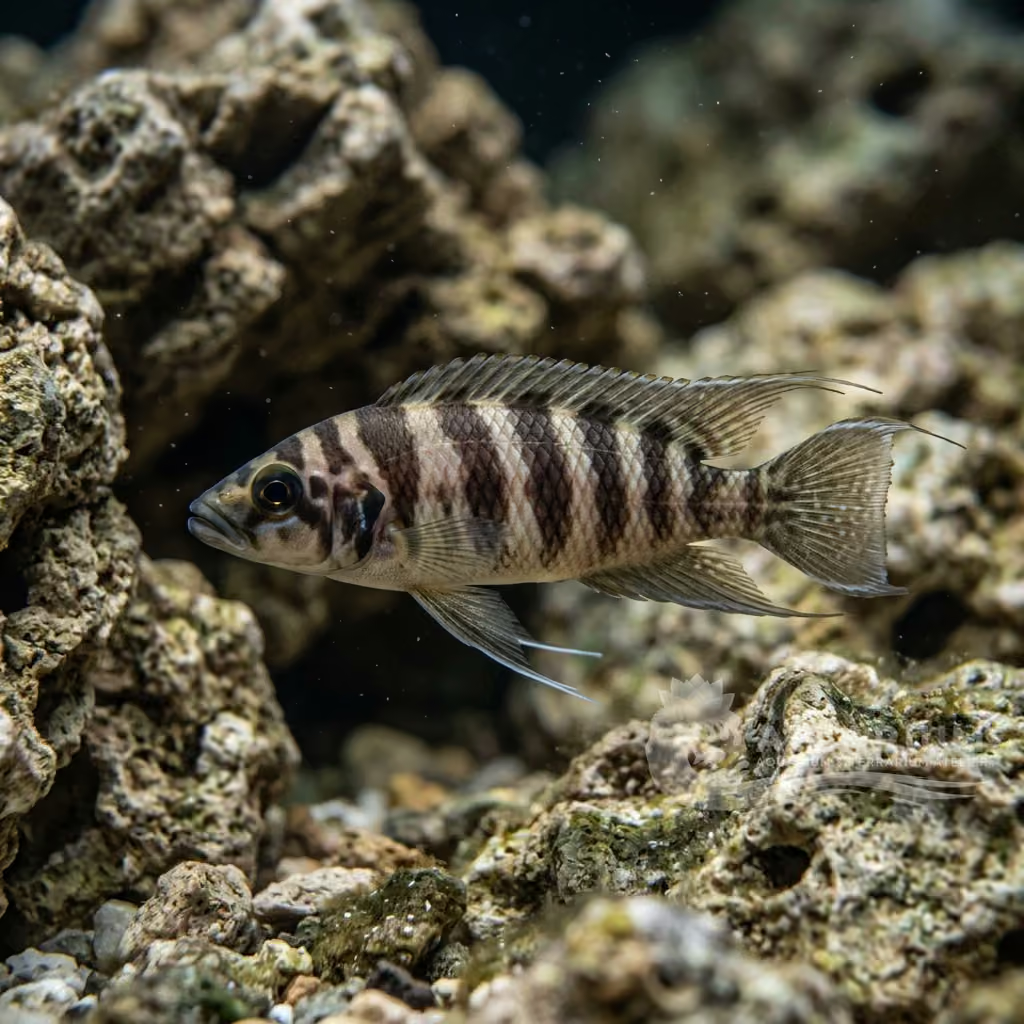
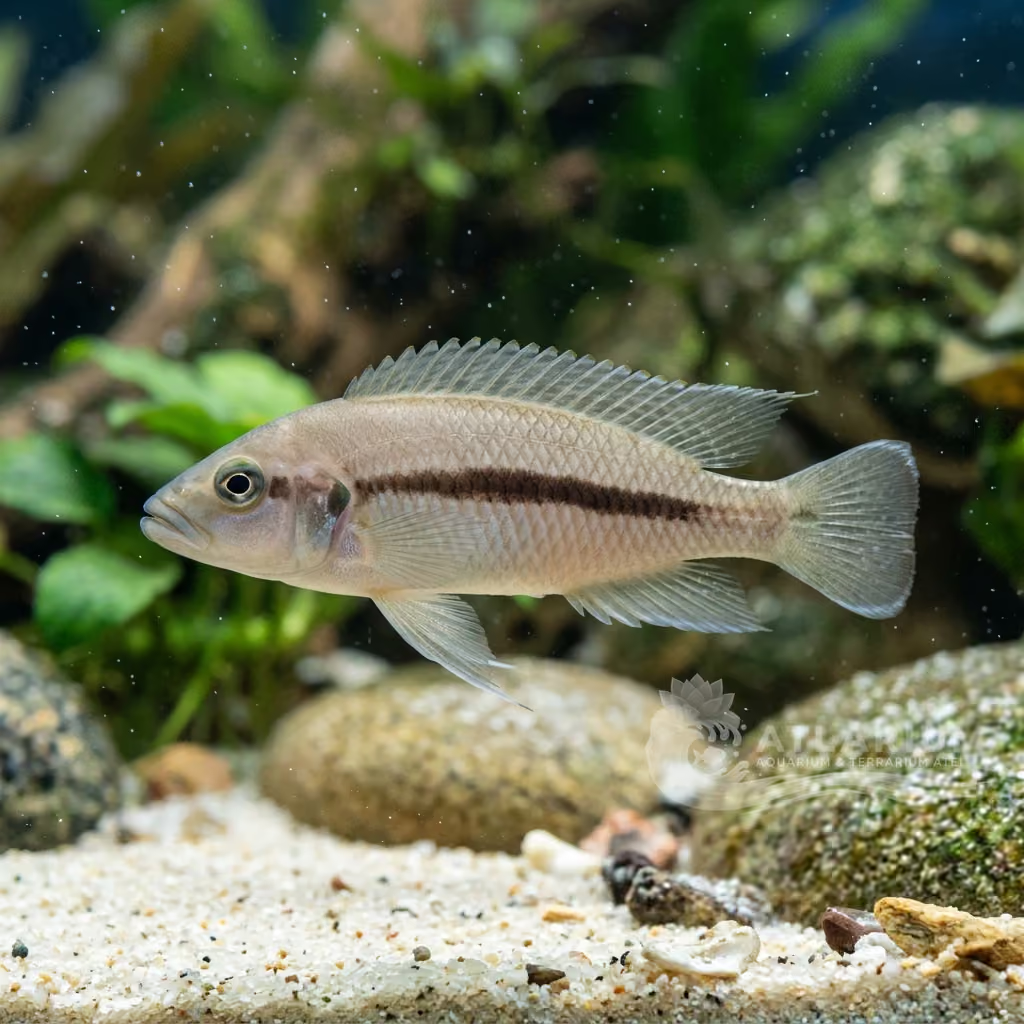
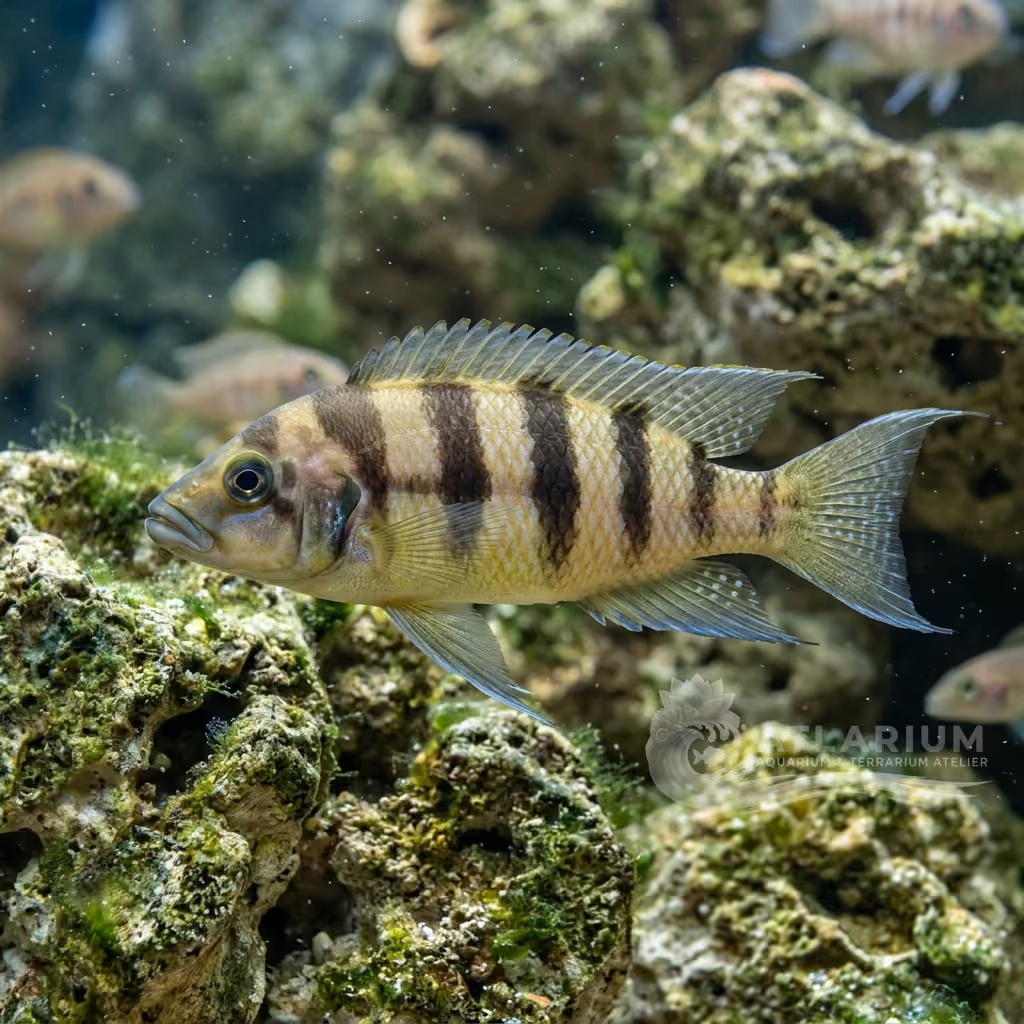
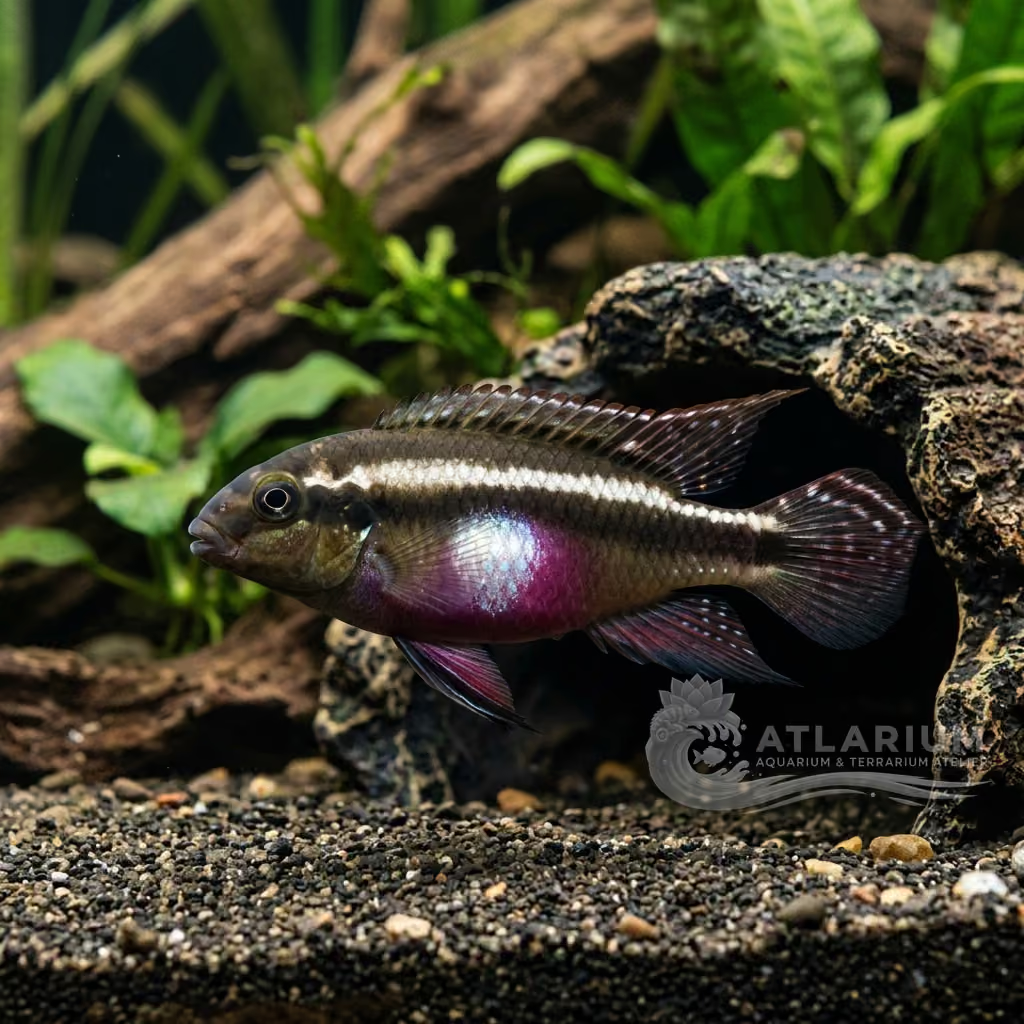
Taxonomy and Morphology: A highly elongated, slender rock-dwelling cichlid. Maxing out around 9-10 cm (3.5 - 4 inches). Its alternative name, the 'Fairy Cichlid', perfectly describes its fins: the tail is deeply forked (lyretail), and every single point on its dorsal, anal, and tail fins elongates into spectacular, graceful, long white thread-like filaments that trail beautifully behind it like a bride's train. Its mouth is pointed and upturned for grabbing zooplankton from the water column.
Social Behavior: TRUE EUSOCIALITY. They are the 'Ants or Wolves' of the aquarium. The most fascinating family dynamic of any freshwater fish. When an Alpha male and female pair off and breed, the resulting babies grow up. INSTEAD of the parents banishing them (like 99% of other cichlids), the older children stay at home and become 'Helpers'. When the parents breed again, this massive army of older siblings aggressively guards the cave and cares for the new fry. The tank rapidly turns into a massive, impenetrable, multi-generational fortress of dozens of fish working perfectly together to slaughter any intruders.
Coloration and Sexual Dimorphism: Delicate, pale, and incredibly refined compared to the loud neon colors of other African lakes. The body is a smooth, soft, dusty sand/cream color, often glowing with a pale rose or blush-pink hue under good lighting. The eyes are an intense, glowing icy-blue. The unmistakable signature is the 'Facial Mask': a dark, sharp 'V' or 'Y' shaped chevron marking located right behind the eye on the gill cover (operculum), accented with a brilliant yellow dash. Males and females look totally identical to the naked eye. In very old dominant males, the tail filaments can grow phenomenally long, trailing inches behind them.

Pflege, Zucht und Mitbewohner

Aquarium Setup: A 80-100 cm (30-40 inch / 30-40 gallon) tank is the minimum to handle a booming dynasty. THE ROCK WALL IS MANDATORY. You must stack dozens of large slate, lava, or limestone rocks to the very top of the water line to create massive, dark, interconnected caves. Leave the entire front of the tank as open swimming space (with fine sand). They will patrol the open water but instantly bolt backward into the rock wall if scared.
Diet and Feeding: Micro-Predator / Zooplankton feeder. In the wild, they hover near their rocks and snap tiny bugs out of the water column. Do not feed them large carnivore pellets; their mouths are too small. Feed ultra-premium, finely crushed flakes or micro-pellets. To encourage massive breeding and spectacular fin growth, heavily supplement their diet with frozen or live Baby Brine Shrimp (nauplii), Daphnia, and Cyclops. They will frenzy and coordinate feeding runs as a family.
Water Quality: African Rift Lake chemistry is required. Flawless, hard, highly alkaline water. pH 8.0-9.0. High GH and KH (use crushed coral). Temp 24-27°C (75-80°F). They are built like tanks and are incredibly resistant to disease, but if nitrates spike above 40ppm due to massive overpopulation, the colony will suddenly crash and die off rapidly. Strong oxygenation is essential.
Compatibility and Cohabitation: THE 'SPECIES TANK' IS THE ONLY WAY. Never throw a pair of Brichardi into a random 'Mixed African Cichlid' tank (Mbunas and Peacocks will stress them, or the Brichardi army will murder the other fish). Keep them exclusively by themselves (just start with 5 or 6 juveniles and wait for them to form a colony). If you must mix them in huge tanks (150cm+), only mix them with fast, upper-water Tanganyikan Sardine Cichlids (Cyprichromis). NEVER, EVER put bottom feeders like Plecos or Corydoras in the tank; the Brichardi army will relentlessly attack their eyes until they are dead.
Aquarium Breeding: Unstoppable Cave Spawners (not mouthbrooders). Once the Alpha pair is established, they lay eggs deep inside the darkest rock crevice. You will never see the mating. Weeks later, you'll see a cloud of 50 tiny white fry hovering near the rock. Do not intervene. The survival rate is nearly 100% because the massive army of older siblings will violently slaughter anything that approaches the babies. It is one of the greatest sights in the aquarium hobby to watch 4 generations of a family working together.
Risks and Diseases: 1. POPULATION BOMB (Tank Crash): They breed so prolifically and perfectly that in two years, your tank will contain 100 fish. If you do not regularly sell or trade the offspring, the tank will suddenly crash from extreme ammonia and lack of oxygen, killing them all overnight. 2. Sibling murder: Sometimes, a massive colony will mysteriously 'turn' on a single sibling and exile them to the top corner to die. 3. Massacre of any non-Tanganyikan fish thrown into their territory.

Geografische Herkunft und Verbreitung

Endemic to the rocky shorelines of Lake Tanganyika (notably around the Burundi coast). They congregate heavily along massive vertical underwater cliffs and steep rocky rubble fields, rarely straying from the complex safety of the dark rock crevices.

Ursprung

NordamerikaAfrika und Madagaskar

Fischprofil

Temperament
Semi-aggressive
They exhibit a fascinating combination of highly cooperative behavior within their colony and extreme aggression towards outsiders. They are completely intolerant of other species entering their territory and will attack relentlessly. Within their own family structure, they are cooperative and highly social.
Diät
Omnivore
They are omnivorous in the wild, feeding on small invertebrates, zooplankton, and algae. In the aquarium, they thrive on a high-quality varied diet of cichlid pellets, flakes, and frozen foods. Regular offerings of brine shrimp, mysis shrimp, and spirulina will keep them in peak condition.
Lebenserwartung
5-8 years
Erwachsenengröße
10 cm
Geschlechterverhältnis
Pair
It is best to start with a small group of juveniles and allow them to pair off naturally. Once a dominant pair forms, they will become the alpha breeders of the colony. The exact sex ratio becomes less critical as the colony grows and establishes its own social hierarchy.
Fütterungsfrequenz
Twice daily
Feed them small amounts one to two times daily to maintain their health and energy levels. Ensure that the food is dispersed widely so all members of the colony get a share. Avoid overfeeding, as uneaten food will degrade the crucial water quality.
Bioload
Low to Medium
This cichlid produces a moderate bioload that can quickly escalate as they breed and form large colonies. Excellent filtration and regular water changes are essential to maintain the pristine water conditions they require. A colony tank will need robust biological and mechanical filtration.
Fluss
Stagnant
They enjoy a moderate water flow that mimics the rocky shorelines of Lake Tanganyika. Good circulation is important for oxygenation and to keep the rocky substrate free of detritus. The current should be steady but not overwhelmingly strong.
Sprungrisiko
Yes
While they typically stay near their rock formations, they can be skittish and may jump if spooked. Aggression within the colony can also drive weaker individuals towards the surface. A secure lid is necessary to prevent any fish from leaping out.
Reproduktion
Oviparous
They are famous for their unique colonial breeding behavior, where older siblings help raise the newest fry. They are substrate spawners that lay their eggs in rocky crevices or caves. Once a pair starts breeding, they will continuously produce generations that live together peacefully.
Kompatibilität & Tankkameraden
Species only
They are highly aggressive and fiercely territorial, especially when breeding. They are best kept in a species-only aquarium due to their habit of forming a massive, defensive colony. Any tank mates must be fast, robust, and capable of holding their own in a large Tanganyikan setup.
Tankfüllstand
Bottom
They primarily inhabit the middle and lower levels of the aquarium, always staying close to their rocky territories. They rely heavily on caves and crevices for security and breeding. They will actively patrol the areas surrounding their rockwork to defend against intruders.

Wissenschaftliche Modelle & Parameter

FishBase

Zugang zu den offiziellen wissenschaftlichen Daten der Art

FishBase v25.04Daten synchronisiert am: 15.06.2026
Trophäenniveau
3,4 ± 0,45 se
Belastbarkeit
Hoch (weniger als 15 Monate)
Phylogenetische Einzigartigkeit (PD50)
0.5
Bayessche Längen-Gewichts-Beziehung
a = 0.01445, b = 2.99
AnfälligkeitGeringe Anfälligkeit (10 / 100)