Água doceIntermediária
©AI Generated·Proprietary
Nothobranchius guentheri — Günther's notho (blue form)

Günther's notho (blue form) — Blau

Nothobranchius guentheri

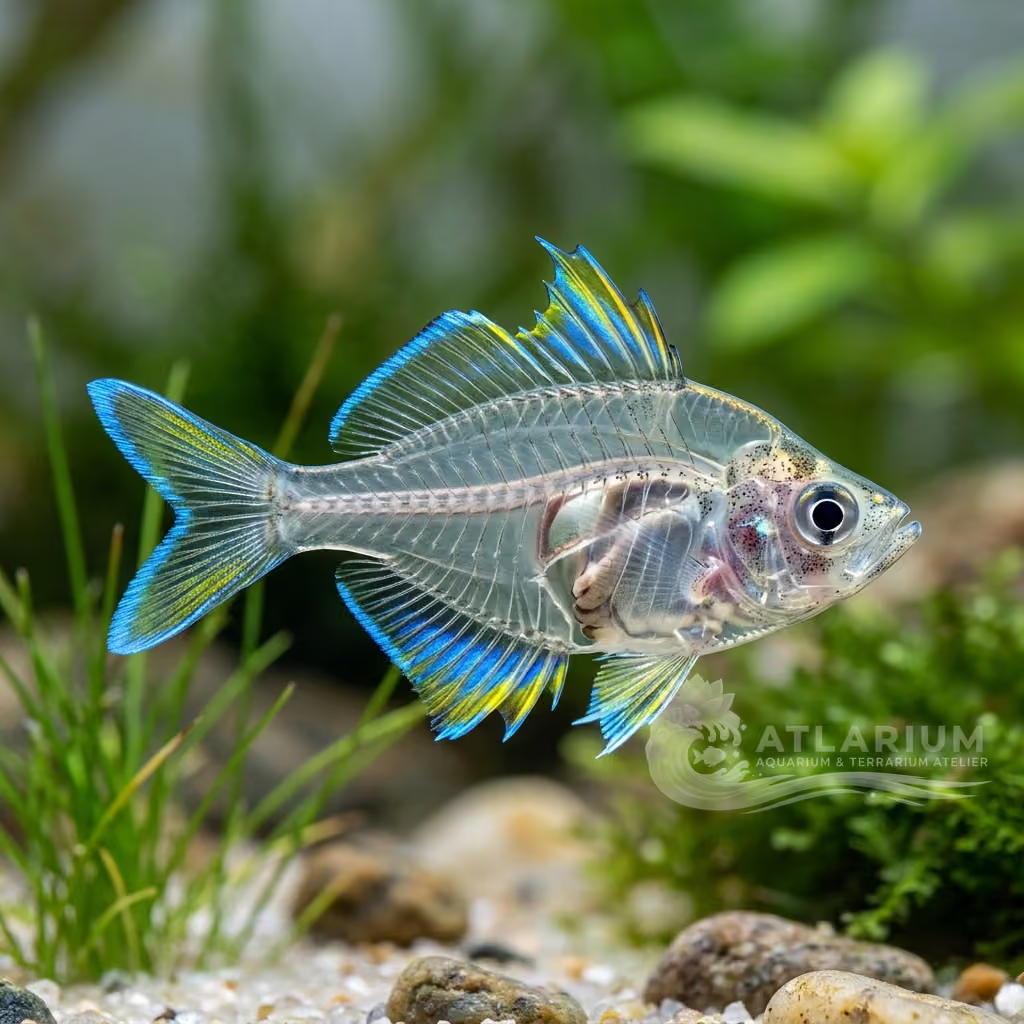
An annual killifish from Zanzibar, Tanzania, in the blue color form: the male sports a brilliant metallic blue body with a fan-shaped red-orange tail — a chromatic combination like a precious miniature. Like all annual Nothobranchius, life is short (6–12 months, up to 14–18 with optimal care) and breeding requires the full cycle of egg collection, dry peat incubation and rehydration. Sexual maturity in 4–6 weeks. Males combative with each other: one male with 2–3 females. Vulnerable to velvet disease (Oodinium). Live food essential.

Temperatura da água

0 - 30 °C

Valor de pH

6.5 - 7

Tipo de água

Água doce

Nível do tanque

Parte inferior e intermediária

Tamanho adulto

3,5 cm

Volume mínimo do tanque

>= 20 L

Grupo mínimo

>= 2

GH

0 - 30 dGH

KH

1 - 15 dKH

TDS

10 - 600 ppm

Condutividade

16 - 938 uS/cm

Descrição da espécie

Geographical Origin and Habitat: Endemic exclusively to the heavily localized coastal lowlands, isolated seasonal swamp systems, and ephemeral river plains of mainland Tanzania (and potentially the Zanzibar archipelago) in East Africa. Nothobranchius guentheri 'blau' (the selectively bred or naturally localized "Blue Form" of Günther's Killifish) natively colonizes intensely temporary, shallow rainwater depressions and mudholes. These micro-habitats are characterized by heavy organic load, high turbidity, dense marginal grasses, and a complete, absolute dry-out period during the seasonal drought.
Taxonomy and Morphology: Scientifically classified within the Nothobranchiidae family, it is an astonishingly vibrant, biologically fascinating, and specialized "annual" killifish. Morphologically, fully mature adult males reach roughly 4.5 to 5.5 centimeters (1.8-2.2 inches) in length, while females remain significantly smaller and notably plumper. It possesses the classic, deeply robust, highly compressed, and muscular body profile typical of the genus. Its absolute defining anatomical feature is an exceptionally massive, rounded dorsal fin and a large, fan-like tail evolved for sudden bursts of mating and combat speed.
Social Behavior: They are hyper-active, intensely territorial, and strictly temporary bottom-dwelling fish. Because they are biologically programmed for an incredibly short lifespan (often only 6-12 months total), their entire existence is dominated by an overwhelming, frantic drive to feed and spawn continuously. Males are intensely hyper-aggressive toward other males, engaging in constant, violent sparring that will end in death if confined. They strictly MUST be kept in a specialized "harem" setup: one spectacular male housed with 3 to 4 females to disperse his relentless breeding aggression.
Coloration and Sexual Dimorphism: Sexual dimorphism is spectacular, massive, and absolute. The 'blau' (blue) form is a breathtaking genetic variation where the typical red base is replaced by intensely glowing, deeply saturated metallic blue. Mature males are the indisputable stars: their entire body is an intense, iridescent sky-blue or dark sapphire, heavily overlaid with deep red or maroon edging on the scales. The dorsal and anal fins are stunningly patterned with dark red and yellow spots. Females are completely devoid of any color, exhibiting a perfectly uniform, pale grey-brown.

Cuidado, criação e companheiros de tanque

Aquarium Setup: The aquarium architecture MUST flawlessly accommodate their unique breeding biology and aggressive nature. A minimum 40-liter (10-gallon) dedicated species tank is required for a single male and his harem. The tank MUST feature significant line-of-sight breaks (like dense thickets of Java Fern or small driftwood) so females can escape the male's relentless pursuit. Crucially, because they are substrate spawners, the bottom MUST be completely covered in a deep layer of extremely soft, fine peat moss, which is an absolute biological requirement for preserving their eggs.
Diet and Feeding: They are highly specialized, intensely voracious micro-predators (carnivores) with an incredibly rapid metabolism (driven by their short annual lifespan). They are notoriously picky and will frequently reject commercial dry flakes or pellets. You MUST feed them a heavily varied, high-protein diet to fuel their relentless, continuous spawning. Daily, heavy offerings of live or high-quality frozen foods are absolutely mandatory: massive amounts of bloodworms, Daphnia, Artemia (brine shrimp), and mosquito larvae. Malnutrition will quickly halt breeding and lead to premature death.
Water Quality: Originating from temporary African rain pools, their water requirements differ completely from typical community fish. They thrive in warm tropical temperatures (23-28°C / 73-82°F). Crucially, they demand moderately soft to moderately hard water (GH 4-12) and a slightly acidic to neutral pH (6.5 - 7.5). They possess absolute zero tolerance for dissolved organic waste; rigorous weekly water changes are mandatory. The water flow MUST be extremely gentle; strong currents will violently exhaust them and completely prevent them from performing their delicate substrate-spawning dives.
Compatibility and Cohabitation: Compatibility is virtually non-existent for standard community setups. Due to their incredibly short lifespan, intense male-on-male aggression, hyper-aggressive breeding behavior, and specific requirement for a deep peat substrate, they MUST be kept exclusively in a dedicated, single-species breeding tank. They are NOT community fish. Housing multiple males in a small tank will result in lethal combat until only one remains. They should be kept strictly as one male to a harem of 3-4 females to prevent the females from being stressed to death.
Aquarium Breeding: Breeding is the entire purpose of keeping this species. They are "annual" killifish; the adults die when the pool dries, but the eggs survive encased in the baked mud. The male aggressively drives the female into the deep peat substrate, where they dive into the mud to deposit single, hard-shelled eggs. To hatch the fry, the aquarist MUST remove the peat, squeeze it damp-dry, seal it in a bag, and incubate it at room temperature for roughly 3-4 months before re-wetting it to trigger explosive hatching.
Risks and Diseases: The absolute greatest physical risk is lethal exhaustion and stress to the females caused by the male's relentless, hyper-aggressive mating drive; housing a single female with a male will result in her rapid death. A harem is strictly mandatory. The second major risk is lethal Velvet Disease (Oodinium), to which Nothobranchius species are uniquely and severely susceptible; adding a small amount of aquarium salt to the water is highly recommended. Finally, remember their lifespan is biologically fixed at roughly 6-12 months.

Origem e distribuição geográfica

Endemic exclusively to the heavily localized coastal lowlands, isolated seasonal swamp systems, and ephemeral river plains of mainland Tanzania (and potentially the Zanzibar archipelago) in East Africa. Nothobranchius guentheri 'blau' (the selectively bred or naturally localized "Blue Form" of Günther's Killifish) natively colonizes intensely temporary, shallow rainwater depressions and mudholes. These micro-habitats are characterized by heavy organic load, high turbidity, dense marginal grasses, and a complete, absolute dry-out period during the seasonal drought.

Origem

América Central e CaribeÁfrica e MadagascarLeste Asiático

Perfil de peixe

Temperamento
Aggressive
Peaceful to other species, but highly driven by reproduction. Males will spar by flaring their brilliant blue fins at one another. True damage is rare if the tank is appropriately sized with plenty of cover.
Dieta
Carnivore
An obligate micro-predator that thrives on live foods. Offer them daily servings of live brine shrimp nauplii, daphnia, and mosquito larvae. They generally reject flake or pellet foods entirely.
Expectativa de vida
1-1.5 years
Tamanho adulto
3.5 cm
Proporção sexual
Solitary
Keep one male with several females to distribute the male's intense breeding focus. Solitary females will quickly become exhausted and may perish. Dense plants or spawning mops provide necessary cover for resting females.
Frequência de alimentação
Twice daily
Feed two or three times a day to sustain their high metabolic rate. Proper nutrition is critical to achieving their intense blue coloration. Clean up any uneaten food immediately to preserve water parameters.
Carga biológica
Low
This stunning blue variant produces the same minimal bioload as the standard form. A well-maintained sponge filter provides perfect biological stability without excessive flow. Weekly partial water changes are crucial to their well-being.
Fluxo
Strong
Requires very slow-moving or completely stagnant water conditions. Strong filtration will quickly stress them out and cause them to hide. Air-driven sponge filters are the universally accepted standard for keeping them.
Risco de salto
Yes
Extremely prone to jumping, often leaping at any gap when the lights turn on or off. A tight lid is the only way to ensure they remain in the tank. Check for gaps around all tank equipment.
Reprodução
Oviparous
They exhibit the fascinating annual breeding strategy, requiring a substrate of peat moss to bury their eggs. The peat is harvested, partially dried, and stored for 3 to 5 months. Reintroducing the peat to fresh water mimics the rainy season and triggers hatching.
Compatibilidade e companheiros de tanque
With caution
Should be kept in a dedicated species tank to prevent cross-breeding with other Nothobranchius variants. They are peaceful towards other small species but are easily outcompeted at feeding time. Mixing variants will result in muddy, undesirable hybrid coloration.
Nível do tanque
Middle/Bottom
Mostly active in the lower third of the water column, staying close to the substrate. They will enthusiastically dive into peat moss to deposit eggs. Floating plants will encourage them to utilize the middle water levels.

Modelos e parâmetros científicos

FishBase

Acesso aos dados científicos oficiais da espécie

FishBase v25.04Dados sincronizados em: 15/06/2026
Nível trófico
3,2 ± 0,4 se
Resiliência
Alta (menos de 15 meses)
Unicidade filogenética (PD50)
0.5
Relação bayesiana comprimento-peso
a = 0.01096, b = 2.94
VulnerabilidadeVulnerabilidade baixa (10 / 100)