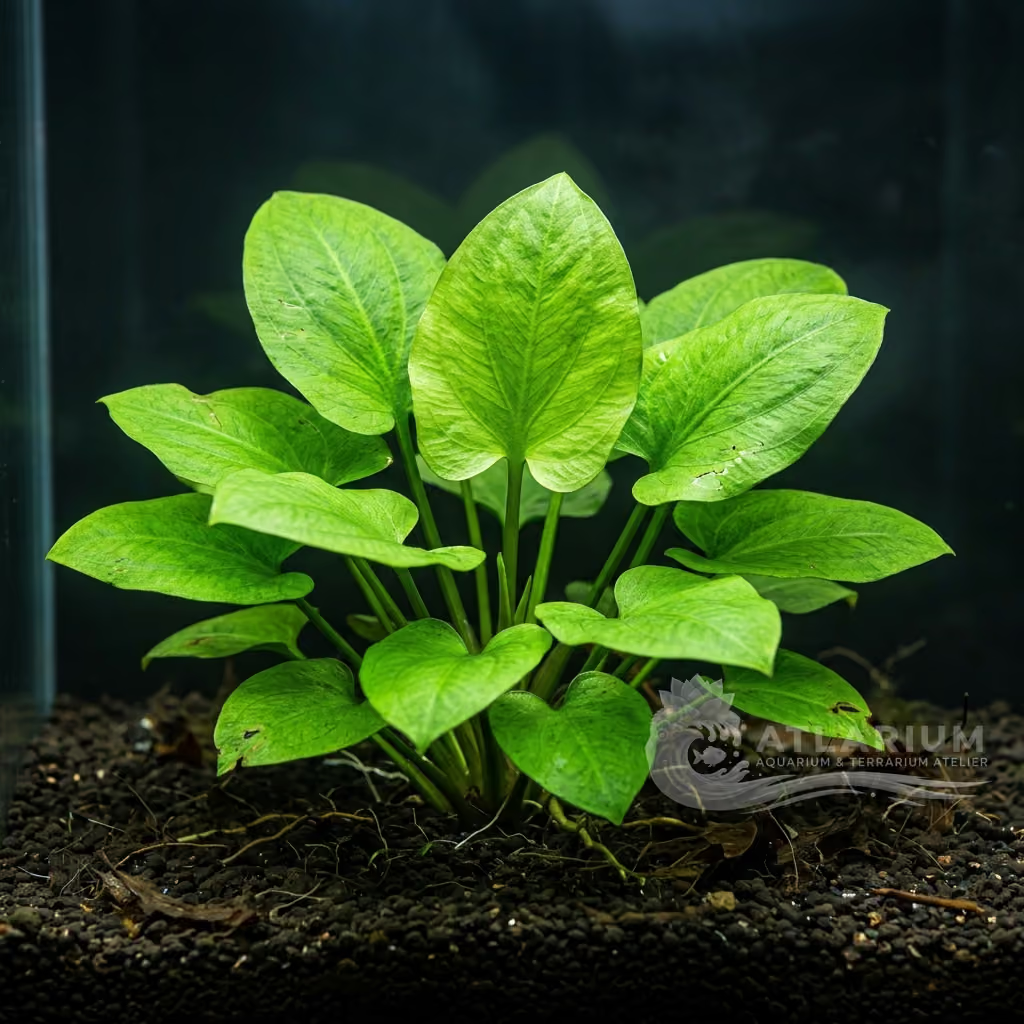
Anubias "nangi"
Anubias "nangi"
Artificial hybrid combining nana and gilletii traits. Obligate low-light epiphyte requiring no CO2, ideal for shaded foreground or midground areas.
Temperatura da água
12 - 30 °C
Valor de pH
5 - 8
Tipo de água
Água doce
Luz
Da bassa ad alta
CO2
Baixa
Altura esperada
15 cm
Largura esperada
15 cm
GH
4 - 20 dGH
KH
0 - 15 dKH

Descrição da espécie
Geographical Origin and Habitat: Anubias "nangi" is a true artificial hybrid that does not exist anywhere in the wild. It was explicitly created and stabilized in the legendary aquatic plant laboratories of Florida Aquatic Nurseries by crossing two distinct species: Anubias barteri var. nana and Anubias gilletii. Its genetic parents, however, both originate from the deeply shaded, fast-flowing tropical jungle streams of West and Central Africa. While it is a laboratory creation, "nangi" inherited all of the profound rheophytic survival adaptations of its wild African ancestors, perfectly coding it to survive in torrential currents and extreme low-light environments.
Taxonomy & Genetics: This is one of the very few commercially successful and officially recognized Anubias hybrids in the global aquarium trade. The portmanteau name "nangi" is derived directly from its parentage ("nan" from nana, "gi" from gilletii). The goal of the hybridization was to combine the indestructible, compact creeping nature and hardiness of Anubias nana with the striking, elongated, spear-like leaf shape of Anubias gilletii. The result is a genetically stable, robust epiphyte that offers a unique architectural silhouette not found in standard varieties.
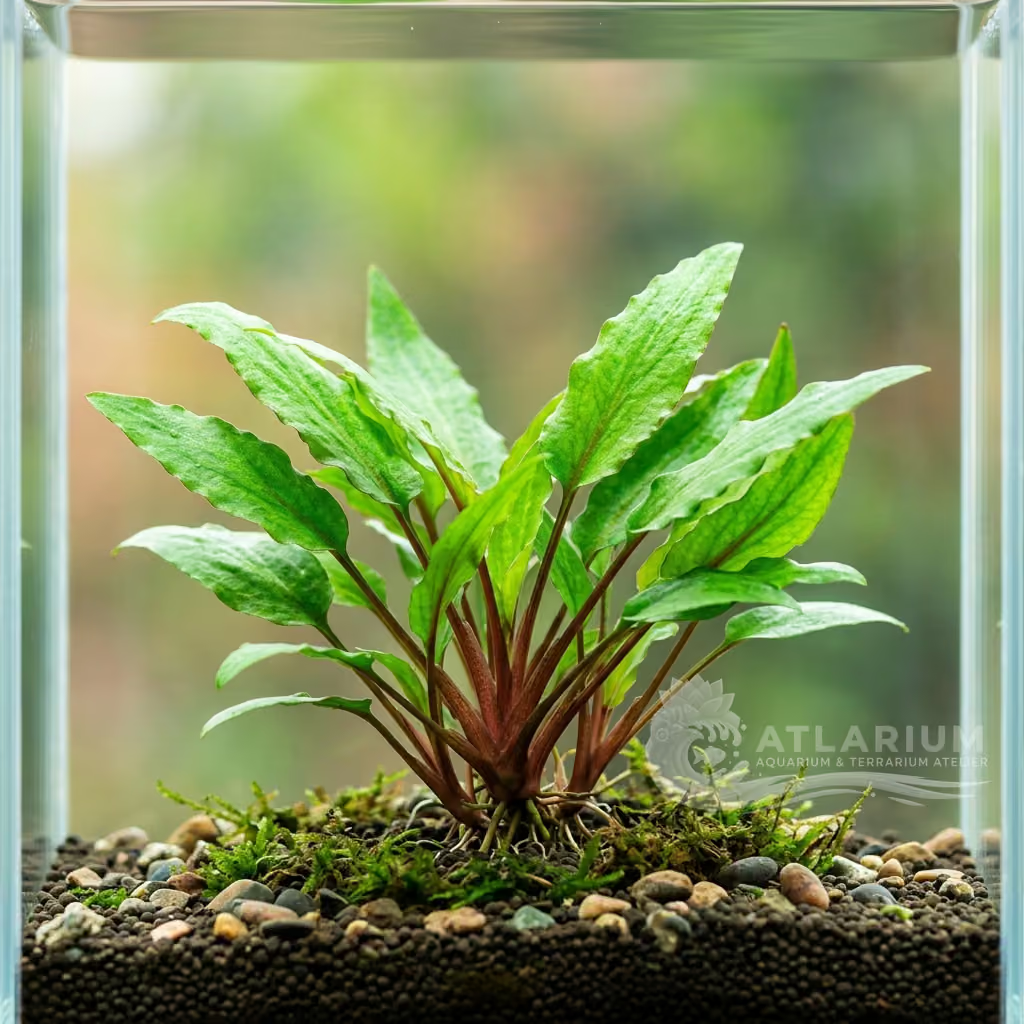
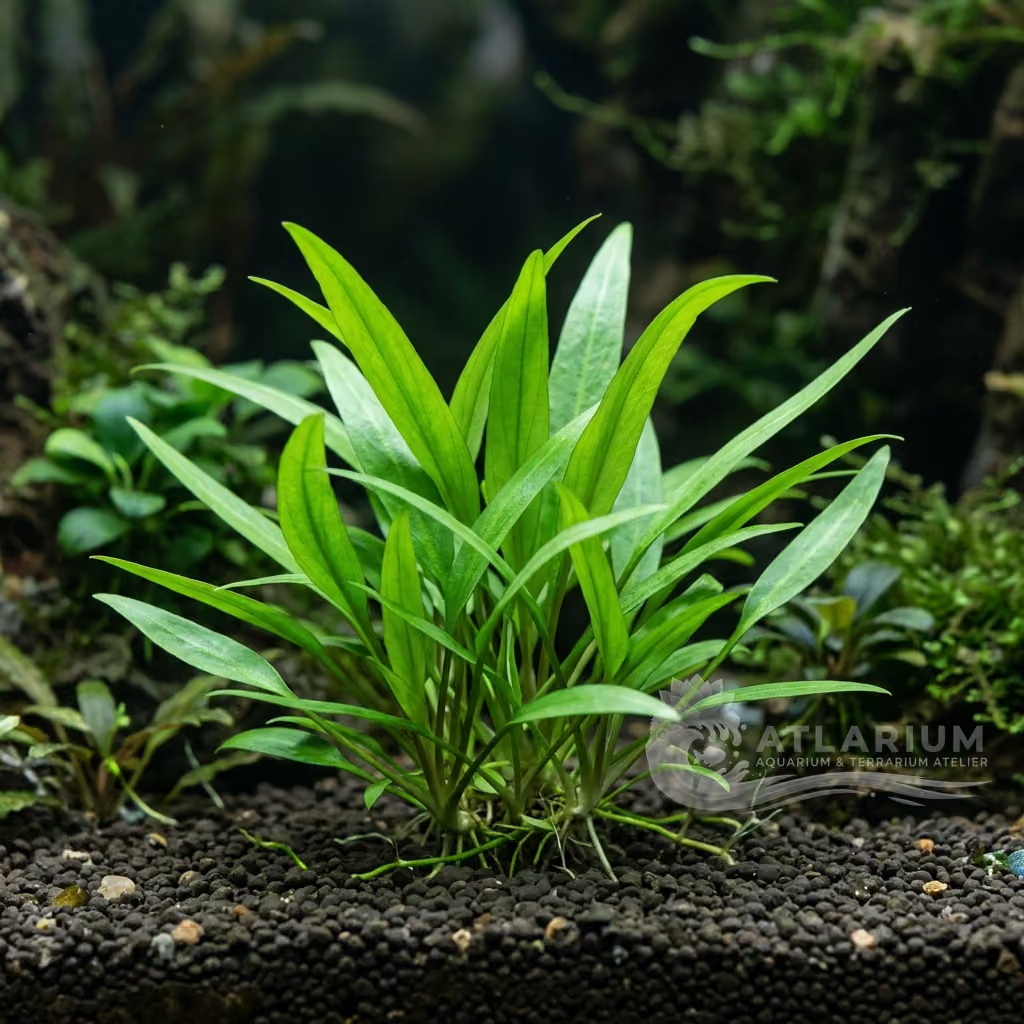
Physical Structure: The structural architecture of Anubias "nangi" is highly elegant and distinctly horizontal. It features a thick, rock-hard creeping horizontal rhizome identical to Anubias nana. However, the rigid stems that emerge from this rhizome are noticeably longer and tend to sweep outwards at a dramatic, low angle rather than growing strictly vertical. It supports broad, distinctly lanceolate (spear-shaped) leaves that bridge the visual gap between small nano-epiphytes and massive, towering background Anubias.
Color & Texture: The deeply veined, spear-shaped leaves are colored a solid, intensely opaque, and very dark emerald green. Like its parents, the texture of "nangi" is notoriously brutal and armor-like. The leaves are phenomenally thick, highly rigid, and intensely coriaceous (leathery), feeling almost exactly like stiff plastic or heavy cardboard to the touch. This extreme cellular toughness makes the plant completely indestructible and entirely immune to being grazed upon by herbivorous fish or large snails.

Cuidado, criação e companheiros de tanque
Lighting & CO2: It is strictly an obligate low-light epiphyte. It requires absolutely no CO2 injection to survive and thrive. Exposing this slow-growing hybrid to intense, high-energy LED lighting or direct sun is a catastrophic error. Because the plant's metabolism is so slow, it cannot physically process high amounts of light energy. The dark, sweeping leaves will act as static solar panels and will be instantly and permanently smothered in suffocating crusts of Black Beard Algae (BBA). It must be kept deeply shaded in the aquarium.
Nutrition & Substrate: This elegant hybrid feeds exclusively from the water column. The creeping rhizome MUST NEVER BE BURIED under gravel, sand, or aquasoil under any circumstances. If the rhizome is suffocated by substrate, the entire plant will rapidly rot, turn to toxic mush, and die. It requires absolutely no substrate to survive. Instead, it absorbs all essential macro and micro nutrients directly through its leaves and thick, wire-like root system via comprehensive liquid fertilization dosed directly into the water.
Water Chemistry: It is a virtually unkillable survivor. It thrives effortlessly in standard tropical temperatures (22-28°C) but easily tolerates cooler water. Most importantly, it completely ignores wild, chaotic fluctuations in pH, severe ammonia spikes, or extreme water hardness. It can survive in soft, highly acidic blackwater biotopes just as easily as it thrives in the hard, liquid rock of an African Cichlid setup. It is the ultimate bulletproof plant for unstable water conditions and beginner aquarists.
Space Management & Placement: Because of its distinct sweeping, horizontal growth habit and moderately large, spear-shaped leaves, it is the perfect transitional epiphyte. It must be aggressively attached—using cyanoacrylate superglue or nylon thread—to a piece of driftwood or porous rock in the midground of the aquarium. It bridges the visual gap between tiny foreground epiphytes and massive background plants. It is generally too large for nano tanks unless used as a solitary centerpiece.
Pruning: Pruning is almost non-existent due to its incredibly slow metabolic growth rate. To artificially propagate the plant, use heavy, sharp pruning shears to cut the massive, woody rhizome completely in half, ensuring both halves retain healthy roots. To maintain the visual purity of the display, occasionally remove any ancient, yellowing, or heavily algae-covered leaves by cutting the thick stem as close to the main rhizome as physically possible.
Risks & Diseases: The plant suffers from virtually no biological diseases, melting, or nutritional deficiencies. Its glacial growth rate and broad, dark leaf surface area make it the absolute perfect, unavoidable host for Green Spot Algae (GSA) and Black Beard Algae (BBA). You MUST keep the aquarium water exceptionally clean, keep organics low, and most importantly, keep the plant heavily shaded by taller plants or overhanging hardscape to prevent algae colonization.

Origem e distribuição geográfica
Anubias "nangi" is a true artificial hybrid that does not exist anywhere in the wild. It was explicitly created and stabilized in the legendary aquatic plant laboratories of Florida Aquatic Nurseries by crossing two distinct species: Anubias barteri var. nana and Anubias gilletii. Its genetic parents, however, both originate from the deeply shaded, fast-flowing tropical jungle streams of West and Central Africa. While it is a laboratory creation, "nangi" inherited all of the profound rheophytic survival adaptations of its wild African ancestors, perfectly coding it to survive in torrential currents and extreme low-light environments.
Origem
África e Madagascar

Perfil da planta
- Posicionamento
- Plano intermediário
- This plant is best placed attached to hardscape such as driftwood or rocks rather than buried in the substrate. It works wonderfully in the midground where its broad leaves can create a natural transition. Burying the rhizome will inevitably lead to rot and plant loss.
- Forma botânica
- Rizoma
- It features a creeping rhizome from which distinct, slightly wavy, dark green leaves emerge. The leaf shape is generally lanceolate, adding a sleek texture compared to rounder Anubias types. Its robust structure provides an excellent hiding spot for small fish and shrimp.
- Crescimento
- Lenta
- As with most Anubias species, Anubias nangi grows at a noticeably slow pace. This slow growth makes it very manageable and reduces the need for frequent maintenance. However, it also means that algae can easily establish on the older leaves if lighting is too intense.
- Substrato
- Nenhuma
- Anubias are epiphytes. They thrive attached to hardscape like rocks or driftwood rather than being buried in substrate. Their fleshy rhizomes must remain above the soil surface to prevent rot, while their roots will naturally anchor onto rough surfaces. They can absorb nutrients directly from the water column, meaning a nutrient-rich substrate is completely unnecessary for their success.
- Fertilização de coluna
- Recomendada
- Liquid fertilization is highly beneficial because the plant draws most of its nutrition through its leaves and water roots. A comprehensive liquid fertilizer applied weekly is usually sufficient for steady growth. Keep dosages moderate to prevent algae blooms on its slow-growing foliage.
- Fertilização radicular
- Nenhuma
- Root tabs are completely unnecessary if the plant is attached to hardscape as recommended. Even if planted in the substrate (with the rhizome exposed), it does not heavily rely on root feeding. Focus instead on water column nutrients for optimal health.
- Corte
- Ocasional
- Trimming is rarely needed due to its slow growth, but older, algae-covered or decaying leaves should be removed. Always cut the leaf stem as close to the rhizome as possible using sharp scissors. Pruning actually helps redirect the plant's energy into producing new, healthy growth.
- Propagação
- Divisão
- Propagation is straightforward and done by dividing the creeping rhizome. Ensure that each cut section has at least three to four healthy leaves to guarantee survival. The newly cut sections can be immediately tied or glued to a new piece of hardscape.
- Sensibilidade
- Moderada
- This plant is quite hardy but highly sensitive to being planted too deeply; the rhizome must remain above the substrate. It is also susceptible to black beard algae and green spot algae under high light. Otherwise, it tolerates a wide range of temperatures and pH levels without issue.
- Função de layout
- Epífita, Plano intermediário
- Anubias nangi serves as an excellent focal point or transitional plant in the midground. Its dark green, sturdy leaves provide a strong visual contrast against fine-leaved background plants. It also helps to soften the harsh edges of rocks and driftwood in the aquascape.

Galeria de imagens
Imagens licenciadas vinculadas à espécie ou, quando marcadas, ao táxon representativo mais próximo.

Espécies relacionadas
Recomendações agrupadas por parentes próximos, escolhas de acompanhantes e cuidados semelhantes.