African Water Fern
Bolbitis heudelotii
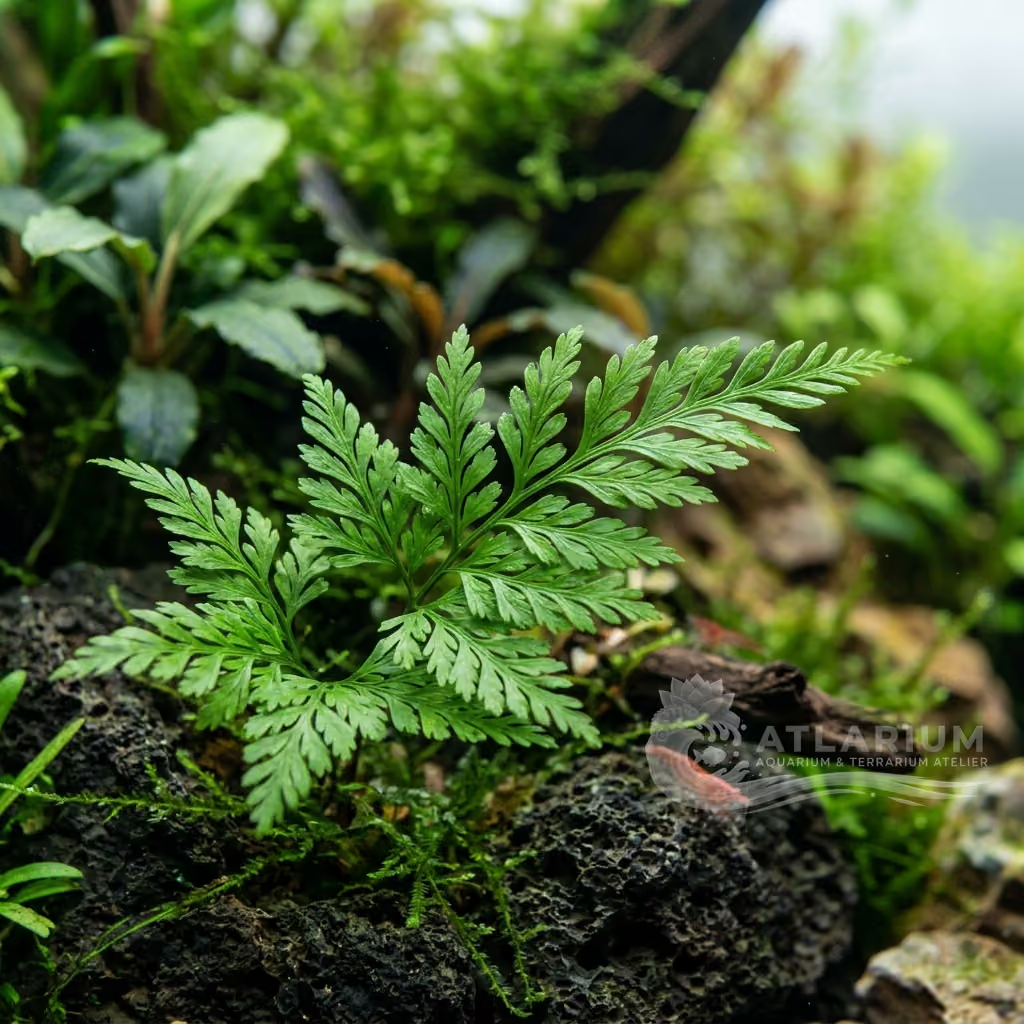
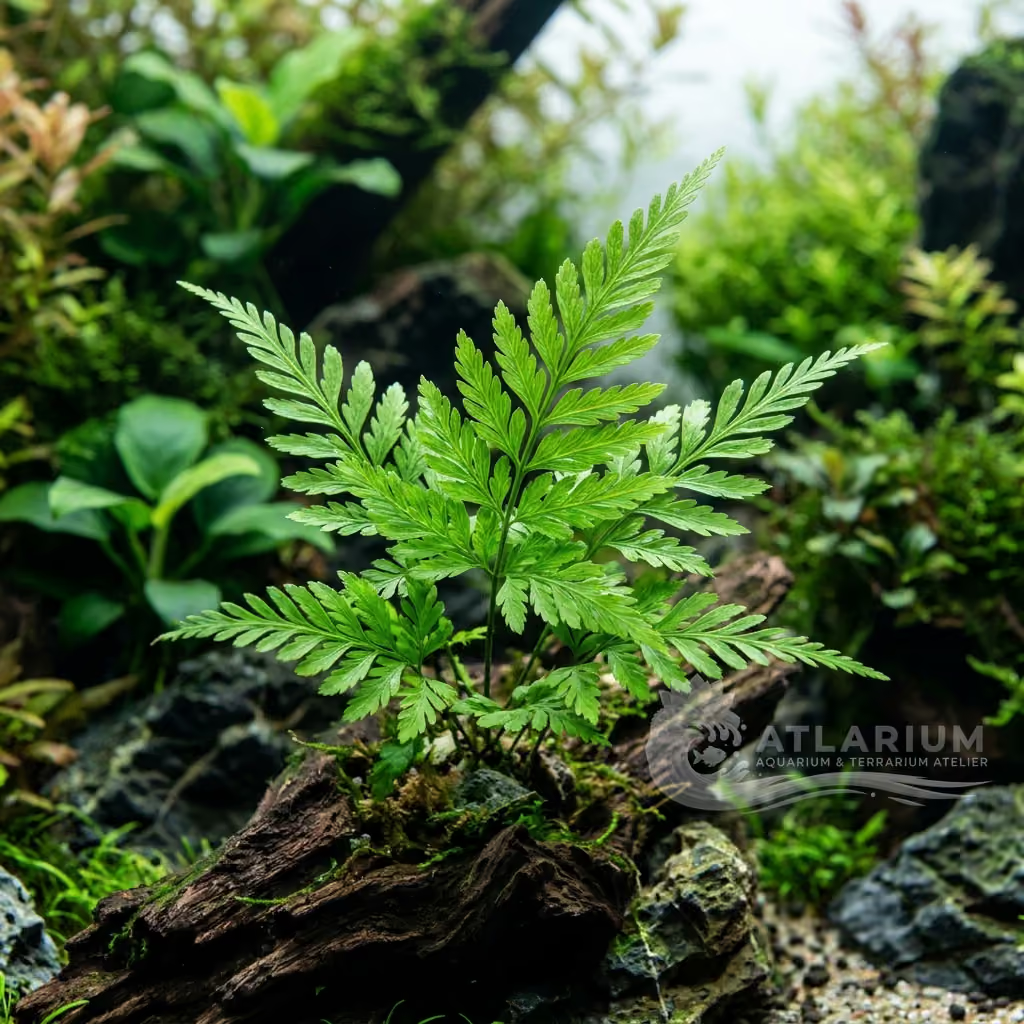
The African Water Fern (Epiphyte, up to 40 cm). One of the most elegant river plants in aquascaping. It features dark bottle-green, translucent pinnate fronds. It grows from a creeping rhizome that must be attached to the hardscape. It prefers cool waters, strong currents, and CO2 injection.
Temperatura da água
20 - 28 °C
Valor de pH
5 - 7
Tipo de água
Água doce
Luz
Bassa / Media (se troppo forte le foglie bruciano diventando nere)
CO2
Media (Aumenta incredibilmente il vigore e la trasparenza smeraldo)
Altura esperada
40 cm
Largura esperada
25 cm
GH
4 - 20 dGH
KH
2 - 15 dKH

Descrição da espécie
Geographical Origin and Habitat: Bolbitis heudelotii is native to the tropical regions of West and Central Africa, ranging from Senegal to Angola. It is a rheophilic aquatic fern that colonizes rocks and tree trunks along the banks of fast-flowing forest streams and rivers. In the wild, it lives in rapid, clear, and highly oxygenated waters, often subjected to seasonal water level fluctuations where it stays submerged during floods and emersed but constantly damp during dry periods.
Taxonomy & Genetics: Belonging to the Dryopteridaceae family, this aquatic fern was first described in the 19th century. The specific name heudelotii honors the French botanist Jean-Pierre Heudelot. Genetically, the species exhibits specialized adaptations for rheophilic aquatic life, featuring robust cells designed to withstand water turbulence.
Physical Structure: The plant develops from a dark, creeping, woody rhizome covered in small scales. Rigid, pinnate, alternate fronds rise from the rhizome on dark petioles. Extremely tenacious adventitious roots grow from the underside of the rhizome, anchoring the plant securely to porous rocks or driftwood.
Color & Texture: Healthy submerged fronds display a deep dark green, bottle green, or emerald color, with a characteristic translucent quality under water. The texture of the leaves is rigid, leathery, and almost glassy. The leaf margins are finely dissected and lobed, creating a complex and highly elegant visual texture similar to terrestrial forest ferns.

Cuidado, criação e companheiros de tanque
Lighting & CO2: It prefers low to moderate lighting; under too intense and direct light, the leaves tend to turn black or get covered in algae. CO2 injection is highly recommended: it accelerates growth (which is otherwise very slow) and gives the leaves their characteristic translucent emerald coloration.
Nutrition & Substrate: It is an epiphytic plant and must never be buried in sand or gravel to prevent rhizome rot. It should be anchored to driftwood or porous rocks. It requires regular liquid fertilization, particularly with a good supply of potassium and microelements.
Water Chemistry: It thrives in slightly acidic to neutral water (pH 5.0-7.0) and soft to moderately hard conditions. It prefers temperatures between 20 and 28°C (68-82°F). It requires excellent filtration and strong water flow, benefiting from clear, oxygen-rich waters.
Space Management & Placement: Optimal placement is in the background or in crevices of driftwood in the midground. Growing up to 30-40 cm, it needs space to spread. It should be placed in areas with good water circulation, preferably near the filter outlet.
Pruning: Propagation is achieved by dividing the rhizome. Cut the rhizome with a sharp tool into parts having at least 3 fronds and healthy roots. For aesthetic pruning, remove individual old or blackened leaves by cutting the petiole at the base.
Risks & Diseases: Rhizome rot if buried is the primary danger. In addition, in water that is too warm (above 28°C/82°F) or has poor circulation, the leaves can blacken and decay. Black Beard Algae (BBA) can colonize leaf margins if there are nutrient imbalances.

Origem e distribuição geográfica
Bolbitis heudelotii is native to the tropical regions of West and Central Africa, ranging from Senegal to Angola. It is a rheophilic aquatic fern that colonizes rocks and tree trunks along the banks of fast-flowing forest streams and rivers. In the wild, it lives in rapid, clear, and highly oxygenated waters, often subjected to seasonal water level fluctuations where it stays submerged during floods and emersed but constantly damp during dry periods.
Origem
África e Madagascar

Perfil da planta
- Posicionamento
- Fundo
- It is a true epiphyte that must be attached to driftwood or porous rocks. It is best placed in the midground or background where the water flow is moderately strong. Never bury the rhizome in the substrate, as this will quickly cause the entire plant to rot.
- Forma botânica
- Epífita
- This African water fern features a thick, dark green rhizome and deeply lobed, pinnate leaves that are somewhat translucent. The dark, bottle-green color of its foliage is distinct and highly prized in aquascaping. Submerged leaves are delicate and elegant, while emersed leaves are stiffer and more robust.
- Crescimento
- Lenta
- Its growth rate is typically slow, though it can become moderate under optimal conditions with CO2 and soft, slightly acidic water. It takes time to establish itself after being moved or newly planted. Once acclimated, it steadily produces large, impressive fronds.
- Substrato
- Nenhuma
- The African Water Fern (Bolbitis heudelotii) is a classic epiphyte that categorically rejects being buried in sand, gravel, or soil. Its thick, dark green rhizome must be attached to driftwood or porous rocks, where its strong adhesive roots can wrap securely around the surface. It relies exclusively on water column dosing for its nutritional intake, flourishing when exposed to a steady current that brings fresh dissolved minerals.
- Fertilização de coluna
- Recomendada
- It absorbs all its required nutrients directly from the water column. Regular dosing of a complete liquid fertilizer rich in potassium and micronutrients is highly beneficial. Iron supplementation can help maintain its characteristic deep green hue and prevent yellowing.
- Fertilização radicular
- Nenhuma
- Because it is an epiphyte, substrate fertilization is completely unnecessary and ineffective for this plant. It develops strong anchoring roots that grip hardscape surfaces but do not dig into soil. Focus your fertilization efforts entirely on the water column.
- Corte
- Ocasional
- Maintenance involves selectively trimming older, decaying, or algae-covered fronds as close to the rhizome as possible. Overgrown clumps can be aggressively pruned to encourage a fresh flush of new, clean leaves. Do not trim the tips of the leaves; always remove the entire leaf stalk.
- Propagação
- Rhizome division
- Propagation is simple and is done by dividing the main rhizome into smaller pieces. Ensure that each separated piece has a healthy growing tip, some roots, and a few fronds. Reattach the new divisions to wood or stone using cotton thread or cyanoacrylate gel.
- Sensibilidade
- Moderada
- It is highly sensitive to poor water circulation and stagnant conditions, which invite black beard algae to form on the edges of its slow-growing leaves. It also strongly prefers cooler water temperatures, ideally below 26°C (79°F). Warmer water can lead to stunted growth and premature leaf decay.
- Função de layout
- Fundo, Plano intermediário, Epífita
- It is a classic staple in Nature Aquarium layouts, often used to create a dark, shadowy backdrop against driftwood. Its deep green color provides a striking contrast to bright green stem plants or light-colored sands. The flowing, translucent leaves add a serene, natural atmosphere to the aquascape.

Espécies relacionadas
Recomendações agrupadas por parentes próximos, escolhas de acompanhantes e cuidados semelhantes.