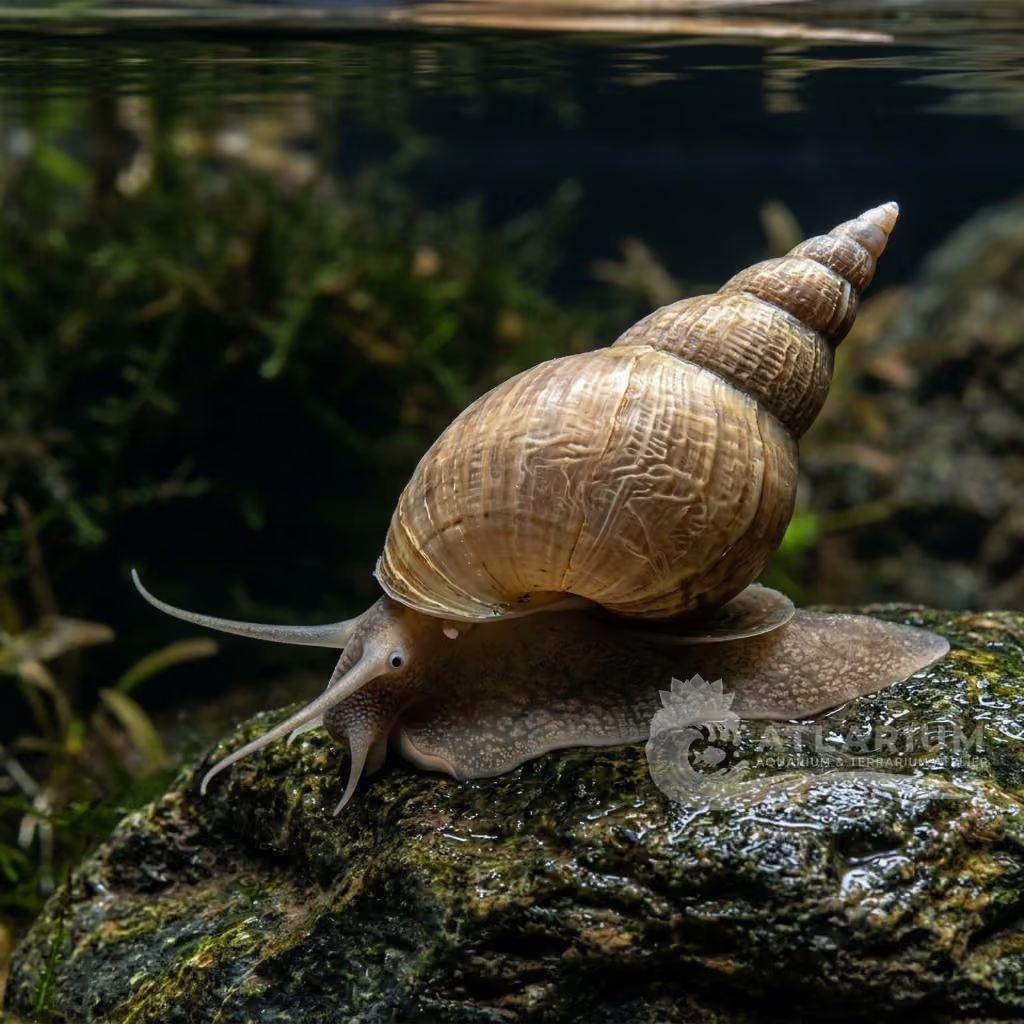
Black devil snail
Faunus ater
The Black Devil Snail is a large, striking freshwater gastropod with a long, dark shell. It is an excellent detritivore that prefers hard alkaline water.
Temperatura da água
20 - 28 °C
Valor de pH
7 - 8.4
Tipo de água
Água doce / Água salobra
Tipo invertebrado
Freshwater snail
Tamanho adulto
8 cm
Grupo mínimo
>= 1
GH
6 - 20 dGH
KH
3 - 15 dKH
TDS
120 - 450 ppm
Papel ecológico
Scavenger
Sensibilidade ao cobre
High

Descrição da espécie
Geographical Origin and Habitat: The Black Devil Snail, frequently marketed as the Cappuccino Snail (*Faunus ater*), is a colossal, extraordinarily hardy gastropod natively endemic to the vast coastal estuaries, brackish lagoons, and freshwater river mouths stretching across Southeast Asia, Indonesia, and the Philippines. Their natural biotope is defined by extreme environmental fluctuation: they live in tidal mudflats and mangrove swamps where water salinity rapidly swings from pure freshwater to heavy brackish conditions, giving them near-indestructible biology.
Taxonomy: Scientifically classified within the Pachychilidae family (distinct from the similar-looking *Tylomelania*), they are towering giants. Fully mature adults routinely reach an absolutely massive 7.0 to 9.0 centimeters (2.8-3.5 inches) in length. Their morphology is iconic: they possess an incredibly elongated, perfectly smooth, needle-like conical shell that lacks the deep grooves of Rabbit snails. They breathe via gills entirely underwater and possess a thick, heavily armored operculum (trapdoor) to survive tidal droughts.
Social Behavior: They are peaceful, robust, and relentless substrate scavengers. Despite their demonic-sounding common name, they possess zero predatory instinct and are completely harmless to fish and dwarf shrimp. They are heavy-duty bulldozers; they spend their entire existence dragging their massive, smooth shells through soft mud and sand, relentlessly plowing the substrate to unearth microscopic detritus and decaying organic matter. They are highly active during both day and night, constantly patrolling the tank bottom.
Coloration and Sexual Dimorphism: Sexual dimorphism is visually non-existent; dissection is required to determine male from female. The "Black Devil" and "Cappuccino" names refer entirely to their spectacular shell coloration. The "Black Devil" variant features an intensely saturated, pitch-black, deeply glossy shell. The highly prized "Cappuccino" variant features a distinct, beautiful color gradient: the tip is pristine white or pale cream, smoothly transitioning through rich mocha brown, and finishing in deep espresso black near the shell opening.

Cuidado, criação e companheiros de tanque
Tank Setup: The aquarium architecture MUST accommodate their colossal length and requirement to plow through the substrate. A minimum 75-liter (20-gallon) tank is absolutely mandatory.
CRITICAL REQUIREMENT: The substrate MUST consist of soft sand or very fine, smooth gravel (at least 2 inches deep). Heavy, jagged gravel will brutally lacerate their soft foot and prevent them from natural foraging. They do not climb glass easily due to their immense shell weight and do not require tight-fitting lids.
Diet and Feeding: They are ravenous, heavy-duty detritivores and algae eaters.
CRITICAL CLARIFICATION: Unlike large Rabbit Snails, the Black Devil Snail is 100% reef-safe for freshwater planted tanks; they DO NOT possess the jaw structure to consume healthy, living aquarium plants. They strictly consume massive amounts of soft diatoms, decaying plant matter, and uneaten fish food. Their massive appetite MUST be fueled daily with copious sinking omnivore wafers, blanched vegetables (zucchini), and spirulina.
Water Quality: Because they evolved in volatile coastal estuaries, they are the ultimate extremophiles. They can thrive in 100% pure freshwater, heavy brackish water, and even survive in full marine (saltwater) environments for extended periods. They require tropical heat (22-28°C / 72-82°F). However, to maintain their massive, perfectly smooth shells, they STRICTLY require HARD, alkaline water (GH 8-20, pH 7.2 - 8.5) rich in calcium. Soft, acidic water will rapidly and lethally erode their spectacular glossy shells.
Compatibility and Tankmates: Compatibility is universally excellent due to their peaceful nature and immensely thick, impenetrable shell. They are the perfect, harmless giant cleanup crew for peaceful community tanks and planted setups. They completely ignore fish. However, they MUST NEVER be housed with aggressive, snail-eating predators (massive Loaches, large Cichlids, Pufferfish) that will relentlessly attack their vulnerable soft foot. They are excellent companions for Neocaridina shrimp and brackish-water species (like Mollies).
Aquarium Breeding: Breeding the Black Devil Snail in a standard freshwater aquarium is
biologically impossible:. While they will mate and the females will lay microscopic eggs, those eggs absolutely require a complex, highly specific transition into full marine (saltwater) conditions for the larvae to hatch, survive, and undergo metamorphosis, similar to Amano Shrimp or Nerite Snails. Because they cannot breed in freshwater, they will absolutely NEVER overpopulate a tank or become a "pest."
Risks and Diseases: The absolute greatest physical risk is slow, agonizing death from massive shell degradation (pitting and whitening) caused by keeping them in soft, acidic water lacking calcium; hard, alkaline water is unconditionally mandatory. The second major risk is lethal starvation; owners fail to realize their colossal appetite and do not provide enough heavy vegetable and sinking pellet foods. Finally, keeping them on sharp gravel will cause severe, lethal lacerations to their massive, fleshy foot.

Origem e distribuição geográfica
The Black Devil Snail, frequently marketed as the Cappuccino Snail (*Faunus ater*), is a colossal, extraordinarily hardy gastropod natively endemic to the vast coastal estuaries, brackish lagoons, and freshwater river mouths stretching across Southeast Asia, Indonesia, and the Philippines. Their natural biotope is defined by extreme environmental fluctuation: they live in tidal mudflats and mangrove swamps where water salinity rapidly swings from pure freshwater to heavy brackish conditions, giving them near-indestructible biology.
Origem
Oceanos tropicais e recifesEuropa, Mediterrâneo e Ásia OcidentalSul e Sudeste AsiáticoLeste Asiático

Perfil de invertebrados
- Dieta
- Biofilm grazer
- The diet of Faunus ater must be carefully managed to ensure robust health, vibrant coloration, and long-term survival in captivity. In its natural environment, it has specific foraging habits that should be replicated as closely as possible in the aquarium. Supplementing its diet with high-quality, targeted commercial foods or fresh preparations ensures it receives necessary vitamins and minerals. Care should be taken not to overfeed, as uneaten food will quickly degrade water quality and harm the animal.
- Papel ecológico
- Scavenger
- Within its native ecosystem, Faunus ater plays a vital biological role that contributes to the overall stability of the environment. Whether acting as a scavenger, filter feeder, predator, or prey, it helps to efficiently cycle nutrients through the food web. Its natural behaviors prevent the over-accumulation of organic waste or the unchecked growth of specific prey populations. Introducing this species to a home aquarium often replicates these beneficial ecological functions, promoting a cleaner and more balanced system.
- Tamanho adulto
- 8 cm
- Risco de salto
- Yes
- While not generally known for jumping out of the water like some fish, Faunus ater can exhibit sudden, frantic escape responses when startled. Crabs and snails, in particular, may deliberately climb above the waterline and explore beyond the rim of an open aquarium. To prevent tragic accidents and desiccation, a well-fitted lid or tight netting is highly recommended for any tank housing this species. Providing adequate hiding spaces also reduces the likelihood of panic-induced erratic movements.
- Sensibilidade ao choque
- High
- Aquarists must be aware that Faunus ater is exceptionally sensitive to rapid fluctuations in its surrounding water parameters. Sudden shifts in temperature, specific gravity, pH, or dissolved organics can induce severe physiological shock, leading to rapid decline or death. A prolonged and careful drip acclimation process is highly recommended whenever moving this animal between systems. Maintaining pristine and unwavering water conditions is arguably the single most critical factor for its successful husbandry.
- Cálcio e minerais
- High
- Proper mineral balance is crucial for Faunus ater, as it requires consistent access to dissolved calcium and related trace elements for physiological maintenance. Depending on its specific biology, calcium is utilized for building external shells, hardening exoskeletons after molting, or supporting skeletal growth. In enclosed aquarium systems, these essential minerals can be rapidly depleted and may require regular supplementation. Routine water testing is encouraged to ensure that general hardness or specific calcium levels remain within the optimal range.
- Muda
- No
- For invertebrate species that undergo ecdysis, Faunus ater requires a safe and stress-free environment to successfully shed its old exoskeleton. During and immediately following a molt, the animal's new shell is soft, leaving it extremely vulnerable to physical damage and predation. It is important to provide ample hiding spaces where it can retreat until its body fully hardens. If applicable, the discarded exoskeleton should be left in the tank, as the animal will often consume it to reclaim vital minerals.
- Reprodução
- Oviparous
- The reproductive strategies of Faunus ater are varied and often highly adapted to its natural environmental conditions. Breeding efforts in a captive aquarium setting can range from straightforward to exceedingly difficult, often depending on specific larval requirements. Successful rearing of young frequently involves managing microscopic planktonic stages and specialized diets away from the main display tank. Nevertheless, captive propagation remains a rewarding endeavor that helps reduce the reliance on wild-caught specimens.
- Compatibilidade e companheiros de tanque
- Peaceful
- Careful consideration of tank mates is required to ensure the safety and wellbeing of Faunus ater in a community setup. It should generally be housed with peaceful species that will not relentlessly harass it, nip at its appendages, or view it as a food source. Conversely, its own predatory or territorial instincts must be evaluated to ensure it does not harm smaller or slower-moving tank inhabitants. Observation during the initial introduction period is vital to confirm a harmonious balance within the aquarium.

Galeria de imagens
Imagens licenciadas vinculadas à espécie ou, quando marcadas, ao táxon representativo mais próximo.

Espécies relacionadas
Recomendações agrupadas por parentes próximos, escolhas de acompanhantes e cuidados semelhantes.