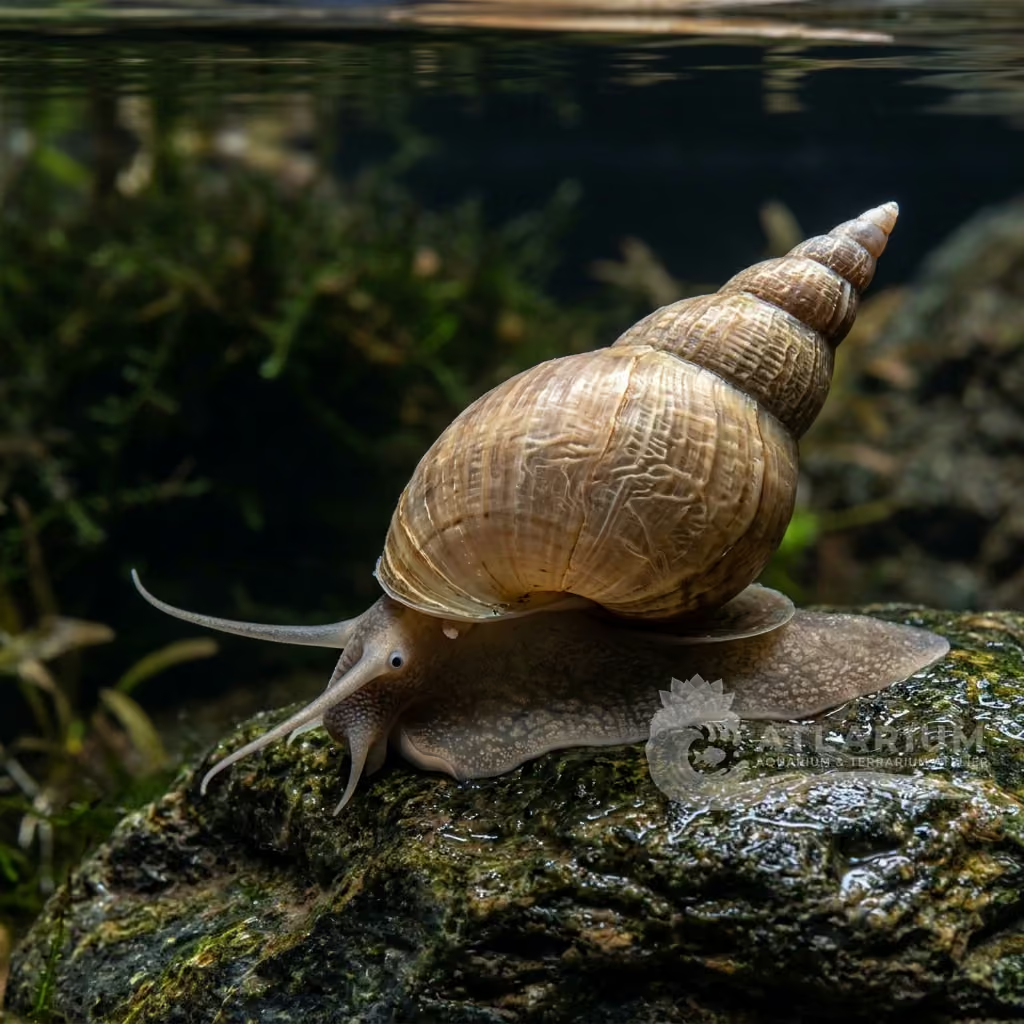
Great ramshorn snail
Planorbarius corneus
Great ramshorn snail: aquarium gastropod in the family Planorbidae, useful for biofilm, light algae, and substrate cleanup. Geographical Origin and Habitat: The Great Ramshorn...
Temperatura da água
20 - 28 °C
Valor de pH
7 - 8.4
Tipo de água
Água doce
Tipo invertebrado
Freshwater snail
Tamanho adulto
3 cm
Grupo mínimo
>= 1
GH
6 - 20 dGH
KH
3 - 15 dKH
TDS
120 - 450 ppm
Papel ecológico
Scavenger
Sensibilidade ao cobre
High

Descrição da espécie
Geographical Origin and Habitat: The Great Ramshorn (*Planorbarius corneus*) is a large, heavily built, and extraordinarily hardy freshwater gastropod natively endemic to the massive, temperate river systems, deep natural lakes, and coldwater ponds stretching entirely across Europe, from the British Isles deep into Siberia. Their natural biotope is defined by slow-moving, heavily vegetated, and significantly cooler waters that freeze over during winter, where they survive deep in the muddy substrate feeding on massive accumulations of decaying autumn leaves and detritus.
Taxonomy: Scientifically classified within the Planorbidae family, they are the undisputed giants of the "true" Ramshorns found in Europe. Fully mature adults routinely reach an impressive 3.0 to 4.0 centimeters (1.2-1.6 inches) in diameter, making them significantly larger and heavier than the common tropical Ramshorn (*Planorbella duryi*). Their thick, calcium-carbonate shell is coiled flat in a "planispiral" shape. Crucially, they lack an operculum (trapdoor) and breathe atmospheric air through a massive, highly efficient lung.
Social Behavior: They are completely peaceful, heavily armored detritivores. Despite their large size, they possess zero aggression toward fish or shrimp. They are methodical, relentless scavengers that spend their entire existence bulldozing through soft substrate and patrolling heavy hardscapes, rapidly vacuuming up thick decaying organic matter, dead fish, and massive amounts of soft green algae. Utilizing their lung, they will occasionally climb to the water surface, inhale deeply, and drop back to the bottom.
Coloration and Sexual Dimorphism: Like all true Ramshorns, they are simultaneous hermaphrodites; every individual possesses both male and female reproductive organs, completely eliminating visual sexual dimorphism. The wild-type European coloration is heavily muted and deeply camouflaged for murky ponds. The thick, deeply grooved shell features a highly saturated, dark olive-green, deeply brown, or near-black base. The massive, muscular foot is usually entirely pitch black, dark grey, or a deep, muddy red in specific aquarium strains.

Cuidado, criação e companheiros de tanque
Tank Setup: The aquarium architecture MUST accommodate their large adult size and their absolute preference for cooler water. A minimum 40-liter (10-gallon) tank or a large outdoor pond is required. They thrive in heavily planted, coldwater setups. Because they breathe atmospheric air via a lung, a gap of air at the top of the tank is unconditionally mandatory. While they stay underwater, a tight-fitting lid is recommended indoors to prevent escape. They do exceptionally well in unfiltered, heavily planted natural setups.
Diet and Feeding: They are spectacular, heavy-duty detritivores and voracious algae eaters.
CRITICAL CLARIFICATION: Despite their large size, they DO NOT eat healthy, living aquarium plants. They actively seek out and consume thick, soft algae, decaying autumn leaves (Indian Almond, Oak), and rotting plant matter. However, their massive size means they cannot survive in a sterile tank. Their diet MUST be supplemented with premium sinking wafers, fish food leftovers, and blanched vegetables (zucchini, carrots).
Water Quality: Originating from temperate Europe, their biological requirements differ wildly from tropical snails. They possess an absolute preference for COLD to temperate water (4-24°C / 39-75°F) and are highly prized for outdoor Koi and Goldfish ponds because they easily survive freezing winters. They STRICTLY require hard, alkaline water (GH 8-20, pH 7.2 - 8.5) rich in calcium to maintain their massive shells. Keeping them in hot tropical tanks (28°C+) will severely drastically accelerate their metabolism and shorten their lifespan.
Compatibility and Tankmates: Compatibility is excellent for cooler-water community tanks, but their lack of a trapdoor makes their soft bodies vulnerable. They are the perfect cleanup crew for unheated tanks containing Goldfish, White Cloud Mountain Minnows, or Hillstream Loaches. They MUST NEVER be housed with aggressive, snail-eating predators (massive Loaches, large Cichlids) that will easily crush their shells. They are exceptional companions for Neocaridina shrimp in unheated breeding setups.
Aquarium Breeding: Breeding is completely automatic and highly prolific, though slightly slower than the smaller tropical Ramshorns due to their massive size. Because they are hermaphrodites, any two snails will constantly mate. They lay large, transparent, gelatinous, flat egg clutches containing 20-50 eggs on plant leaves, pond liners, and glass. The population is entirely dictated by food availability: in an overfed pond or tank, the population will explode to break down the excess waste, then stabilize.
Risks and Diseases: The absolute greatest physical risk is agonizing shell degradation caused by keeping them in soft, acidic water; calcium-rich, highly alkaline water is unconditionally mandatory. The second major risk is lethal metabolic exhaustion caused by keeping this temperate species in a constantly hot (28°C+) tropical aquarium. The greatest risk to the aquarist is a massive population explosion resulting from severe overfeeding. Chemical copper treatments are immediately and brutally lethal.

Origem e distribuição geográfica
The Great Ramshorn (*Planorbarius corneus*) is a large, heavily built, and extraordinarily hardy freshwater gastropod natively endemic to the massive, temperate river systems, deep natural lakes, and coldwater ponds stretching entirely across Europe, from the British Isles deep into Siberia. Their natural biotope is defined by slow-moving, heavily vegetated, and significantly cooler waters that freeze over during winter, where they survive deep in the muddy substrate feeding on massive accumulations of decaying autumn leaves and detritus.
Origem
Europa, Mediterrâneo e Ásia Ocidental

Perfil de invertebrados
- Dieta
- Biofilm grazer
- They are exceptional scavengers that enthusiastically consume dead plant matter, uneaten fish food, and soft algae. They generally leave healthy, living plants alone, making them excellent janitors for planted setups. Their diet should be supplemented with sinking pellets or blanched vegetables if natural detritus is sparse.
- Papel ecológico
- Scavenger
- These snails play a vital role in preventing the buildup of noxious organic waste by constantly recycling detritus. Their foraging behavior keeps the substrate aerated and prevents the formation of anaerobic gas pockets. They effectively turn decaying matter into bio-available nutrients for aquarium plants.
- Tamanho adulto
- 3 cm
- Risco de salto
- Yes
- Planorbarius corneus are fully aquatic and have no inclination to leave the water, posing absolutely no jump risk. They navigate the glass and plants entirely submerged. A lid is generally not necessary to keep them contained, though it helps reduce evaporation.
- Sensibilidade ao choque
- High
- They are extremely hardy and adaptable to a wide range of water conditions, particularly thriving in cooler waters. They are generally resistant to minor fluctuations in water quality but should still be acclimated gently to avoid shock. Extreme heat or sudden massive shifts in pH are the few things that can truly harm them.
- Cálcio e minerais
- High
- To grow and maintain their large, impressive spiraled shells, they require a steady source of calcium in the water. Soft, acidic water will gradually dissolve their shells, leading to weakness and death. A moderate KH level and dietary calcium supplements are recommended for optimal shell integrity.
- Muda
- Shell growth
- Great Ramshorn Snails do not molt; they continuously expand their coiled shell throughout their lives. Because the shell is carried vertically, any structural weakness from poor water quality becomes highly visible. A well-cared-for individual will have a thick, smooth, richly colored shell.
- Reprodução
- Variable
- They are hermaphrodites and reproduce very readily, laying small, flat, gelatinous egg clutches on glass and broad leaves. Their population size is directly linked to the amount of excess food available in the tank. To prevent a population explosion, strict feeding management and routine tank maintenance are required.
- Compatibilidade e companheiros de tanque
- Peaceful
- They are perfectly peaceful and make fantastic companions for small community fish, shrimp, and other snails. However, they are easily preyed upon by specialized snail-eating species like pufferfish, loaches, and assassin snails. They are highly recommended for planted tanks as they act as a gentle cleaning crew.

Galeria de imagens
Imagens licenciadas vinculadas à espécie ou, quando marcadas, ao táxon representativo mais próximo.

Espécies relacionadas
Recomendações agrupadas por parentes próximos, escolhas de acompanhantes e cuidados semelhantes.