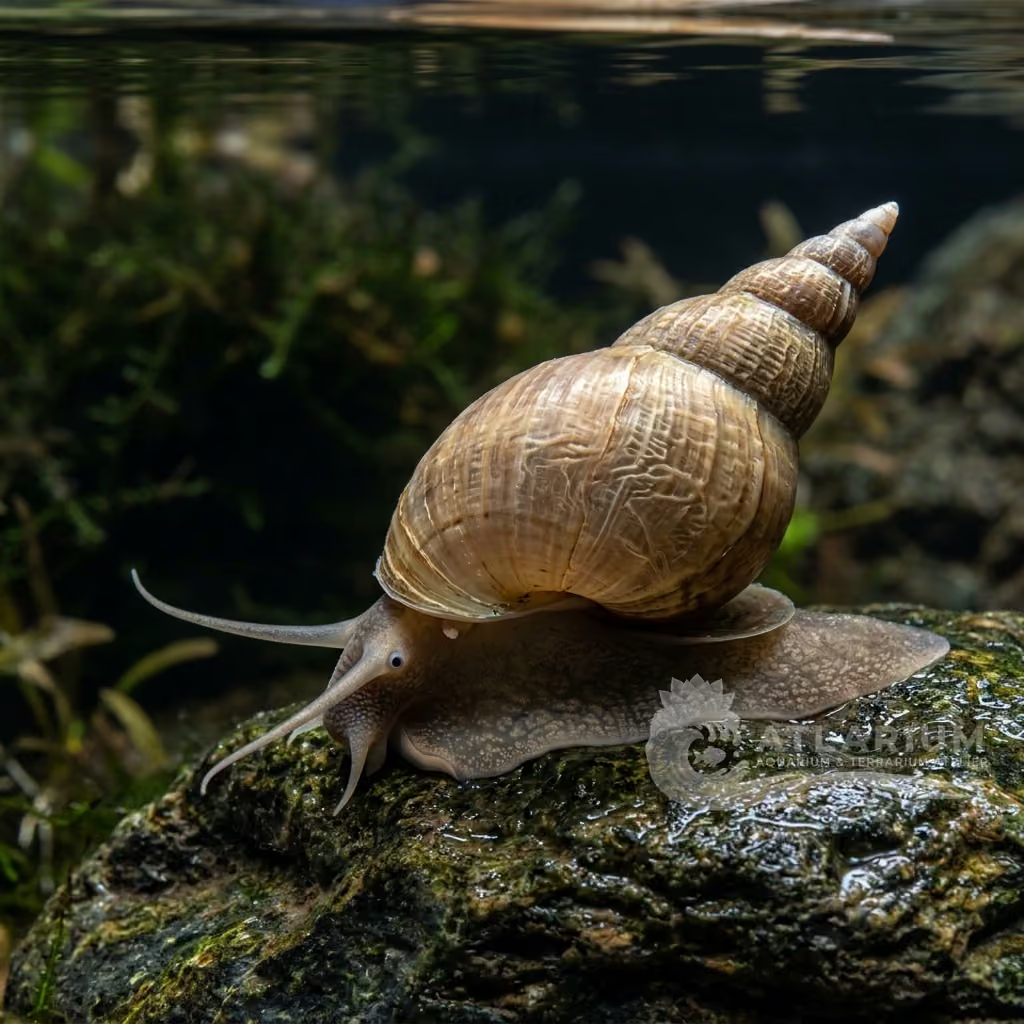
Golden Basket Clam
Corbicula fluminea
The Golden Clam is a peaceful freshwater bivalve that continuously filters water for suspended phytoplankton. It requires a sandy substrate and supplemental food.
Temperatura da água
15 - 28 °C
Valor de pH
7 - 8.5
Tipo de água
Água doce
Tipo invertebrado
Freshwater shrimp
Tamanho adulto
3 cm
Grupo mínimo
>= 1
GH
10 - 20 dGH
KH
5 - 15 dKH
TDS
200 - 400 ppm
Papel ecológico
Scavenger
Sensibilidade ao cobre
High

Descrição da espécie
Geographical Origin and Habitat: Corbicula fluminea is native to Eastern Asia (China, Korea, Japan) but has established invasive populations globally in Europe and North America. It inhabits freshwater rivers, lakes, and canals with slow-to-moderate currents over well-oxygenated sandy or gravelly substrates.
Taxonomy: Belonging to the family Cyrenidae (formerly Corbiculidae), this is a small bivalve mollusk with a thick, triangular, and heavily ribbed shell. Adult specimens range from 2.5 to 4 cm in size. It uses a muscular foot to burrow and anchor itself.
Social Behavior: Sessile and non-interactive. It spends almost its entire lifespan buried in the sand with only its incurrent and excurrent siphons visible to process water. It does not actively move around once a suitable spot is established.
Coloration and Sexual Dimorphism: The shell exterior is light golden-yellow to olive-brown, while the interior is often tinged with light violet or white. This species is a self-fertilizing hermaphrodite; therefore, there is no sexual dimorphism.

Cuidado, criação e companheiros de tanque
Tank Setup: Requires a sandy substrate at least 5-8 cm deep to allow the clam to bury itself completely. Coarse gravel is unsuitable as it blocks their movement. Moderate water flow is necessary to bring suspended particles to the clam. Good oxygenation is key.
Diet and Feeding: Obligate filter feeders. They feed on phytoplankton, micro-algae, suspended organic detritus, and bacteria. In home aquariums, they must be target-fed with liquid foods for invertebrates, dissolved spirulina, or live phytoplankton using a syringe.
Water Quality: Prefers cool, clean water: temperature 15-24°C (struggles in warm water above 25°C), pH 7.0-8.0, GH 8-20, and KH 4-12. Very sensitive to ammonia and nitrites. Regular water testing is recommended. Copper is highly lethal.
Compatibility and Tankmates: Safe with peaceful mid-water fish and dwarf shrimp. Never keep with mollusk-eating predators (e.g. puffers, loaches), large digging fish (cichlids, large catfish), or freshwater turtles that will easily crush and consume them.
Aquarium Breeding: Breeding can occur in captivity. They release tiny, fully formed juvenile clams directly into the water, which quickly settle into the sand. However, mass breeding can lead to filter clogging and nutrient depletion.
Risks and Diseases: The greatest risk is starvation due to over-filtered water. If a clam dies undetected beneath the sand, its decomposition will cause a rapid ammonia spike, endangering the entire tank. Check clams regularly to ensure shells remain closed.

Origem e distribuição geográfica
Corbicula fluminea is native to Eastern Asia (China, Korea, Japan) but has established invasive populations globally in Europe and North America. It inhabits freshwater rivers, lakes, and canals with slow-to-moderate currents over well-oxygenated sandy or gravelly substrates.
Origem
Cosmopolita ou apresentadoAmérica do NorteEuropa, Mediterrâneo e Ásia OcidentalLeste AsiáticoOceanos tropicais e recifes

Perfil de invertebrados
- Dieta
- Filter feeder
- The diet of Corbicula fluminea must be carefully managed to ensure robust health, vibrant coloration, and long-term survival in captivity. In its natural environment, it has specific foraging habits that should be replicated as closely as possible in the aquarium. Supplementing its diet with high-quality, targeted commercial foods or fresh preparations ensures it receives necessary vitamins and minerals. Care should be taken not to overfeed, as uneaten food will quickly degrade water quality and harm the animal.
- Papel ecológico
- Scavenger
- Within its native ecosystem, Corbicula fluminea plays a vital biological role that contributes to the overall stability of the environment. Whether acting as a scavenger, filter feeder, predator, or prey, it helps to efficiently cycle nutrients through the food web. Its natural behaviors prevent the over-accumulation of organic waste or the unchecked growth of specific prey populations. Introducing this species to a home aquarium often replicates these beneficial ecological functions, promoting a cleaner and more balanced system.
- Tamanho adulto
- 3 cm
- Risco de salto
- Yes
- While not generally known for jumping out of the water like some fish, Corbicula fluminea can exhibit sudden, frantic escape responses when startled. Crabs and snails, in particular, may deliberately climb above the waterline and explore beyond the rim of an open aquarium. To prevent tragic accidents and desiccation, a well-fitted lid or tight netting is highly recommended for any tank housing this species. Providing adequate hiding spaces also reduces the likelihood of panic-induced erratic movements.
- Sensibilidade ao choque
- High
- Aquarists must be aware that Corbicula fluminea is exceptionally sensitive to rapid fluctuations in its surrounding water parameters. Sudden shifts in temperature, specific gravity, pH, or dissolved organics can induce severe physiological shock, leading to rapid decline or death. A prolonged and careful drip acclimation process is highly recommended whenever moving this animal between systems. Maintaining pristine and unwavering water conditions is arguably the single most critical factor for its successful husbandry.
- Cálcio e minerais
- High
- Proper mineral balance is crucial for Corbicula fluminea, as it requires consistent access to dissolved calcium and related trace elements for physiological maintenance. Depending on its specific biology, calcium is utilized for building external shells, hardening exoskeletons after molting, or supporting skeletal growth. In enclosed aquarium systems, these essential minerals can be rapidly depleted and may require regular supplementation. Routine water testing is encouraged to ensure that general hardness or specific calcium levels remain within the optimal range.
- Muda
- Shell growth
- For invertebrate species that undergo ecdysis, Corbicula fluminea requires a safe and stress-free environment to successfully shed its old exoskeleton. During and immediately following a molt, the animal's new shell is soft, leaving it extremely vulnerable to physical damage and predation. It is important to provide ample hiding spaces where it can retreat until its body fully hardens. If applicable, the discarded exoskeleton should be left in the tank, as the animal will often consume it to reclaim vital minerals.
- Reprodução
- Oviparous
- The reproductive strategies of Corbicula fluminea are varied and often highly adapted to its natural environmental conditions. Breeding efforts in a captive aquarium setting can range from straightforward to exceedingly difficult, often depending on specific larval requirements. Successful rearing of young frequently involves managing microscopic planktonic stages and specialized diets away from the main display tank. Nevertheless, captive propagation remains a rewarding endeavor that helps reduce the reliance on wild-caught specimens.
- Compatibilidade e companheiros de tanque
- Peaceful
- Careful consideration of tank mates is required to ensure the safety and wellbeing of Corbicula fluminea in a community setup. It should generally be housed with peaceful species that will not relentlessly harass it, nip at its appendages, or view it as a food source. Conversely, its own predatory or territorial instincts must be evaluated to ensure it does not harm smaller or slower-moving tank inhabitants. Observation during the initial introduction period is vital to confirm a harmonious balance within the aquarium.

Modelos e parâmetros científicos
SeaLifeBase
Acesso aos dados científicos oficiais da espécie
SeaLifeBase v26.04Dados sincronizados em: 15/06/2026
- Resiliência
- Alta (menos de 15 meses)

Espécies relacionadas
Recomendações agrupadas por parentes próximos, escolhas de acompanhantes e cuidados semelhantes.