Azolla caroliniana
Azolla caroliniana
A small, beautiful freshwater floating fern of the Azollaceae family, ideal for shading the tank and naturally absorbing nitrates from the water column.
Temperatura da água
15 - 28 °C
Valor de pH
6 - 8
Tipo de água
Água doce
Luz
Média - Alta
CO2
Baixa
GH
4 - 20 dGH
KH
2 - 15 dKH

Descrição da espécie
Geographical Origin and Habitat: Azolla caroliniana is native to the Americas, with a native distribution that includes eastern North America, the Mississippi basin, and parts of Central and South America. It inhabits nutrient-rich ponds, calm lakes, agricultural ditches, and slow-flowing forested swamps. This fern colonizes the water surface forming thick compact carpets. Tolerating significantly colder temperatures than tropical species, it can survive even in temperate climates during winter.
Taxonomy & Genetics: Taxonomically it is classified in the Azollaceae family, genus Azolla. Like other ferns of the genus, it shares a close symbiotic association with the blue-green alga Anabaena azollae. This mutualistic relationship allows it to fix atmospheric nitrogen efficiently. At the genetic level, its adaptability to temperate climates makes it a robust and invasive species in ideal conditions, with lightning-fast clonal reproduction capacity.
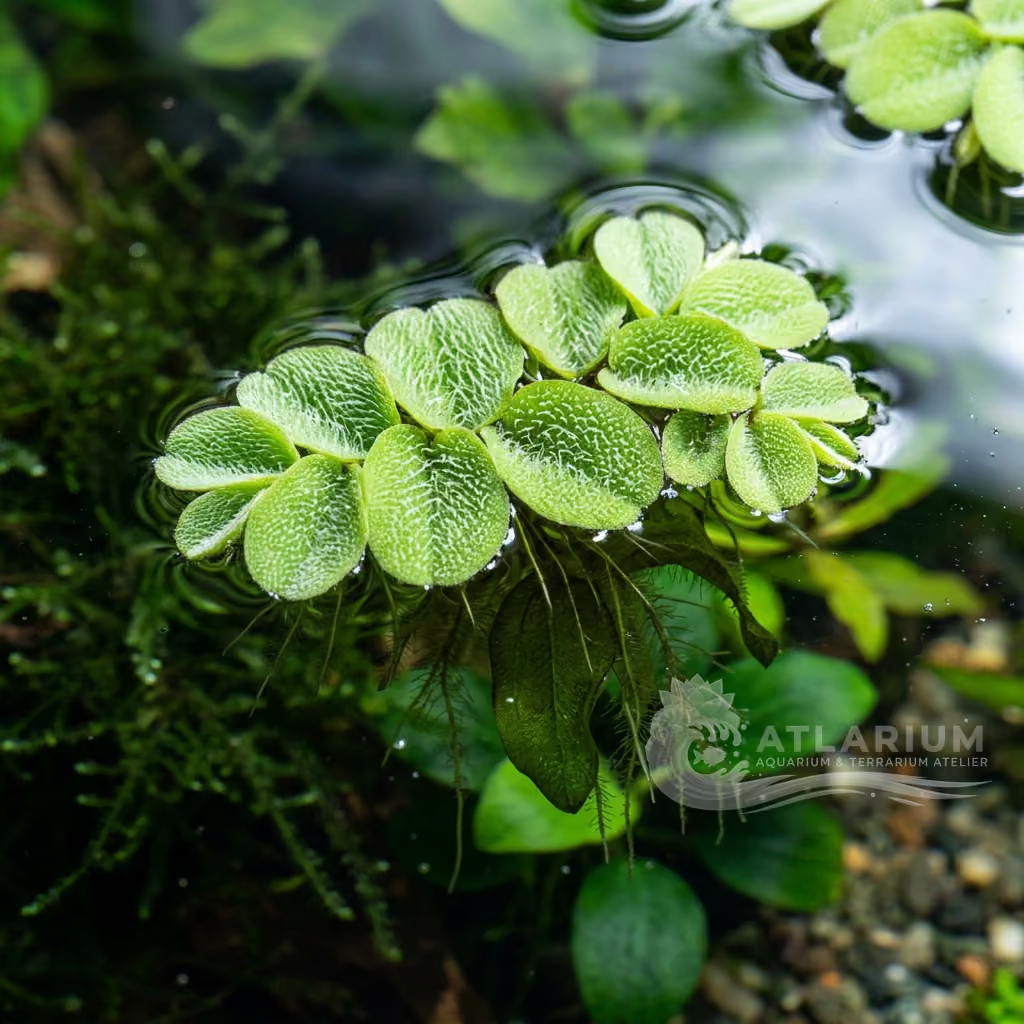
Physical Structure: The plant has a tiny and branched vegetative structure, with flexible stems a few centimeters long. The leaves are scale-like, lobed, arranged in two overlapping rows. The roots are thread-like, unbranched, and hang free in the water to absorb dissolved minerals. Buoyancy is guaranteed by air cavities inside the leaves that allow it to remain constantly on the surface.
Color & Texture: The leaves have a velvety light green or olive green color under normal conditions. However, in autumn, under strong solar radiation or in situations of lack of nutrients in water, the plant develops protective pigments that turn the color towards an intense red, purple, or reddish-brown. The leaf texture is water-repellent, covered with microscopic hair that prevents water from wetting it.

Cuidado, criação e companheiros de tanque
Lighting & CO2: Requires medium-high lighting to thrive and develop red hues. Since the leaves float in contact with the air, it does not need any CO2 injection in the
Water Chemistry: obtaining the necessary carbon directly from atmospheric carbon dioxide.
Nutrition & Substrate: Does not require any type of substrate. It draws all nutrients from the aquarium water through the suspended roots. Thanks to the symbiotic fixation of nitrogen, it tolerates nitrate-free water, but requires good concentrations of phosphorus, potassium, and iron dissolved in the column.
Water Chemistry: Tolerates temperatures between 5°C and 30°C, adapting perfectly to cold water aquariums and outdoor ponds. It prefers a pH between 6.0 and 7.5 and soft to medium-hard water. It does not tolerate brackish water and high copper concentrations.
Space Management & Placement: It is an exclusively floating plant. It quickly expands covering the entire surface of the water; it must be thinned regularly to allow the passage of light and gaseous exchanges, which are essential for the well-being of fish and submerged plants.
Pruning: Maintenance does not involve pruning, but simply periodic thinning of the floating carpet using a fine net. This operation allows to export accumulated nutrients (like phosphorus and potassium) from the aquarium ecosystem.
Risks & Diseases: The main risk is the strong surface current induced by the filters: Azolla caroliniana requires calm or very slow waters. If constantly pushed under the water jet or blocked in zones of strong turbulence, it quickly drowns and rots. Phosphorus deficiency causes an immediate arrest of development.

Origem e distribuição geográfica
Azolla caroliniana is native to the Americas, with a native distribution that includes eastern North America, the Mississippi basin, and parts of Central and South America. It inhabits nutrient-rich ponds, calm lakes, agricultural ditches, and slow-flowing forested swamps. This fern colonizes the water surface forming thick compact carpets. Tolerating significantly colder temperatures than tropical species, it can survive even in temperate climates during winter.
Origem
América do NorteExtra-Amazônica América do SulAmérica Central e Caribe

Perfil da planta
- Posicionamento
- Flutuante
- As a free-floating fern, this plant sits entirely on the water surface with its tiny roots dangling below. It is ideal for providing shade to lower-light plants or shy aquatic inhabitants beneath. Because it can quickly cover the surface, it should be kept within a floating ring if light needs to reach the plants below.
- Forma botânica
- Flutuante
- This tiny, aquatic fern consists of overlapping, scale-like leaves that form small, multi-branched fronds. Depending on the light intensity and nutrient levels, its color ranges from vibrant light green to deep red. Short, fine roots hang down into the water, providing a natural, wild look.
- Crescimento
- Média
- In nutrient-rich water with strong lighting, its growth rate is extremely rapid, often doubling its biomass in just a few days. This explosive growth makes it an excellent plant for absorbing excess nutrients and outcompeting algae. However, its fast growth means it requires frequent thinning to prevent it from blocking gas exchange at the surface.
- Substrato
- Nenhuma
- As a true floating fern, Azolla caroliniana has no requirement for a physical substrate. Its delicate, unbranched roots dangle directly into the water column, absorbing dissolved nutrients like nitrogen and phosphorus. This plant is often used for nutrient export and shading, entirely bypassing the need for a planted bottom.
- Fertilização de coluna
- Recomendada
- Since it has no connection to the substrate, it depends entirely on liquid fertilization or nutrients naturally present in the water. Dosing a comprehensive liquid fertilizer, especially one with trace elements like iron, will encourage dense, healthy growth. Be mindful that in heavily stocked tanks, it may absorb nitrates faster than fish produce them.
- Fertilização radicular
- Nenhuma
- Root fertilization is completely unnecessary and impossible for this species, as it is a true floating plant. It derives zero benefit from nutrient-rich substrates or root tabs. All nutritional needs must be met through the water column.
- Corte
- Ocasional
- Trimming is not applicable; instead, maintenance involves physically removing handfuls of the plant from the water surface. Regular removal is crucial to ensure light penetrates to the submerged plants and to allow for proper surface agitation. Always dispose of excess floating plants responsibly to prevent them from entering local waterways.
- Propagação
- Divisão
- Propagation is incredibly simple and occurs automatically through vegetative fragmentation. As the fronds grow, they naturally break apart into smaller segments that continue to grow independently. Given good conditions, a single small cluster will rapidly multiply to cover the entire surface.
- Sensibilidade
- Moderada
- Azolla caroliniana prefers still or slow-moving water, as strong surface agitation can damage its delicate fronds and cause it to rot. It is also sensitive to condensation dropping onto its leaves from aquarium lids, which can lead to fungal issues. It is highly adaptable to various water parameters but dislikes extreme surface turbulence.
- Função de layout
- Flutuante
- Its primary role is as a surface cover, providing a natural canopy that diffuses light and creates a sense of security for fish. The hanging roots add a fascinating, complex texture to the upper levels of the aquarium. The potential color shift from green to red offers a beautiful contrast when viewed from above or in shallow setups.

Espécies relacionadas
Recomendações agrupadas por parentes próximos, escolhas de acompanhantes e cuidados semelhantes.