Diodia virginiana
Diodia virginiana
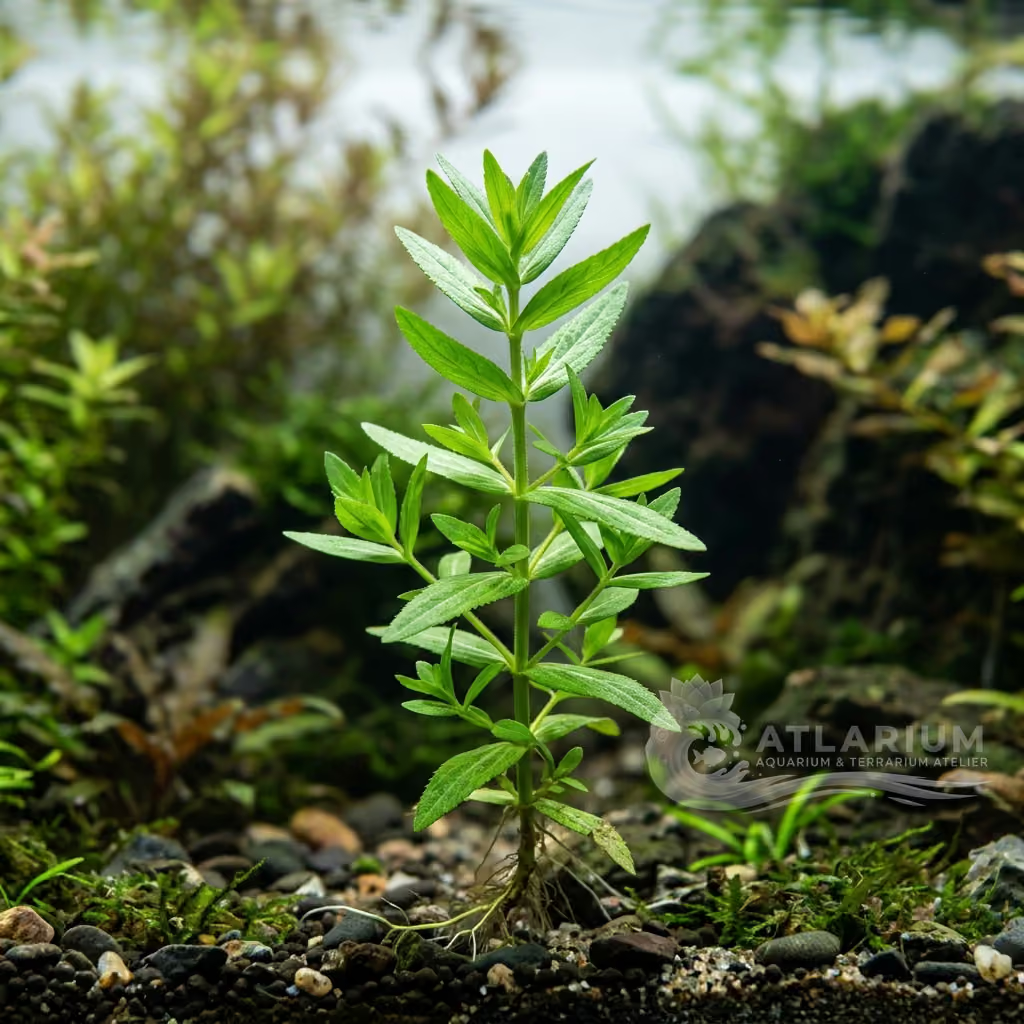
Diodia virginiana is a vigorous wetland stem plant native to the US. Featuring bright green leaves and white axillary flowers, it adds a wild, natural aesthetic to paludariums and open-top tanks.
Temperatura da água
22 - 28 °C
Valor de pH
6 - 7.5
Tipo de água
Água doce
Luz
Medium to High
CO2
Média - Alta
Altura esperada
40 cm
Largura esperada
25 cm
KH
2 - 10 dKH

Descrição da espécie
Geographical Origin and Habitat: Diodia virginiana (commonly known as Virginia buttonweed) is native to the warm and humid regions of the southeastern United States, ranging from Texas to Florida and Virginia. It inhabits wet meadows, ditch banks, seasonal river margins, and agricultural soils subject to flooding. It is a creeping and erect wetland plant adapted to living in water-saturated soils, tolerating short periods of complete submersion during rainy seasons.
Taxonomy & Genetics: It belongs to the Rubiaceae family, genus Diodia. Genetically, it is a very resistant weed species in its native areas, with high phenotypic plasticity that allows it to adapt to varying moisture conditions. It develops small white hermaphrodite flowers in the leaf axils, and its cellular structure is optimized for photosynthesis in both emersed and submerged environments, though it requires significant energy in the latter.
Physical Structure: It features quadrangular, slightly hairy, and branched stems that grow erect or creeping depending on light intensity. The leaves are arranged oppositely along the stem, lanceolate-elliptic in shape, and lack a petiole (sessile). The root system is fibrous and extensive, capable of expanding rapidly in the substrate to absorb water and dissolved liquid nutrients.
Color & Texture: The leaves show a uniform bright green coloration, which may display slight reddish or purple hues in the presence of intense light or cold stress. The leaf surface is characterized by prominent secondary veins that create a wrinkled and solid texture, contrasting nicely with the square structure of the erect stem.

Cuidado, criação e companheiros de tanque
Lighting & CO2: Requires moderate to intense lighting to prevent the internodes from stretching excessively and the lower leaves from falling when submerged. CO2 injection (15-25 mg/L) is strongly recommended to support photosynthesis under
Water Chemistry: stimulating compact development and preventing stem decay.
Nutrition & Substrate: Prefers a sandy or clayey substrate rich in nutrients. The plant absorbs a large portion of nutrients through the water column and root system, responding very well to liquid fertilization rich in potassium, nitrogen, and iron. Nutrient deficiencies cause tiny foliage and brittle stems.
Water Chemistry: Adaptable to chemical parameters, it prefers soft to medium-hard water, with an optimal pH between 6.0 and 7.5. The optimal water temperature ranges between 18°C and 28°C. Regular water changes encourage the removal of suspended organic matter that could settle on the leaves.
Space Management & Placement: Ideal for the midground or background of medium-sized aquariums. It should be planted in small groups, spacing individual stems 2-3 cm apart to allow light to penetrate to the base of the plant and prevent early loss of lower foliage.
Pruning: Pruning is done by cutting the main stem above a leaf node with sharp scissors. The cut portion (cutting) can be replanted directly into the substrate to propagate, while the basal part will quickly develop new lateral shoots, making the bush denser.
Risks & Diseases: In the aquarium, the main risk is stem rot if lighting is insufficient or if the water is too hard and alkaline. The tender leaves are subject to attack by herbivorous fish. Moderate growth can encourage green spot or thread algae on the leaves if nutrients are not balanced.

Origem e distribuição geográfica
Diodia virginiana (commonly known as Virginia buttonweed) is native to the warm and humid regions of the southeastern United States, ranging from Texas to Florida and Virginia. It inhabits wet meadows, ditch banks, seasonal river margins, and agricultural soils subject to flooding. It is a creeping and erect wetland plant adapted to living in water-saturated soils, tolerating short periods of complete submersion during rainy seasons.
Origem
América do Norte

Perfil da planta
- Posicionamento
- Plano intermediário
- Best placed in the background or midground of the aquascape. Its rapid, creeping to upright growth habit means it requires ample space to expand without shading neighboring plants. It should be positioned where it receives intense, direct lighting.
- Forma botânica
- Caule
- Features somewhat broad, lanceolate leaves that grow oppositely along a robust stem. The submersed leaves are typically a bright, light green, while the emersed form can produce small white flowers. The stems often grow at an angle or creep along the substrate before turning upwards.
- Crescimento
- Média
- Exhibits a fast to very fast growth rate when provided with high light, CO2 injection, and rich nutrients. This vigorous growth requires frequent trimming to prevent it from overtaking the aquarium and blocking light to other species. It adapts well and quickly begins growing once planted.
- Substrato
- Média
- Diodia virginiana prefers a moderately fertile substrate, such as a high-quality aqua soil, to support its continuous growth. Its fine root system requires a relatively soft and porous bottom layer to easily spread and anchor the plant. A depth of 3-5 centimeters allows the roots to access necessary minerals without being stifled. Maintaining a nutrient-rich base helps this species maintain its bright green foliage and robust stem structure.
- Fertilização de coluna
- Recomendada
- Requires a comprehensive liquid fertilization routine to support its rapid growth. High light and CO2 must be balanced with adequate nitrates, phosphates, and potassium to prevent nutrient deficiencies. Consistent dosing is key to maintaining a lush, dense thicket.
- Fertilização radicular
- Recomendada
- While it readily absorbs nutrients through the water column, it also develops a strong root system. Planting it in a nutrient-rich substrate or using root tabs will encourage even faster and more robust growth. A fertile root zone provides a good buffer for this fast-growing stem plant.
- Corte
- Ocasional
- Requires regular and sometimes aggressive trimming to manage its height and lateral spread. Cut the stems at the desired height; the lower portions will quickly sprout new side shoots. This continuous pruning helps create a dense, bushy appearance suitable for aquascaping.
- Propagação
- Estacas
- Very easily propagated through stem cuttings. Snip the top shoots and replant them into the substrate, where they will quickly develop roots. This rapid propagation makes it easy to multiply the plant and create thick groups in a short amount of time.
- Sensibilidade
- Moderada
- Not particularly sensitive, but it is a light-demanding plant that will shed its lower leaves if heavily shaded. It can handle a range of water parameters but prefers clean, well-filtered water. It is relatively resilient against algae if its growth remains vigorous.
- Função de layout
- Plano intermediário, Fundo
- Acts as an excellent, fast-growing green background or filler plant. Its bright green, lanceolate leaves provide a soft, bushy texture that contrasts nicely with red plants or fine-leaved species. It is particularly useful in larger setups where its vigorous growth can be properly accommodated.

Espécies relacionadas
Recomendações agrupadas por parentes próximos, escolhas de acompanhantes e cuidados semelhantes.