Echinodorus cordifolius 'Mini'
Echinodorus cordifolius 'Mini'
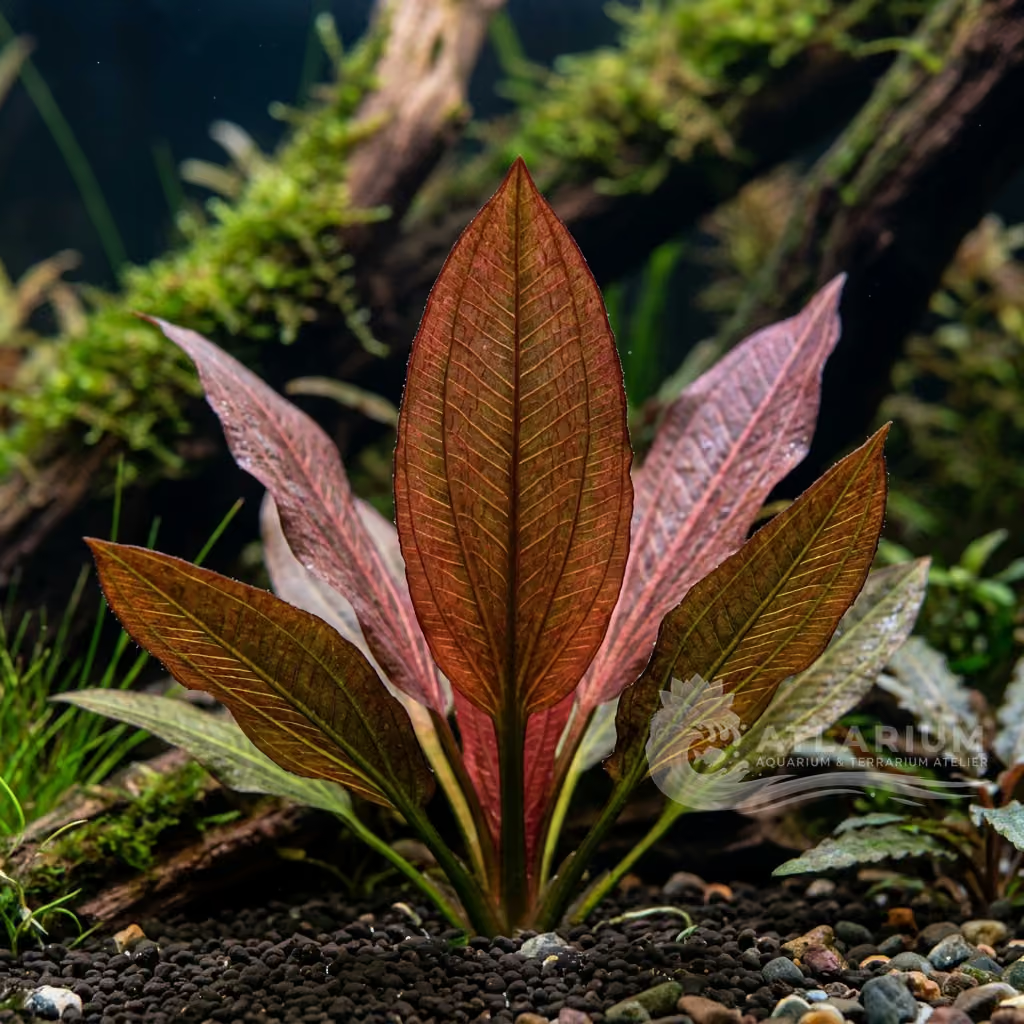
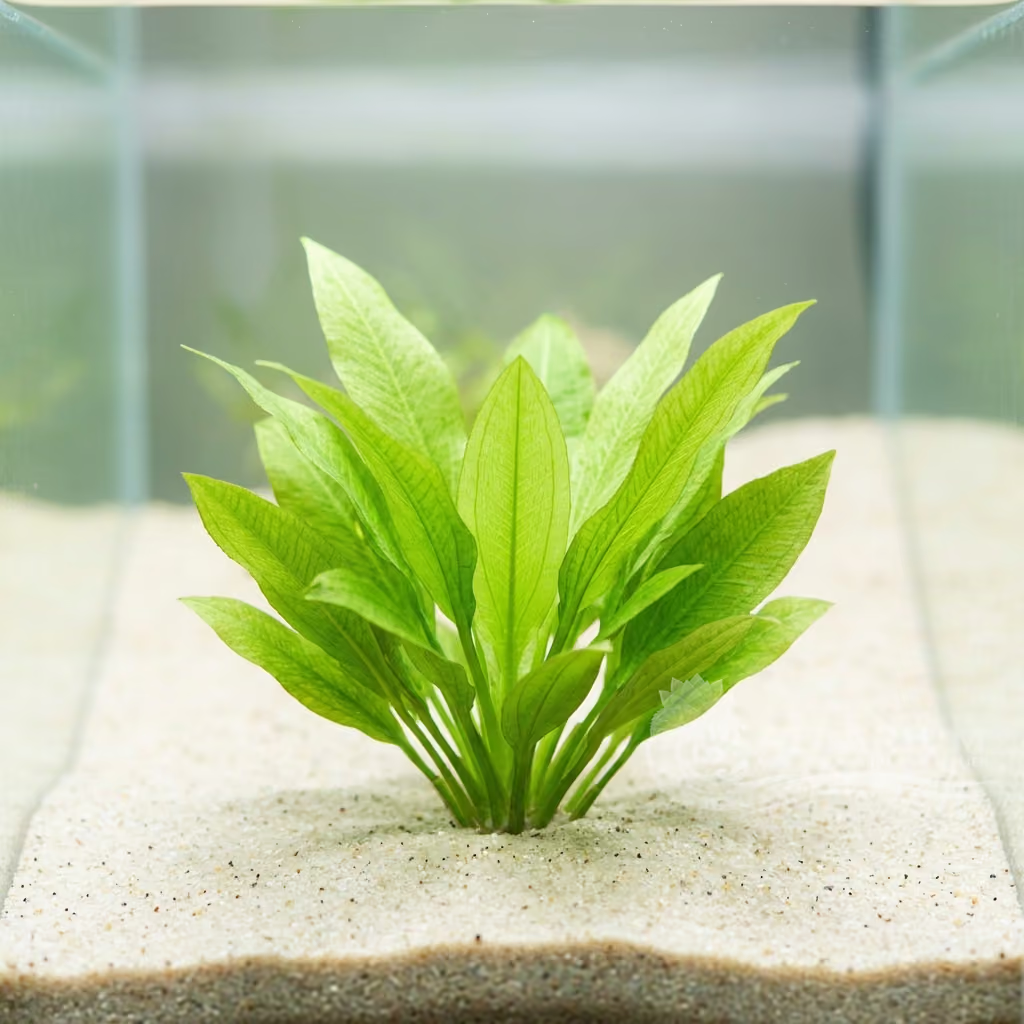
Echinodorus cordifolius 'Mini' is a charming dwarf selection of the classic swamp plant, offering bright green, heart-shaped leaves in a very tight, compact habit.
Temperatura da água
22 - 28 °C
Valor de pH
6 - 7.5
Tipo de água
Água doce
Luz
Média - Alta
CO2
Média - Alta
Altura esperada
20 cm
Largura esperada
20 cm
KH
2 - 10 dKH

Descrição da espécie
Geographical Origin and Habitat: The type species Echinodorus cordifolius is native to the southeastern United States and Mexico, where it populates marshes, ponds, and muddy banks. This 'Mini' selection is a dwarf form isolated in cultivation to meet the needs of aquarists who want the look of cordifolius in smaller spaces.
Taxonomy & Genetics: It belongs to the family Alismataceae. It is a stabilized mutation or horticultural selection of the pure species. Despite its small size, it retains the reproductive characteristics of the parent species, including the production of long submerged and emersed flower stalks.
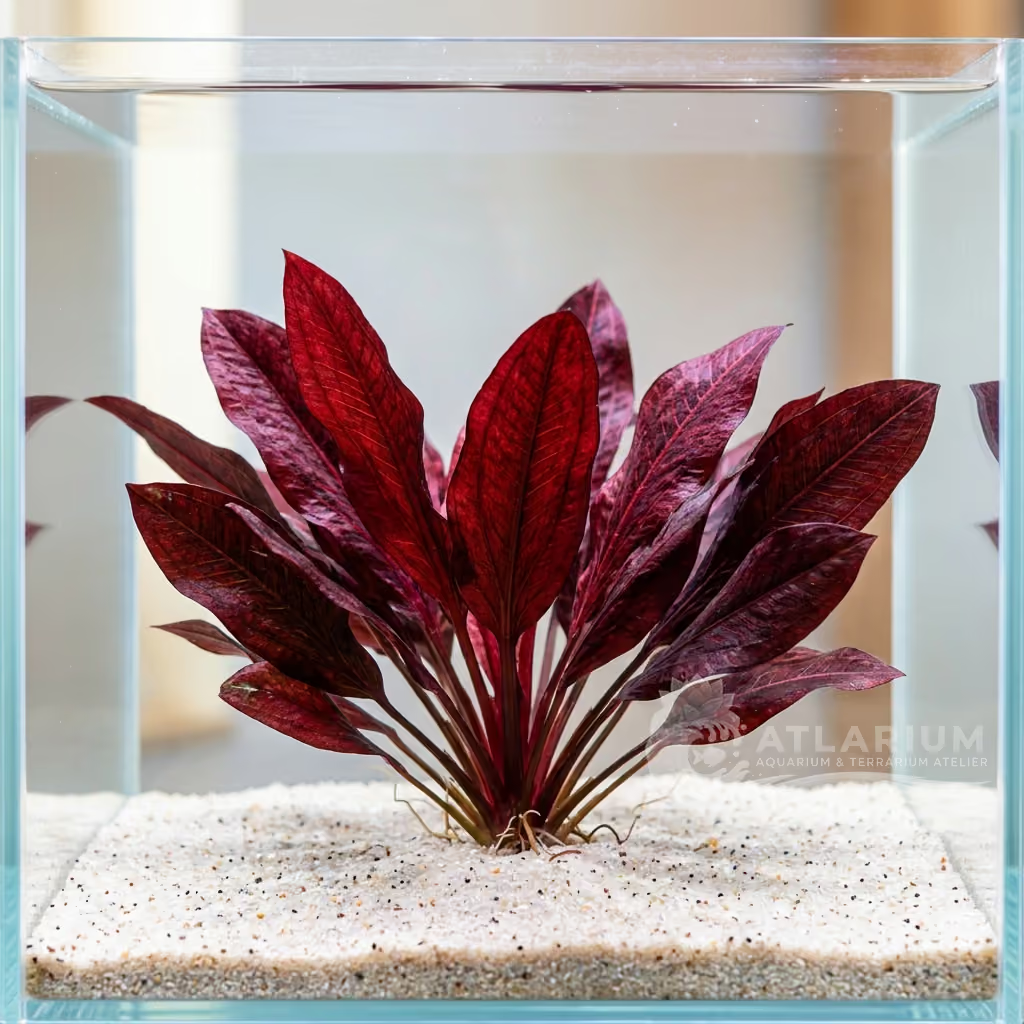
Physical Structure: It is a rosette plant characterized by short petioles and heart-shaped (cordate) leaves. The plant maintains a much more compact shape compared to the wild form, with a maximum height that usually does not exceed 20 cm when grown submerged.
Color & Texture: The leaves have a bright light green coloration, sometimes with slight reddish or brownish hues on new leaves under intense light. The texture is robust but less leathery than in larger varieties, with prominent palmate veins starting from the petiole insertion point.

Cuidado, criação e companheiros de tanque
Lighting & CO2: Requires medium-high lighting to prevent the petioles from lengthening excessively in search of light, losing the dwarf growth habit. CO2 is recommended to keep the plant compact and dense, but it can also grow well in low-tech aquariums.
Nutrition & Substrate: A fertile substrate is essential. The plant develops a robust root system that absorbs large amounts of nutrients. The use of fertilizer tabs inserted into the substrate ensures healthy leaves and prevents the leaf discoloration typical of iron deficiencies.
Water Chemistry: Prefers stable temperatures between 18°C and 28°C. The ideal pH is neutral or slightly acidic/alkaline (6.0 - 7.5), while the optimal water hardness is medium-high, although it adapts to various ranges.
Space Management & Placement: It is ideal for the midground of medium and large aquariums, or as a background in small nano-aquariums. Position in open areas to allow the rosette to fan out without being compressed by rocks or driftwood.
Pruning: Requires occasional pruning of older leaves or those that tend to grow too tall. If the plant produces flower stalks that escape the water, these can be cut to redirect energy back to submerged leaf growth.
Risks & Diseases: The main risk is the transition to the emersed form if lighting is insufficient or if the plant reaches the surface. Leaves can show nutrient deficiencies (especially potassium and iron) which manifest as yellowing and small holes.

Origem e distribuição geográfica
The type species Echinodorus cordifolius is native to the southeastern United States and Mexico, where it populates marshes, ponds, and muddy banks. This 'Mini' selection is a dwarf form isolated in cultivation to meet the needs of aquarists who want the look of cordifolius in smaller spaces.
Origem
Melhoramento seletivo e cultivares

Perfil da planta
- Posicionamento
- Plano intermediário
- Due to its 'Mini' designation, this plant is an excellent choice for the midground or even the foreground of larger aquariums. Its compact, bushy stature allows it to form a dense focal point without overwhelming the aquascape. In smaller tanks, it can serve as a striking background plant. Its placement should allow for unimpeded light penetration to its lower leaves.
- Forma botânica
- Roseta
- This cultivar is characterized by a rosette growth pattern, producing multiple broad, slightly textured, oval to heart-shaped leaves from a central crown. The leaves are typically a bright, vibrant green and remain relatively short compared to the standard species. It maintains a distinctively bushy and compact form, making it highly desirable for intricate aquascapes.
- Crescimento
- Média
- The growth rate of Echinodorus cordifolius 'Mini' is generally moderate to slow, depending heavily on the environmental conditions provided. Under high lighting, CO2 injection, and rich fertilization, growth accelerates noticeably. In lower tech setups, it will maintain its compact form but produce new leaves at a reduced pace. This steady growth makes it relatively easy to manage without frequent pruning.
- Substrato
- Alta
- A nutrient-rich substrate is essential for the optimal growth of Echinodorus cordifolius 'Mini'. As a heavy root feeder, it thrives when planted in aquasoil or a substrate supplemented with high-quality root tabs. The substrate should be deep enough to accommodate its extensive and vigorous root system. A sandy or fine-gravel substrate can be used if adequately enriched, but specialized planted aquarium soils yield the best results.
- Fertilização de coluna
- Recomendada
- While primarily a root feeder, liquid column fertilization provides a valuable supplementary nutrient source. A balanced liquid fertilizer containing essential micronutrients, especially iron, helps maintain leaf color and overall vitality. Column dosing is particularly beneficial in densely planted tanks where substrate nutrients might be rapidly depleted or unevenly distributed.
- Fertilização radicular
- Necessária
- Robust root fertilization is the cornerstone of successful cultivation for this species. Regular application of nutrient-dense root tabs placed deep into the substrate near the root zone is highly recommended. This targeted feeding approach ensures the plant has access to a constant supply of macronutrients and trace elements, promoting vigorous root and foliar growth.
- Corte
- Ocasional
- Trimming Echinodorus cordifolius 'Mini' is straightforward and involves pruning only the outermost, oldest leaves. Use sharp aquascaping scissors to cut the petiole as close to the crown as possible without damaging the center. Avoid snipping leaves in half, as the remaining portion will simply rot. Consistent pruning maintains a clean appearance and encourages the continuous emergence of new central shoots.
- Propagação
- Divisão
- Propagation is typically achieved through the division of the central rhizome or the separation of daughter plants (adventitious plantlets) that form on mature individuals. In rare cases under optimal conditions, it may produce a flowering stalk with plantlets. The separated plantlets or rhizome divisions should be replanted in a nutrient-rich substrate to establish new, independent specimens.
- Sensibilidade
- Moderada
- Overall, Echinodorus cordifolius 'Mini' is quite hardy, but it can be sensitive to sudden, drastic shifts in water parameters. It may experience a period of melting when transitioning from emersed to submersed growth. During this acclimation phase, it is vital to keep water conditions stable and avoid uprooting the plant. It is also susceptible to spot algae if lighting is too intense without adequate CO2.
- Função de layout
- Plano intermediário, Fundo, Nano
- In an aquascape, Echinodorus cordifolius 'Mini' serves as a magnificent structural anchor or centerpiece. Its substantial leaf mass provides a bold texture that breaks up monotonous areas of fine foliage. It is highly valued in various layout styles for its dominant presence. When positioned correctly, it naturally draws the viewer's eye and adds a sense of maturity to the tank.

Espécies relacionadas
Recomendações agrupadas por parentes próximos, escolhas de acompanhantes e cuidados semelhantes.